
Warehouse Roofing Contractor in Auburn, Indiana: A Practical Project Guide
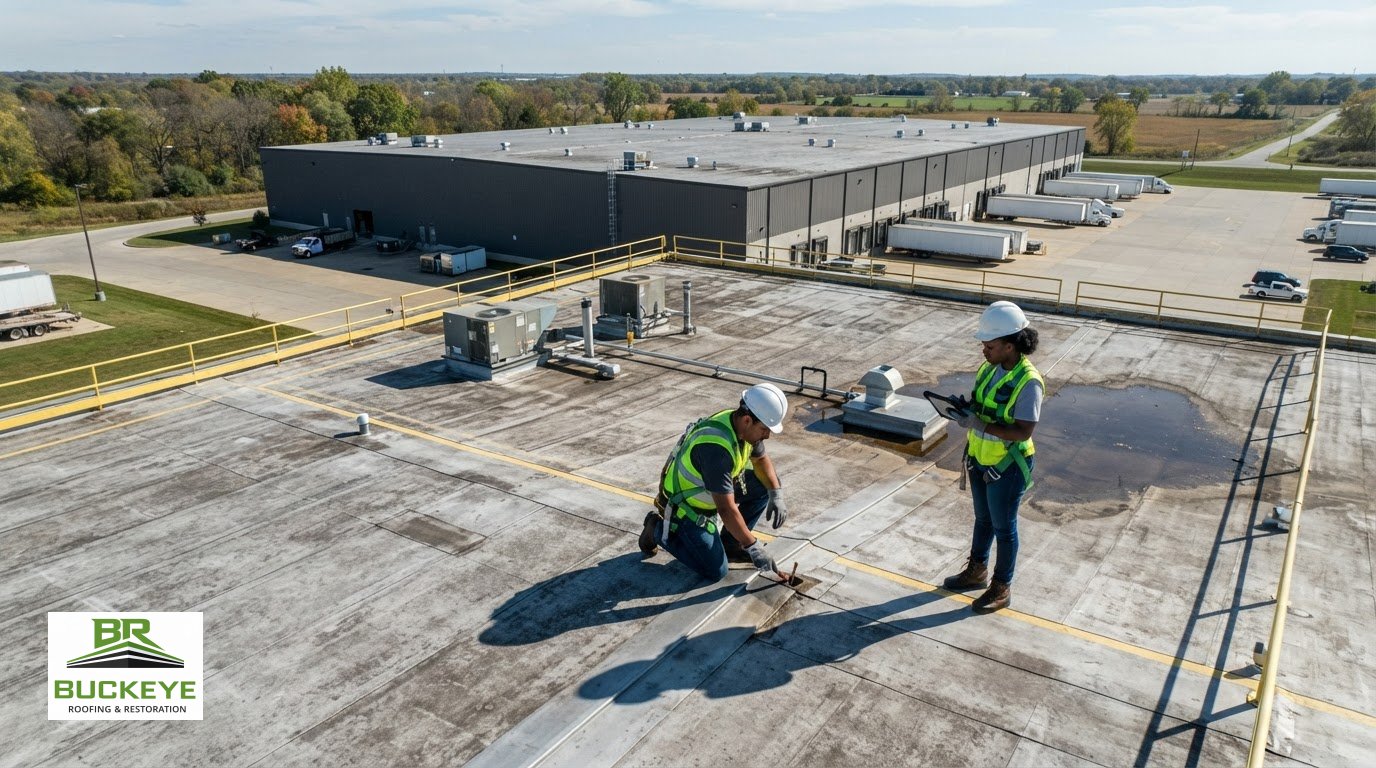
What if the right warehouse roofing project in Auburn isn’t a full replacement? If you’re responsible for inventory, equipment, or daily operations, a roof concern can make a major project feel urgent. The right scope depends on what an inspection finds, not on a predetermined system. A warehouse roofing contractor in Auburn Indiana should assess the existing roof before recommending repair, restoration, coatings, or replacement.
That assessment matters in Northeast Indiana, where snow, ice, freezing temperatures, and seasonal shifts make drainage and roof condition important planning concerns. A leak, ponding water, or worn roof section deserves attention, but it doesn’t automatically mean the entire roof needs to come off.
This guide explains what a commercial roofing contractor should evaluate, how to compare project approaches with your roof’s condition and warehouse needs, and what information to prepare before arranging an inspection. You’ll have a clearer way to plan next steps, account for building operations, and discuss a sensible scope with a contractor serving Auburn.
Key Takeaways
- Start with the roof’s observed condition and warehouse priorities, not a predetermined project type.
- A professional assessment should examine the roof surface, seams, penetrations, drainage, and visible deterioration before work is scoped.
- Repair addresses specific failures, while restoration, coatings, and replacement suit different roof conditions.
- Gather roof records, known concerns, access details, and operational priorities before meeting with a warehouse roofing contractor in Auburn Indiana.
- Buckeye Roofing & Restoration serves Auburn warehouses with commercial roof inspections and condition-based project options.
Warehouse Roofing in Auburn, Indiana: What the Building Needs from a Roofing Project
A warehouse roof is part of the building’s operating system. It protects storage and work areas, while its drainage design directs water toward drains, scuppers, or roof edges. Warehouse roofs may use low-slope membrane systems such as TPO or EPDM, or commercial metal panels. Each system has different materials and details, so a warehouse roofing contractor in Auburn Indiana should assess the existing roof and the building’s needs before defining a project.
Many warehouse roofs are low-slope systems designed to drain rather than remain perfectly level. Others use commercial metal panels. An assessment should account for the roof type and its visible components, including seams, penetrations, drainage paths, and signs of wear. The goal is to understand the roof’s condition, not to assume replacement is necessary.
For a warehouse operator, a roof concern has practical consequences. Water near stored goods, equipment, electrical systems, or active work areas can disrupt building use. Recurring leaks, ponding water, aging materials, and visible damage all provide useful context, but none alone determines the project scope. A professional inspection helps connect reported symptoms to the condition of the roof system.
Which warehouse roof conditions deserve prompt attention?
Start with what staff can observe safely from inside the building or at ground level. Note interior staining, recurring leaks, damp areas, or water that appears to remain around visible drainage points. Record where and when concerns occur, and whether they affect inventory, equipment, or work areas. These observations help focus a professional assessment.
Don’t climb onto the roof to investigate or attempt repairs. Suspected structural concerns, loose materials, unsafe access, or conditions that could put people at risk call for professional assessment. A roofer can determine whether a specific failure needs commercial roof repair or points to a broader issue that requires a different scope.
How Auburn-area conditions fit into roof planning
Regional weather is useful context, but it doesn’t diagnose a particular roof. Snow and ice, freeze-thaw cycles, wind, and seasonal precipitation can make drainage and roof condition relevant considerations for commercial properties in Auburn and Northeast Indiana. The building’s design, exposure, materials, drainage, and maintenance history still need to be evaluated on their own.
During an assessment, consider how the roof handles water and how its condition relates to warehouse operations. A contractor can examine drainage, visible deterioration, seams, and other exposed components, then consider those findings alongside the facility’s use. This building-specific approach gives owners and facility managers a practical starting point without treating location alone as a diagnosis.
How a Warehouse Roofing Contractor Assesses the Roof Before Scoping Work
A sound project scope starts with evidence, not a material choice or an assumption that the entire roof needs replacement. A warehouse roofing contractor in Auburn Indiana should first hear what building staff have observed, then assess the roof system and connect the findings to work that addresses the facility’s needs.
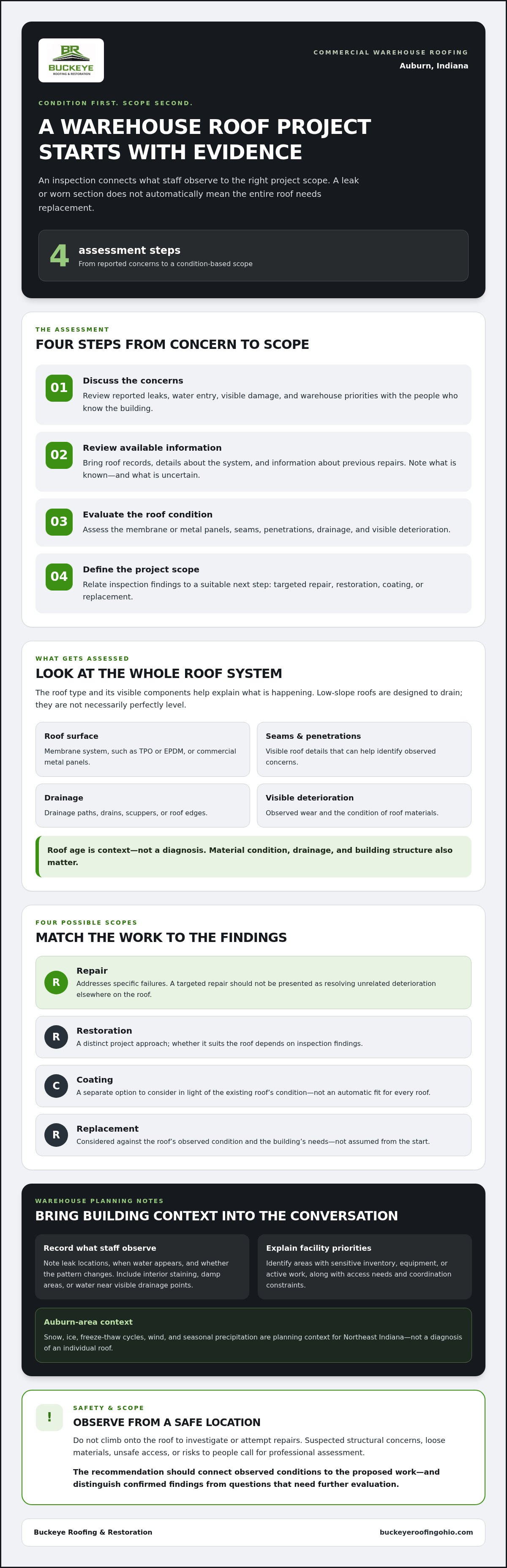
The assessment typically moves through four steps:
- Discuss concerns: Review leaks, water entry, visible damage, and operational priorities with the people who know the building.
- Review available information: Consider roof records, prior repairs, and known system details alongside staff observations.
- Evaluate roof condition: Assess the membrane or metal panels, seams, penetrations, drainage, and visible deterioration.
- Define the scope: Relate the findings to a suitable next step, such as targeted repair, restoration, coating, or replacement.
Inspection findings, not roof age alone, should guide the recommendation. Age can provide context, but it doesn’t establish whether a roof is sound, repairable, or suitable for restoration. The condition of the materials, drainage, and building structure matters.
What information helps establish the warehouse roof’s condition?
Before the assessment, organize details that help the roofer understand how the roof has been performing. Note known leak locations, when water was observed, and whether its location or pattern has changed. Share available roof records, information about past repairs, and any known details about the roof system. If some records are missing, clearly separate what you know from what you’re unsure about.
Also describe how the warehouse operates. Explain which areas store sensitive inventory, house equipment, or support active work, along with access needs and other constraints that may affect project coordination. You don’t need to prescribe a work schedule. This context helps shape a plan around the building’s use rather than treating the roof as a standalone surface.
What should a project recommendation explain?
A useful recommendation connects observed conditions to the proposed work and explains its purpose. If the roofer identifies a localized failure, the scope should distinguish that repair from broader roof concerns. Commercial roof repair can address specific failures, but a targeted fix should not be presented as resolving unrelated deterioration across the roof.
The recommendation should distinguish confirmed observations from questions that need further evaluation. Visible wear may be clear, for example, while the condition of underlying materials requires closer assessment. Restoration or coating suitability depends on findings such as moisture, substrate condition, drainage, and structural integrity. If those factors haven’t been established, the scope should identify what remains to be evaluated rather than assume the roof qualifies.
A documented assessment gives warehouse owners and facility managers a practical basis for comparing options. It should help explain what the roof needs, why a particular scope is proposed, and what questions remain before work is approved.
Repair, Restoration, Coating, or Replacement: Match the Scope to the Roof
A warehouse roof concern doesn’t automatically call for full replacement. The practical question is whether the proposed work fits the extent of damage, the condition of the existing system, and the building’s needs. A warehouse roofing contractor in Auburn Indiana should explain the purpose and limits of each option using inspection findings, not assumptions.
| Approach | Purpose | Conditions to assess | Key inspection question |
|---|---|---|---|
| Repair | Address a specific leak, seam, flashing, panel, or other failure. | Localized damage and the surrounding roof condition. | Is the problem limited, or are there related roof-wide concerns? |
| Restoration | Renew an existing roof system without treating it as a full replacement. | Substrate, moisture, drainage, and structural integrity. | Can the existing roof support a suitable restoration scope? |
| Coating | Apply a coating as part of a suitable roof project. | Compatibility with the roof surface and its overall condition. | Is the surface suitable, and will underlying issues need work first? |
| Replacement | Remove and replace the existing roof system. | Extent of deterioration and whether other approaches are feasible. | Do inspection findings make repair or restoration unsuitable? |
These options aren’t interchangeable. A coating isn’t a fix for every roof, and restoration isn’t automatically a substitute for replacement. The right scope depends on what the inspection establishes about the existing materials and supporting conditions.
When might repair or restoration be considered?
Repair may fit when the inspection identifies a localized failure and the surrounding system remains suitable for that work. It addresses the specific problem, not unrelated deterioration elsewhere. A repair recommendation should state what it covers and what it does not resolve. Buckeye provides commercial roof repair for identified roof issues.
Restoration may be considered when the existing roof can support it. The assessment should account for substrate condition, moisture levels, drainage, and structural integrity. If those findings show the roof isn’t a suitable candidate, restoration or coating may not be the sensible scope. Review the inspection-based considerations behind commercial roof restoration.
When should replacement enter the discussion?
Replacement belongs in the conversation when documented deterioration or other inspection findings limit the feasibility of repair or restoration. The recommendation should explain which conditions led to that conclusion and why a narrower scope would not address the roof’s needs. There’s no single roof age that determines the answer, and no option is best for every warehouse. Commercial roof replacement is one possible project path after assessment.
Before approving a scope, compare the proposed work with the findings and the warehouse’s operating priorities. Make sure the recommendation clearly describes the areas and conditions it is intended to address.
How to Prepare for a Warehouse Roofing Project in Auburn
Good preparation helps an inspection and project discussion stay focused on the building, its operations, and the work the roof actually needs. It can also bring practical coordination issues to light early. Clear information gives the project team a better basis for planning, though it can’t guarantee uninterrupted operations or a particular construction sequence.
Before meeting with a warehouse roofing contractor in Auburn Indiana, gather what you know and flag what remains uncertain. You don’t need a perfect record set. Even partial notes can help connect reported concerns with roof history and facility needs.
What should facility managers organize before the inspection?
Collect available roof plans, maintenance notes, records of prior repairs, and any documents that identify the existing roof system. Then map interior leak observations by location. Add when each issue appeared, whether it recurred, and whether the affected area or pattern changed. These notes help the roofer compare reported symptoms with inspection findings.
- Roof information: Plans, system details, maintenance records, and repair history.
- Observed concerns: Leak locations, dates, recurrence, and any known effects on stored goods, equipment, or work areas.
- Site visit details: Access procedures, relevant facility contacts, and areas that need coordination during the visit.
- Operational priorities: Areas with sensitive inventory, active processes, or access needs that may affect project planning.
Share the warehouse’s normal uses and any important constraints in plain language. For example, explain which work areas need access maintained or where moving stored materials could require coordination. The purpose is to make the building’s needs visible while the project scope is being developed, not to assume a particular work schedule or promise that operations won’t be affected.
How can the project scope stay clear?
Ask for the inspection findings and proposed work to be described in terms your facility team can use. The scope should identify the roof areas involved, the tasks proposed, and how those tasks relate to observed conditions. It should also note building-specific considerations, such as access limits or operational areas that require coordination. If replacement is under consideration, the recommendation should tie that approach to the documented condition and project needs.
Keep immediate concerns separate from longer-term planning. An active leak may need attention, while other roof conditions could be monitored or addressed as part of a broader plan. Clear distinctions help facility managers understand what the proposed work is intended to resolve and what falls outside its scope.
Before approving work, review the proposed areas and tasks with the people responsible for building access, operations, and affected spaces. That discussion can help your team understand the project scope and prepare for coordination.
Work with Buckeye on Commercial Warehouse Roofing in Auburn
Buckeye Roofing & Restoration is based in Edon, Ohio, and serves commercial properties in Auburn and Northeast Indiana. For warehouse owners and facility managers, the starting point is the building’s roof condition and operational needs, not an assumed replacement. An inspection helps establish whether the appropriate next step is repair, restoration, coating, or replacement.
Buckeye works on commercial and industrial roofing systems, with services that include low-slope roof repair, restoration, coatings, replacement, inspections, and maintenance. The team also works with TPO and EPDM roofing systems and provides commercial metal-roof repair and restoration. These options address different conditions, so a service category alone does not determine what a particular warehouse needs.
Buckeye serves commercial properties across Ohio, including Toledo, Findlay, Lima, Defiance, Bryan, Bowling Green, and Perrysburg, as well as Auburn, Fort Wayne, and Elkhart in Northeast Indiana. Its service area also includes Southern Michigan communities such as Jackson, Battle Creek, Kalamazoo, and Adrian. Local weather and building conditions vary, so the roof at each facility needs an individual assessment.
What Buckeye brings to an Auburn warehouse roofing discussion
A useful project discussion connects roof findings with how the warehouse functions. A recurring leak near stored inventory, for example, raises different coordination concerns than visible wear in an area with no reported water entry. Sharing those details helps focus the assessment, while the inspection establishes the roof’s actual condition.
As a commercial roofer serving Auburn from its Edon base, Buckeye focuses on recommendations that fit the building. Repair may address a specific failure; restoration or coating depends on whether the existing roof is suitable; replacement may be considered when inspection findings make other approaches impractical. No single scope should be assumed before the roof is assessed.
That condition-based approach gives facility managers a clearer basis for planning. It helps distinguish work that addresses known roof problems from broader considerations for the building’s roofing system. A warehouse roofing contractor in Auburn Indiana should explain how proposed work relates to observed conditions and facility priorities in straightforward terms.
What to do next about a warehouse roof concern
To prepare for an inspection, gather the warehouse location, a short description of the roof concern, and any available maintenance notes or prior repair records. You can also identify the areas or operations that need consideration during the visit. These details provide context, but they don’t replace a professional assessment of the roof.
After inspection, the findings can guide a practical conversation about next steps. If repair is appropriate, the scope can focus on the identified issue. If restoration, coating, or replacement is under consideration, the recommendation should reflect the roof’s condition and relevant building factors. Planning around warehouse operations is part of the discussion, but no project should be presented as guaranteeing uninterrupted activity or a fixed construction sequence.
If you’re responsible for a warehouse roof in Auburn, request a commercial roof inspection to discuss the building, its roof concerns, and a sensible path forward.
Make the Next Roof Decision With a Clear Plan
Before committing to a roofing project, make sure the people responsible for the building agree on practical priorities: which operations need consideration, what areas are most sensitive, and what questions remain about the proposed work. That shared understanding can help your team evaluate the scope and coordinate decisions without assuming the roof needs a particular solution.
A warehouse roofing contractor in Auburn Indiana can help connect the building’s needs with a suitable next step. Use the inspection discussion to clarify what the work is intended to address and what decisions your facility team will need to make.
When you’re ready, schedule a commercial roof inspection with Buckeye Roofing & Restoration to review your Auburn warehouse roof and discuss the appropriate next step.
Frequently Asked Questions
What information should I gather before requesting a warehouse roof inspection?
Gather enough context to help the roofer understand the building before arriving. Along with available roof documents, note which facility contacts can answer questions about past maintenance and access procedures. If water has affected operations, record which activities or stored materials were affected. This helps make the visit more relevant to your warehouse’s specific needs.
Can a warehouse roofing project be planned in phases?
Phasing may be considered if the inspection supports dividing the work into manageable areas. For example, a project discussion could account for separate roof sections that serve different warehouse functions. The appropriate approach depends on roof condition, project scope, access, and operational requirements. Discuss these constraints during planning, but don’t assume phasing will eliminate disruption or that a specific sequence will suit every building.
Does a roof leak always mean the whole warehouse roof needs replacement?
No. A leak can come from a localized failure, and an inspection may find that targeted repair is appropriate. The leak’s location inside the building doesn’t always identify the exact source on the roof, so the surrounding system also needs assessment. If other areas show widespread deterioration or related problems, the recommendation may involve broader work. The findings, not the leak alone, guide the scope.
What should a commercial roof inspection report help me understand?
A useful report should help connect observations to decisions: where concerns were found, what the findings indicate, and what work is proposed to address them. Ask the warehouse roofing contractor in Auburn Indiana to distinguish visible, confirmed conditions from areas that couldn’t be assessed or need further evaluation. That distinction helps you understand the recommendation’s basis and identify unanswered questions before approving a project scope.
Can an existing warehouse roof receive a coating?
Sometimes, but a coating isn’t suitable for every existing roof. The evaluation should consider whether the roof surface can accept the coating and whether underlying concerns, such as moisture or drainage problems, need attention first. A coating is not a substitute for correcting conditions that make the roof unsuitable. Ask how the inspection findings support coating as part of the proposed scope, rather than treating it as an automatic alternative to replacement.
Should warehouse staff go onto the roof to document damage?
No. Staff shouldn’t climb onto a commercial roof to investigate or photograph suspected damage. Instead, document what can be observed safely from inside or at ground level, such as interior water marks or visible exterior concerns. Include the date and location of the observation and share it with the roofing professional. If there are signs of structural trouble or an unsafe condition, keep people clear of the area and arrange a professional assessment.

Article by
Harry Stanley III
Harry Stanley III is a construction marketing strategist and fractional CMO at H&A Marketing. He has helped construction companies grow through website strategy, SEO, paid advertising, branding, lead generation, CRM systems, and professional content. His past work includes helping Meraki Solar generate an additional $3.7 million in revenue in his first year and supporting American Builders as a fractional CMO. Today, Harry works directly with custom home builders and construction companies to build marketing systems designed to generate qualified leads and measurable growth.
