
Silicone vs. Acrylic Roof Coatings for Commercial Metal Roof Restoration
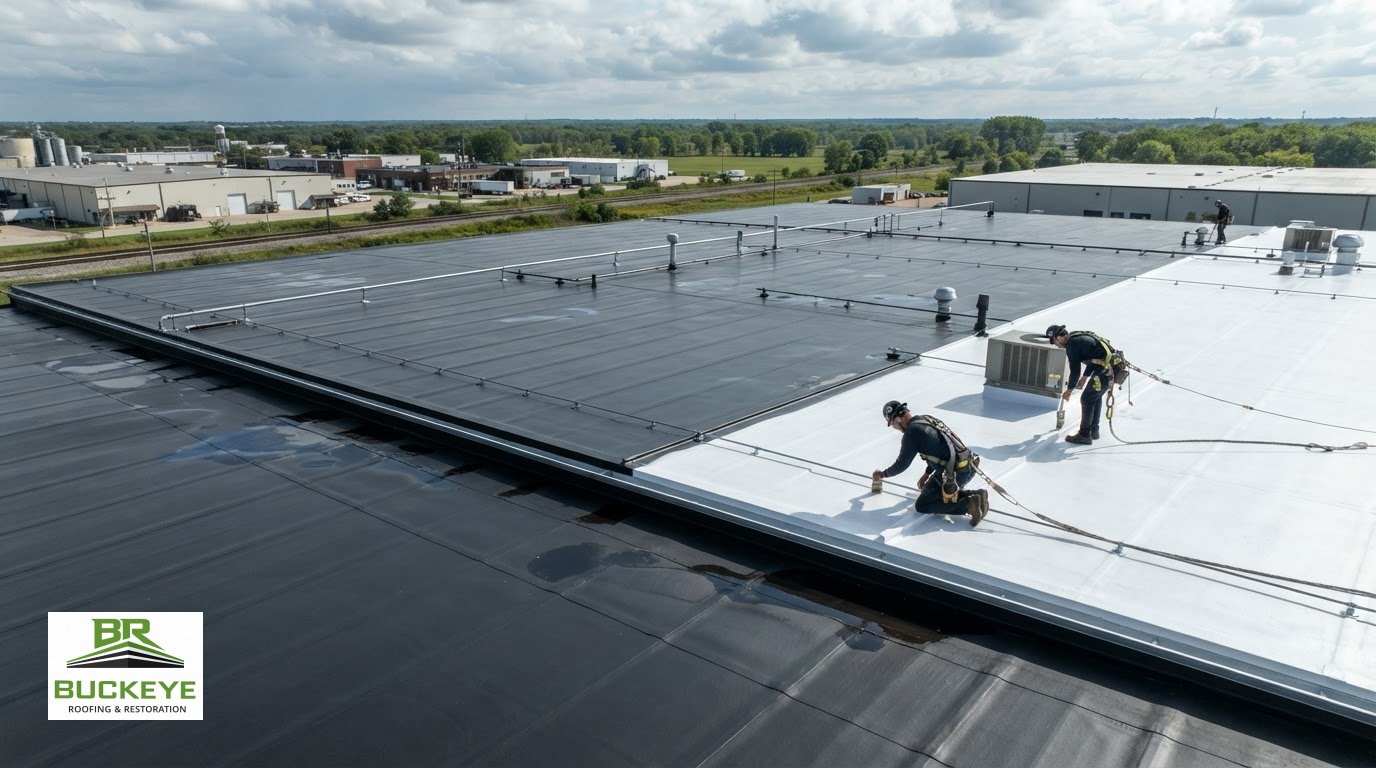
The coating that handles water better may still be the wrong choice for your commercial metal roof. In the Silicone vs Acrylic Roof Coatings decision, drainage and the roof’s existing condition matter as much as the coating’s properties.
If you’re weighing the options, you’re right to look beyond the initial appeal of a coating. Ponding water, weather exposure, the existing roof material, and the condition of the metal can all affect whether a restoration system is suitable. A coating can protect a sound roof, but it can’t correct underlying damage or structural problems.
This guide compares how silicone and acrylic coatings perform, including their differences in water resistance and application considerations. It also explains what an inspection should determine before you choose: whether the roof drains properly, whether the surface is compatible and sound, and whether repairs are needed first. You’ll come away with a clearer sense of when coating or broader restoration may make sense, and when repair or replacement deserves consideration instead. The goal is a practical choice based on the roof in front of you, not a one-size-fits-all recommendation.
Key Takeaways
- Silicone vs Acrylic Roof Coatings should be compared against the roof’s drainage, exposure, and restoration goals, not treated as a one-size-fits-all choice.
- Learn how water exposure, UV conditions, application requirements, and maintenance needs can shape the coating decision.
- Regional snow, freeze-thaw cycles, and seasonal weather are factors to include in a commercial roof assessment.
- Use an inspection-led sequence to identify defects, check compatibility, and compare suitable coating systems before restoration.
- Determine whether the roof is a candidate for coating or whether repair or replacement is the more appropriate next step.
Silicone vs. Acrylic Roof Coatings: What Each Means for a Metal Roof
For a commercial metal roof, a coating is a fluid-applied layer placed over an existing roof surface as part of a planned restoration system. It can help protect a roof that remains suitable for restoration, but it isn’t a repair by itself and won’t correct every leak or defect. A coating also differs from the metal roofing system beneath it: panels, seams, fasteners, and supporting structure continue to do the underlying work of covering the building.
Restoration aims to preserve a viable existing roof by addressing its condition and applying a compatible system. Replacement removes and installs a new roofing system. Which path makes sense depends on inspection findings, not simply on whether silicone or acrylic sounds preferable.
How silicone and acrylic coatings differ
Silicone and acrylic are different coating chemistries. Acrylic coatings are commonly water-based, while silicone coatings use silicone-based chemistry. Both are available in different formulations, so the name alone doesn’t establish how a particular product will perform on a metal roof. A fluid applied roofing membrane describes the broad category; product-specific documentation explains the properties and installation requirements of a particular system.
That distinction matters: the coating is only one part of the restoration system. Surface preparation, repairs, and compatibility with the existing roof all affect whether the system is appropriate.
Why metal-roof condition matters before comparing coatings
On a metal roof, an inspection should look at the condition of the panels, seams, fasteners, areas of corrosion, and any existing coating. These details help identify where water may be entering and whether the roof surface can support a restoration system. A coating layer shouldn’t be treated as a stand-alone fix for active leaks or unresolved defects.
Coating also can’t correct structural problems or stop unresolved roof movement. If panels or connections are shifting, or the roof has underlying damage, those issues need to be assessed before coating is considered. A professional inspection helps establish whether targeted repairs, restoration, or replacement is the sensible next step.
That’s the practical starting point for Silicone vs Acrylic Roof Coatings: first determine whether the metal roof is a sound candidate for restoration, then compare compatible systems against the building’s conditions. Neither coating type is automatically right for every commercial roof.
Silicone vs. Acrylic Roof Coatings: Compare the Trade-Offs
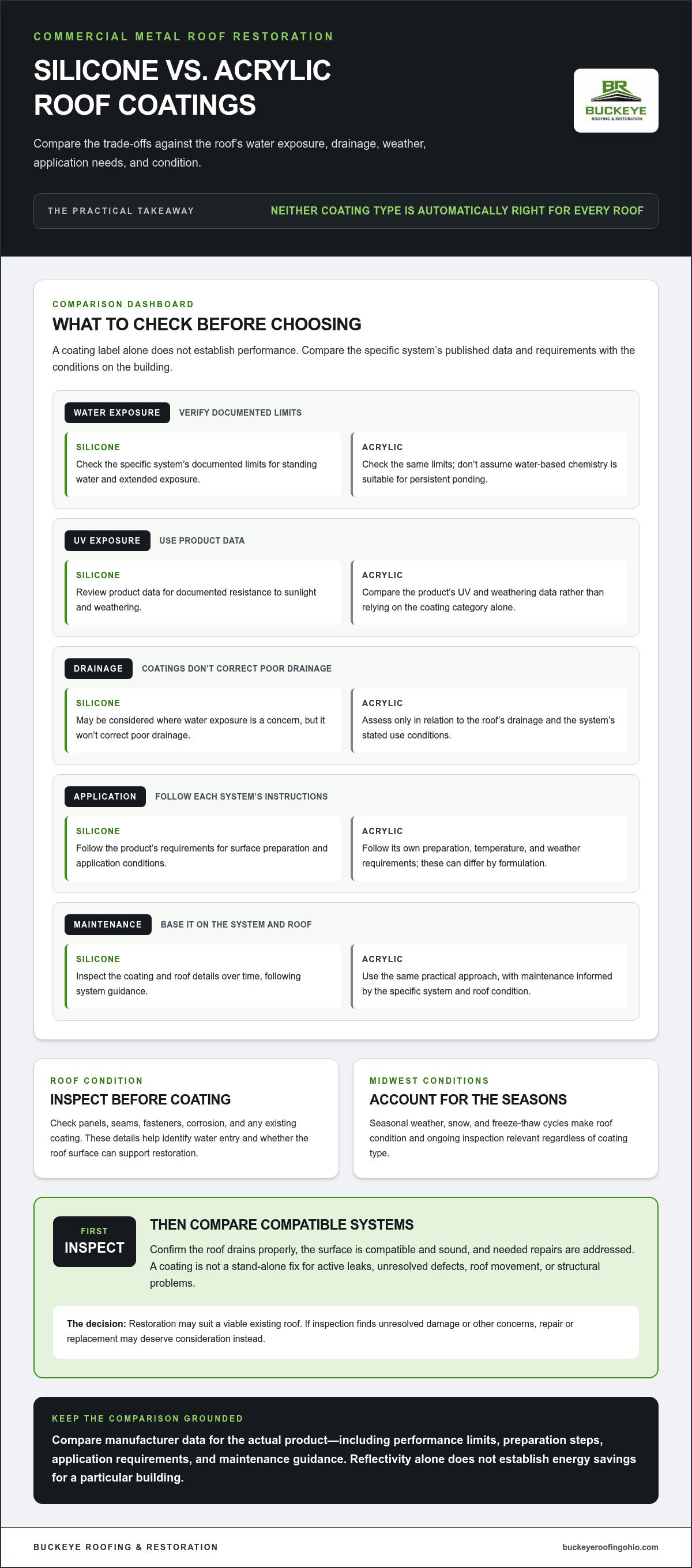
There isn’t a reliable winner based on coating type alone. The right comparison looks at how a specific system handles the roof’s water exposure, weather, application conditions, and maintenance needs. The Roof Coatings Manufacturers Association perspective on specifying roof coatings is a useful starting point, but product-specific documentation should guide decisions about performance and installation limits.
| Consideration | Silicone coating | Acrylic coating |
|---|---|---|
| Water exposure | Check the specific system’s documented limits for standing water and extended exposure. | Check the same limits; don’t assume water-based chemistry is suitable for persistent ponding. |
| UV exposure | Review product data for documented resistance to sunlight and weathering. | Compare the product’s UV and weathering data rather than relying on the coating category alone. |
| Drainage | May be considered where water exposure is a concern, but it won’t correct poor drainage. | Assess only in relation to the roof’s drainage and the system’s stated use conditions. |
| Application | Follow the product’s requirements for surface preparation and application conditions. | Follow its own preparation, temperature, and weather requirements; these can differ by formulation. |
| Maintenance | Inspect the coating and roof details over time, following system guidance. | Use the same practical approach, with maintenance informed by the specific system and roof condition. |
Water exposure, drainage, and ponding
Standing water can keep a coating exposed to moisture longer than a roof that drains promptly. That makes ponding a key inspection finding, not a reason to choose a coating based on its name. Verify that the exact system is intended for the roof’s expected water exposure. If water collects because drains, slopes, or other drainage features aren’t working as intended, a coating won’t fix that underlying defect.
Weathering, reflectivity, and maintenance
Silicone and acrylic formulations can differ in reflectivity and weathering performance. Compare the manufacturer’s published data for the actual product, including any stated limits, preparation steps, and maintenance guidance. A reflective surface alone doesn’t establish energy savings for a particular building.
For commercial roofs in Ohio and the surrounding Midwest, seasonal weather, snow, and freeze-thaw cycles make the roof’s condition and ongoing inspection relevant regardless of coating type. A sourced comparison in broad terms is that silicone and acrylic are distinct chemistries with different product-specific performance characteristics; neither label guarantees suitability for a particular roof.
For a practical assessment of drainage and coating suitability, discuss a commercial roof inspection with Buckeye Roofing & Restoration.
Which Coating Fits a Commercial Metal Roof in the Midwest?
For a commercial metal roof in Ohio, Northeast Indiana, or Southern Michigan, climate is part of the decision, not the answer by itself. Snow, seasonal temperature swings, and freeze-thaw cycles are useful inspection context, but they don’t automatically make silicone or acrylic the better choice. The roof’s condition, drainage, building use, exposure, and restoration goals all matter. So does the coating system’s documented compatibility with the existing surface.
A warehouse roof with sound panels and manageable drainage presents a different restoration question than a roof with recurring leaks, corrosion, or loose connections. The Silicone vs Acrylic Roof Coatings comparison should follow an assessment of those conditions, not replace it.
When drainage and standing water influence the decision
Standing water deserves investigation before coating is considered. It may point to a drainage problem or changes in the roof surface, and coating won’t correct either one. If water is safely visible from the ground, or building staff notice recurring interior leaks or water stains after rain or snowmelt, arrange a professional assessment. Don’t climb onto the roof to check ponding or attempt a repair.
The roofer can assess drainage and determine whether the water exposure affects the suitability of a particular coating system.
When metal panels, seams, or corrosion change the scope
On the roof, the inspection should account for panel condition, seams, fasteners, corrosion, and any existing finish or coating. These details help determine what preparation or repairs may be needed before restoration. Loose fasteners or failed seams, for example, call for specific attention rather than simply covering the surface with coating.
Structural concerns, moisture within the roof assembly, or extensive deterioration may mean coating isn’t a suitable option. The scope could involve targeted commercial roof repairs before restoration, or a different solution if the roof can’t support a coating system.
That’s why two buildings exposed to the same Midwest weather may call for different recommendations. One may be a candidate for coating after repairs and preparation; another may need broader work. An inspection should connect the roof’s actual condition with the building’s use and the owner’s restoration goals before a coating is selected.
How to Evaluate Silicone or Acrylic Before Restoring a Metal Roof
For a commercial metal roof, compare coating systems only after establishing whether restoration is appropriate. A professional evaluation should lead to a clear scope, not just a recommendation based on the word silicone or acrylic. These steps help building owners and facility managers understand the decisions behind that scope.
What an inspection should establish
The inspection should assess the metal panels and existing coating, substrate condition, moisture, drainage, and structural integrity. It should also identify active leaks and defects that need correction before restoration is considered. Findings determine whether the roof is a viable candidate for a coating system or needs a different approach.
- Inspect the roof. Have a commercial roofer assess the roof system and document its overall condition. Building staff should not climb onto the roof to investigate.
- Diagnose defects. Identify leaks, damaged seams, loose fasteners, corrosion, or other problems that may require repair before any coating work.
- Assess drainage. Review how water moves across the roof and whether ponding or drainage issues need to be addressed. A coating doesn’t correct a drainage defect.
- Verify compatibility. Determine whether the proposed system suits the existing metal surface and coating, if present. Preparation and repair requirements are part of this decision.
- Compare complete systems. Review the proposed scope, product-specific documentation, application requirements, and maintenance expectations for each option.
How to compare proposals without reducing the choice to chemistry
Look beyond the coating label. A useful proposal explains the surface preparation, repairs, system compatibility, and maintenance plan, along with the manufacturer documentation supporting product-specific claims. Comparing those details makes it easier to see whether two proposals address the same roof conditions and work, or simply name different coating types.
The right outcome may be targeted repair, restoration with a coating, or replacement. Repair addresses specific defects. Restoration preserves an existing roof that remains suitable. A coating is one component of a restoration system, not a substitute for necessary repairs. Replacement may be the more appropriate option when inspection findings show the roof can’t support restoration. For more detail on restoration scope, see Buckeye’s commercial roof restoration services.
Silicone vs Acrylic Roof Coatings is a useful comparison only after these conditions are understood. Arrange a commercial roof inspection to determine whether repair, coating, restoration, or replacement fits your building.
Buckeye’s Inspection-Led Approach to Commercial Metal Roof Coatings
Choosing between silicone and acrylic is one part of a larger decision: is the existing metal roof a sound candidate for restoration? Buckeye Roofing & Restoration serves commercial properties across Ohio, Northeast Indiana, and Southern Michigan. The team evaluates roof condition before recommending repair, restoration, coating, or replacement, so the proposed work fits the building rather than a preferred coating type.
When a coating may be part of a restoration plan
A coating may be appropriate for some viable roofs after inspection and any required repairs. The decision depends on the condition of the metal substrate, moisture, drainage, structural integrity, and compatibility with the existing roof surface. If those conditions support restoration, a coating can be part of a broader system designed for the roof. It isn’t a stand-alone fix for underlying defects.
Learn more about Buckeye’s commercial roof restoration service. The inspection findings help establish whether restoration is a sensible option and what preparation or repairs it may involve. Silicone vs Acrylic Roof Coatings becomes a useful comparison once the roof’s eligibility and project requirements are understood.
When repair or replacement deserves consideration
Unresolved leaks, substantial deterioration, or structural concerns call for professional evaluation before a coating is considered. Targeted repair may address specific roof defects. Restoration preserves an existing roof that remains viable, while replacement may be appropriate when the roof’s condition rules out restoration. These options serve different purposes, and a coating preference shouldn’t decide between them.
Buckeye’s inspection-led approach is straightforward: assess the roof, identify the work it needs, and recommend a suitable path based on the findings. That gives building owners and facility managers a clearer basis for planning without assuming every roof needs the same solution.
Request a commercial roof inspection to discuss your metal roof and determine whether repair, restoration, coating, or replacement makes sense.
Choose a Coating After You Know the Roof
Silicone vs Acrylic Roof Coatings isn’t a choice that should be made by chemistry alone. The right system depends on the metal roof’s condition, drainage, existing surface, and the product’s documented compatibility. An inspection can also reveal whether repairs are needed before restoration is considered.
Keep the options distinct: repair addresses specific defects, restoration preserves a roof that remains viable, and replacement may be appropriate when the roof’s condition rules out restoration. A coating can be part of a restoration plan, but it isn’t a fix for structural problems or unresolved leaks.
Buckeye Roofing & Restoration provides commercial roof inspections, repair, restoration, coatings, and replacement for properties across Ohio, Northeast Indiana, and Southern Michigan. The recommendation should fit the roof, not the other way around.
Have questions about a commercial metal roof? Request a commercial roof inspection to discuss its condition and sensible next steps. A clear assessment can help you plan with confidence.
Frequently Asked Questions
Is silicone or acrylic coating better for a commercial metal roof?
Neither is automatically better; the right choice depends on the roof and the specific coating system. Consider drainage, water exposure, existing finishes, roof condition, and the manufacturer’s compatibility and application requirements. Silicone vs Acrylic Roof Coatings is a useful comparison after an inspection establishes whether restoration is suitable and what the system needs to address. A coating won’t correct unresolved leaks, structural problems, or defects that require repair first.
Can you apply roof coating over an existing metal roof?
Yes, a coating can be applied over some existing commercial metal roofs, but only if inspection findings support it. The roofer evaluates the panels, seams, fasteners, existing finish, moisture, and structural condition, then determines what repairs and surface preparation are needed. The proposed coating must be compatible with the substrate and any existing coating. Applying a new layer without addressing defects or confirming compatibility can leave underlying problems unresolved.
Does silicone roof coating handle ponding water better than acrylic?
Some silicone systems are designed to tolerate standing water, but suitability depends on the specific product’s documentation and the roof’s conditions. Don’t assume every silicone coating can handle ponding or that acrylic is always unsuitable. An inspection should determine why water remains and whether drainage needs attention. Coating selection doesn’t fix a drainage defect, and persistent ponding should be part of the scope discussion before restoration is planned.
Is acrylic roof coating suitable for a metal roof?
Acrylic coating may be suitable for a commercial metal roof if the specific system is compatible with the existing surface and the roof meets its application requirements. Drainage, water exposure, surface preparation, and the condition of panels and seams all matter. A commercial roofer should review the manufacturer’s product documentation and inspect the roof before recommending it. The coating type alone doesn’t establish whether the roof is ready for restoration.
What happens if a commercial metal roof has rust before coating?
Rust needs to be assessed and addressed as part of the restoration scope; coating over corrosion without suitable preparation won’t resolve the underlying condition. A roofer evaluates how extensive it is, whether the metal remains sound, and whether nearby seams or fasteners are affected. Depending on the findings, repairs or surface remediation may be needed before a coating is considered. Extensive deterioration may make coating unsuitable, so inspection should come first.
How do I know if a metal roof can be restored instead of replaced?
A professional inspection is the way to determine whether restoration is viable. The roofer assesses the panels, seams, fasteners, substrate, moisture, drainage, existing finish, and structural integrity, then identifies active leaks and defects that need correction. A sound roof may be a candidate for repair and restoration; substantial deterioration or structural concerns may point to replacement. Buckeye evaluates commercial roofs across Ohio, Northeast Indiana, and Southern Michigan before recommending a path.
Do Midwest freeze-thaw conditions affect roof coating selection?
Yes, regional weather belongs in the evaluation, but freeze-thaw conditions alone don’t determine which coating is right. In Ohio, Northeast Indiana, and Southern Michigan, snow, seasonal temperature changes, and freeze-thaw cycles are relevant context for assessing roof condition, drainage, and system requirements. Buckeye serves commercial properties in areas including Toledo, Fort Wayne, Findlay, Lima, Defiance, Bryan, Kalamazoo, Adrian, Bowling Green, Perrysburg, and Auburn. Inspection findings and product documentation should guide the choice.

Article by
Harry Stanley III
Harry Stanley III is a construction marketing strategist and fractional CMO at H&A Marketing. He has helped construction companies grow through website strategy, SEO, paid advertising, branding, lead generation, CRM systems, and professional content. His past work includes helping Meraki Solar generate an additional $3.7 million in revenue in his first year and supporting American Builders as a fractional CMO. Today, Harry works directly with custom home builders and construction companies to build marketing systems designed to generate qualified leads and measurable growth.
