
Fluid-Applied Roof Coatings: How They Work on Commercial Roofs
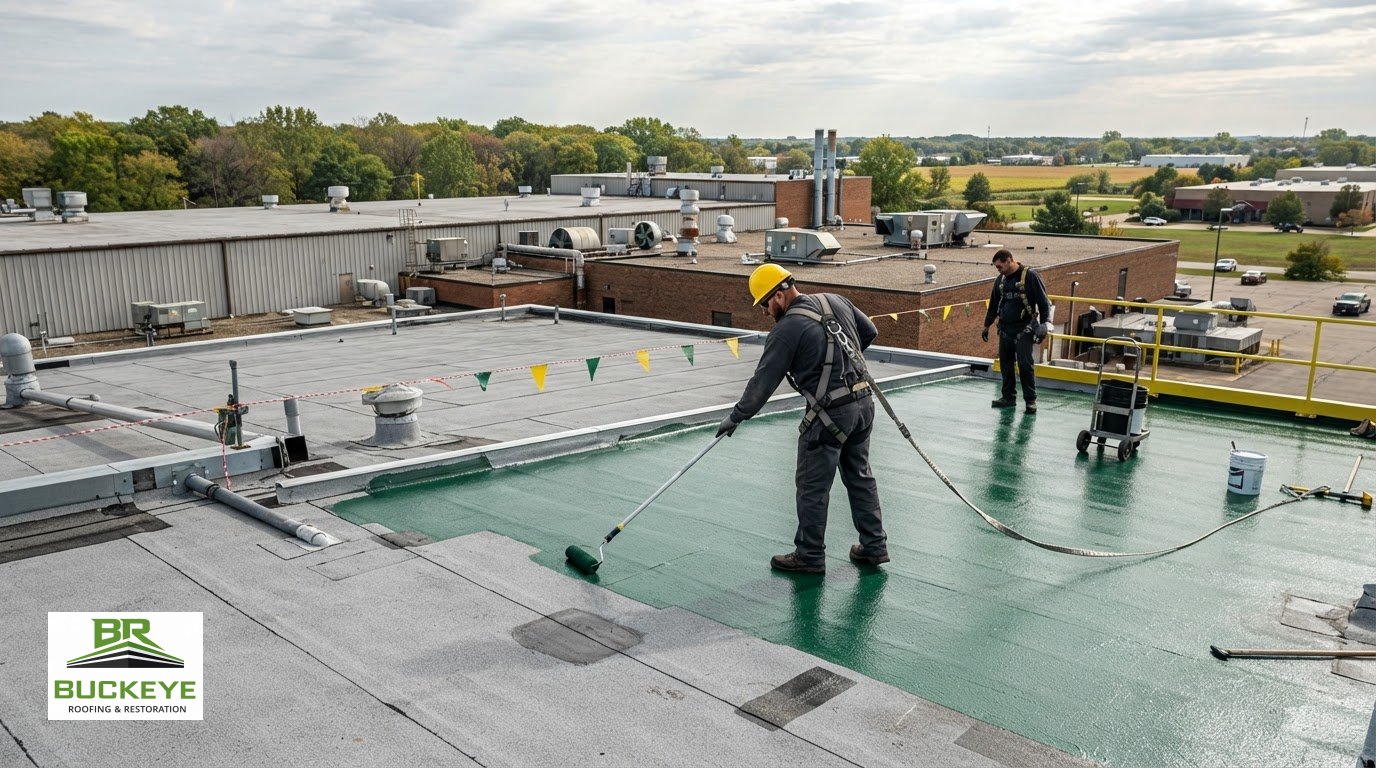
Could fluid applied roof coatings restore your commercial roof, or would they cover up a problem that needs a different fix? It’s a fair concern. A coating can create a continuous protective layer, but it isn’t a shortcut around leaks, trapped moisture, or a roof that’s no longer structurally sound.
For building owners and facility managers, the right answer starts with the condition of the existing roof, not the coating itself. The surface and underlying materials need to be suitable for preparation and application. An inspection helps identify moisture, damage, drainage issues, and other conditions that could affect whether restoration makes sense.
This article explains how fluid-applied coatings work on commercial roofs and what an application involves, from surface preparation to reinforcing vulnerable areas. You’ll also learn what inspection findings can rule out a coating, and how coating fits into the choices between targeted repair, broader restoration, and replacement. The goal is a clearer basis for deciding whether a coating is a practical way to preserve your roof, or whether it needs another solution.
Key Takeaways
- Fluid applied roof coatings form a protective layer over an existing roof; they aren’t a standalone replacement for the roof assembly.
- A coating may suit a roof only after defects are addressed and the roof’s structure, materials, moisture condition, and drainage are assessed.
- Understand what a commercial roofer checks, from roof history and visible symptoms to the condition of the underlying assembly.
- Freeze-thaw cycles, snow, and drainage are relevant considerations for commercial roofs in Jackson, Michigan, but don’t automatically rule out coating.
- Document interior leaks and safely visible roof concerns from inside or ground level to help guide the inspection and next-step decision.
What Are Fluid-Applied Roof Coatings for Commercial Buildings?
A fluid-applied roof coating is a liquid layer installed over an existing roof and allowed to cure into a continuous protective surface. It works with the roof assembly already in place; it isn’t a standalone replacement membrane that takes the place of the entire roofing system.
The term covers different coating materials and application systems, not one product with the same chemistry or use in every situation. The existing roof, its surface, and the coating system all affect what preparation and detailing are needed. A coating also isn’t a fix for every roofing problem. Its role depends on the condition of the roof beneath it.
How a liquid coating becomes a protective roof layer
Before application, the existing surface must be evaluated and prepared for the selected system. Depending on the roof, that work may include cleaning and addressing defects or vulnerable areas. The liquid coating is then applied across the prepared surface and cures into a continuous layer. For a neutral overview of roof coatings and the related term fluid applied roofing membrane, see the general reference.
Continuity matters because the coating covers the surface as a layer rather than acting as a patch at one leak location. But that layer can’t correct wet insulation, structural problems, or serious drainage issues by itself. Those conditions require assessment and appropriate work before a coating is considered.
Which commercial roof types may be considered
Commercial low-slope roofs may be assessed for fluid applied roof coatings, but the roof type alone doesn’t establish eligibility. Existing TPO and EPDM assemblies, for example, need substrate-specific evaluation. Metal roofs call for different surface preparation and attention to seams, fasteners, and other details than membrane roofs do.
It helps to separate coating from the other available scopes of work:
- Repair addresses a localized defect, such as a damaged area or leak source.
- Restoration is broader work intended to preserve an existing roof when its condition supports that approach. A coating may be part of a restoration system.
- Reroofing generally adds a new roof layer over an existing assembly, while replacement removes and replaces the existing roof system.
These options aren’t interchangeable. An inspection helps determine whether the roof needs a targeted repair, a broader restoration, or a new system. The right scope follows from the roof’s actual condition, not simply from the availability of a coating.
How Fluid-Applied Roof Coatings Fit Into Commercial Roof Restoration
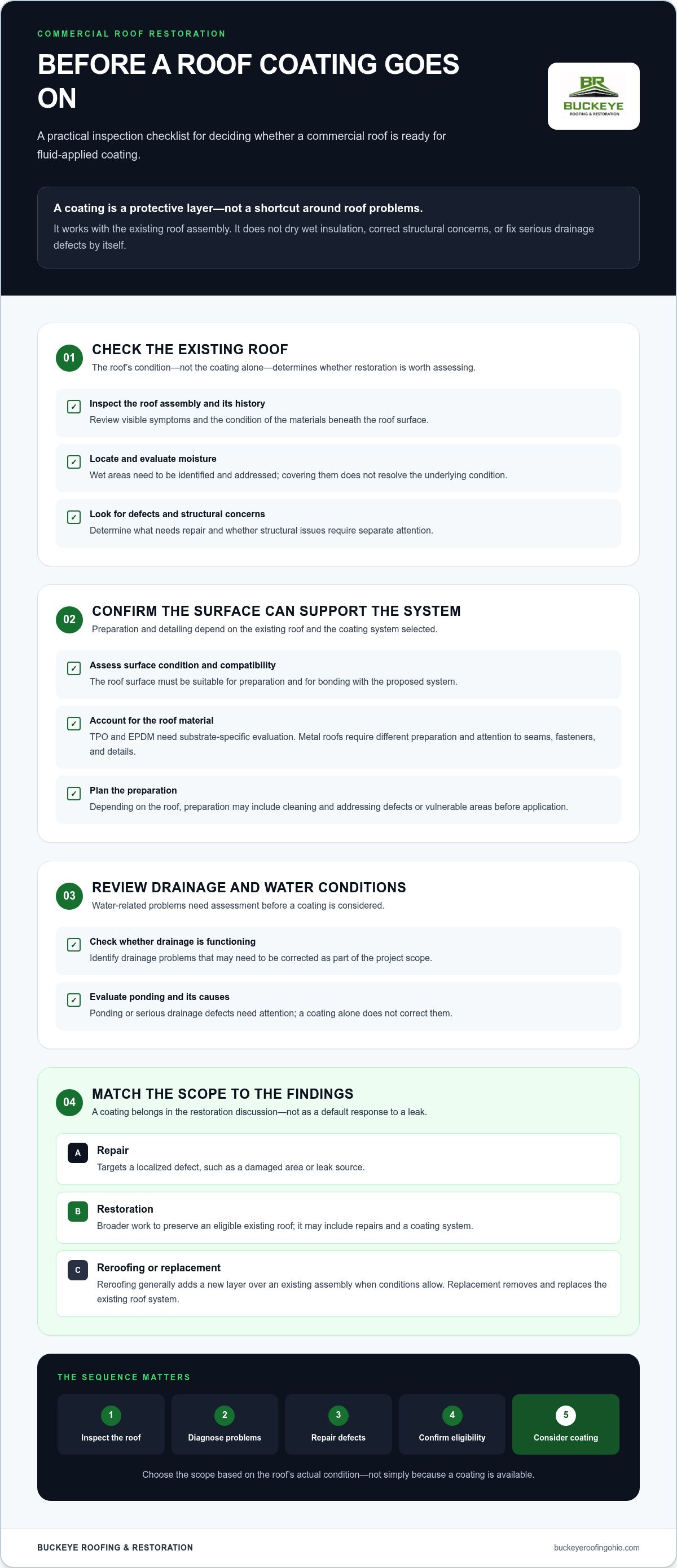
A coating should be considered after the roof has been assessed, not used as the first response to a leak. A sound decision follows a practical sequence: inspect the roof, diagnose the cause of any problems, repair defects, determine whether the existing assembly is eligible, and then consider whether a coating system fits the restoration scope.
This order matters. A coating can become part of a broader restoration, but it won’t dry wet insulation, correct structural concerns, or fix serious drainage defects by itself. Applying a new layer before addressing those conditions can leave the underlying problem in place. The Roof Coatings Manufacturers Association (RCMA) offers industry information on roof coatings, but a specific roof still needs an individual assessment.
Coating, repair, restoration, and replacement are not interchangeable
Each option addresses a different condition. Repair targets specific failures in the existing roof, such as a damaged area or a leak source. Restoration takes a broader approach to preserving an eligible roof, and may include repairs and a coating system. Replacement involves removing and replacing the roof assembly when its condition calls for a new system. In some projects, a new roof may be installed over an existing assembly if the roof and project conditions allow it.
Fluid applied roof coatings belong in the restoration discussion, not as a substitute for diagnosing the roof. Learn about commercial roof restoration and how it can fit into an assessment of the existing system.
What inspection findings can rule out coating
Moisture in the roof assembly needs to be located and evaluated before coating is considered. Covering a wet area doesn’t resolve it. The inspection also looks at whether the roof surface can support and bond with the proposed system, whether drainage is functioning, and whether ponding or structural concerns need separate attention.
A practical assessment should establish whether defects can be repaired and whether the remaining roof assembly is suitable for restoration. Findings may point to localized repair, broader restoration, or replacement instead. For facility managers, the key is to base the scope on the roof’s actual condition rather than treating coating as a default answer. A commercial roof inspection can help clarify which path makes sense.
Is Your Commercial Roof a Candidate for Fluid-Applied Coating?
A coating may be worth assessing when the existing roof is still sound enough to serve as a base for restoration. It can add a protective layer and may help preserve a roof that doesn’t need full replacement. But fluid applied roof coatings aren’t a cure-all, and eligibility can’t be determined from the roof’s age or appearance alone. The Roof Coatings Manufacturers Association provides a useful definition of roof coatings; whether one suits a particular building depends on the roof itself.
Manageable surface wear doesn’t automatically rule out a coating. The key questions are whether the roof structure is sound, whether the existing materials are suitable for the coating system, and whether defects can be addressed before application. A professional inspection must verify those conditions.
| What you observe or know | What it may indicate |
|---|---|
| The roof appears structurally sound, with limited surface wear | May support a coating assessment, subject to inspection and material compatibility. |
| Seams or other localized areas have failed | May require repair and closer evaluation before restoration is considered. |
| There are signs of moisture within the roof assembly | Needs diagnosis; coating over concealed moisture doesn’t resolve the underlying condition. |
| Water repeatedly ponds, drainage is impaired, or the roof is extensively deteriorated | Requires professional assessment to determine whether drainage work, broader repairs, or another roofing scope is needed. |
Conditions that may support a coating assessment
An existing commercial roof with a sound structure and a suitable surface may be a candidate for evaluation. Some wear may be manageable if the affected areas can be properly prepared and repaired. These are encouraging signs, not approval for coating: inspection findings must confirm the substrate, moisture condition, drainage, and overall roof condition.
Conditions that call for more than a coating
Wet insulation or other concealed moisture needs to be located and addressed before restoration. Persistent drainage problems also need attention because a coating alone won’t correct them. Failed seams and active leaks call for diagnosis and repair, while extensive deterioration or structural concerns may point to a different scope. Don’t access an unsafe roof to investigate. Contact a commercial roofing professional for active leaks, suspected structural problems, or unsafe access, and base the decision on a full assessment.
What Commercial Roofers Evaluate Before Applying Coatings in Jackson, Michigan
For a commercial building in Jackson, coating suitability starts with the roof’s history and current condition, not the season or a general rule about roof type. An inspection helps establish what the assembly needs and whether fluid applied roof coatings are a practical option. Freeze-thaw cycles, snow exposure, and drainage are part of that assessment, but none automatically rules out restoration.
Inspection steps before a coating recommendation
A roofer may work through the roof in a sequence like this:
- Review the roof history. Identify the roof type, prior repairs, known leak locations, and recurring trouble spots.
- Check visible symptoms. Look for surface deterioration, open or failed seams, loose materials, and other signs that need closer evaluation.
- Assess drainage and details. Examine how water moves across the low-slope roof, including around penetrations, edges, drains, and areas where water tends to remain.
- Evaluate the assembly. Consider the substrate and roof condition, including possible trapped moisture and structural concerns.
- Determine whether further investigation is needed. Testing or additional review depends on what the inspection finds. The recommendation should reflect those findings, not assume a coating is the right answer.
Planning for Midwest weather and building operations
In Jackson, seasonal snow and freeze-thaw conditions make drainage and existing roof defects important parts of the evaluation. Water that doesn’t drain as intended, or areas already showing deterioration, deserve attention before restoration is planned. These regional conditions guide inspection and planning; they aren’t automatic disqualifiers for a coating.
Application timing also depends on the selected system’s instructions and suitable site conditions. For a warehouse, manufacturing plant, or other operating facility, planning should account for roof access, equipment placement, and how work may interact with daily operations. Those practical details help shape the project plan alongside the roof assessment.
For commercial properties in Jackson, Buckeye Roofing & Restoration evaluates the roof before recommending a coating or other scope of work. Learn more about commercial roof restoration, or request a commercial roof inspection to discuss your building’s condition and next steps.
Choosing the Next Step for a Coating Project in Jackson, Michigan
A coating decision should follow a clear sequence: inspect the roof, diagnose defects, establish whether the existing assembly is eligible, then choose the right scope. That may mean targeted repair, broader restoration with a coating, or replacement. Fluid applied roof coatings are one option, not a decision to make before the roof’s condition is understood.
Information to gather before discussing a commercial roof
Facility managers can help make an inspection more useful by gathering records and noting what they’ve observed from inside the building or from accessible ground-level areas. Exact installation paperwork isn’t required; whatever information is available can help establish context.
- Roof age, installation records, or documents describing the existing roof system, if available.
- Where leaks or ceiling stains appear, when they occur, and whether the affected areas change over time.
- Any known interior impacts, such as water near equipment, inventory, or work areas.
- Prior repair locations and a record of recurring leak concerns.
Don’t send untrained staff onto the roof to check seams, take measurements, or investigate standing water. Roof access can be hazardous, and an interior stain doesn’t always identify the roof defect directly above it. Leave roof-level investigation to a qualified commercial roofing professional.
When an inspection can clarify the right solution
An inspection connects the symptoms you’ve documented to the condition of the roof assembly. It can help determine whether a localized defect needs repair, whether the broader roof is suitable for restoration, or whether its condition points toward replacement. Suspected moisture, active leaks, structural concerns, or unsafe access are reasons to arrange a professional assessment rather than assume a coating will address the problem.
Buckeye Roofing & Restoration serves commercial properties in Jackson, Michigan, and surrounding regional markets. The recommendation should follow the inspection findings and reflect the roof’s condition, drainage, materials, and building needs. If you’re ready to discuss the next step, request a commercial roof inspection.
Choose the Right Path for Your Commercial Roof
Fluid applied roof coatings can be part of a practical restoration plan, but only when the existing roof is a suitable candidate. The roof’s condition, moisture, drainage, and structural integrity all matter. An inspection helps distinguish where targeted repair may be enough, where restoration could fit, and when replacement deserves consideration.
Commercial flat and low-slope roofing is Buckeye Roofing & Restoration’s primary specialty. Our team provides commercial inspections, repairs, coatings, restoration, and replacement, serving properties in Jackson, Michigan, and surrounding markets. The recommendation should match the roof, not a one-size-fits-all approach.
If you’re weighing a coating or another roofing option, start with a clear assessment of the existing system. Request a commercial roof inspection to discuss what your building needs. A sound next step begins with knowing what’s happening on the roof.
Frequently Asked Questions
What are fluid-applied roof coatings?
Fluid applied roof coatings are liquid materials applied over an eligible existing roof and cured into a continuous protective layer. They’re used as part of a restoration approach, not as a universal replacement for the roof assembly. The right coating and application depend on the existing roof material, its condition, moisture levels, drainage, and inspection findings. A coating isn’t a substitute for diagnosing problems beneath the surface.
Can fluid-applied coatings be applied over TPO or EPDM?
An existing TPO or EPDM roof may be assessed for a coating, but compatibility isn’t automatic. A roofer needs to evaluate the membrane’s condition, seams, surface, and the presence of moisture, then determine whether the proposed system’s requirements can be met. A commercial roof inspection helps establish whether preparation and coating are appropriate or whether repairs or another roofing solution should be considered first.
How long do fluid-applied roof coatings last?
There isn’t one service-life figure that applies to every coating project. Performance depends on the existing roof, substrate, drainage, application, weather exposure, maintenance, and selected system. A general lifespan claim shouldn’t be treated as a project guarantee. For a useful expectation, review the inspection findings alongside documentation for the specific system being considered, and make sure the roof’s condition supports the proposed restoration plan.
Do fluid-applied roof coatings stop existing leaks?
Not necessarily. A coating shouldn’t be used as a shortcut for finding the source of an active leak. Water may enter through a failed seam, penetration, drainage problem, or another defect, and concealed moisture may also need investigation. A commercial roofer should diagnose relevant conditions and determine what repairs are needed before recommending restoration. A coating can’t guarantee that every leak will stop or prevent future leaks.
Are fluid-applied roof coatings suitable for commercial roofs in Jackson, Michigan?
They may suit some commercial roofs in Jackson, but location alone doesn’t determine eligibility. A roofer must assess the roof assembly, moisture, drainage, structural integrity, and damage. Freeze-thaw and snow exposure inform inspection and planning, but don’t automatically rule out coating. Buckeye Roofing & Restoration serves commercial properties across Ohio, Northeast Indiana, and Southern Michigan, including Toledo, Fort Wayne, Findlay, Lima, Battle Creek, Elkhart, Defiance, Bryan, Kalamazoo, Adrian, Bowling Green, Perrysburg, and Auburn.
What is the difference between roof coating and roof replacement?
A coating is applied over an existing roof that qualifies for restoration, while replacement addresses the roof assembly on a larger scale. Depending on the findings, replacement may involve removing the existing system or installing a new roof over it. Neither option fits every building. An inspection helps compare coating, targeted repair, broader restoration, and replacement based on the existing roof’s condition and project needs.
Can a roof coating be applied over a wet commercial roof?
Moisture within the roof assembly needs evaluation before a coating is considered. Applying a coating doesn’t resolve wet insulation or concealed damage, and overlooking moisture can undermine the restoration plan. A professional assessment should determine where moisture is present and how it affects the roof. The findings guide the next step, which may involve repairs, removal of affected materials, replacement, or another appropriate scope of work.

Article by
Harry Stanley III
Harry Stanley III is a construction marketing strategist and fractional CMO at H&A Marketing. He has helped construction companies grow through website strategy, SEO, paid advertising, branding, lead generation, CRM systems, and professional content. His past work includes helping Meraki Solar generate an additional $3.7 million in revenue in his first year and supporting American Builders as a fractional CMO. Today, Harry works directly with custom home builders and construction companies to build marketing systems designed to generate qualified leads and measurable growth.
