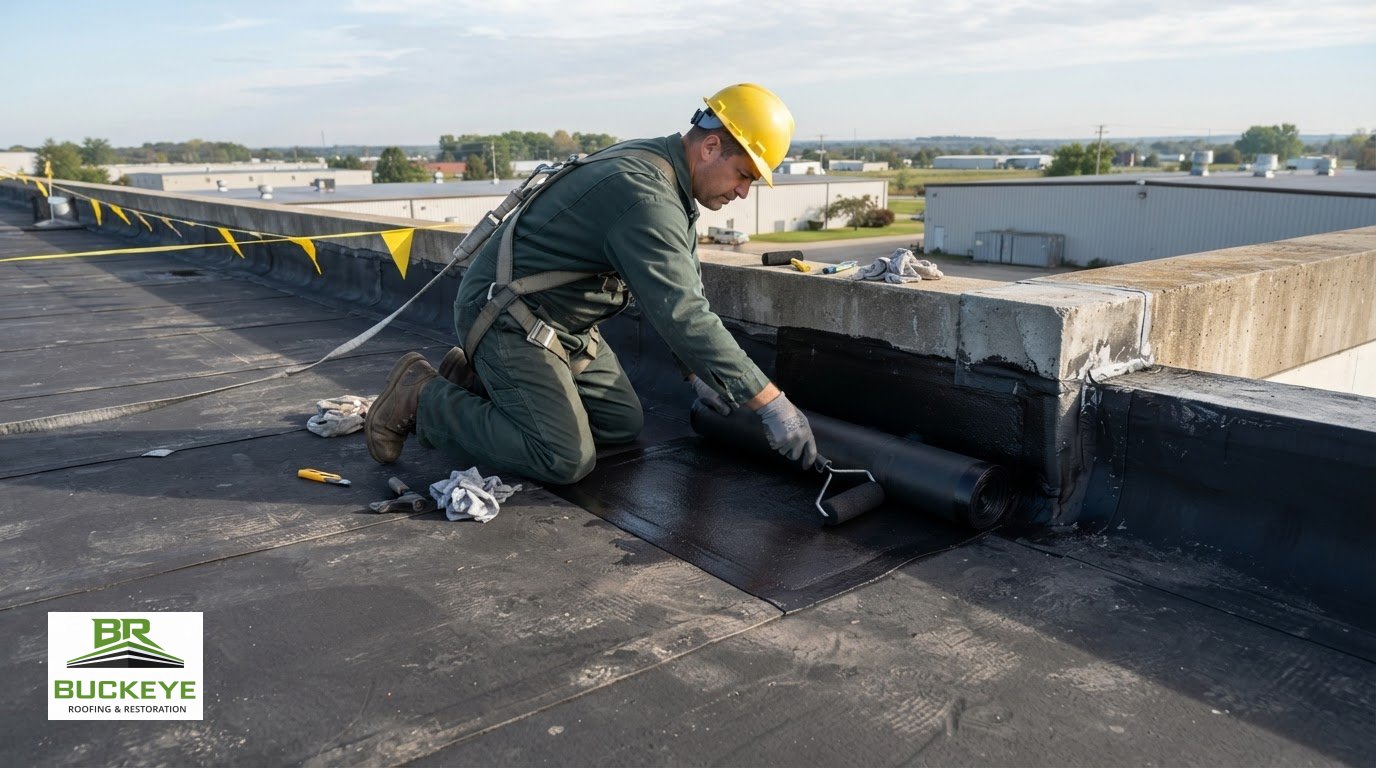
The smallest repair isn’t always the least costly choice over time. EPDM roof maintenance in Findlay, Ohio, starts with an inspection to identify membrane damage, weak seams, flashing issues, drainage problems, and weather exposure before they lead to larger repairs.
It’s reasonable to want a clear idea of what maintenance may involve and what can affect the cost. The scope depends on the roof’s condition, the location and extent of damage, the details around penetrations and edges, drainage, and the roof’s age. A focused repair may address a specific defect, while broader deterioration can call for a different plan.
This article explains what a professional inspection looks for, how flashing and Findlay’s changing weather affect repair decisions, and why roof age matters. You’ll also learn which findings can shape the work required and how an inspection helps determine whether targeted repairs or broader maintenance make sense.
Key Takeaways
- Use professional inspections to identify membrane, seam, flashing, and drainage concerns before choosing maintenance work.
- Match repairs to the problem: localized defects may need targeted attention, while broader deterioration calls for a wider assessment.
- Pay close attention to roof penetrations and edges, where flashing details can affect leak risk.
- Findlay’s changing weather can expose EPDM roofs to heat, UV, wind, and freeze-thaw stress, so inspection findings matter more than a one-size-fits-all schedule.
- Roof age is only one part of the decision; membrane condition, drainage, and the extent of damage help determine whether repair or more extensive work makes sense.
Commercial EPDM Roof Inspections and Maintenance
A professional inspection connects roof conditions with drainage and signs inside the building. In Findlay, a useful assessment explains what was observed and what work is proposed.
Roof and Exterior Inspections
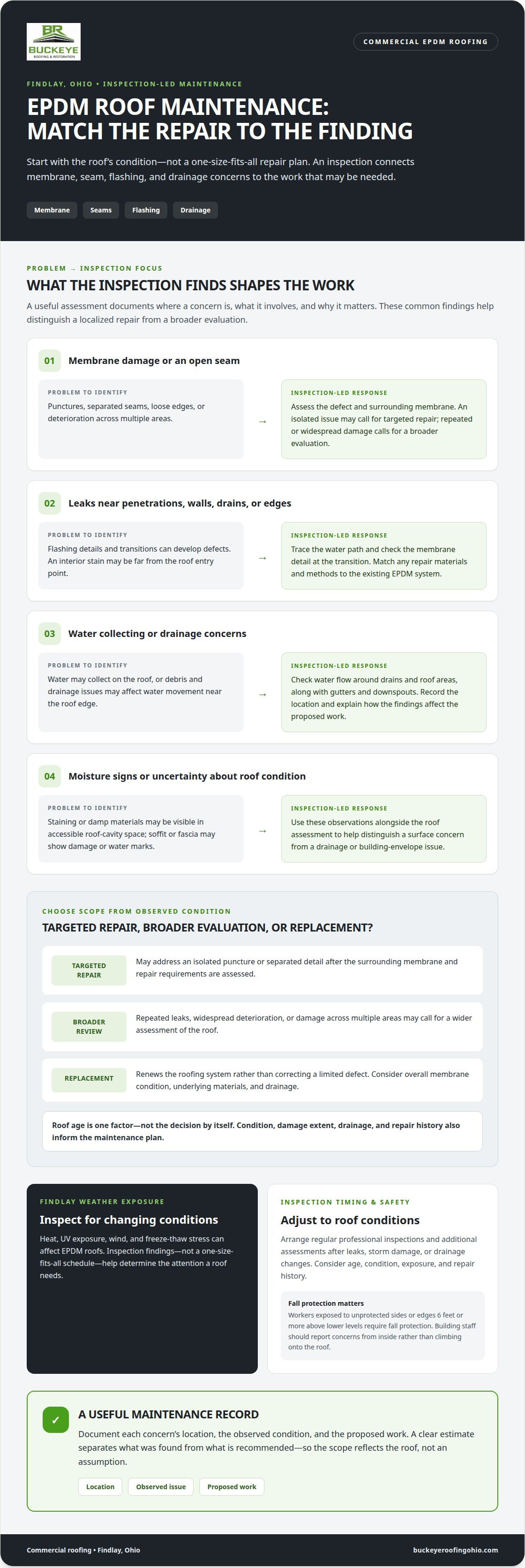
During an EPDM inspection, the roofer checks the membrane for punctures, open seams, loose edges, and areas where water collects. They examine flashing around penetrations, walls, and drains, where defects can develop. Gutters and downspouts are also checked for debris or drainage issues that could affect water movement along the roof edge.
Where accessible attic or roof-cavity space is available, the inspection can look for moisture beneath the roof, including staining or damp materials. Soffit and fascia areas are checked for visible damage or water marks. These observations help distinguish a roof-surface concern from a drainage or building-envelope issue.
Inspection and Maintenance Process
How does a roofing contractor perform EPDM roof maintenance, and what should a building owner expect? The contractor assesses the roof surface, seams, flashing, penetrations, edges, and drainage, then documents the findings. Maintenance may address debris, minor openings, or loose details. An estimate should distinguish observed issues from proposed work.
A useful inspection record identifies each concern’s location and explains why it matters. For example, a leak near a roof drain calls for checking the membrane detail and water flow around the drain. An honest assessment distinguishes a localized repair from broader deterioration instead of treating every concern as a reason to replace the roof.
Inspection Timing and Safety
How often should an EPDM roof be inspected in Findlay, Ohio? Arrange regular professional inspections, along with additional assessments after leaks, storm damage, or changes in drainage. The interval should reflect the roof’s age, condition, exposure, and repair history. Recurring problems may warrant closer attention than a roof in stable condition.
What safety precautions do roofing contractors take when inspecting or maintaining a flat roof? They assess access and surface hazards and use fall protection appropriate to the work. Construction workers exposed to falls from unprotected sides or edges 6 feet or more above lower levels require fall protection. Building staff should report concerns from inside instead of climbing onto the roof.
For EPDM roof maintenance in Findlay, Ohio, documented observations connect roof conditions with safe work planning and the next maintenance decision.
EPDM Roof Repairs and Maintenance
EPDM repairs should address the specific defect while accounting for the surrounding roof. The right scope depends on the damage pattern, membrane condition, and installation details.
Roof Repairs and Replacements
A professional repair starts by locating the water entry point and assessing the surrounding membrane. A ceiling stain may be far from the roof defect, so the roofer traces the leak instead of assuming the nearest roof area is responsible. The assessment identifies whether the problem involves a seam, penetration, edge, or membrane surface.
For a seam repair, the EPDM surface must be properly prepared before compatible repair materials are applied. Splice wash cleans membrane surfaces before tape is applied, helping prevent contaminants from weakening the adhesive bond. Patches must also suit the membrane system and repair detail.
Minor repairs can address isolated punctures or separated details. Repeated leaks, widespread membrane deterioration, or damage across multiple areas may call for a broader evaluation. A written estimate should describe observed conditions and proposed work, including any related repairs. Building owners can use a commercial roof repair assessment to understand the scope before deciding how to proceed.
Replacement renews the roofing system rather than correcting a limited defect. A roofer considers the membrane’s overall condition, underlying materials, drainage, and whether localized work can address the affected areas.
EPDM, TPO, and PVC Maintenance
EPDM, TPO, and PVC all require attention to seams, penetrations, edges, and drainage, but each uses different materials and repair methods. Maintenance must match the membrane already installed. A product or technique suited to one system may not suit another.
That distinction matters when planning maintenance. The roofer identifies the existing membrane and selects compatible materials and methods. For example, preparing an EPDM seam differs from working on a TPO or PVC seam. Identifying the membrane first helps ensure the repair suits the roof.
Ohio permit requirements for a particular EPDM repair depend on the project and property location. Before work begins, provide the repair scope and site address to the building department serving the property to clarify applicable requirements. Don’t assume the same rules apply to every project.
Keep a record of the membrane type, repair location, and materials used. For a facility manager overseeing several roof areas, these notes distinguish previous work from new damage and inform future maintenance planning.
EPDM Flashing Problems and Water Leaks
An EPDM leak can start where the membrane meets a roof penetration, wall, drain, or edge. A thorough assessment follows the water path and checks these transitions instead of treating an interior stain as proof of a defect directly above it.
Where EPDM Flashing Can Fail
Roof penetrations need fittings designed for the EPDM system. A pipe, vent, or equipment support should have a pre-molded fitting bonded to the field membrane. If the fitting lifts, splits, or separates from the membrane, water can enter around the opening. The roofer checks the fitting and adjacent membrane for movement, open edges, or signs of water intrusion.
Wall terminations and roof edges also need close attention. Water can enter where flashing has loosened, sealant has separated, or the membrane no longer meets the adjacent surface securely. At a parapet wall, for example, the inspection follows the membrane up the wall and checks its termination. At an edge, the roofer examines how the membrane meets the metal detail and building face.
Tracing a Leak to Its Source
A ceiling stain can appear far from where water entered the roof. A roofer compares the stain’s location with roof details above, then checks nearby penetrations, seams, drains, and wall transitions. If water appears near a drain, the assessment includes the drain opening and surrounding membrane, not just the visible interior mark. This helps pinpoint the actual entry point.
Inside the building, staining, damp insulation, or dripping near a pipe can help show where water travels. These signs guide the roof assessment, but they don’t identify the defect on their own. Water may move along a roof assembly before appearing beneath a different section. The inspection connects interior evidence with specific roof details before repair work is selected.
Matching Repairs to the Flashing Detail
Repair materials and methods must suit both the EPDM membrane and the detail being repaired. A loose penetration fitting requires different work from an open wall termination, even if both cause leaks. The roofer identifies the failed connection, assesses nearby membrane condition, and restores the flashing detail so it joins the surrounding roof. Covering an opening without addressing the connection can leave the leak path unresolved.
In Findlay, snow, rain, and changing temperatures can make active leaks easier to notice indoors, but trained professionals should handle roof access. Building staff can record the room, visible stain, and conditions when water appears. This gives the roofer a practical starting point for tracing the leak without asking staff to climb onto the roof.
For EPDM, penetrations should use pre-molded EPDM fittings bonded to the field membrane; metal roofs should use purpose-built flashing boots.
Summer Heat, UV Exposure, and Storm Damage to EPDM Roofs
Findlay’s summer exposure puts EPDM roofs through hot, sunny conditions and periods of heavy rain. Over time, heat and ultraviolet exposure can change membrane surfaces and stress roof details. A maintenance assessment compares affected areas with the rest of the roof, looking for surface changes, weakened attachments, and signs that conditions have shifted since earlier observations.
Wind-driven weather can also test the roof perimeter and rooftop details. A professional assesses whether membrane edges, equipment connections, or other exposed areas have moved or loosened. The assessment focuses on the actual installation and observed condition; no attachment approach is best for every building or wind exposure.
How can ice, snow, ponding water, and debris affect an EPDM roof in northwest Ohio? Snow and ice can obstruct drains and add weight, while freeze-thaw cycles may stress vulnerable areas. Ponding keeps sections wet, and debris can block drainage or conceal damage. A professional checks drainage paths and affected surfaces after these conditions.
After a storm, facility staff can record water intrusion, ceiling stains, or debris visible from the ground. Don’t climb onto the roof to investigate. In a warehouse, note which rooms or production areas show moisture and when it appeared. These details help a roofer focus on likely affected roof sections without assuming an interior symptom identifies its source.
Seasonal maintenance should reflect the roof’s recent exposure. A review after summer can document changes following heat and sun; an assessment after a wind event can focus on exposed edges and rooftop equipment. Before Findlay’s winter weather, check drainage paths so leaves and other debris don’t restrict water flow as snow and ice arrive.
Storm findings help determine whether the roof needs a localized repair or a broader condition review. A single impact mark differs from damage across several sections, and visible surface changes alone don’t establish that replacement is necessary. Before defining the work, the roofer considers the membrane’s condition, attachment, and drainage, along with the location and extent of storm effects.
For EPDM roofs in Findlay, the choice between mechanically fastened and fully adhered systems depends on the building, roof design, and project conditions. A professional assessment can evaluate the existing installation and observed condition to guide decisions about needed work.
Common Signs of EPDM Roof Aging
An aging EPDM roof often shows changes in several areas, not just one isolated mark. A contractor compares the membrane, seams, edges, and interior conditions to identify patterns. For EPDM roof maintenance in Findlay, Ohio, recurring defects matter more than age alone. For example, several patches near a roof drain may point to a broader drainage or membrane concern that warrants closer assessment.
Building staff can watch for visible warning signs from inside the facility or at ground level:
- Seams that lift or separate: An opening can expose a path for water entry.
- Membrane pulling at edges: Tension near a parapet or roof edge can affect nearby details.
- Cracks, splits, or punctures: Damage may expose underlying roofing materials.
- Repeated ceiling stains: A returning mark can indicate an unresolved leak path.
- New patches or repairs: Multiple repairs in one area may warrant a wider review.
Changes around equipment and rooftop openings also deserve attention. A pipe support or service unit can create movement around the membrane as the building and roof experience changing conditions. If staff notice moisture near equipment below, they should record the location and report it during the next assessment. This helps the contractor compare the affected area with roof conditions without assuming the opening above is the source.
Age-related changes can appear as a pattern of small defects. A single repaired puncture may remain isolated, while repeated seam separation across different roof sections suggests a broader condition to evaluate. EPDM roof maintenance in Findlay, Ohio, should account for repair history, current membrane condition, drainage, and locations of recurring signs. Inspection findings, rather than the calendar alone, help shape the next maintenance decision.
For a warehouse or manufacturing building, maintenance records make patterns easier to recognize. Note where leaks appeared, when repairs occurred, and whether water returned. A contractor can compare these records with current observations and assess whether localized repairs remain suitable. If damage spans multiple areas or moisture affects underlying materials, the roof may need a broader evaluation before repair or replacement is chosen.
Visible aging doesn’t automatically mean the entire roof needs replacement. The contractor considers whether the membrane remains serviceable, whether defects can be addressed individually, and whether drainage or attachment issues contribute to deterioration. This condition-based review gives property managers a clearer basis for planning roof work and prioritizing areas that need attention.
Buckeye Roofing & Restoration: Commercial Roof Inspections and Maintenance
Buckeye Roofing & Restoration provides commercial roof inspections and maintenance for building owners managing EPDM systems in Findlay. A commercial roof inspection helps identify current concerns, document the roof’s condition, and clarify whether maintenance or a specific repair deserves attention.
For a commercial EPDM roof, the assessment considers the membrane and the details that connect the system to the building, including seams, roof penetrations, edges, flashing, and drainage. If a warehouse reports a leak near equipment or a facility manager sees a recurring ceiling stain, those observations help focus the inspection without assuming the visible symptom marks the entry point.
The findings guide the next step. A localized defect may call for commercial flat-roof repair; broader deterioration needs a wider review before the scope is chosen. Repair addresses a specific problem, while replacement renews the roof system. The inspection is a practical starting point for deciding what fits the roof’s actual condition.
Maintenance also gives property managers a clearer record of roof changes over time. Notes about recurring leaks, previous repairs, standing water, or visible membrane damage connect current conditions with earlier findings. For facilities with multiple roof areas, documenting each location organizes maintenance decisions and makes patterns that deserve closer evaluation easier to identify.
EPDM and TPO are distinct roofing systems, so repairs must account for the membrane installed on the building. Buckeye works with TPO and EPDM roofing systems and commercial flat roofing. For an EPDM roof, the assessment considers membrane condition, seams, flashing details, attachment, and drainage before defining repairs. A coating or restoration approach is not a default substitute for an inspection; suitability depends on roof conditions and findings.
Consider arranging an inspection when a commercial roof has an active leak, repeated water entry, visible damage, or drainage concerns. A professional assessment can clarify whether a targeted repair is appropriate or whether the roof needs a broader evaluation. For property owners in Findlay, the goal is a clear picture of the roof and a work scope tied to inspection findings, not an automatic recommendation for replacement.
To discuss an EPDM concern or arrange a commercial roof inspection, contact Buckeye Roofing & Restoration.
Frequently Asked Questions
What routine maintenance does an EPDM roof need?
Routine maintenance should keep drainage paths clear and track changes across the roof. A professional can record debris buildup, new patches, shifting edge details, and recurring trouble spots in a maintenance log. For a commercial property, these records help facility staff connect a later ceiling stain with earlier observations. Keep inspection notes with roof plans or maintenance records so the next assessment can compare the same areas.
How do Ohio weather and seasonal temperature changes affect EPDM roofs?
Ohio’s seasonal shifts expose EPDM roofs to summer heat, ultraviolet exposure, rain, snow, and freeze-thaw conditions. These changes can stress seams, edges, and roof details, especially where water collects or drainage is restricted. For a Findlay facility, a professional can compare roof conditions before and after seasonal weather, noting new separation or interior moisture that appeared during a storm or temperature change.
What are the signs of EPDM roof leaks or damage?
Common warning signs include recurring ceiling stains, damp materials, visible membrane openings, lifting seams, and water that repeatedly collects in one area. In a warehouse, a stain below a roof penetration or near stored equipment deserves attention, even if it seems small. Record the room and timing of any water entry. Those details help a roofer investigate without treating the stain itself as the confirmed leak source.
How do roofing contractors clean and repair an EPDM roof safely?
Roofing contractors assess access, roof conditions, and the repair area before beginning work. They use materials suited to EPDM rather than treating it like a shingle or thermoplastic roof. Cleaning and repair methods depend on the membrane and defect, so building staff shouldn’t climb up or apply household cleaners, patches, or sealants. A professional can document the affected area and complete the work using appropriate roof-access and fall-protection measures.
What do local roofing contractors charge for EPDM roof inspections and repairs?
Commercial EPDM inspection and repair charges depend on the work involved, including the roof’s condition, access, damage location, and scope. Buckeye Roofing & Restoration offers free commercial roof inspections across Ohio. An inspection identifies observed issues and helps shape a repair estimate around the building’s needs. The inspection is not a repair quote; the repair amount depends on the proposed work.

Article by
Harry Stanley III
Harry Stanley III is a construction marketing strategist and fractional CMO at H&A Marketing. He has helped construction companies grow through website strategy, SEO, paid advertising, branding, lead generation, CRM systems, and professional content. His past work includes helping Meraki Solar generate an additional $3.7 million in revenue in his first year and supporting American Builders as a fractional CMO. Today, Harry works directly with custom home builders and construction companies to build marketing systems designed to generate qualified leads and measurable growth.