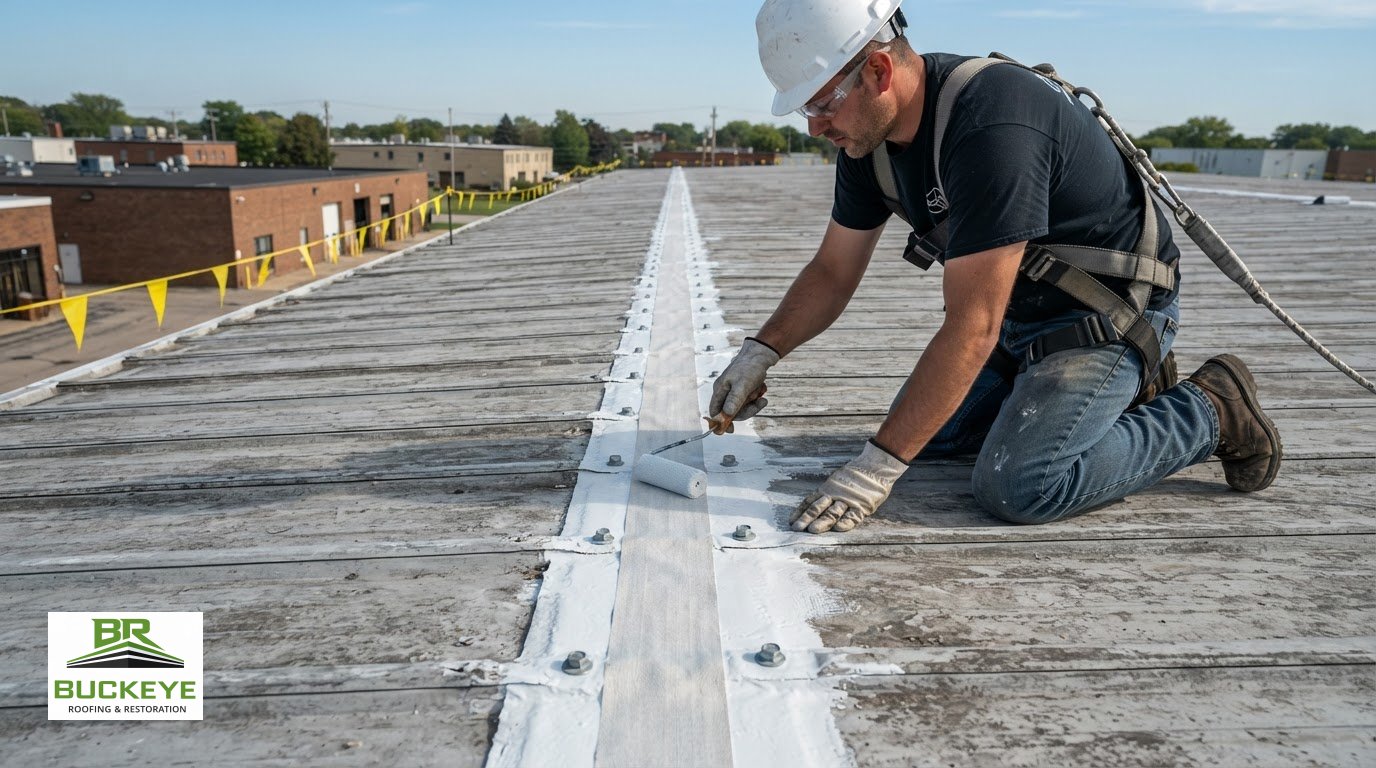
A leak in a commercial metal roof doesn’t automatically mean the roof needs replacing. Failed fasteners, open seams, worn sealant, damaged flashing, corrosion, or movement around roof penetrations can all let water in. For Jackson businesses, commercial metal roof restoration in Jackson, Michigan, may be a practical option when the roof’s underlying condition supports restoration.
It’s reasonable to want a clear answer before committing to major roof work. This article explains common leak causes and how targeted repairs, restoration coatings, painting, replacement, and maintenance differ. You’ll also learn what a roofing professional evaluates, including metal panels, fasteners, seams, drainage, and signs of moisture or structural trouble. That assessment helps determine whether a focused repair can address the problem or a broader solution is more appropriate.
Key Takeaways
- Leaks can start at fasteners, seams, flashing, or roof penetrations, so identifying the source helps guide the right repair.
- Repair, restoration, coating, painting, and replacement address different roof conditions; the article explains how to tell them apart.
- A coating is not simply paint. The roof’s condition, drainage, and surface determine whether a coating approach is suitable.
- Jackson’s seasonal weather makes sound drainage and regular roof assessments important considerations for commercial properties.
- A professional inspection can help clarify whether targeted metal-roof repairs or broader restoration is the more practical next step.
Commercial roof installation, replacement, maintenance, and repair
Commercial roof work can range from a targeted metal-roof repair to a full system installation or replacement. In Jackson, the roof’s condition, drainage, and building use help determine what scope addresses the problem without adding unnecessary work.
Commercial Roof Repair and Maintenance
Commercial metal roof repair addresses specific defects, such as loose fasteners, separated seams, damaged flashing, or failed sealant. Maintenance records the roof’s condition and identifies details that may need attention. In Jackson, changing weather can expose weak points around roof joints and penetrations. A professional inspection can trace visible leaks to likely entry points and define the necessary repairs.
For example, a ceiling stain near a roof penetration may result from failed flashing rather than a panel defect. Finding the source helps avoid treating only the interior symptom.
Restoration or Replacement Decisions
Restoration may suit a metal roof when its panels and underlying assembly remain serviceable. The work can include repairs and surface preparation before applying a compatible coating system. Replacement may be appropriate when deterioration, widespread damage, or moisture in the assembly makes restoration unsuitable. A professional assessment considers panel condition, corrosion, drainage, and the extent of needed repairs before recommending an approach.
For a new installation or replacement, the contractor also considers the existing roof assembly, building use, and drainage design. A warehouse and a manufacturing facility may have different operating needs. The roofing scope should account for these conditions and clearly define the work.
Signs of Needed Roof Work
Recurring interior stains, visible corrosion, loose panels, open seams, and sealant pulling away can signal that a commercial metal roof needs attention. Leaks near roof edges, penetrations, or flashing can help identify areas for professional inspection. These signs alone don’t determine whether restoration or replacement is appropriate; they point to conditions that need assessment.
A facility manager can record where interior leaks appear and whether they recur after certain weather. Avoid unsafe roof access, and have a qualified professional inspect suspected damage.
Warranties and Expected Lifespan
There is no single warranty or expected lifespan that applies to every restored metal roof. Coverage and performance depend on roof condition, preparation, repair scope, selected system, and maintenance. Review written warranty terms for covered work, exclusions, and any maintenance responsibilities. Ask the contractor to explain how inspection findings relate to the proposed restoration and its documented coverage.
Financing, rebates, or tax incentives should not be assumed as part of a roofing proposal. Review applicable program or financing terms separately before including them in project planning. They don’t replace a roof assessment or determine whether repair, restoration, or replacement suits its condition.
Metal roof painting versus roof coatings
Paint and roof coatings can change a metal roof’s appearance, but they serve different purposes. Paint generally provides a finish, while a roofing coating is selected as part of a roof restoration system. Neither option replaces repairs to failed seams, loose fasteners, or damaged flashing. An inspection helps determine whether the metal surface and existing roof assembly can support either approach.
Consider a commercial roof with faded panels but no signs of active water entry. Appearance may be the main concern, so a compatible paint system could be considered after assessing the surface. A roof with leaks at fasteners or seams needs those defects addressed first. Applying a finish over unresolved openings can hide the problem without fixing its source.
Roof coatings are designed for roofing surfaces, but products and systems differ. The right choice depends on the existing metal, its condition, surface preparation, and the project’s purpose. A professional evaluates corrosion, existing coatings, seams, fasteners, flashing, and penetrations. The inspection also considers drainage and whether moisture has affected the roof assembly. These findings guide preparation and material selection.
- Paint: Primarily changes or renews the surface finish. It should not be treated as a substitute for roof repair or a restoration system.
- Roof coating: Forms part of a roofing application intended for the existing roof surface. Its suitability depends on the substrate, preparation, and roof condition.
Preparation matters for both options. A contractor assesses whether the surface needs cleaning, removal of loose material, or repairs before application. For example, coating over peeling material or corrosion may compromise adhesion. Seams and fasteners also need attention because a coating cannot correct movement or deterioration beneath the surface.
Jackson’s changing weather makes drainage part of the decision. If water collects around a roof detail, the contractor should assess the cause rather than treating only the visible surface. A metal roof with extensive corrosion, widespread panel damage, or moisture in the assembly may need replacement instead of paint or coating. The same inspection helps distinguish a finish project from roof restoration.
For commercial properties, the choice should follow the roof’s function, not a color preference alone. The contractor should explain what preparation, repairs, and application the proposed scope includes. A facility manager can use those details to compare the work with the roof’s observed condition. Commercial roof restoration may be worth evaluating when the existing metal roof remains suitable for restoration.
The contractor should explain what preparation, repairs, and application the proposed scope includes, and clarify whether the work concerns the roof surface or another building surface. A customer described a heated 2500-square-foot shop building in Charlotte, Michigan, where Commercial Painting Services polished and sealed the concrete floor.
A concrete floor is not a metal roof, so floor polishing or sealing does not establish whether a product is suitable for roofing. Keeping the surface and purpose clear helps distinguish a roof finish from a roofing coating and ties the proposed work to the condition being assessed.
Roofers serving Jackson, Michigan
Commercial property owners in Jackson should look for a roofing contractor whose assessment addresses the building’s roof system and operating needs. A metal-roof restoration proposal should identify the areas inspected, the recommended work, and how each task relates to observed conditions. For a warehouse, that could mean documenting roof details above loading areas separately from sections with different access requirements.
Commercial experience matters because occupied buildings bring practical constraints. A manufacturing facility may need roof access coordinated around equipment, deliveries, or active work areas. A retail property may have different scheduling and access needs. The contractor should understand these conditions before outlining a work plan, so the proposed scope fits the property rather than treating every building alike.
For a metal roof, ask for a clear explanation of the proposed restoration work. The assessment and scope should identify whether the work addresses panels, seams, fasteners, flashing, or other roof details. A facility manager can use this information to understand what the proposal covers and how it responds to the roof’s observed condition. The recommendation should distinguish restoration from targeted repairs or replacement.
A useful proposal makes the project easier to evaluate. Look for details such as:
- The roof areas included in the assessment and proposed work.
- Repairs identified before any restoration materials are applied.
- Preparation and application work described in plain language.
- Access or operational considerations relevant to the building.
- How the contractor will document completed work and maintenance needs.
Jackson’s seasonal weather makes the timing and sequence of exterior work relevant to facility planning. A proposal should describe how preparation and application fit the project schedule and weather conditions. For example, a facility manager coordinating work around deliveries needs to understand when roof access may affect loading operations. Clear communication helps building staff plan around the work.
Commercial references or project examples can help show whether a contractor’s experience matches the building type and roofing scope. A metal-roof project is more relevant to this decision than a general roofing example. The property manager should also be able to connect the contractor’s stated approach to actual inspection findings, rather than relying on broad claims about results.
Ultimately, select a contractor based on a roof-specific assessment and a written scope that explains the recommended work. For commercial metal roofing in Jackson, clarity about repairs, restoration limits, access, and project coordination gives owners and facility managers a practical basis for planning. It keeps the decision focused on the building’s needs, whether the appropriate scope is restoration, repair, or replacement.
Jackson, Michigan roofing pros have an average homeowner rating of 4.1. That figure can provide a point of comparison as property owners review contractors, but it does not replace checking whether a roofer’s commercial experience matches the building and proposed scope. Consider the rating alongside relevant project examples and a detailed assessment of the roof.
Before moving forward, confirm that the contractor’s recommendations address the property’s observed conditions and operational needs. A clear scope gives facility staff a basis for evaluating the work and coordinating it with building activity.
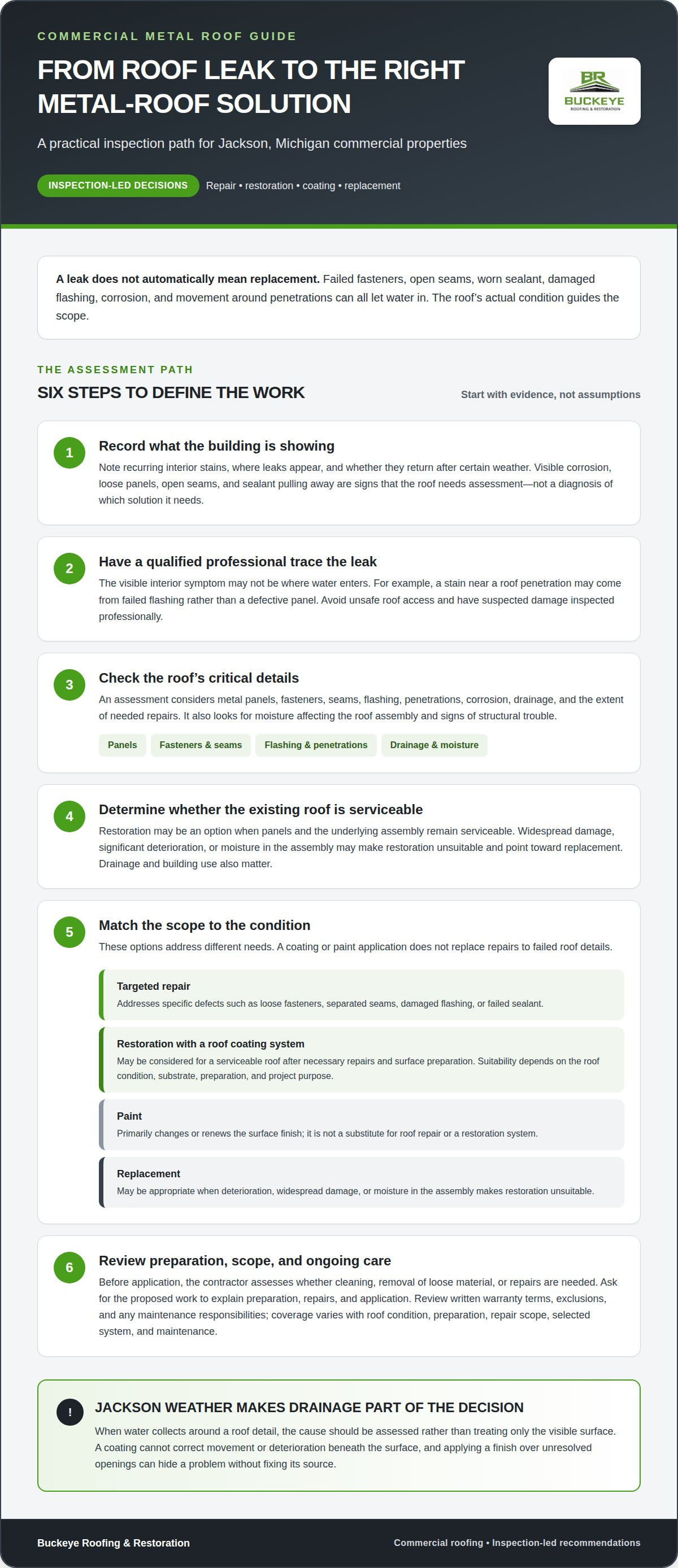
Commercial roof restoration in Jackson, Michigan
Commercial roof restoration turns inspection findings into a defined work plan for an existing roof. For a Jackson facility, that plan should connect each task to a documented condition and account for how the work fits the building’s operations.
For Michigan building codes and permits, the project team should establish which requirements apply to the proposed scope before scheduling work. Requirements depend on the project, so don’t assume a restoration coating and a broader change to the roof assembly follow the same process.
A metal-roof restoration process begins with documenting the roof’s condition and agreeing on the work scope. The contractor then sequences preparation, repairs, and application. A facility manager can support planning by sharing known leak locations, access constraints, operating hours, and areas that must remain clear. For example, a warehouse with active loading bays may need roof access coordinated with deliveries.
- Confirm the scope. Connect each proposed task to inspection findings and identify the roof areas included.
- Plan site coordination. Establish access routes and account for building operations, equipment, and restricted areas.
- Prepare and repair. Complete the specified surface preparation and repairs before applying restoration materials.
- Apply the system. Carry out the specified restoration work under suitable project conditions.
- Review completion. Compare the completed work with the agreed scope and document relevant maintenance needs.
There is no single timeline for metal-roof restoration. The roof’s size, access, repair scope, preparation needs, materials, and weather all affect scheduling. A roof with several areas requiring repairs involves a different sequence from one needing limited preparation. After assessing the building and defining the work, the contractor should explain the expected stages and scheduling considerations.
Jackson facility managers can reduce scheduling friction by identifying operational constraints early. A manufacturer may need to coordinate roof access around equipment or active production areas, while a distribution building may need clear loading access. Sharing these details helps the contractor plan the work sequence around facility operations.
A clear restoration proposal records the scope, preparation, repairs, application areas, and completion review. It should distinguish restoration of the existing assembly from replacement of that assembly. Reviewing a detailed commercial roof restoration scope helps a property manager understand what the work addresses and how the project will proceed.
Commercial metal roof restoration contractors in Jackson, Michigan
A commercial metal roof restoration contractor should base the proposed work on an inspection, not appearance alone. For a Jackson warehouse, the assessment should document panel condition, seams, fasteners, flashing, penetrations, drainage, and signs of moisture. Those findings help determine whether restoration suits the existing roof or repairs or replacement are more appropriate.
The contractor’s scope should connect observed conditions to specific work. If the inspection identifies separated seams, the proposal should explain how they will be addressed. If fasteners or flashing need attention, those repairs should be identified separately from surface preparation and coating. This helps a facility manager understand what restoration includes and which roof areas it addresses.
Commercial experience matters because building operations affect planning. A manufacturing facility may have equipment, loading areas, or active work zones that shape roof access and scheduling. A useful work plan identifies access needs, affected areas, and how the project will coordinate with facility operations. Jackson’s seasonal weather also makes the proposed sequence for surface preparation and coating relevant.
A clear written proposal should describe the following:
- The inspection findings that support restoration.
- Repairs required before surface preparation or coating.
- The areas included and excluded from the scope.
- Materials and preparation methods specified for the roof.
- How completion will be reviewed and what maintenance follows.
These details help distinguish restoration from a coating-only application. A coating applied without addressing failed roof components may leave the original problem unresolved. For example, coating a panel surface does not explain how deteriorated flashing will be repaired. The proposal should connect preparation, repairs, and application in one defined scope.
Contractors should also explain why restoration suits the roof’s condition. Extensive corrosion, moisture within the assembly, or structural concerns can change the recommendation. A facility manager benefits from a written explanation of these findings, especially when comparing restoration with replacement. The explanation should identify the conditions driving the recommendation rather than rely on broad promises about performance.
Warranty language deserves careful review alongside the work description. The proposed coverage should state what components and work it applies to, plus any stated maintenance obligations or exclusions. Warranty terms cannot make an unsuitable roof a sound restoration candidate; the inspection findings and repair scope remain central to the decision.
For commercial metal roof restoration in Jackson, Michigan, start with a roof-specific assessment and a scope that ties each task to a finding. This gives building owners a practical basis for understanding the work, planning around operations, and deciding whether restoration addresses the roof’s needs.
Buckeye Roofing & Restoration: Commercial Metal Roof Repair and Restoration
Buckeye Roofing & Restoration provides commercial metal roof repair and restoration using Conklin roof restoration products. If a leak, worn seam, loose fastener, or damaged flashing affects your building, a commercial roof inspection can identify the source and help determine the right scope of work.
Restoration may suit a metal roof whose condition, substrate, drainage, and structure support the work. Where damage calls for a different approach, targeted repair or replacement may make more sense. The recommendation should follow the roof’s condition, not assume every leak requires full replacement.
For a commercial roof inspection or to discuss repair and restoration options, contact Buckeye Roofing & Restoration.
Make the Next Roof Decision with a Clear Scope
The next useful step is to turn roof concerns into a practical plan for the property. Note where interior leaks appear, what building operations could affect access, and any maintenance records available. These details can help an inspection focus on the roof areas that need attention.
Choosing commercial metal roof restoration in Jackson, Michigan starts with understanding whether the existing roof can support the work. Buckeye Roofing & Restoration also provides commercial flat roofing, commercial flat-roof repair, and commercial roof restoration. An inspection helps connect the building’s condition with an appropriate scope, rather than assuming every roof needs the same approach.
If you’re ready to discuss a commercial roof concern or arrange an inspection, contact Buckeye Roofing & Restoration. A clear assessment can help you plan the next step with confidence.
Frequently Asked Questions
What causes metal roof leaks?
Metal roof leaks often begin where water can enter around roof details, and the interior stain may appear elsewhere. Wind-driven rain can travel along panels or framing before becoming visible, so the stain’s location alone may not reveal the source. Corrosion, loosened fasteners, panel movement, failed sealants, and damaged transitions can contribute. A professional can also determine whether moisture comes from the roof, condensation, or plumbing.
What are the best coatings for restoring commercial metal roofs in Michigan?
The right coating system is compatible with the existing roof and selected after assessing its condition. Metal type, current finish, corrosion, previous coatings, panel condition, and surface preparation all affect suitability. A commercial roof inspection can identify necessary repairs and whether the roof is suitable for restoration. Choose based on the roof and project conditions, not color or product label alone.

Article by
Harry Stanley III
Harry Stanley III is a construction marketing strategist and fractional CMO at H&A Marketing. He has helped construction companies grow through website strategy, SEO, paid advertising, branding, lead generation, CRM systems, and professional content. His past work includes helping Meraki Solar generate an additional $3.7 million in revenue in his first year and supporting American Builders as a fractional CMO. Today, Harry works directly with custom home builders and construction companies to build marketing systems designed to generate qualified leads and measurable growth.