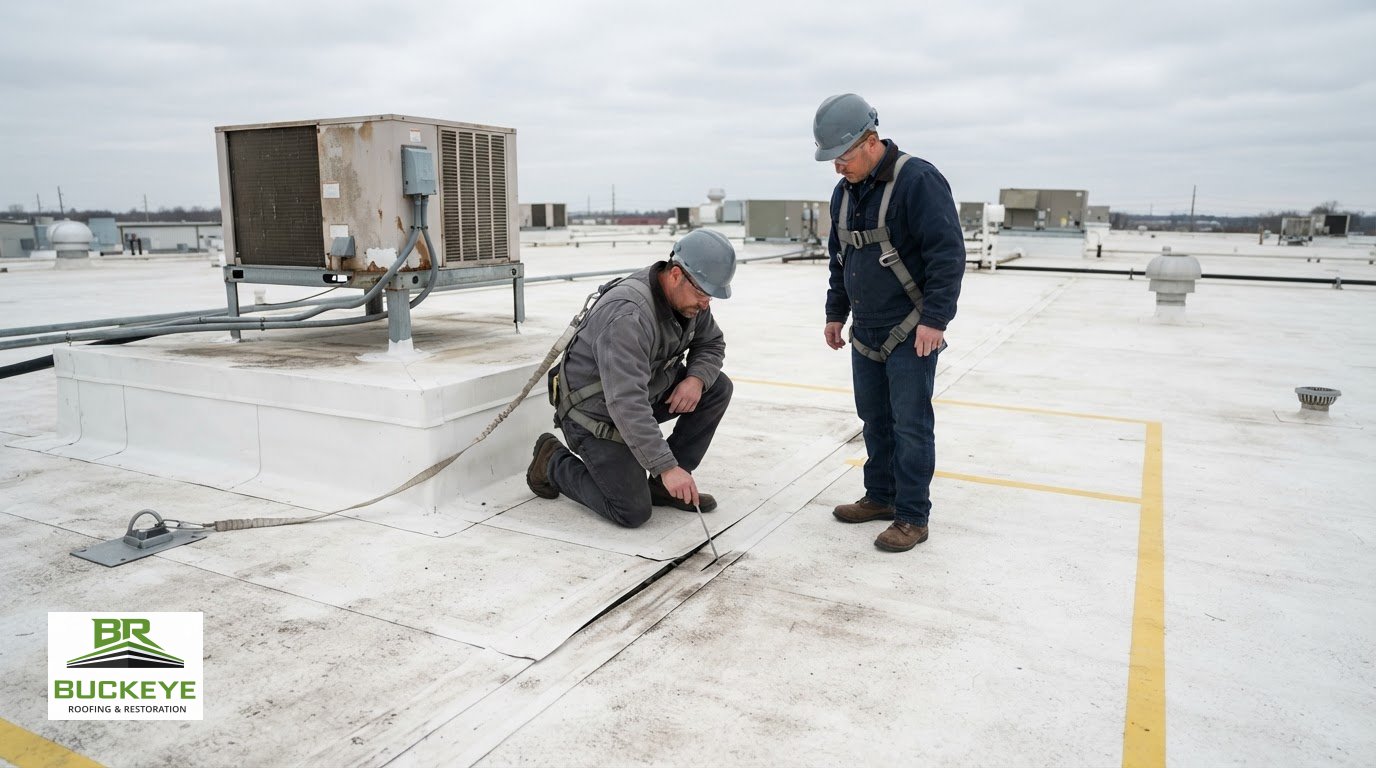
A roof leak doesn’t automatically mean a commercial roof needs replacement. A low-slope roofing contractor in Auburn, Indiana, should assess the roof’s size, materials, drainage, and condition before recommending work. Those details also shape the project schedule, so no single cost or timeline applies to every building.
Before committing to roof replacement, it’s reasonable to want a clear budget and manageable project plan. Freeze-thaw cycles in Auburn can stress vulnerable seams and metal edges, so the roof’s condition matters. This article explains what affects replacement costs and schedules, how to compare contractors, and why a leak may call for repair or restoration rather than replacement. It also outlines what a professional inspection considers when determining the next step.
Key Takeaways
- Replacement cost depends on the roof’s size, existing condition, drainage, and the work required, not just the roofing material.
- A leak doesn’t automatically call for a new roof; repair or restoration may be worth considering after an inspection.
- Project duration depends on roof conditions, installation scope, and how the work can be coordinated with building operations.
- Compare contractor proposals by their scope, system details, cleanup plan, and final walkthrough, not rating numbers alone.
- For Auburn’s low-slope properties, pay close attention to drainage, seams, flashing, and roof areas exposed to freeze-thaw cycles.
How long does it take to replace a roof?
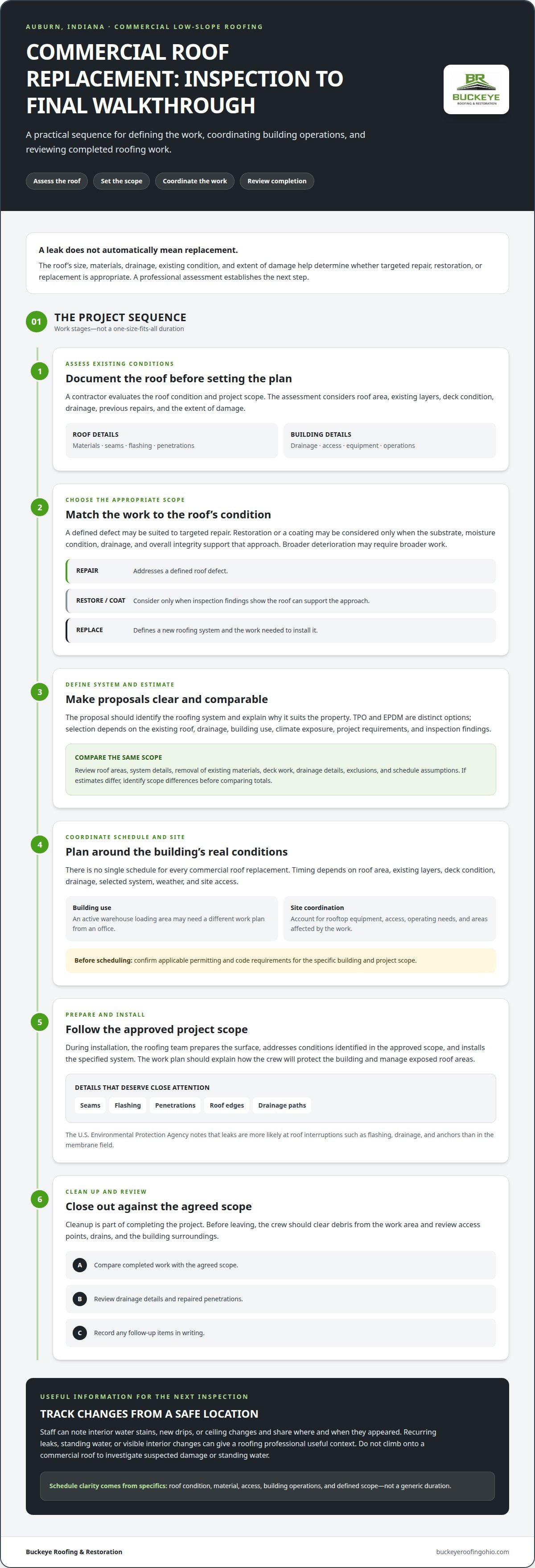
A commercial roof replacement in Auburn has no single schedule that fits every building. Timing depends on roof area, existing layers, deck condition, drainage, the selected system, weather, and site access. A clear work area and sound deck present a different scope from a roof that needs deck repairs. A useful estimate outlines the work stages and explains what conditions could affect the schedule.
Before setting a schedule, a contractor assesses the existing roof and defines the project scope. Building use matters: a warehouse with active loading areas may need a different work plan from an office. Rooftop equipment, site access, and operating needs also affect coordination. The estimate should connect its schedule to these specific conditions.
TPO and EPDM are distinct options for Auburn low-slope roofs. The right system depends on the existing roof, drainage, building use, climate exposure, project requirements, and inspection findings. A proposal should name the system and explain why it suits the property.
A leak alone doesn’t mean replacement is necessary. A contractor considers the roof’s age and overall condition, previous repairs, the extent of damage, and whether a lasting repair is practical. Recurring leaks or widespread deterioration may call for broader work, while a defined defect may have a more targeted solution. Interior stains or repeated water intrusion are reasons to arrange a professional assessment.
For an Auburn, Indiana, project, address permitting and code requirements for the specific building and scope. Ask the project team to identify applicable local requirements before scheduling work. Requirements can vary by roof and property.
Compare estimates by checking that they describe the same work. One proposal may include removing existing materials, while another may use a different scope. Review the roof areas, proposed system, deck work, drainage details, exclusions, and schedule assumptions. If estimates differ, identify the scope differences before comparing totals.
Financing is separate from the roofing work. Account for funding approval in your project planning and consider how payment timing fits your budget process. Keep financing arrangements distinct from the construction scope so both the proposed work and payment plan remain clear.
Replacement timing becomes clearer once the roof condition, materials, access, and scope are documented. Facility managers can help the contractor prepare a realistic schedule by sharing building-use constraints early, rather than relying on a generic duration.
After reviewing the roof, the contractor can consider targeted repairs, coating possibilities, and replacement systems. Faze Construction advises considering replacement when needed repairs cost more than 50% of a new roof replacement.
Roof installation, cleanup, and final walkthroughs
A commercial roof project involves more than installing a new membrane. For an Auburn warehouse, planning should account for roof access, equipment, drainage paths, and areas where work could affect operations. The scope should explain how the crew will protect the building, manage exposed roof areas, and coordinate work around entrances or loading zones.
During installation, the roofing team prepares the surface, addresses conditions identified in the approved scope, and installs the specified system. Seams, flashing, penetrations, and roof edges deserve close attention because they interrupt the broad membrane field. According to the U.S. Environmental Protection Agency, leaks are more likely at roof interruptions such as flashing, drainage, and anchors than in the membrane field. A facility manager can ask for those details to be included in the inspection and final review.
Cleanup is part of completing the project. The crew should clear debris from the work area and review access points, drains, and the building surroundings before leaving. A final walkthrough can compare completed work with the agreed scope. For example, the reviewer can discuss drainage details and repaired penetrations, and record any follow-up items in writing.
Regular inspections can identify changes before they disrupt building operations. From a safe location, staff can note interior water stains, new drips, or ceiling changes, then share where and when they appeared. A professional inspection can assess roof condition, drainage, deck concerns, seams, flashing, and penetrations. Staff should not climb onto a commercial roof to investigate standing water, loose materials, or suspected damage.
Small problems still need timely attention. A leak near a rooftop unit, a split seam, or persistent ponding may have different causes, so repairs should address the source, not just the visible interior stain. When arranging an inspection, describe the location and symptoms. For an active leak, keep people and equipment clear of the affected area and report it promptly through the building’s maintenance process.
Repair, restoration, and coating solve different roof conditions. A targeted repair addresses a defined defect; restoration or a coating may suit a roof only when its substrate, moisture condition, drainage, and overall integrity support that approach. A professional inspection helps establish which option fits. A commercial roof repair assessment can help clarify whether a localized defect needs attention or broader work deserves consideration.
Freeze-thaw cycles in Auburn can stress vulnerable seams and metal edges. Record recurring leaks, standing water, or visible interior changes to give the roofing professional useful context for maintenance planning. This history can help distinguish a recurring issue from an isolated repair need and focus the next inspection.
How do I find local roofers near Auburn, IN?
For an Auburn commercial property, choose a contractor experienced with low-slope systems who clearly explains the proposed work. Review the service area, estimate scope, insurance documents, and written warranty terms before selecting a roofing partner.
Auburn and Regional Service Areas
Commercial roofing contractors serving Auburn may also cover Fort Wayne and other Northeast Indiana communities. Confirm that the proposed service includes your building and that the contractor has experience with its roof type, access needs, and operating conditions.
Warehouses, offices, and commercial pole buildings can have different roof layouts and maintenance needs. When arranging an assessment, describe the building and the concern, such as water intrusion near a drain or recurring leaks around rooftop equipment.
Comparing Estimates and Contractors
Compare estimates by matching the work included, not just the totals. Check whether each proposal describes the roof condition, repair or replacement scope, materials, drainage, flashing, and cleanup. Clarify any differences in scope before comparing the proposed approaches.
For example, if a leak appears near a wall transition, compare how each proposal describes investigating and repairing it. Review inspection findings, exclusions, project coordination, and final review details. A project-specific explanation helps show how the proposed work addresses your Auburn building.
Licensing and Insurance Requirements
For an Auburn project, ask the contractor for applicable licensing information and current insurance documents. Review them as part of your selection process, rather than assuming a rating or online profile establishes qualifications or coverage.
Keep copies with the project agreement and note the legal business name, coverage information, and relevant dates shown in the documents. This gives property managers a clear record to share with building owners, procurement staff, or facility teams involved in approving the work.
Make sure the contractor’s experience matches the roof system. TPO and EPDM are distinct membrane systems, so a proposal should identify the system under consideration rather than treating them as interchangeable. The recommendation should reflect the existing roof, drainage, building use, climate, and inspection findings.
Review written warranty terms before agreeing to a project. Check what the warranty covers, its duration, any maintenance conditions, and how to report a concern. If material and workmanship coverage are described separately, keep both documents with the building’s roof records. Rely on written terms rather than verbal assurances.
Reviews can help frame questions, but base your decision on the proposal and project-specific assessment. For a warehouse, office, or commercial pole building near Auburn, look for clear documentation of the work, communication plan, and follow-up process. These details help you understand what the contractor plans to do and how it fits the property.
Contractor ratings and customer review counts
Online ratings can reveal patterns, but a star score alone doesn’t show whether a contractor handles commercial low-slope roofs. For an Auburn warehouse, office, or manufacturing building, look for review details about inspections, communication, scheduling, cleanup, and follow-through. These specifics matter more than a broad statement that the crew did good work.
Review counts offer context, not proof of roofing quality. A contractor with fewer reviews may have relevant commercial experience, while a larger count may include work unrelated to low-slope systems. Check whether reviewers describe buildings and projects similar to yours, such as membrane repairs, drainage work, or replacement. A review count is no substitute for a written scope and inspection.
Look for consistent feedback from Auburn and Northeast Indiana. For example, several accounts describing clear updates during active work may help you understand how the contractor communicates. A detailed complaint or compliment can be useful, but shouldn’t outweigh project documents, inspection findings, and a discussion of your building’s needs.
Read the substance of each review, not just its rating. Note whether the customer identifies the building type, roofing work, and issue addressed. A review about a commercial metal roof, for instance, may say little about work on a warehouse’s low-slope drains or membrane seams. Reviews describing a specific process are more useful than general praise.
Use a simple review check:
- Look for commercial properties and low-slope roofing work.
- Notice whether reviews discuss communication, cleanup, and follow-up.
- Compare recurring themes across separate reviews, rather than relying on one comment.
- Consider how recent and project-specific the descriptions appear, without assuming they verify technical quality.
Reviews can also prompt useful questions. If a customer mentions a recurring leak, ask how the contractor identifies the source and documents the repair scope. If reviews describe smooth coordination, ask how the work plan accounts for building operations. These questions connect public feedback to your facility’s practical needs.
Compare reviews with the written estimate and warranty documents. A positive account doesn’t define what your project includes, and a high rating doesn’t establish coverage terms. Confirm that the proposal names the work, materials, exclusions, cleanup, and final walkthrough. Keep the documents with the building’s maintenance records.
For a commercial property in Auburn, use ratings alongside relevant project experience, inspection findings, clear documentation, and communication. A project-specific plan is more useful than a score or review count alone.
Flat and low-slope roofing for Auburn properties
Commercial roofs described as “flat” still need slope to direct water toward drains or roof edges. In Auburn, warehouses, older downtown buildings, and manufacturing facilities can have different drainage layouts and roof interruptions. The roofing system should suit the building’s design, use, existing materials, and inspection findings, not just its visible surface.
Water movement deserves close attention. A blocked or poorly performing drain can leave standing water, while freeze-thaw cycles can stress vulnerable seams and metal edges. Persistent ponding, interior stains, or recurring leaks near a drain can offer a professional useful clues. Building staff should report observations from a safe location instead of walking on the roof.
Leaks don’t always start in the broad membrane field. According to the U.S. Environmental Protection Agency, roof interruptions such as flashing, drainage, and anchors are more likely leak points. On a modern Auburn facility, that could mean checking the flashing around an HVAC curb or the seal around an anchor. On an older building, parapets and layered materials may make transitions more complex.
System selection depends on the building and roof condition. TPO and EPDM are distinct membrane systems, not interchangeable labels. Suitability depends on existing materials, drainage, rooftop equipment, building use, climate exposure, and project requirements. A professional assessment should identify the system in place and explain how the proposed work addresses its details.
Repair, restoration, coating, and replacement address different needs. A repair targets a defined defect, such as damaged flashing or a seam. Restoration or coating may suit a roof only if its substrate, moisture condition, drainage, and structural integrity support that approach. Widespread deterioration or underlying damage can change the recommendation. An inspection connects the proposed work to the roof’s actual condition.
For an Auburn property manager, useful observations include:
- Interior stains or active drips, with the room and location recorded.
- Water that remains in the same roof area after drainage conditions change.
- Visible blisters, splits, or loose edge details observed without roof access.
- Leaks that return near drains, wall transitions, or rooftop equipment.
These signs can help guide an inspection, but they don’t establish the cause. A professional assesses drainage, seams, flashing, penetrations, and deck concerns before recommending a scope. For a commercial building in Auburn, arrange a roof inspection to discuss observed symptoms and determine the appropriate next step.
Directing water toward drains or edges, maintaining sound seams, and protecting flashing at wall transitions and penetrations are central to low-slope roof performance. These details work together: a weakness at a transition or penetration can undermine an otherwise intact surface. An inspection should assess water movement as well as the condition of seams and flashing.
Older roofs near downtown Auburn may have layered materials and complex parapets, while modern facilities may have broad membrane surfaces and HVAC curbs. Addressing blisters, splits, or persistent standing water early can help limit disruption inside a building. Recording where these conditions appear and whether they recur can focus the assessment and inform decisions about appropriate work.
Buckeye Roofing & Restoration
Buckeye Roofing & Restoration helps commercial property owners in Auburn assess low-slope roof problems and plan practical next steps. A commercial roof inspection can clarify whether the building needs targeted repair, restoration, coating, or replacement, based on its condition, drainage, materials, and project requirements. A leak or aging surface doesn’t automatically call for replacement. The recommendation should fit the roof’s actual condition and the building’s use.
For a warehouse, office, or industrial property, share the roof’s known history and any interior leak locations when discussing an inspection. That context helps focus the assessment and compare the proposed scope with your building’s needs. If you’re ready to discuss a commercial roof in Auburn, contact Buckeye Roofing & Restoration to talk through the next step.
Set a Clear Next Step for Your Roof
Keep your building’s operating needs in view when planning the next step. A roof plan should account for access, drainage, and how work can fit around tenants, staff, equipment, or production. This context is a more useful basis for planning than relying on a single rating or estimate.
Choosing a low slope roofing contractor in Auburn, Indiana, is ultimately about getting a recommendation grounded in the roof’s condition and the property’s priorities. Buckeye Roofing & Restoration provides commercial flat roofing, commercial flat-roof repair, and commercial roof restoration. An inspection helps clarify which approach fits your building before you commit to a scope of work.
If you’re ready to discuss the roof and your project priorities, contact Buckeye Roofing & Restoration. A clear conversation is a practical place to start planning the right next step for your property.
Frequently Asked Questions
How Much Does a New Roof Cost?
Commercial roof replacement costs depend on the roof area, existing materials, deck condition, drainage details, access, and selected roofing system. For example, a project involving deteriorated insulation or complicated rooftop equipment may require a different scope than a straightforward installation. Buckeye Roofing & Restoration provides a quote after a request, based on the building and planned work. An inspection helps define the scope before you compare estimates.
commercial low slope roofing services Auburn IN
Commercial low-slope roofing services include inspections, repairs, and replacement. The contractor should assess the roof’s condition, drainage, and building use before recommending work.
low slope roofing repair cost Auburn Indiana
Repair costs depend on the roof’s condition, drainage, and required work, so arrange an inspection for a project-specific estimate. For an active leak, keep people and equipment clear of the affected area and report it promptly through the building’s maintenance process.

Article by
Harry Stanley III
Harry Stanley III is a construction marketing strategist and fractional CMO at H&A Marketing. He has helped construction companies grow through website strategy, SEO, paid advertising, branding, lead generation, CRM systems, and professional content. His past work includes helping Meraki Solar generate an additional $3.7 million in revenue in his first year and supporting American Builders as a fractional CMO. Today, Harry works directly with custom home builders and construction companies to build marketing systems designed to generate qualified leads and measurable growth.