
Commercial Roof Maintenance Plans in Defiance, Ohio: What to Expect
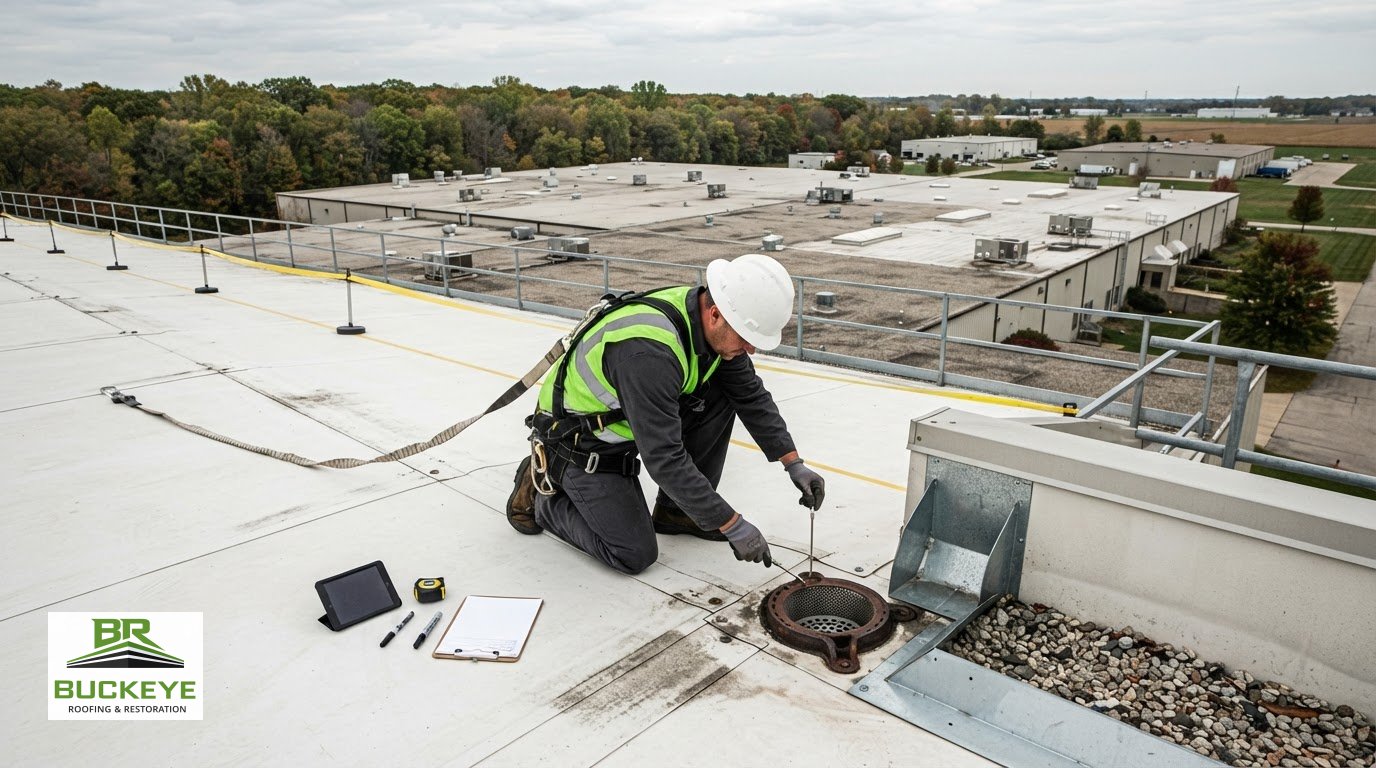
What if the roof problem that disrupts operations could have been caught during a routine inspection? If you're responsible for a commercial building, commercial roof maintenance plans in Defiance Ohio should give you a clear way to spot developing issues and plan sensible next steps, not just respond after a leak appears. That matters in Northwest Ohio, where seasonal freeze-thaw cycles, snow, and strong winds can put added strain on low-slope roofs.
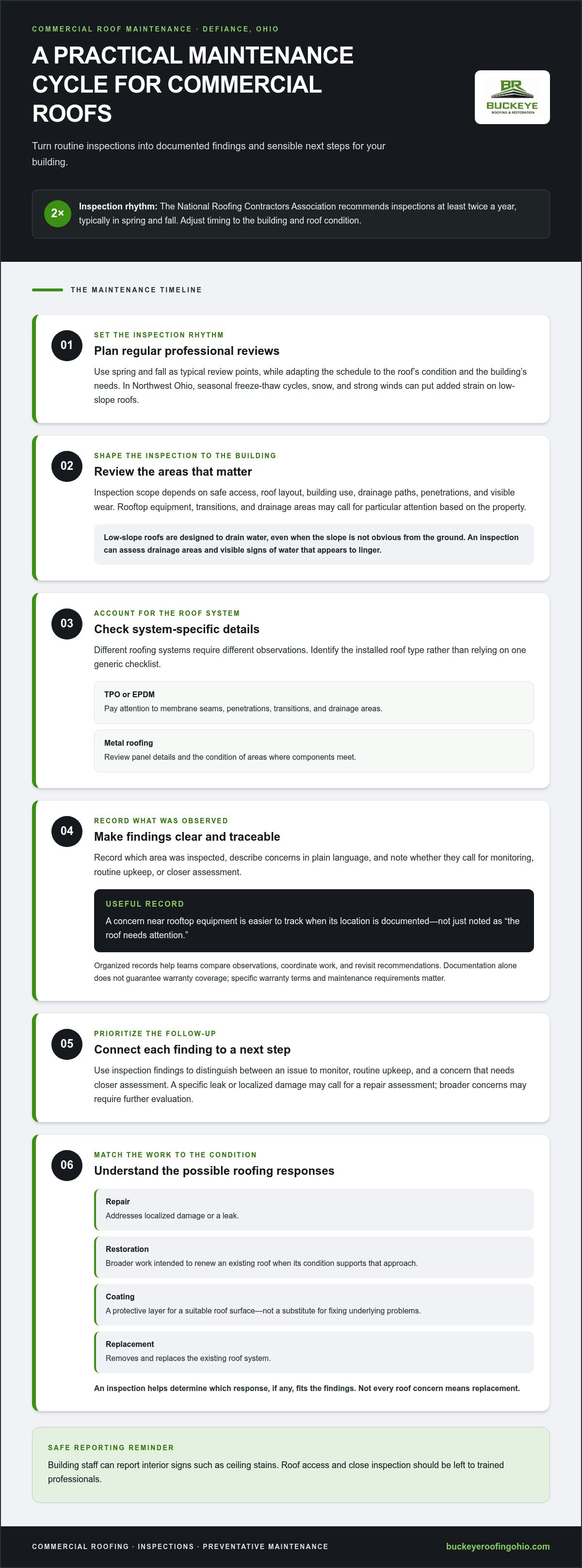
A useful plan doesn’t mean scheduling unnecessary work. It sets a practical inspection rhythm, checks key roof areas and drainage, documents findings, and helps prioritize small fixes before they grow into larger repairs. The National Roofing Contractors Association recommends inspections at least twice a year, typically in spring and fall, with timing adjusted to the building and roof condition. In this article, you’ll learn what maintenance should cover, how to shape a schedule around a Defiance property and Ohio’s changing seasons, and when a professional inspection can help determine whether repair, restoration, coating, or replacement makes sense.
Key Takeaways
- A practical maintenance plan records roof conditions, prioritizes concerns, and turns inspection findings into clear next steps.
- Commercial roof maintenance plans in Defiance Ohio should account for each building’s access, drainage, roof use, penetrations, and observed wear.
- Planned maintenance, a one-time inspection, and a repair visit serve different purposes; choosing the right approach starts with the issue you need to address.
- Use seasonal reviews and organized roof records to help facility teams plan work and track changing conditions over time.
- Inspection findings can help determine whether monitoring, targeted repair, restoration, coating, or replacement is appropriate for the roof.
Why Defiance Commercial Properties Benefit from a Planned Roof Maintenance Approach
A roof doesn’t need to be leaking to deserve attention. For a warehouse, manufacturing facility, office, or other commercial property in Defiance, scheduled upkeep gives the building team a clearer picture of roof condition and a chance to plan work around operations. Seasonal shifts in Northwest Ohio make that planning useful: changes in temperature, snow, and wind can expose wear or affect drainage over time.
A commercial roof maintenance plan is scheduled professional attention guided by the roof’s system, age, condition, and use, with observations recorded and follow-up actions recommended. Unlike a one-time repair, which responds to a specific problem, planned maintenance creates a repeatable way to review the roof and track what changes.
What does a commercial roof maintenance plan mean?
A plan can include periodic professional inspections, written notes about observed conditions, and recommendations ranked by importance. The right scope depends on the building. A busy manufacturing facility may have rooftop equipment or penetrations that deserve careful review, while a warehouse may have broad roof areas and drainage paths that need attention. Access and the existing roof system also shape what a safe, useful inspection can cover.
Low-slope roofs are designed to drain water, even if their slope is not obvious from the ground. An inspection can assess whether drainage areas are clear and look for visible signs of wear or water that appears to linger. Building staff should report interior signs, such as a ceiling stain, but should leave roof access and close inspection to trained professionals. For general context on cleaning methods, see roof cleaning techniques; any cleaning approach on a commercial roof should suit the roof system and its condition.
Maintenance is not the same as every other roofing service. A repair addresses localized damage or a leak. Restoration is broader work intended to renew an existing roof when its condition supports that approach. A coating is a protective layer applied to a suitable roof surface, not a substitute for fixing underlying problems. Replacement removes and replaces the existing roof system. An inspection helps clarify which, if any, of these steps fits the findings. If a specific issue needs attention, commercial roof repair addresses that separate need.
Why plan upkeep when the roof is not leaking?
Because a quiet ceiling doesn’t tell the whole story. Scheduled professional attention can identify visible concerns before they interrupt warehouse activity, production, office work, or tenant operations. It can also give facility managers time to coordinate access, budget discussions, and roof work with other building needs, rather than making every decision in response to an active leak.
That’s the practical value of commercial roof maintenance plans in Defiance Ohio: not a promise that problems won’t occur, but a clearer record of roof condition and proportionate next steps. Buckeye Roofing & Restoration serves commercial properties in Defiance with inspections and preventative maintenance to help owners make informed decisions about their buildings.
What a Commercial Roof Maintenance Plan in Defiance Should Cover
A useful plan should leave a property manager with more than a note that the roof was checked. It should explain which areas were reviewed, what the roofer observed, which concerns deserve attention, and what steps make sense next. For commercial roof maintenance plans in Defiance Ohio, that record helps owners and facility teams keep decisions tied to the roof’s actual condition and the building’s needs.
Inspection findings, documentation, and follow-up
Inspection priorities depend on safe access, roof layout, building use, drainage paths, penetrations, and visible wear. A roofer may note the area inspected, describe a concern in plain language, and identify whether it calls for monitoring, routine upkeep, or a closer assessment. For example, a recurring concern near rooftop equipment is more useful to track by location than as a general note that the roof needs attention.
Organized records help facility teams compare observations over time, coordinate work, and revisit earlier recommendations. They can also support conversations about warranty requirements, but documentation alone doesn’t guarantee warranty coverage. The specific warranty terms and required maintenance procedures matter. The National Roofing Contractors Association recommendations offer a professional roofing reference point; the inspection and follow-up plan should still reflect the building’s roof and applicable warranty documents.
Adjusting the plan for TPO, EPDM, or metal roofing
Different systems call for different observations. On TPO or EPDM roofs, a roofer may pay attention to membrane seams, penetrations, transitions, and drainage areas. A metal roof calls for attention to panel details and the condition of areas where components meet. These systems aren’t interchangeable, so a plan should identify the installed roof type and account for its specific details rather than use one generic checklist.
System, age, observed condition, and building use all shape the inspection scope. Maintenance findings may point to routine attention, such as addressing a concern before it worsens, or to a repair assessment for localized damage. If concerns appear more widespread, the roofer may recommend evaluating whether restoration or another broader project is appropriate. Restoration isn’t simply a more extensive maintenance visit, and a coating isn’t a substitute for assessing underlying roof conditions.
A practical plan can record:
- Roof areas and details reviewed, including access points and drainage features.
- Visible conditions, their locations, and whether they appear new or recurring.
- Recommended actions, with urgent concerns distinguished from items to monitor.
- Follow-up observations or assessments needed to guide the next decision.
That level of detail gives owners a working record, not a promise that every issue has been found or that a particular remedy is right. For a commercial property in Defiance, Buckeye Roofing & Restoration can help assess roof condition and outline practical next steps. Request a commercial roof inspection to discuss the building’s maintenance needs.
Comparing Planned Maintenance with Reactive Repairs for Defiance Buildings
Planned maintenance, a one-time inspection, and a reactive repair can all help a facility team make roofing decisions, but they answer different needs. A maintenance calendar alone isn’t the right response to an active leak or visible damage. In those cases, arrange a professional assessment so the immediate concern can be evaluated directly.
| Approach | Purpose | Typical trigger | Useful records | What it can clarify |
|---|---|---|---|---|
| Planned maintenance | Review roof condition over time and plan appropriate upkeep. | Ongoing facility planning or a scheduled review. | Past observations, current findings, and follow-up recommendations. | What has changed, what to monitor, and which actions to prioritize. |
| One-time inspection | Assess the roof at a particular point in time. | A property purchase, a planning question, or a concern that needs review. | Findings from that inspection and recommended next steps. | The visible condition at the time of review and whether further evaluation is needed. |
| Reactive repair | Address a specific leak or localized damage. | An active leak or observed roof concern. | The reported issue, assessment findings, and work recommended or completed. | What may be causing the specific problem and how it should be addressed. |
When does planned maintenance make more sense than waiting?
Planned attention can suit a property team that needs to coordinate roof work with production, shipping, tenant schedules, or other facility tasks. It creates an opportunity to review conditions before a problem demands immediate operational decisions. The right scope and timing depend on the roof system, its condition, and how the building is used. Commercial roof maintenance plans in Defiance Ohio should be tailored to those factors, not treated as a universal package or schedule.
When should a concern move beyond routine maintenance?
An interior leak, standing water, loose roofing materials, or a suspected structural concern calls for professional attention rather than waiting for the next planned visit. Report what you can observe safely from inside or at ground level, and keep people away from hazards. Don’t climb onto the roof or attempt repairs without appropriate training and access controls. A professional assessment can help distinguish a localized repair need from a broader roofing concern.
Maintenance records can inform a decision, but the inspection evidence should guide the remedy. A plan label doesn’t determine whether repair, restoration, coating, or replacement is appropriate. A roofer evaluates the observed issue and roof condition before recommending a specific next step. For more detail on responding to a localized problem, Buckeye’s commercial roof repair guidance explains how repair decisions fit into commercial roof care.
Building a Seasonal Commercial Roof Maintenance Schedule in Defiance
A useful schedule gives facility teams a repeatable process without assuming every roof needs the same visits or work. In Defiance, seasonal changes offer practical points to coordinate professional attention and check whether earlier recommendations were addressed. The schedule should fit the roof’s condition, system, and building operations, with professional findings guiding the timing and scope.
Planning around Ohio’s seasonal weather
Freeze-thaw cycles, snow, and ice are relevant considerations for commercial roofs in Northwest Ohio. As seasons shift, drainage areas and visible changes can merit professional attention. A low-slope roof is designed to drain, and a roofer can assess drainage areas and concerns that appear to linger. Facility staff should report interior signs or observations from safe locations rather than going onto the roof.
For a warehouse, production site, or office, coordinate professional attention with building access and operations. A roof with previous concerns may need a different follow-up approach from one without known issues. Commercial roof maintenance plans in Defiance Ohio work best when professional findings, rather than a calendar alone, shape the next review.
A practical sequence for facility managers
Keep the process straightforward. Before a visit, assign a property contact and note operational constraints, such as restricted access areas, active equipment, or times when roof-related work could affect building activity. Then use a consistent sequence to move from planning to follow-up:
- Plan access. Share relevant building and access information with the roofing professional and identify who will coordinate on site.
- Arrange a professional review. Set the inspection timing and scope based on roof condition, building use, and previous findings.
- Record observations. Note the areas reviewed, visible concerns, and recommendations for the facility team.
- Prioritize action. Separate concerns needing prompt assessment from items that can be monitored or coordinated with operations.
- Revisit the record. Track completed work and follow-up observations to inform the next planning discussion.
This sequence helps a facilities team coordinate roofing decisions with the demands of running a building. If seasonal planning brings up questions about current roof condition or inspection timing, discuss a commercial roof inspection with Buckeye Roofing & Restoration.
Choosing the Next Step for a Commercial Roof in Defiance, Ohio
An inspection should help turn roof observations into a practical decision, not automatically lead to a major project. For a commercial property in Defiance, the right next step depends on the roof’s condition, the location and extent of concerns, drainage, and the building’s needs. No single solution fits every roof, and an inspection can inform a recommendation without guaranteeing a particular outcome or preventing future problems.
What an inspection can clarify before work is recommended
A professional review can assess visible roof conditions, drainage areas, seams or other roof details, and signs that need further evaluation. Findings may support monitoring a stable area, addressing localized damage with a targeted repair, or assessing whether broader work is appropriate. A coating or restoration may be considered only when the roof’s substrate, moisture levels, drainage, structural integrity, and other inspection findings support it. Replacement may be considered when the existing system’s condition makes other options unsuitable.
These choices are distinct. A repair addresses a specific problem. Restoration renews an existing roof when its condition supports that work. A coating is applied to a suitable roof surface, but it isn’t a fix for every underlying concern. Replacement means installing a new roof system. The inspection findings, rather than a maintenance-plan label or a preference for one type of work, should guide the recommendation.
For building owners, useful findings should make the reasoning understandable: what was observed, what needs attention, and what can be monitored. If the inspection identifies a localized issue, the next step may be limited in scope. If concerns appear across larger areas, the roofer can explain why a broader assessment may be warranted. Commercial roof maintenance plans in Defiance Ohio can help organize that process, but the roof itself determines the appropriate response.
Request a commercial roof inspection in Defiance
When discussing an inspection, share the building type, the roof concern, and any operational considerations that could affect access or scheduling. For example, a facility manager might describe an interior leak location, note when it was first observed, and explain whether nearby production or equipment affects site coordination. Keep to observations from safe locations; leave roof access and close assessment to roofing professionals.
Buckeye Roofing & Restoration is based in Edon and serves commercial properties in Defiance and surrounding markets. Its commercial inspection and maintenance work can help owners understand the roof’s condition and consider proportionate next steps. To discuss a building concern and arrange an inspection, request a commercial roof inspection.
Make Your Next Roof Decision With a Clear Plan
Use your next facilities planning discussion to decide who should review roofing recommendations, who approves work, and how roof needs fit alongside other building priorities. Clear ownership helps keep decisions moving even when facility responsibilities shift.
For commercial roof maintenance plans in Defiance Ohio, a useful next step is to bring the people responsible for building operations and maintenance into the same conversation. That way, roof planning can account for the property’s day-to-day needs.
When you’re ready to talk through your building’s roof, request a commercial roof inspection. A straightforward conversation can help you decide how to proceed with confidence.
Frequently Asked Questions
How often should a commercial roof maintenance plan be reviewed?
Review the plan when an event could change how the roof is used or managed, such as a renovation, a new rooftop installation, or a change in building operations. A completed repair may also prompt the team to check whether related follow-up is still needed. Rather than choosing a fixed interval for every property, use these changes and professional findings as cues to revisit the plan for a Defiance-area building.
Can a commercial roof maintenance plan prevent every leak?
No maintenance plan can guarantee that a roof will remain leak-free. Water may enter after unexpected damage, or a problem may develop in an area that wasn’t visibly concerning during an earlier review. A leak can also appear some distance from its source, so an interior drip doesn’t necessarily point to the roof area directly above it. Arrange a professional assessment when water intrusion appears, even if the roof was recently reviewed.
Does a newer commercial roof need maintenance?
Yes. For a newer roof, keep the project closeout information, identify the installed system, and note later work that could affect the roof, such as equipment installation or service access. This gives facility staff useful background if questions arise and helps distinguish original roof details from later changes. A newer system may have different care needs than an older one, so avoid applying another building’s maintenance routine without considering this roof’s documentation and use.
What should a facility manager do if a roof leak appears between planned visits?
Prioritize people and building operations while arranging professional help. If water is near equipment, inventory, or an occupied work area, follow the facility’s procedures for keeping people clear and limiting exposure where it’s safe to do so. Note when the leak appears and whether it changes with rainfall or building activity. That information can help the roofer investigate. Don’t delay reporting the issue just because a scheduled visit is coming up.
Can a maintenance plan include both TPO and EPDM roof areas?
Yes. A single property plan can cover both, but first identify which building sections or additions have each system. This matters on campuses or facilities expanded in stages, where different roof areas may have separate histories and needs. Share that distinction when arranging a review, and keep future notes tied to the correct section. That helps prevent observations from one roof area from being mistakenly applied to another.
What roof maintenance records should a commercial property keep?
Along with inspection and repair documents, keep a roof-area map, notes about access restrictions, and a log of interior leak reports with their locations and dates. These details can help a facility team connect an observation to the right roof section and coordinate access for follow-up. Store records where the people responsible for building operations can find them, especially when maintenance duties or property contacts change.

Article by
Harry Stanley III
Harry Stanley III is a construction marketing strategist and fractional CMO at H&A Marketing. He has helped construction companies grow through website strategy, SEO, paid advertising, branding, lead generation, CRM systems, and professional content. His past work includes helping Meraki Solar generate an additional $3.7 million in revenue in his first year and supporting American Builders as a fractional CMO. Today, Harry works directly with custom home builders and construction companies to build marketing systems designed to generate qualified leads and measurable growth.
