
Commercial Metal Roof Repair in Auburn, Indiana: A Practical Buying Guide
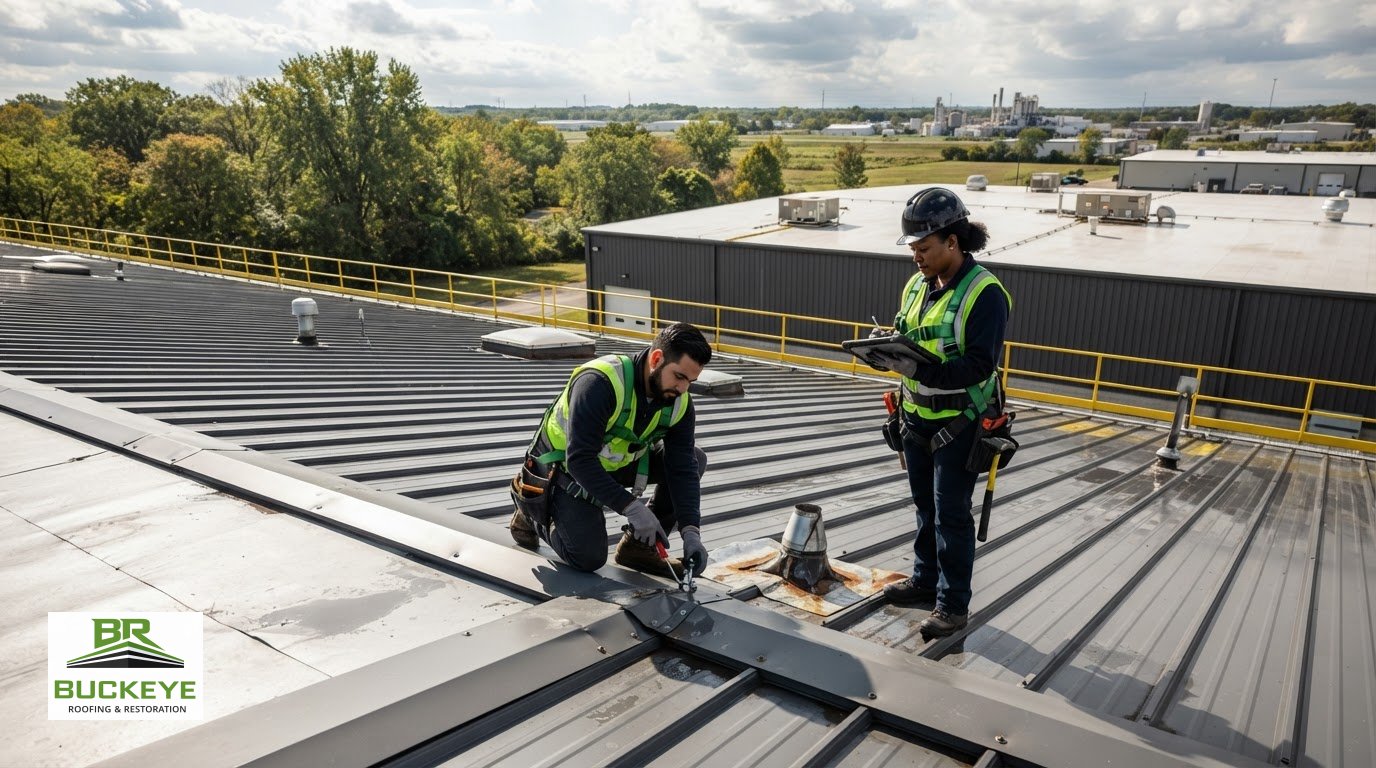
A full replacement isn’t automatically the right answer for a commercial metal roof. For commercial metal roof repair in Auburn Indiana, the next step depends on what an inspection finds, from loose fasteners or failing sealant to widespread corrosion or damage. That distinction matters when a leak affects a warehouse, manufacturing space, or other active facility, where roofing work needs to address the problem while accounting for building operations.
Before comparing recommendations, get a clear picture of the roof’s condition and the proposed scope. A useful inspection assesses panels, seams, fasteners, penetrations, transitions, and drainage, then explains whether targeted repair is appropriate or broader work deserves consideration. This guide covers how to review those findings, compare repair, restoration, coating, and replacement, and plan work around facility operations. Seasonal temperature changes and freeze-thaw cycles in Auburn can place stress on metal panels and fasteners, so the roof’s actual condition is a better guide than a one-size-fits-all recommendation.
Key Takeaways
- Commercial metal roof repair in Auburn Indiana should match the damage found, not default to a broader project.
- A professional inspection can investigate the source of water entry and assess the roof beyond the visible leak.
- Compare repair, restoration or coating, reroofing, and replacement based on the condition and needs of the existing roof.
- Review the proposed work areas and the reason for each task so you can understand the scope.
- Coordinate access, equipment locations, and operating schedules early to help manage disruption.
Commercial metal roof repair in Auburn, Indiana: when repair makes sense
Commercial metal-roof repair is targeted work that addresses a specific damaged area or point of failure. It can involve a compromised fastener, an open seam, or a detail around a roof penetration. The goal is to correct the identified problem without treating the entire roof as if it has the same condition. An inspection helps determine whether the issue is isolated or part of broader deterioration.
Commercial low-slope roofs are designed to drain water, even if they look nearly flat from the ground. A small amount of slope directs water toward drainage points. The roof’s shape and components work together, as described in this general overview of types of roofs and their components. A leak at one location may involve a seam, transition, or penetration elsewhere, so the visible interior stain does not always identify where water entered.
Localized repair addresses a defined failure; full replacement renews the roof system when its overall condition no longer supports a practical repair plan. The right scope depends on inspection findings, not just the location of a ceiling stain. Buckeye provides commercial roof repair based on the condition and needs of the building.
What a commercial metal-roof inspection should establish
A professional assessment connects what you can observe inside the building with roof conditions that could be allowing water in. The roofer evaluates panels, seams, fasteners, transitions, penetrations, and drainage. Interior stains, damp areas, and recurring drips can help narrow the investigation, but water may travel before appearing indoors. The visible symptom does not always pinpoint the exterior failure.
Record where and when you have noticed water, along with any changes you have observed. Don’t climb onto the roof to investigate. Leaks, loose materials, or unsafe access call for a professional assessment. A useful inspection explains the suspected cause, the affected area, and how the proposed work addresses that condition.
Why Auburn building conditions matter to repair planning
Commercial roofs in Auburn experience Northeast Indiana’s snow, ice, and seasonal freeze-thaw exposure. These conditions make it important to assess the roof as a working assembly, including the condition of panels, fasteners, seams, and drainage. They do not automatically mean a roof needs broad work, but they do make an inspection beyond the visible leak worthwhile.
The building’s use matters, too. A warehouse, manufacturing facility, or agricultural building can have different access needs, interior operations, and equipment locations than an office property. These details affect how repair areas are reached and how work is coordinated. For commercial metal roof repair in Auburn Indiana, clear inspection findings help facility managers connect the problem to a specific scope instead of assuming every leak needs the same remedy.
How commercial metal roof repair is scoped for an Auburn property
A useful repair scope starts with evidence, not assumptions. A drip or ceiling stain shows where water appeared inside, but not necessarily where it entered the roof. Water can move along roof components before becoming visible, and a single symptom may not reveal other conditions. For commercial metal roof repair in Auburn Indiana, the inspection should connect the reported concern to the roof’s condition and explain why each proposed task is included.
A clear process helps property and facility managers understand how a recommendation was reached:
- Document concerns safely. Note where and when water appears, and record visible interior damage from a safe location.
- Inspect the roof. A professional assesses relevant roof areas and components using appropriate access and safety controls.
- Identify likely causes. The findings should distinguish the suspected point of failure from the interior symptom.
- Define the scope. The proposal should identify affected areas and describe the repair needed.
- Review next steps. Discuss broader concerns, operational coordination, and whether further assessment is warranted.
Inspection findings, not symptoms alone, should guide the repair scope. That distinction helps avoid mistaking a narrow leak symptom for the full condition of the roof, or treating an isolated defect as proof that the whole roof needs replacement.
What the roofer evaluates before recommending repair
The assessment considers the type of metal roof system and the condition of its panels, seams, fasteners, and transitions. It also considers drainage and signs of moisture, including whether the substrate beneath the metal or nearby structural elements show concerns. The building’s use matters: equipment, restricted access, active production, and occupied areas can affect where work can take place and how the scope is planned.
A recommendation should tie those observations to the proposed work. If an issue appears limited to a connection or transition, for example, the scope should identify that area and explain the repair approach. If the inspection finds broader panel or substrate concerns, the assessment should address them rather than focus only on the first reported leak.
How to prepare for a commercial roof inspection
Before the inspection, record the locations and timing of leaks from inside the building. Note relevant roof history and share access limits, equipment locations, and operating schedules with the project team. Don’t climb onto the roof or attempt repairs without appropriate training and safety controls. For information on safe roof work, review OSHA fall protection requirements for roofing.
These details help make the assessment relevant to the building, not just the roof surface. To discuss an inspection or repair scope for your Auburn property, contact Buckeye Roofing & Restoration.
Repair, restoration, or replacement: compare metal-roof options
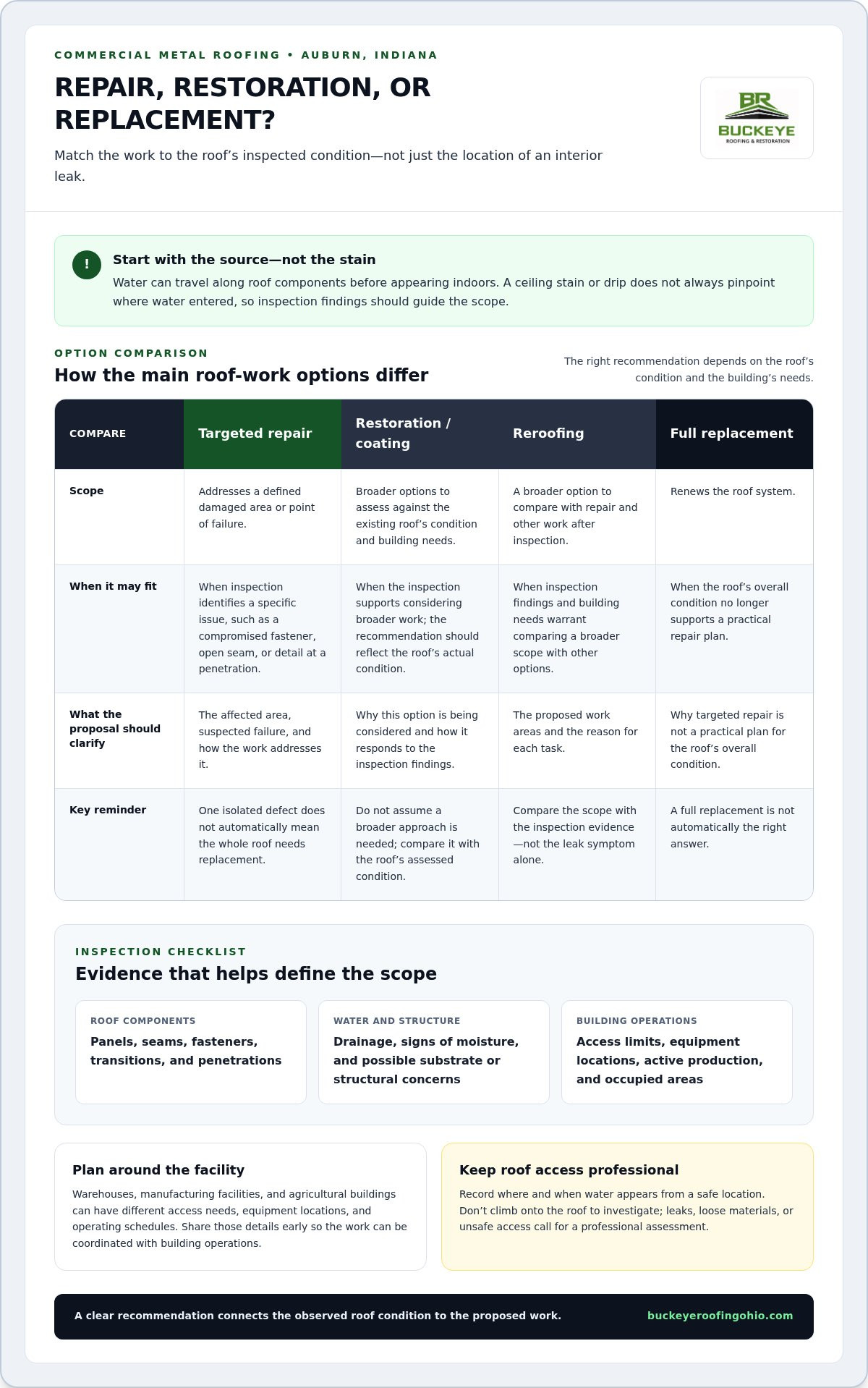
A leak or visible defect doesn’t automatically call for a new roof. The right option depends on how much of the metal roof is affected and whether its existing components can support continued service. Use this comparison to understand the terms, then rely on an inspection to determine which approach fits the building.
Repair: Targeted work on an identified failure, such as a damaged panel area, connection, or seam. It addresses a specific condition rather than renewing the roof.
Restoration or coating: Work on the existing roof that may include preparation and a coating system. It is appropriate only when the roof’s condition and inspection findings support it.
Reroofing (recover or overlay): Installing a new roof system over the existing roof without removing it. Suitability depends on the existing assembly and project conditions.
Full replacement: Removing the existing roof system and installing a new one. Unlike a recover, this approach takes off the existing roof.
“Reroofing” can be used broadly, so a proposal should state whether it means a recover over the existing roof or removal and replacement. Those approaches involve different scopes. A localized defect may support targeted repair, while conditions found across several areas call for a wider assessment.
No single remedy suits every commercial metal roof. The right choice depends on the roof’s condition, the building’s needs, and inspection findings. Match the work to the evidence rather than assuming one leak represents the condition of the entire roof.
When targeted metal-roof repair may be appropriate
Repair may make sense when an inspection identifies a specific failure and the surrounding roof remains suitable for targeted work. The scope should identify the affected area and explain how the work addresses the suspected cause. If water keeps appearing inside, investigate the recurring symptom. It does not, by itself, confirm where water enters or whether the original failure is the only concern.
For building owners considering commercial metal roof repair in Auburn Indiana, a clear explanation of the findings helps distinguish an isolated repair from broader roof needs. The proposal should describe the identified condition without promising that future leaks are impossible or guaranteeing a specific extension of roof life.
When broader restoration or replacement deserves consideration
Deterioration across multiple areas, recurring concerns, or problems involving the roof beneath the metal may justify looking beyond individual repairs. Restoration or a coating may be suitable only if inspection findings support it. The substrate, moisture, drainage, and structural condition all matter. A coating is not a substitute for addressing conditions that make the existing roof unsuitable for restoration.
Full replacement is an option to assess when the overall condition makes repair or restoration unsuitable, not an automatic response to damage. Buckeye Roofing & Restoration serves commercial properties in Auburn and can inspect the roof to help assess the available approaches. A commercial roof inspection gives you a basis for discussing the findings and next steps.
Choosing a commercial metal-roof repair scope in Auburn, Indiana
A sound repair proposal should show what the inspection found, where work is planned, and why each task belongs in the scope. For facility managers, that clarity supports a practical comparison of recommendations and helps align roofing work with building operations. A list of tasks without locations or reasons is harder to evaluate than a scope that connects each action to a documented condition.
Review the proposal by separating identified defects from additional recommended work. An identified defect is a condition noted during the inspection. Additional work may be recommended because of related concerns or to address a broader area, but its purpose should be explained. This distinction helps decision-makers understand which work addresses the immediate issue and what else the roofer believes deserves attention.
Questions that clarify the proposed repair scope
Ask which inspection findings support the work and which roof areas it covers. Clarify how each task relates to the reported water entry or visible deterioration. If the recommendation includes more than a targeted repair, ask what condition supports the broader scope and which alternatives were considered. These questions turn a list of roofing terms into a plan you can evaluate.
For example, a proposal may identify a particular seam or transition for repair while noting separate areas for further evaluation. The document should distinguish those items and explain why each is included. If repair, restoration, and replacement are all under consideration, ask for a plain-language explanation of how the roof’s condition supports each option. Buckeye’s commercial roof repair service starts with assessing the property’s needs, not assuming every concern calls for the same scope.
Plan work around Auburn commercial building operations
Roof access and building activity can shape project coordination. Before work is scheduled, identify access routes, active loading areas, sensitive equipment, tenant needs, and production or operating constraints. Share this information with the project team so it can be considered during planning. At a warehouse, loading activity may affect access. At a manufacturing facility, nearby equipment or active work areas may require specific coordination.
Northeast Indiana’s seasonal conditions can also influence planning. Snow, ice, and changing weather may affect when roof work can be carried out, but a suitable schedule depends on the project and conditions at the time. Don’t assume a repair can be completed without disruption or within a fixed timeline. Discuss expected access needs and operational coordination when reviewing the scope.
For broader maintenance planning, Buckeye’s guide, Commercial Flat Roof Repair: A Facility Manager’s Guide to Longevity, offers a related perspective on managing commercial roof repairs. The roof systems differ, but a clear scope and thoughtful coordination matter across facility planning. If you need to review findings for a metal roof serving your Auburn property, arrange an inspection or discuss the proposed repair scope.
Buckeye’s commercial metal-roof repair process for Auburn properties
Buckeye Roofing & Restoration serves commercial properties in Auburn and nearby Northeast Indiana. For a metal-roof concern, the first step is to understand the roof’s condition and the building’s needs. An inspection helps determine whether targeted repair, broader restoration, a coating, or replacement fits the findings. The recommendation should reflect what the roof can support, not assume every damaged area calls for the most extensive option.
What building owners can expect from a condition-based recommendation
Inspection findings should lead to a practical explanation of the proposed work: what condition was found, which areas are affected, and how each task responds to those findings. If a repair addresses one specific defect, the scope should say so. If the assessment points to broader deterioration, the recommendation should explain why a wider remedy deserves consideration.
Replacement isn’t the default for every damaged roof. Buckeye’s commercial roof repair and commercial roof restoration services give property managers options to consider, with inspection findings guiding the appropriate approach. Restoration or coating suitability depends on the existing roof’s condition and other site-specific findings.
Next steps for a commercial metal roof in Auburn
Before discussing an inspection, gather a concise account of the building’s concerns. Note where and when leaks appear inside, any known roof history, and operational details that could affect access or scheduling. Include constraints such as active work areas, sensitive equipment, tenant access, or loading activity. This information helps the project team understand both the roof issue and the facility it serves.
Broader repair planning can also help facility managers organize maintenance priorities. Buckeye’s Commercial Flat Roof Repair: A Facility Manager’s Guide to Longevity offers related context for managing commercial roofing work, though a metal roof requires an assessment tailored to its system and condition.
Buckeye serves commercial properties across Ohio, Northeast Indiana, and Southern Michigan, including Toledo, Fort Wayne, Findlay, Lima, Jackson, Battle Creek, Elkhart, Defiance, Bryan, Kalamazoo, Adrian, Bowling Green, Perrysburg, and Auburn. For commercial metal roof repair in Auburn Indiana, an inspection provides a grounded starting point for reviewing the available options.
Make the next roofing decision with a clear plan
A roof concern can become a useful planning point, not just another item on the maintenance list. Once you understand the roof’s condition and the work it supports, you can coordinate roofing decisions with facility priorities and plan how to manage the property over time. That is a more grounded approach to commercial metal roof repair in Auburn Indiana than making a decision based on a visible symptom alone.
Before moving ahead, consider what information would help your team act confidently: a clear account of the roof’s condition, a defined scope, and a recommendation that fits how the building operates. The right next step should make sense for the property, whether the concern is active or part of ongoing maintenance planning.
When you’re ready to discuss the roof’s condition and possible next steps, request a commercial roof inspection from Buckeye Roofing & Restoration.
Frequently Asked Questions
How much does commercial metal roof repair cost in Auburn, Indiana?
The cost depends on the repair scope, roof system, access, and materials needed, so an inspection is the basis for a project-specific estimate. To understand a proposal, check whether it identifies the work area, describes the tasks, and states any assumptions or exclusions. When comparing options, compare the work included, not just the bottom-line figure.
Can a commercial metal roof be repaired without replacing the whole roof?
Yes. A repair can address a limited problem without replacing the entire roof if inspection findings support that approach. The proposal should make clear whether the work concerns a specific section or a broader area, and how the repair fits the roof’s overall condition. This helps you weigh a targeted project against a larger capital plan without assuming either choice in advance.
Can commercial metal-roof work be planned around warehouse operations?
Work planning can account for warehouse routines, though some coordination or disruption may still be necessary. Before scheduling, identify who controls roof access, where materials could be staged, and whether delivery or loading activity affects those areas. Share restricted hours or active production periods with the project team. The final schedule depends on the scope and site conditions.
What information should I gather before requesting a commercial roof inspection?
Useful records include previous roofing proposals, repair invoices, maintenance notes, and available roof plans. These can help establish what work has already been done and which areas have drawn concern. Also identify the person who can arrange building access and point out interior locations affected by leaks. You don’t need to diagnose the roof; organized records simply give the inspection team better context.
What happens if a commercial metal-roof leak returns after a repair?
Record when the water reappears, where it shows inside, and any conditions you observed at the time, then notify the roofing team. If the repair documentation identifies the work area, have it available for review. Avoid covering or altering the affected area before it can be assessed, and don’t access the roof yourself. The roofing team can evaluate the new information and determine whether follow-up work is needed.
Is a coating always suitable for an older commercial metal roof?
No. A roof’s age alone does not determine whether coating work is appropriate. Before approving that approach, ask what preparation the scope includes, which conditions need to be addressed first, and how inspection findings support applying a coating to this roof. Those details help you understand the work and whether the recommendation accounts for the existing surface.
Does a commercial metal roof need to be completely dry before repair work?
Not necessarily for every type of work. Acceptable conditions depend on the repair method, materials, and site conditions. The roofing professional should determine whether the surface is ready for the specific task and whether weather could affect preparation or application. If conditions change before work begins, the project team can reassess. Building staff should leave roof access and surface preparation to trained roofing personnel.

Article by
Harry Stanley III
Harry Stanley III is a construction marketing strategist and fractional CMO at H&A Marketing. He has helped construction companies grow through website strategy, SEO, paid advertising, branding, lead generation, CRM systems, and professional content. His past work includes helping Meraki Solar generate an additional $3.7 million in revenue in his first year and supporting American Builders as a fractional CMO. Today, Harry works directly with custom home builders and construction companies to build marketing systems designed to generate qualified leads and measurable growth.
