
How HVAC Curbs and Pipe Penetrations Cause Commercial Roof Leaks
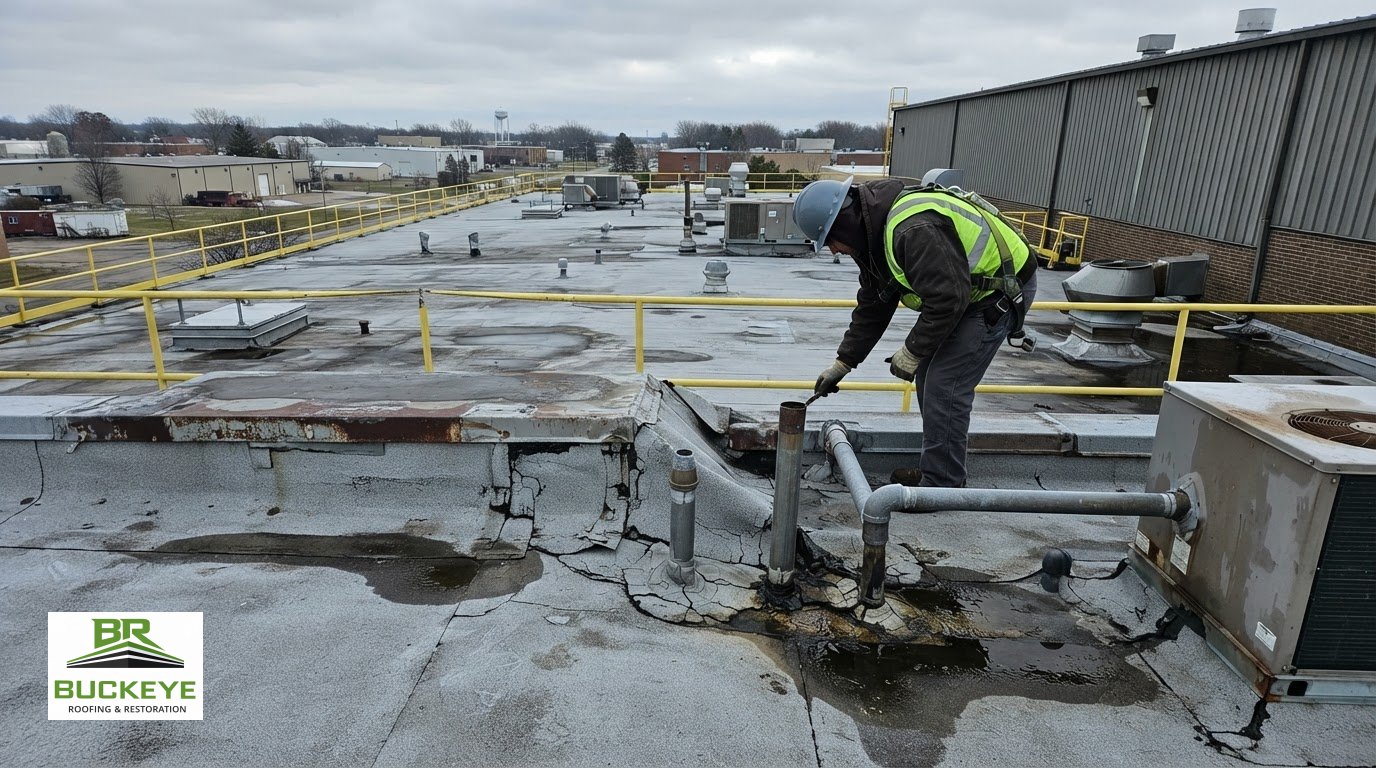
Could a small gap around an HVAC curb or pipe let water reach the building below? These roof details deserve attention during routine maintenance, especially when seasonal freeze-thaw cycles in Adrian, Michigan, put stress on seams and penetrations. If you’re looking for a commercial roof maintenance contractor in Adrian Michigan, you need a clear picture of the roof’s condition and practical next steps, not a one-size-fits-all checklist.
A useful maintenance visit considers the roof system and building use, then evaluates areas such as curb and pipe flashing, seams, drainage, and visible signs of moisture or material wear. That matters for warehouses, manufacturing facilities, offices, and other commercial buildings where a leak can affect equipment, inventory, or daily operations. Safe access and Michigan weather also affect when work can be planned.
This article explains why HVAC curbs and pipe penetrations can become leak points, what a contractor evaluates during an inspection, and how findings guide maintenance or repair. You’ll also learn how to document concerns safely and plan roof reviews around your system, operating needs, and access constraints.
Key Takeaways
- Commercial roof maintenance is planned observation and upkeep guided by the roof’s condition, not a one-size-fits-all checklist.
- A professional assessment reviews the membrane or metal panels, seams, flashing, drainage, and visible deterioration without requiring staff to access unsafe roof areas.
- Maintenance priorities for TPO, EPDM, and metal roofs depend on the system, building activity, occupancy, drainage, and access.
- Document interior leak signs and visible changes from safe locations, then track inspection findings and follow-up work.
- A commercial roof maintenance contractor in Adrian Michigan can use inspection findings to guide practical next steps, from routine maintenance to repair or further evaluation.
Why Commercial Roof Maintenance Matters for Adrian Properties
Commercial roof maintenance is planned observation and upkeep guided by the roof’s actual condition. It helps owners and facility teams track wear, drainage, and details that may need attention before a concern affects interior spaces or building operations. For a warehouse, manufacturing facility, office, or retail building, even a limited leak can disrupt work areas, equipment use, or access.
A low-slope roof isn’t meant to be perfectly level. Its design directs water toward drains or other outlets, so maintenance includes checking whether drainage paths appear clear and water is moving off the roof as intended. The goal is to understand the roof’s condition and address evidence of a problem, not to promise that leaks can’t happen or recommend replacement without cause.
What maintenance can and cannot do for a commercial roof
Maintenance helps identify visible changes and document conditions; it isn’t the same as repairing a leak. Repair addresses a specific defect. Restoration or a coating may be considered when inspection findings support that approach, while replacement may be appropriate when the existing roof’s condition calls for it. Each option depends on an assessment, not an assumption that every aging or damaged roof needs the same work.
Even a consistent maintenance routine can’t prevent every failure. Weather, building activity, and concealed conditions can affect a roof between visits. Findings from a professional review help determine whether monitoring, targeted commercial roof repair, or a broader evaluation is the sensible next step. Restoration or coating suitability depends on factors such as roof condition, substrate, moisture, drainage, and structural integrity.
Why Adrian’s seasonal conditions belong in the plan
Adrian’s seasonal shifts make timing worth considering. Freeze-thaw conditions can stress roofing materials and details, while snow and ice can affect drainage and make roof access less suitable. A review after winter can help identify visible changes. Another review before colder conditions return can help teams plan work around building operations and access.
Not every roof needs the same schedule or response. The roof system, observed condition, drainage, and upcoming building needs all matter. A commercial roof maintenance contractor in Adrian Michigan can assess those factors and help set priorities without treating seasonal weather as proof of damage.
Keep the goal straightforward: understand the roof’s condition, record concerns, and choose work that matches the findings. If staff notice interior water staining, new drips, or visible changes that may point to a roof issue, document what they can see safely and arrange a professional assessment. Maintenance supports informed decisions; it shouldn’t be used to dismiss a developing concern or push an unnecessary replacement.
What a Commercial Roof Maintenance Contractor Evaluates
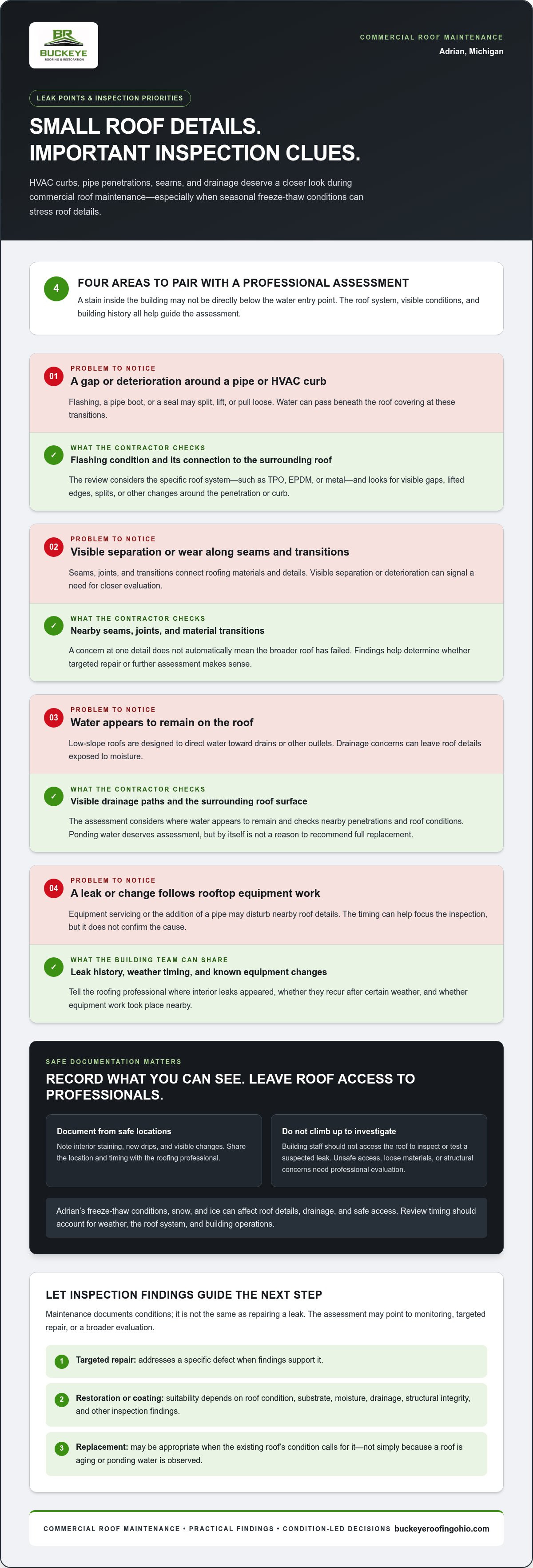
A professional assessment looks beyond the open roof surface to details where roofing materials meet curbs, pipes, and other equipment. These transitions rely on flashing, boots, or seals to keep water out. If a flashing edge pulls loose, a seam opens, a pipe boot splits, or a seal deteriorates, water can pass beneath the roof covering. The interior stain may appear some distance from the entry point, so its location alone may not reveal the source.
A commercial roof maintenance contractor in Adrian Michigan considers these details in relation to the roof system and the building’s history. Facility staff can share where leaks have appeared and whether they recur after certain weather. They shouldn’t climb onto the roof to inspect or test a suspected leak.
How roof-system condition shapes the assessment
TPO and EPDM membranes and commercial metal panels use different materials and details, so their inspection needs differ. At a pipe, the roofing professional checks the visible condition of the flashing or boot and how it meets the surrounding roof. At an HVAC curb, the review includes the membrane flashing around the curb and its visible connections to the roof surface. Splits, gaps, lifted edges, or other changes can signal that closer evaluation is needed.
The assessment also covers nearby seams, joints, and transitions for visible separation or deterioration. A concern at one penetration doesn’t automatically mean the broader roof has failed. Findings help determine whether targeted commercial roof repair or further assessment is appropriate.
How drainage and rooftop equipment factor into maintenance
Water movement matters because drainage problems can leave roof details exposed to moisture. A contractor considers visible drainage paths and areas where water appears to remain, then evaluates the surrounding surface and nearby penetrations. Ponding water deserves assessment, but it isn’t, on its own, a reason to recommend full replacement.
Equipment areas also deserve attention because service work can disturb nearby roof details. If a leak appeared after equipment was serviced or a pipe was added, share that timing with the roofing professional. It may help focus the inspection, but the cause still needs to be confirmed on site.
Suspected moisture within the roof assembly, structural concerns, loose materials, or unsafe access call for professional evaluation. Facility teams can record interior staining and report known changes to rooftop equipment from safe locations. The roofing professional can assess the details and explain what the visible evidence supports.
If you’ve noticed water intrusion or a concern around rooftop equipment, arrange a professional commercial roof inspection.
How to Prioritize Maintenance for Adrian’s Commercial Roofs
Priorities should reflect both the roof system and the building’s day-to-day demands. A warehouse with regular rooftop service visits may need closer attention to areas affected by equipment work. A facility with limited roof access may need to coordinate reviews carefully so the roofing professional can assess key areas without interrupting essential operations.
Use this comparison to organize observations and communicate concerns. It isn’t a repair checklist or a ranking of roofing systems. The right maintenance plan depends on the roof’s condition and how the property is used.
| Roof system | Observation focus | When to seek evaluation |
|---|---|---|
| TPO | Membrane surface, seams, transitions, and areas affected by rooftop work | Visible punctures, lifted seams, or changes near equipment |
| EPDM | Membrane condition, seams, transitions, and areas around service paths | Visible damage, seam concerns, or recurring interior signs |
| Commercial metal | Panel seams, fasteners, corrosion, and coating condition | Rust, loose components, or visible changes at connections |
TPO and EPDM maintenance priorities
TPO and EPDM are distinct membrane systems, so observations shouldn’t be treated as identical. A professional can assess each system’s seams, transitions, and surface condition, paying particular attention to areas exposed to foot traffic or equipment servicing. If staff notice a possible puncture or separation from a safe vantage point, report its location and arrange an evaluation rather than attempting a repair.
Commercial metal roof maintenance priorities
For metal roofing, note visible changes at panel seams, fasteners, and coated surfaces. Rust or a loose component deserves assessment before anyone selects a remedy. A coating may suit some roofs, but the decision depends on inspection findings, including the condition of the metal and existing finish. Don’t assume a coating is the right response to every sign of corrosion.
Building use can help determine what to address first. A leak above active production, stored inventory, or sensitive equipment may deserve prompt review because of its operational impact. Share known equipment-service activity, access limitations, and areas where staff have noticed changes so the roofing professional can take those factors into account.
For properties in Adrian, a commercial roof maintenance contractor in Adrian Michigan can relate observed conditions to the roof system and building needs. Keep staff observations to safe locations; don’t ask untrained employees to walk the roof or inspect seams and fasteners directly.
If a leak or visible change is affecting building operations, arrange a commercial roof inspection to discuss the next step.
How to Build a Safe, Useful Commercial Roof Maintenance Routine
A practical routine turns roof concerns into clear next steps without asking facility staff to do roofing work. Document what’s visible from safe locations, arrange professional reviews, save the findings, and track follow-up. This gives property managers and operations teams a shared record, even when staff or contractors change.
What facility staff can safely document
Staff can note interior leak locations, the date a concern appeared, and any effect on work areas, equipment, inventory, or building access. If a concern is visible from the ground or another permitted, safe location, a photo can help show what changed. Don’t climb onto the roof or attempt repairs. Active water intrusion, structural concerns, or electrical risks should be raised promptly through the building’s established safety and maintenance process.
How to keep maintenance records actionable
Store inspection dates, observed conditions, recommendations, and completed follow-up in one place. Include known roof-system details, prior repair records, and relevant access or operating constraints. A useful record shows whether a concern was addressed or still needs attention, rather than simply collecting reports without assigning a next step.
Use a repeatable sequence for each maintenance cycle:
- Document concerns. Record what staff can observe safely, where it occurred, and how it affects building operations.
- Plan a professional review. Coordinate roof access and timing with the roofing professional, facility schedule, and weather conditions. Don’t treat a routine calendar date as a reason to access a roof when conditions are unsafe.
- Save the findings. Keep inspection notes with the building’s roof-system information and previous repair history.
- Track follow-up. Note which recommendations were completed and which still need a decision or further assessment.
Timing should fit both the roof and the building. In Adrian, teams may plan reviews around seasonal changes, including periods when snow, ice, or freeze-thaw conditions can affect roof access and drainage. Weather can also affect when a professional can safely assess the roof or complete planned work. For an occupied office, warehouse, or manufacturing facility, coordinate scheduling with operations so access and work can be managed with less disruption.
A commercial roof maintenance contractor in Adrian Michigan can use your records to understand the history of a concern and focus the inspection. A documented approach is also useful across industrial facilities, where roof condition and operational needs should be tracked together.
If you have an active leak or need a professional review, request a commercial roof inspection.
How Buckeye Supports Commercial Roof Maintenance in Adrian
Buckeye Roofing & Restoration is based in Edon, Ohio, and serves commercial properties in Adrian. The company also serves businesses across Ohio, Northeast Indiana, and Southern Michigan, including Toledo, Fort Wayne, Findlay, Lima, Jackson, Battle Creek, Elkhart, Defiance, Bryan, Kalamazoo, Bowling Green, Perrysburg, and Auburn. These markets include commercial and industrial buildings where weather, drainage, rooftop equipment, and building operations all factor into roof maintenance.
Buckeye provides commercial roof inspections and scheduled preventative maintenance for individual buildings and portfolios. An inspection considers the existing roof system, visible condition, drainage, reported leaks, and the building’s operational needs. Findings help clarify whether routine follow-up is appropriate or whether a specific area needs repair or broader assessment.
When inspection findings point to repair or continued maintenance
A localized defect may call for targeted repair while the rest of the roof remains serviceable. If an inspection identifies damage around a pipe or HVAC curb, for example, the response may focus on that detail rather than replacing the entire roof. The recommendation depends on the assessment, including whether related concerns appear elsewhere.
Some roofs may need continued observation and scheduled maintenance rather than immediate corrective work. Others may need repair to address a specific problem. Buckeye’s commercial roof repair service addresses identified roof issues; an inspection helps determine whether repair is the right next step. Property teams can keep records of findings and follow-up so new observations can be considered alongside prior work.
When restoration, coating, or replacement deserves evaluation
If inspection findings show broader deterioration, restoration, coating, or replacement may warrant discussion. These options serve different purposes, and none should be selected by default. Restoration or coating suitability depends on the roof’s condition, substrate, moisture, drainage, structural integrity, and other assessment findings. A roof that isn’t suitable for one approach may require a different plan.
Replacement may be considered when the existing system’s condition calls for it, but a maintenance concern alone doesn’t establish that need. An inspection should connect observed conditions to a proportionate recommendation. That gives owners a clearer basis for planning work around building access, occupancy, and operations.
Working with a commercial roof maintenance contractor in Adrian Michigan gives facility teams a practical way to assess concerns and plan next steps. Buckeye serves Adrian commercial properties with inspections and preventative maintenance, using inspection findings to inform recommendations for repair, restoration, coating, or replacement as appropriate.
If you’re managing an active leak or want to discuss a roof inspection or maintenance concern, contact Buckeye to request an inspection.
Make the Next Roof Decision With Clear Information
A roof concern is easier to manage when the next step is based on what’s happening, not guesswork. If you’ve noticed a recurring leak, a change in how water drains, or a concern around rooftop equipment, record what you can observe safely and arrange a professional assessment. That gives your team a starting point for planning without assuming the entire roof needs major work.
Choosing a commercial roof maintenance contractor in Adrian Michigan should help you understand the roof’s condition, the available options, and what deserves attention first. Buckeye Roofing & Restoration serves commercial properties in Adrian from its base in Edon, Ohio, and bases recommendations on inspection findings rather than assuming replacement is necessary.
Have a roof concern to discuss? Request a commercial roof inspection from Buckeye to discuss maintenance, a leak, or the next step for your building.
Frequently Asked Questions
How often should a commercial roof in Adrian be professionally maintained?
Set the schedule according to the roof system, condition, past findings, drainage, and building use. The National Roofing Contractors Association recommends professional inspections at least twice a year, typically in spring and fall, and after severe weather. A commercial roof maintenance contractor in Adrian Michigan can help tailor reviews to the property, so a roof with recurring concerns or substantial rooftop activity gets appropriate attention.
Can a commercial roof maintenance visit be planned around normal building operations?
Yes. Coordinate the visit with facility staff so the roofing professional understands access procedures, active production areas, equipment schedules, and spaces that need to remain clear. A warehouse may need to protect receiving activity, while a manufacturer may need to coordinate around rooftop equipment. Share these constraints in advance so the inspection can be planned with building use and safe access in mind.
Does ponding water mean a commercial roof needs to be replaced?
No. Water that remains after rainfall calls for evaluation, but it doesn’t by itself establish that replacement is necessary. A roofing professional can consider where water collects, whether drainage paths are obstructed, and the surrounding roof condition. If staff can observe standing water safely from inside or another permitted location, note where it appears and tell the roofing professional rather than attempting to reach or clear it.
Should facility staff remove snow or ice from a commercial roof?
Don’t send untrained staff onto the roof to remove snow or ice. Roof access can be hazardous, and improper tools or methods may damage roofing materials. Snow or ice concerns, especially alongside signs of unusual structural movement or water intrusion, should be raised promptly with building management and a qualified roofing professional. Follow the facility’s safety procedures and keep people away from any area that may be unsafe.
What should I do if I find water inside after a roof maintenance visit?
Report the water promptly through your facility’s maintenance process, even if the roof was recently inspected. Record the room, visible extent, time noticed, and any affected equipment or work area. Keep people clear of electrical hazards or unsafe conditions, and don’t investigate from the roof. A leak’s interior location may not identify the point where water entered, so share your notes with the roofing professional for follow-up.
Can maintenance records help guide a future repair or restoration decision?
Yes. Inspection notes, repair history, and records of recurring leaks help show how conditions have changed and whether concerns are isolated or appearing in multiple areas. That context can support a more informed discussion about continued maintenance, targeted repair, or whether restoration or coating deserves evaluation. Records don’t determine the solution on their own; a professional still needs to assess the roof’s current condition and suitability.
Is commercial roof maintenance useful when there are no visible leaks?
Yes. A dry interior doesn’t tell you everything about the roof’s condition. A professional review may identify visible wear, drainage concerns, or changes around rooftop equipment before they show up as interior water. Maintenance also gives facility teams a baseline to compare against future observations. It’s a practical way to make decisions from documented conditions rather than waiting for a leak to become the first sign of a problem.

Article by
Harry Stanley III
Harry Stanley III is a construction marketing strategist and fractional CMO at H&A Marketing. He has helped construction companies grow through website strategy, SEO, paid advertising, branding, lead generation, CRM systems, and professional content. His past work includes helping Meraki Solar generate an additional $3.7 million in revenue in his first year and supporting American Builders as a fractional CMO. Today, Harry works directly with custom home builders and construction companies to build marketing systems designed to generate qualified leads and measurable growth.
