
Commercial Roof Inspection Guide: Battle Creek, MI
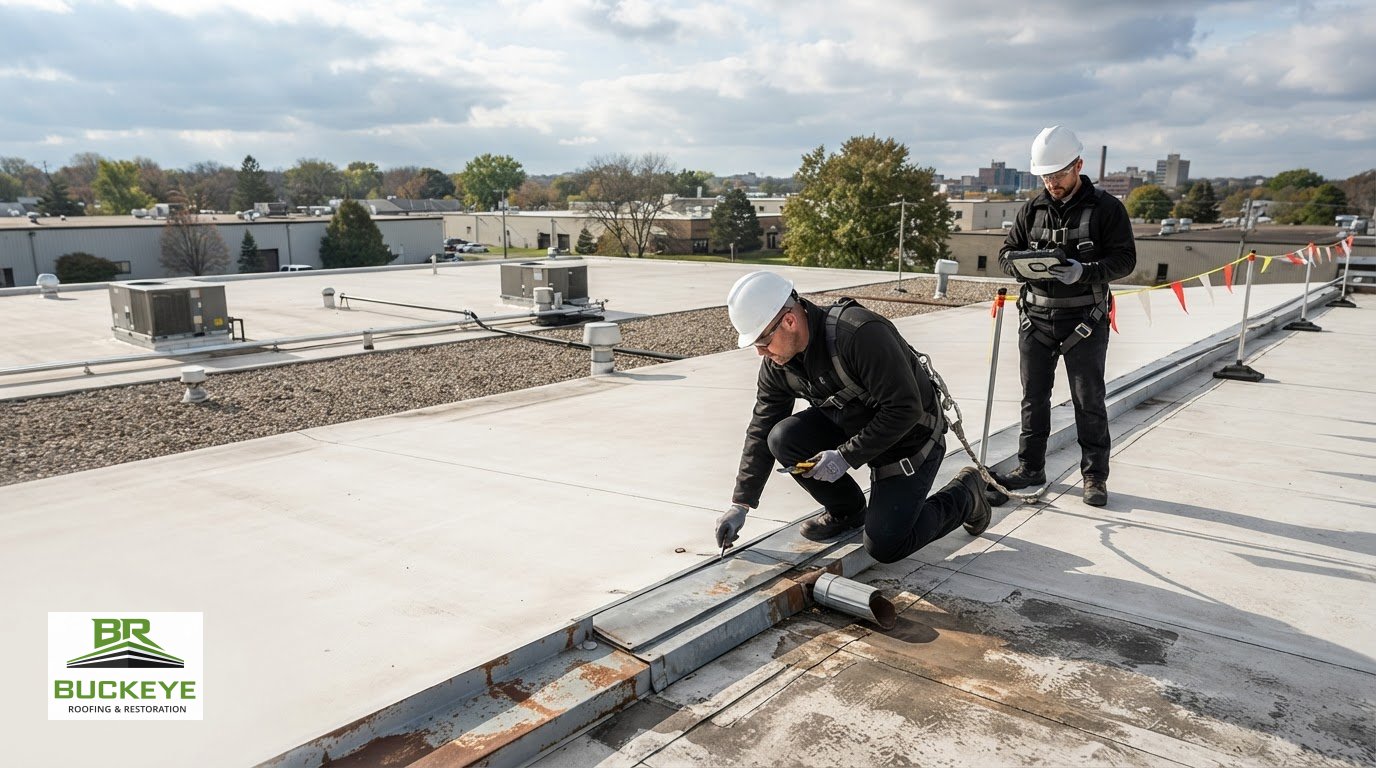
A useful commercial roof inspection guide should explain what a professional evaluates and how the findings help you decide what needs attention now, what can be monitored, and what work to plan. For Battle Creek property owners and facility managers, that clarity matters when a leak could disrupt warehouse, manufacturing, or office operations.
You may be wondering what an inspection covers, whether a ceiling stain points to a roof problem, or when a concern needs a closer look. A visual review documents visible conditions. If the signs suggest moisture may be concealed beneath the roof surface, further evaluation may be appropriate.
This guide explains what inspectors assess, how to prepare without taking unnecessary risks, and what a useful report should document. It also shows how to use findings to plan maintenance, repair, restoration, or replacement based on the roof’s condition rather than assumptions.
Key Takeaways
- This commercial roof inspection guide explains how documented findings help facility teams plan maintenance before roof concerns disrupt building operations.
- Inspection scope depends on the roof system, building use, safe access, and observed conditions. A useful assessment reflects the property, not a one-size-fits-all checklist.
- An inspection doesn’t automatically mean replacement. Distinguishing localized damage from broader deterioration helps clarify appropriate next steps.
- Prepare by coordinating access and sharing leak locations, repair history, roof-system information, and operational constraints.
- Buckeye Roofing & Restoration is based in Edon, Ohio, and serves commercial properties in Battle Creek, helping owners use inspection findings to plan practical roofing work.
Why Commercial Roof Inspections Matter for Battle Creek Buildings
A commercial roof inspection is a professional evaluation of a roof’s observable condition. It gives owners and facility teams a basis for maintenance and repair planning instead of relying only on interior leaks or urgent complaints to reveal problems. For a warehouse, manufacturing plant, office, or multi-building property, documented findings help teams plan work around building use and operating needs.
An inspection can’t prevent every roof problem. It can give managers time to understand a concern, coordinate access, and plan appropriate work before it interrupts building operations. Treat an inspection as a decision-making tool, not an automatic recommendation for major work.
A routine review and an inspection prompted by an event have different purposes. Scheduled reviews help track changing roof conditions as part of ongoing maintenance. A leak, visible damage, or concern after severe weather calls for a professional evaluation focused on what has changed. Facility staff should share what they’ve observed and arrange a qualified assessment rather than climbing onto the roof.
What a commercial roof inspection can and cannot tell you
An inspection records conditions observed at the time of the assessment. Those findings help guide maintenance and repair decisions, but they can’t guarantee that the roof will remain leak-free or predict every future problem. Some conditions may be concealed beneath the roof surface. If visible evidence or the building’s history points to a possible hidden issue, further evaluation may be appropriate before deciding on a response.
When should a Battle Creek property schedule an inspection?
Build roof reviews into the property’s maintenance plan, with timing suited to the roof, building use, and access requirements. In Battle Creek, seasonal changes between cold winters and warmer periods make it practical to consider roof condition as facility teams plan work throughout the year. A fixed calendar alone isn’t enough, though. Arrange a professional review if a new leak, visible damage, or storm concern develops rather than waiting for the next scheduled check.
Consider an inspection when:
- A leak appears or returns, even if the interior sign seems limited.
- Staff notice visible damage from a safe location or report a change after severe weather.
- The maintenance team needs current condition information to plan upcoming work or coordinate building access.
Record when and where a concern appeared and whether it changes during or after weather events. That information helps the roofing professional focus the assessment. If conditions inside the building change or another concern develops, update the inspection plan rather than assuming an earlier report describes the roof’s current condition.
What a Professional Commercial Roof Inspection Evaluates
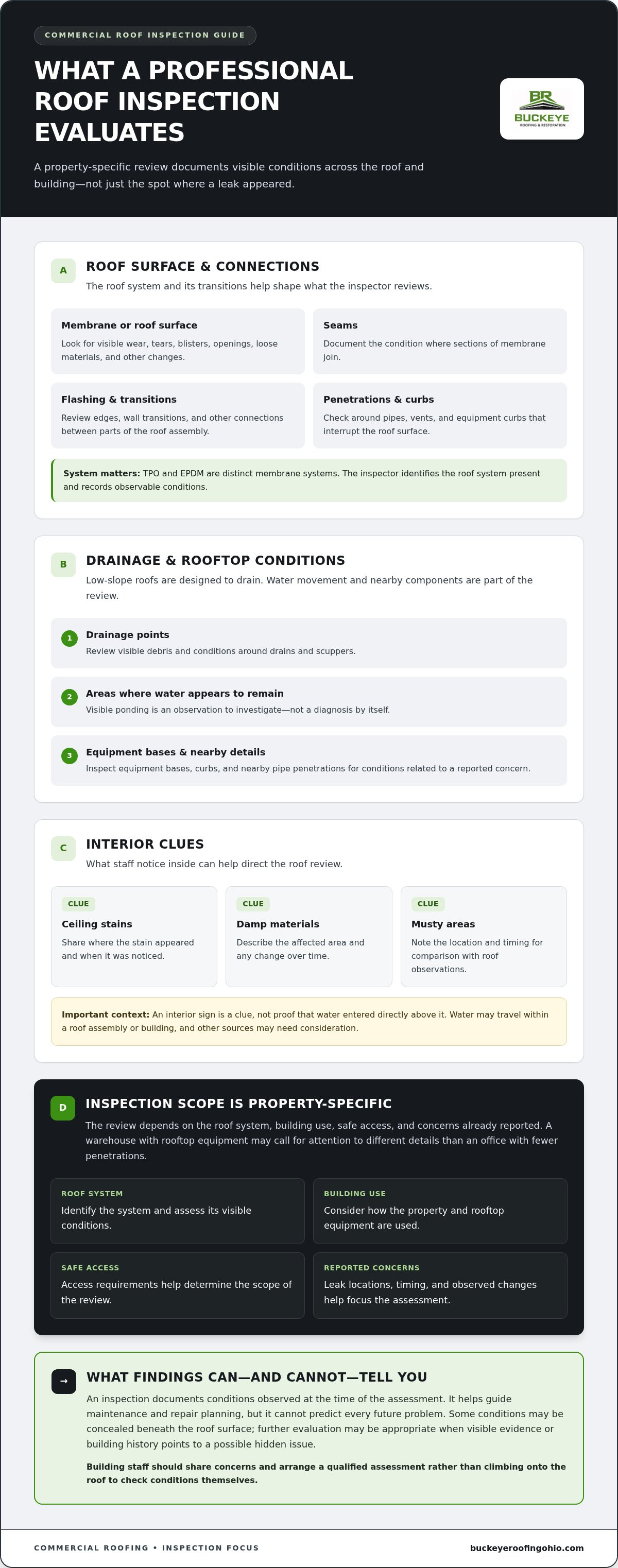
An inspection isn’t a one-size-fits-all checklist. The roofer’s review depends on the roof system, building use, safe access, and concerns already reported. A warehouse with rooftop equipment may need attention to different details than an office with fewer penetrations. The inspector’s goal is to document relevant roof conditions and compare them with what the facility team has noticed inside.
Commercial low-slope roofs are designed to drain, so the assessment includes how water moves across the surface and toward drainage points. The roofer considers multiple visible conditions rather than assuming one observation explains the whole roof. This commercial roof inspection guide covers common areas a professional may review, but the actual scope should reflect the property.
Roof surface, seams, flashing, and penetrations
The roofer examines the membrane or roof surface for visible wear, tears, blisters, openings, loose materials, and other changes. Seams join sections of membrane, so their condition is important to document. Flashing protects transitions and edges. Penetrations such as pipes and vents interrupt the roof surface and need careful evaluation. Roof edges, wall transitions, and equipment curbs also deserve attention because they connect different parts of the roof assembly.
The roof material matters. TPO and EPDM are distinct membrane systems, not interchangeable names for the same material. An inspector identifies the system present and records what can be observed rather than treating all membranes alike. For information about safe access and work practices, consult relevant OSHA safety guidelines for roof inspections. Building staff shouldn’t climb onto the roof to check these details themselves.
Drainage, rooftop equipment, and interior clues
Drainage is another part of the review. The roofer may document visible debris, the condition around drains and scuppers, and areas where water appears to remain. A low-slope roof is designed to drain, but visible ponding is an observation to investigate, not a diagnosis on its own. Equipment bases, curbs, and nearby pipe penetrations are also checked for conditions that may help explain a reported concern.
Inside the building, ceiling stains, damp materials, or a musty area can help direct the investigation. These are clues, not proof that water entered directly above that spot. Water may travel within a roof assembly or building before becoming visible indoors, and other sources may need consideration. Share the location and timing of interior signs so the inspector can compare them with roof observations.
A useful report connects observations to the roof system and building context. It should also note where access or concealed conditions limit the assessment. If you need a professional evaluation, request a commercial roof inspection to clarify the roof’s condition and appropriate next steps.
Interpreting Roof Inspection Findings Without Replacement
An inspection doesn’t automatically mean a commercial roof needs full replacement. Its purpose is to document conditions and help determine a proportionate response. A localized opening or isolated area of damage is different from deterioration across broad sections of the roof system. The extent, location, and condition of the surrounding materials all matter.
Use a commercial roof inspection guide to organize decisions, not to jump to a predetermined outcome. A report should explain what the inspector observed, where it was found, and what needs attention. The NRCA commercial roof inspection standards can help inform professional roofing practice, but the right scope of work still depends on the building and inspection findings.
Which findings may call for repair or continued maintenance?
A localized defect may lead to a targeted repair recommendation after a professional evaluates its cause and the condition of the surrounding roof. Active water entry or isolated damage deserves timely attention, but it doesn’t by itself prove that the entire system has failed. The affected area needs to be assessed in context before work is recommended.
Other findings may call for monitoring or routine upkeep. Monitoring shouldn’t replace a necessary repair, especially if water is entering the building. Photos can help record changes over time, but they can’t establish the roof’s full condition or confirm a diagnosis on their own.
When might restoration or replacement enter the discussion?
Restoration and coatings may be considered when the existing roof is suitable for that scope. Suitability depends on the substrate, moisture within the assembly, drainage, structural condition, and other inspection findings. A coating isn’t a universal fix, and restoration isn’t appropriate for every roof. An assessment should establish whether the existing system can support the proposed work.
If deterioration is widespread or the roof has broader system concerns, the work under consideration may change. Restoration renews an eligible existing roof, while a coating adds a protective layer when the roof’s condition supports it. Reroofing is a general term for installing a new roof covering or system; the project may involve retaining or removing existing materials. Full replacement involves removing and replacing the existing roof system. The inspection and project plan should clarify which work is proposed.
Use the report to ask practical questions: Is the concern isolated or widespread? Does the roof need a defined repair, ongoing maintenance, or broader work? What conditions support the recommendation? Buckeye’s commercial roof restoration service is an option when inspection findings indicate the roof may be suitable. An inspection helps establish that instead of assuming replacement is necessary.
If you’re weighing a repair against a larger scope of work, request a commercial roof inspection to discuss the documented conditions and practical next steps.
How Facility Managers Can Prepare for an Inspection and Use the Report
A little preparation helps an inspection address the building’s actual concerns. Before the visit, assign a facility contact to coordinate access, gather roof records, and explain operational limits. At a manufacturing site, for example, this could include restricted areas or equipment that needs to remain in service. Give the inspector useful context, but don’t ask staff to access the roof.
Preparation and follow-up are part of the same process. The inspection report becomes more useful when your team can compare its observations with past records and track what happens next.
What information should the facility team gather first?
Collect what’s available, even if the files are incomplete. Useful background includes previous inspection notes, repair documentation, and information about the roof system. Map interior leak reports or ceiling stains by room or building area, and note when they appeared or changed. These details help focus the review, but they don’t establish the source of moisture.
- Share reported leak locations and the dates or conditions associated with them.
- Provide records of earlier repairs or maintenance, including the areas addressed.
- Coordinate building access and flag operational constraints, such as active production areas.
Keep staff observations to areas they can reach safely, such as interior rooms or other approved locations. Don’t send employees onto the roof to take photos, check drains, or point out a concern. Leave roof access and close-up assessment to qualified professionals.
How to turn findings into a maintenance record
When the report arrives, transfer useful details into the property’s maintenance system or a consistent roof log. For each item, record its location, observed condition, recommended action, priority, and follow-up status. If the report includes photos or a roof plan, file them with the notes so the next reviewer can identify the area clearly.
Keep the record active. Note when recommended work is completed, which area it addressed, and any later observations. This history helps the team compare conditions over time and plan maintenance across several buildings. Separate observations from completed work: a concern listed in a report isn’t resolved until the appropriate action has been taken and recorded.
If the report identifies a repair, use its location and description to frame the next discussion. Buckeye’s commercial roof repair guidance can help facility teams understand how repair fits into broader roof planning.
Have an inspection report or a concern to document? Request a commercial roof inspection to discuss the property’s condition and practical next steps.
Plan a Commercial Roof Inspection in Battle Creek with Buckeye
A clear inspection record gives a property owner more than a list of roof concerns. It provides a basis for deciding what to address, what to monitor, and how to plan work around building operations. For a warehouse, manufacturing building, office, or other commercial facility, that can help the team organize next steps without assuming every concern calls for the same scope.
Buckeye Roofing & Restoration works with commercial property owners and facility managers to evaluate roof conditions and inform maintenance planning. Based in Edon, Ohio, Buckeye serves commercial properties across Ohio, Northeast Indiana, and Southern Michigan, including Toledo, Fort Wayne, Findlay, Lima, Jackson, Battle Creek, Elkhart, Defiance, Bryan, Kalamazoo, Adrian, Bowling Green, Perrysburg, Auburn, and South Bend.
A useful commercial roof inspection guide makes one thing clear: findings inform the recommendation. They don’t predetermine full replacement.
What to expect from a condition-based recommendation
The appropriate next step depends on what the inspection documents about the roof and building. A specific, localized concern may call for a repair, while other findings may point to ongoing maintenance or a broader assessment of the system. Restoration or a coating may be considered when the roof’s condition supports that approach. Replacement may enter the discussion if findings indicate broader system concerns, but it isn’t an automatic result of scheduling an inspection.
Ask for recommendations that connect each proposed action to a documented observation. This helps you understand why a concern matters, whether it needs timely attention or monitoring, and how the work could affect facility planning. Repair addresses a defined problem; restoration renews an existing roof when appropriate; a coating is a separate protective layer whose suitability depends on the roof. Replacement involves replacing the existing system. The roof’s condition, drainage, substrate, and other findings shape which option makes sense.
If you manage several buildings, keep each property’s records distinct. For example, track recurring reports of moisture by location and compare them with that building’s repair and inspection history. Similar symptoms at another facility don’t necessarily mean the roofs need the same work.
Request an inspection for your commercial property
Before reaching out, gather the building address, general property use, known roof-system information, and a short description of your concerns. Include reported leak areas, visible signs observed safely from inside, previous repairs, and operational constraints that could affect access or planning. You don’t need to diagnose the roof. Clear observations are enough to start a useful conversation.
If you’re responsible for a commercial property and want to understand its roof condition, request a commercial roof inspection and share what your facility team has observed. The findings can help you plan practical next steps based on the building, not assumptions.
Make Roof Condition Part of Your Property Plan
A roof record becomes more valuable when it informs upcoming maintenance and operating decisions. Set a review point for open recommendations, completed work, and new observations from staff. This gives your team a clearer starting point for future planning without assuming the same solution fits every building or roof concern.
Use this commercial roof inspection guide when deciding what information to gather and how to make the findings useful. If you manage a commercial property in Battle Creek, Buckeye’s inspections and preventative maintenance can help you understand the roof’s observed condition and consider appropriate next steps.
Request a commercial roof inspection and share the building’s roof concerns with Buckeye. A clear assessment can help your team move forward with a practical plan.
Frequently Asked Questions
How often should a commercial roof be inspected?
Plan for at least two professional inspections each year, a schedule recommended by the National Roofing Contractors Association, often in spring and fall. Timing can also depend on roof condition, building use, and maintenance needs. For a commercial property in Battle Creek, coordinate reviews with seasonal facility planning and arrange an additional assessment if a leak, visible damage, or another concern develops between scheduled visits.
Can a commercial roof inspection guarantee that the building will not develop leaks?
No inspection can guarantee that a roof won’t leak later. It documents conditions observed during the assessment, but weather, building activity, and concealed issues can change conditions afterward. Use the report as a current reference, then report new interior moisture or visible changes promptly. Keeping dates and locations with those reports helps your team and roofing professional compare new concerns with earlier observations.
Does a commercial roof inspection include the inside of the building?
It can, especially when interior signs may help direct the roof evaluation. Facility staff can identify ceiling stains, damp areas, or changes near equipment and note when they appeared. These signs don’t prove the roof is the source, but they give the inspector useful context. Coordinate interior access in advance, particularly in production areas, tenant spaces, or rooms with restricted entry.
Is thermal imaging necessary for every commercial roof inspection?
No. A visual inspection may be enough to document visible roof conditions. Thermal imaging is a specialized option that can help investigate suspected moisture beneath a roof surface, but it isn’t automatically needed for every property or concern. The inspection findings and purpose of the assessment help determine whether additional testing is worthwhile. Discuss suspected concealed moisture with the roofing professional rather than assuming a scan is required.
What records should I keep after a commercial roof inspection?
Keep the dated inspection report, marked roof plans or location notes, photographs provided, and records of completed maintenance or repair work. Store them together by building so a future facility manager can follow the roof’s history. Add the date an action was completed and any later changes reported by staff. These records can clarify whether an observation is new, recurring, or already addressed.
Can an inspection be planned around normal business operations?
Often, an inspection can be coordinated with facility needs. Share access procedures, restricted areas, production schedules, tenant requirements, and equipment that must remain in operation when arranging the visit. A warehouse may need coordination around loading activity, while a manufacturing facility may have controlled-access zones. Planning these details ahead helps limit disruption to staff and daily work.
Should a commercial roof be inspected after severe weather?
Arrange a professional evaluation if severe weather raises a concern or staff observe damage, new moisture, or another change afterward. Don’t wait for a routine inspection if water is entering the building or visible damage needs assessment. From inside or another safe area, note where and when the concern appeared. Never climb onto the roof to investigate; access and close inspection should be left to qualified professionals.

Article by
Harry Stanley III
Harry Stanley III is a construction marketing strategist and fractional CMO at H&A Marketing. He has helped construction companies grow through website strategy, SEO, paid advertising, branding, lead generation, CRM systems, and professional content. His past work includes helping Meraki Solar generate an additional $3.7 million in revenue in his first year and supporting American Builders as a fractional CMO. Today, Harry works directly with custom home builders and construction companies to build marketing systems designed to generate qualified leads and measurable growth.
