
Commercial Flat Roof Wind Uplift: Causes, Warning Signs, and Next Steps
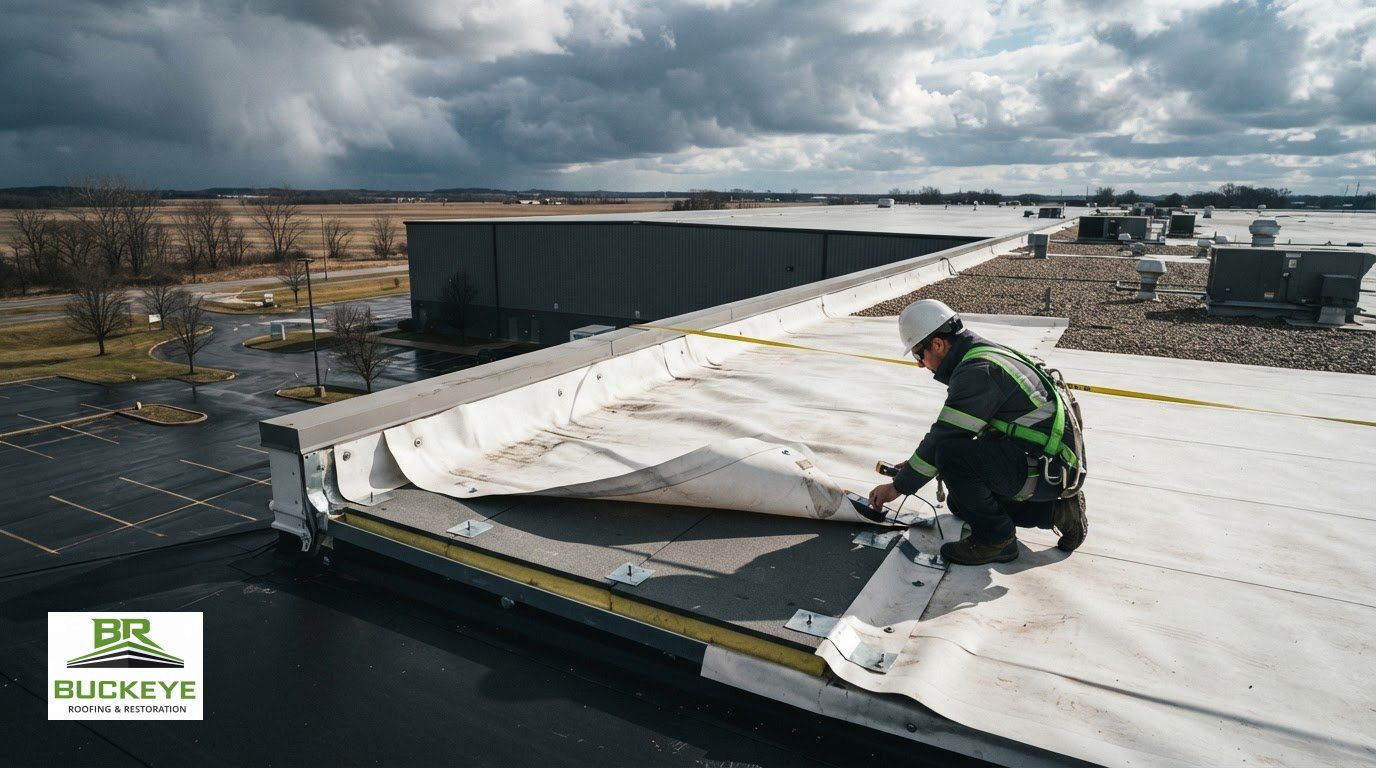
What if a commercial roof looks intact after a windstorm, but parts of its attachment system have been weakened? Commercial flat roof wind uplift affects more than the visible membrane. Wind pressure can pull on the roof assembly, including fasteners, insulation, and edge details. Corners and perimeter areas can face greater pressure than the center, so damage may begin out of sight.
If you manage a warehouse, manufacturing facility, or other commercial building, it can be hard to know whether a roof concern calls for a repair, a closer inspection, or no immediate work. Surface damage doesn’t always reveal what’s happening beneath the membrane, and one sign alone doesn’t mean the roof needs replacement.
This article explains how uplift forces act on a low-slope roof, which warning signs you can check safely from inside or at ground level, and when to contact a commercial roofer. You’ll also learn what an inspection can assess, from edge securement and attachment details to leaks and the overall condition of the assembly, so the next step reflects the roof’s actual needs.
Key Takeaways
- Commercial flat roof wind uplift can affect connected roof components, so an intact-looking membrane may not tell the whole story.
- Interior signs such as new leaks or ceiling changes can flag a concern. Leave roof-level checks to a qualified professional.
- Document what you observe and note any impact on building operations before arranging an assessment.
- Repair, restoration, coatings, or replacement may be considered, but the right option depends on inspection findings and roof condition.
- A professional assessment can clarify the roof’s attachment, damage, and next steps without assuming full replacement is necessary.
What Is Commercial Flat Roof Wind Uplift, and Why Does It Matter?
Commercial flat roof wind uplift is the upward force wind can place on a roof assembly. Wind moving over a roof can create lower pressure above it while pressure inside the building remains higher, pushing roof components upward. This pressure difference is one part of the broader concept of wind load, or the forces wind exerts on a structure.
“Flat roof” is common shorthand, but commercial roofs are generally low-slope systems. Their slope helps direct water toward drains or other drainage points. Wind uplift is a separate concern: it involves how the assembly resists upward forces, not whether the roof looks level from the ground. A storm can expose a building to wind without damaging its roof. The building’s condition and roof details determine what actually happens.
How wind pressure can act on a low-slope roof
As wind flows around and over a building, pressure varies across its surfaces. The roof may experience suction from above, while pressure inside can also contribute to upward force. Wind does not act evenly across every part of a roof. Corners and perimeter areas may face greater localized pressures than the central field, so their design and condition deserve particular attention. These areas warrant assessment, but their location alone doesn’t prove damage has occurred.
For a commercial building, the practical concern is whether wind force has affected the roof’s ability to stay secured and keep water out. A storm alone doesn’t confirm a problem. An assessment should consider the specific roof assembly and any changes observed afterward.
Which parts of a commercial roof assembly matter?
Uplift concerns the connected assembly, not just the exposed membrane. Depending on the system, components may include the membrane, insulation, a cover board, attachment materials, and the roof deck. Some assemblies use mechanical fasteners; others use different attachment methods. Not every roof contains the same layers, and a visible membrane surface cannot reveal every detail beneath it.
If one component or connection is compromised, the condition of adjoining layers can affect how the roof performs. That’s why an assessment should identify the existing system and examine how its components work together, rather than judge the roof by its surface alone. TPO and EPDM are examples of commercial roofing systems, but their materials and installation details differ. The appropriate system depends on the building and project needs.
For facility managers, understanding the assembly helps frame the next question: what can be observed safely, and what needs a professional assessment? It also keeps a suspected wind issue in perspective. The goal is to determine the roof’s actual condition and any effect on building operations, not to assume every storm requires major work.
How Commercial Flat Roof Wind Uplift Can Affect the Roof Assembly
Commercial flat roof wind uplift acts on a connected roof system, not just the exposed membrane. Wind pressure can place force on the membrane, which transfers through the attachment method and other roof layers toward the deck. If a connection or material is weakened, the assembly may not perform as intended. The location and extent of any effect depend on the specific roof and its condition.
A membrane type by itself doesn’t establish how well a roof resists uplift. TPO or EPDM describes the membrane material, not the complete assembly or its performance. Insulation, cover board, fasteners or adhesive, deck condition, and perimeter details all matter. Roof wind load design standards address how roof assemblies are considered in relation to wind forces. A building’s actual design and condition require project-specific evaluation.
Why attachment and roof edges deserve attention
Mechanically attached systems use fasteners to secure roofing components, while adhered systems use adhesive to bond components. These are distinct approaches, and neither is a universal prescription. The suitable design depends on the system, substrate, building, and project requirements.
During an assessment, a roofer can give particular attention to perimeter and corner details, where wind pressures may differ from those across the roof field. Edge securement, transitions, and attachment condition can help show whether the assembly needs repair or further evaluation. Don’t infer a failure from the roof’s system type or from wind exposure alone.
What building and site conditions can affect assessment?
Wind-load evaluation depends on more than the membrane. Building height, roof geometry, exposure, and surrounding conditions can affect how wind interacts with a structure. Nearby buildings or open terrain may shape exposure, while roof shape and edges influence how forces act across different areas.
For a facility manager, local weather history can provide useful context. Note when a storm occurred and any changes observed afterward. Weather alone can’t confirm roof damage. A professional assessment should consider the actual building, existing assembly, attachment approach, and visible or reported changes. Check specific design or code questions against current, applicable requirements rather than relying on a generic wind-speed rule.
If you’re unsure how your roof assembly is attached or whether a storm warrants a closer look, discussing the roof with a commercial roofing professional can help clarify what should be assessed before you choose a response.
Wind Uplift Warning Signs: What Facility Managers Can, and Cannot, Conclude
After a storm, start with observations you can make safely from inside the building or from the ground. Commercial flat roof wind uplift is one possible concern, but a leak or visible change doesn’t confirm that wind weakened the roof attachment. Record what you see and arrange a professional assessment if materials appear displaced, loose, or damaged.
Clues to document without climbing onto the roof
Note where and when an interior leak or ceiling change appeared, and whether it followed a storm. From a safe location, record visible debris or roof materials that appear out of place. Photos taken from the ground or inside can help show what changed. Don’t touch loose components or approach areas that may be unsafe, and don’t climb onto the roof to investigate.
Observable clues and what a roofer should evaluate
| Observable clue | What a roofer should evaluate |
|---|---|
| New leak or ceiling staining after a storm | Possible entry points, membrane seams, penetrations, drainage, and concealed moisture or attachment concerns |
| Visible membrane displacement or loose-looking roof material from the ground | Condition of the affected area, edge details, and how roof components are secured |
| Debris near the building or roof edge | Whether roof materials are missing or disturbed, and whether the assembly shows related damage |
| Water collecting or recurring leaks | Drainage conditions and other possible causes, including seam failures or punctures |
Why a visual clue is not a diagnosis
A ceiling leak can result from several roof or building conditions, including a seam failure, puncture, or drainage problem. It doesn’t prove uplift. A membrane that looks intact from below may not reveal the condition of insulation or concealed attachment points. A roofer’s assessment can distinguish visible symptoms from issues that need closer inspection. Professional wind-load resources, such as NRCA’s Roof Wind Designer, support design evaluation; they don’t diagnose damage at a particular building.
For broader context on assessing and addressing roof problems, see this commercial flat roof repair guide. Let inspection findings, not a guess based on one clue, determine the next step.

How to Respond to Suspected Wind Uplift on a Commercial Roof
If you suspect wind uplift, take a measured approach. Document what changed, limit disruption inside the building, and arrange a professional assessment. Don’t climb onto the roof, attempt a temporary repair, or disturb loose or potentially unsafe materials. Those steps can put people at risk and make it harder to understand the roof’s condition.
What to record before contacting a roofer
Write down when the concern appeared and whether it followed a storm or another weather event. Note affected rooms, equipment, inventory, or work areas, along with any interior leaks or ceiling changes. If roof materials or debris are visible from a safe location, record their position without approaching or handling them.
Gather roof records if they’re readily available. Useful details include the roof’s age, known system type, prior repairs, maintenance history, and any plans or inspection records that describe the assembly. You don’t need to identify the exact cause before making contact. A clear timeline and basic building information give the roofer a practical starting point.
Protect indoor operations while arranging an assessment
If water is affecting an occupied area, follow your building’s procedures for keeping people and equipment clear of the affected space. Report the issue to the appropriate facilities or property team, and note any changes as they occur. Keep people away from areas with possible electrical hazards, ceiling instability, or other unsafe conditions.
Commercial flat roof wind uplift is only one possible explanation for what you observe. Recording the circumstances helps a roofer consider that possibility alongside other causes, without treating a storm or leak as proof of a specific failure.
What a commercial roof inspection should evaluate
An assessment may include the membrane and seams, roof edges, penetrations, drainage, and accessible details of the assembly and its attachment. The scope depends on the roof system, safe access, and the conditions reported. A roofer may also consider whether visible concerns are isolated or appear across a broader area.
Inspection findings help determine whether repair or another response is appropriate. Don’t assume the exact cause or repair scope before the roof has been assessed. Sharing records and observations can help focus the evaluation, but they don’t replace an inspection.
If you’ve noticed possible storm-related roof changes or an active leak, request a commercial roof inspection to discuss the building’s condition and appropriate next steps.
Repair, Restoration, or Replacement After Wind Uplift? Let Findings Guide the Decision
Suspected commercial flat roof wind uplift doesn’t automatically mean the roof needs full replacement. The right response depends on inspection findings: the extent of damage, the condition of the roof assembly, and whether affected components can be addressed without leaving underlying problems in place.
These options serve different purposes. A repair addresses specific, verified damage or failure points. Restoration renews an existing roof system when its condition makes that approach suitable. A coating is a protective layer applied to a roof surface as part of an appropriate coating system; it isn’t a substitute for correcting underlying damage. Reroofing generally adds a new roof system over an existing one when conditions allow, while full replacement removes and replaces the existing roof assembly. The terms aren’t interchangeable, and suitability must be assessed for the building.
When repair or restoration may be considered
If an inspection identifies a limited area of damage and the surrounding assembly remains serviceable, localized repair may be a proportionate response. The work should address the confirmed issue, such as a damaged seam or affected attachment detail, rather than rely on a surface patch that leaves the cause unresolved.
Restoration or coating may be considered only after evaluating the existing roof’s condition. Moisture within the assembly, substrate condition, drainage, structural integrity, and other inspection findings all influence whether an approach is appropriate. Learn more about commercial roof restoration and why eligibility depends on the roof itself.
When broader replacement evaluation may be appropriate
If an assessment finds extensive damage, widespread moisture, compromised underlying materials, or other conditions that a targeted repair can’t reasonably address, a roofer may discuss broader options. Those findings can prompt an evaluation of reroofing or full replacement, but they don’t determine the answer on their own. The condition of the deck and assembly, drainage, building use, and project requirements all matter.
A sound recommendation explains what was found and why the proposed scope fits. Ask whether the issue is isolated or widespread, which components are affected, and whether restoration or coating is appropriate. If replacement is under consideration, review the factors involved in commercial roof replacement. No fixed rule based only on a storm or a roof’s age can replace an assessment of its actual condition.
For a measured next step, discuss your commercial roof inspection and use the findings to determine which option makes sense.
Make the Next Step an Informed One
Commercial flat roof wind uplift is an assembly concern, so a surface that looks intact may not reveal every issue. At the same time, a leak or storm alone doesn’t confirm uplift damage. Safe observations, roof records, and a professional assessment help clarify what’s happening.
Inspection findings should guide the response. A verified, limited problem may call for repair, while restoration or replacement depends on the roof’s overall condition, including moisture, drainage, and the assembly beneath the membrane. Full replacement isn’t automatic.
Buckeye Roofing & Restoration provides commercial flat-roof inspections, repairs, restoration, and replacement for businesses across Ohio, Northeast Indiana, and Southern Michigan, including Toledo, Fort Wayne, Findlay, Lima, Jackson, Battle Creek, Elkhart, Defiance, Bryan, Kalamazoo, Adrian, Bowling Green, Perrysburg, and Auburn. If you’ve noticed a leak or possible roof damage, contact Buckeye Roofing & Restoration to request a commercial roof inspection and discuss a sensible next step.
A clear assessment can help you plan with confidence and keep your building’s needs in view.
Frequently Asked Questions
What is wind uplift on a commercial flat roof?
Commercial flat roof wind uplift is upward force that wind can place on a roof system as it moves around and over a building. The concern involves more than the visible membrane: attachment points and other assembly components also matter. The effect on a specific roof depends on its design, system, building characteristics, and conditions. A qualified inspection is needed to assess a particular property, whether it’s in Ohio, Northeast Indiana, or Southern Michigan.
Can wind uplift damage a commercial roof without causing an immediate leak?
Yes, the absence of an immediate leak doesn’t prove a commercial roof is undamaged. Some roof conditions may not show up as water inside the building, and concealed components can’t always be judged from interior observations. A leak also doesn’t confirm wind uplift, since other roof issues can let water in. If you notice displaced materials or other concerning changes after a storm, document them from a safe location and arrange a professional assessment.
What parts of a commercial roof are most affected by wind uplift?
Wind-related forces can affect the roof assembly, including its membrane, attachment approach, edges, corners, and transitions. The parts that need the closest evaluation depend on the building and the specific roof system. A visible surface change can’t identify which component has a problem, and not every commercial roof has the same layers or attachment details. A roofer can assess the relevant parts of the assembly rather than assume the membrane alone tells the full story.
How can I tell if wind uplift damaged my commercial roof?
You can’t confirm wind uplift from a single clue, but you can record changes that help guide an assessment. Note interior leaks or ceiling changes, visible displaced materials from the ground, and when each issue appeared. Don’t climb onto the roof, touch loose components, or try to repair them. These observations can help a commercial roofer investigate, but an inspection is needed to assess the roof and determine whether wind-related damage occurred.
Does wind uplift damage always mean a commercial roof needs replacement?
No. Replacement isn’t automatic. A roofer should first assess the extent of damage and the condition of the roof assembly. Depending on the findings, options may include a targeted repair, restoration, coating, or replacement, but these approaches aren’t interchangeable or suitable for every roof. Moisture, substrate condition, drainage, and the overall assembly can affect the recommendation. The inspection should explain which conditions support the proposed work and why.
What should a commercial roof inspection check after suspected wind uplift?
An inspection can evaluate the membrane, seams, edges, penetrations, drainage, and accessible details of the roof assembly. The scope depends on the system, access, and observed conditions. Share when the concern appeared, what you’ve noticed from safe locations, and any available roof or maintenance records. Buckeye Roofing & Restoration provides commercial roof inspections across Ohio, Northeast Indiana, and Southern Michigan. Don’t access an unsafe roof to gather information.

Article by
Harry Stanley III
Harry Stanley III is a construction marketing strategist and fractional CMO at H&A Marketing. He has helped construction companies grow through website strategy, SEO, paid advertising, branding, lead generation, CRM systems, and professional content. His past work includes helping Meraki Solar generate an additional $3.7 million in revenue in his first year and supporting American Builders as a fractional CMO. Today, Harry works directly with custom home builders and construction companies to build marketing systems designed to generate qualified leads and measurable growth.
