
Commercial Flat Roof Repair: A Facility Manager’s Guide to Longevity
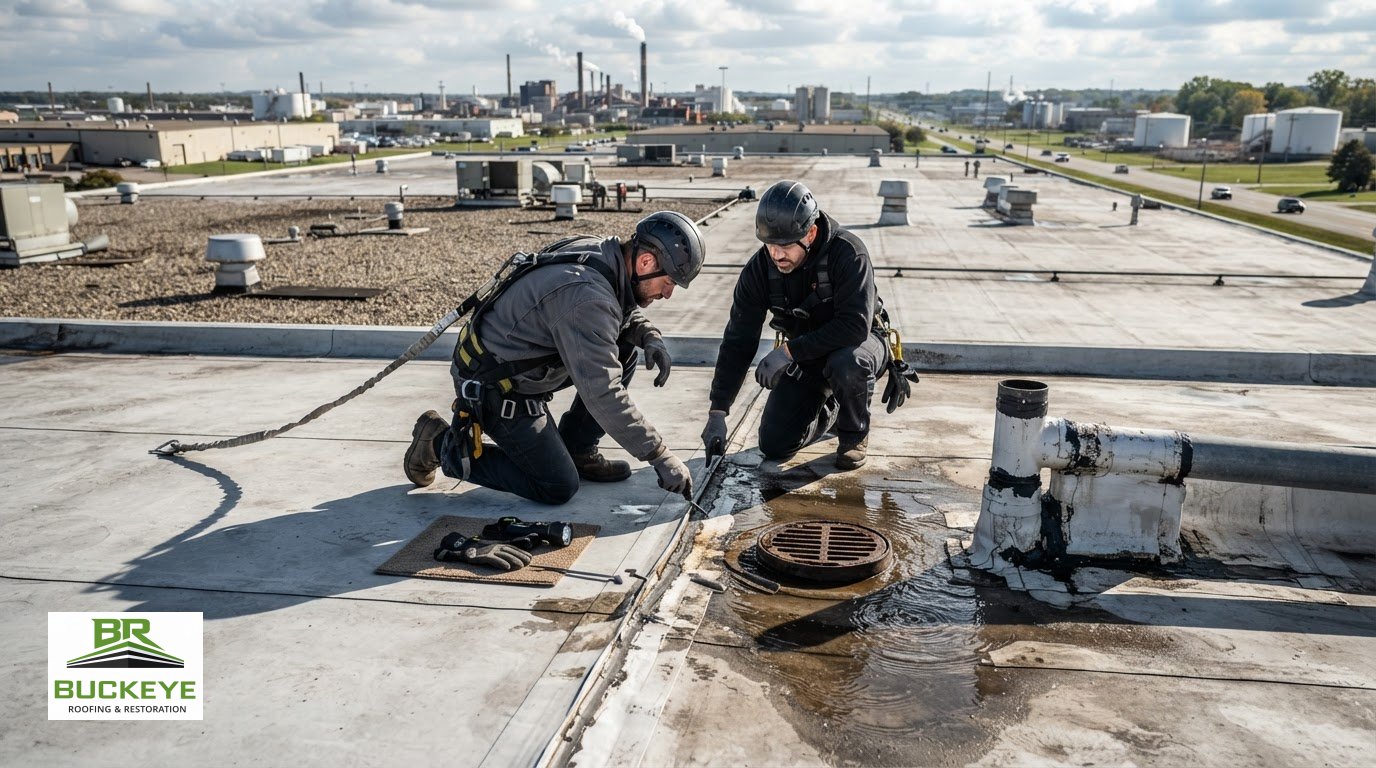
What if the leak over your warehouse floor needs a targeted repair, not a full roof replacement? When water interrupts operations, you need to stop the problem and understand what it may mean for your next capital expense. But a visible leak doesn’t show how much of the roof is affected. A careful inspection can distinguish an isolated failure from broader damage before you choose a solution.
Commercial flat roof repair can address problems such as failed seams, damaged flashing, or punctures. Widespread moisture or drainage issues may call for a different plan. Buckeye Roofing & Restoration works exclusively on commercial roofing, with practical recommendations based on the roof’s condition rather than an assumption that every roof needs a tear-off.
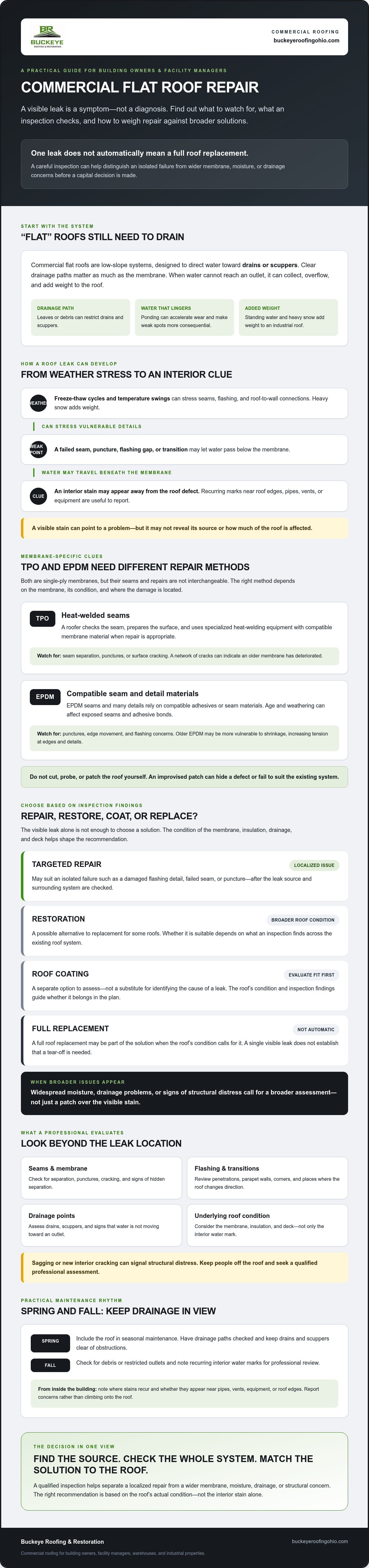
This guide explains warning signs to watch for, what a professional evaluates, and how repair, restoration, coating, and replacement differ. You’ll also learn how Midwest freeze-thaw cycles, heavy snow, and ponding water can contribute to roof failures, and when restoration may be a suitable alternative to replacement. The right recommendation depends on the roof’s membrane, insulation, drainage, and deck.
Key Takeaways
- Learn why low-slope roofs need clear drainage paths and how regional weather can stress vulnerable areas.
- Recognize common TPO seam and EPDM membrane damage so you can describe visible warning signs during an inspection.
- Understand when commercial flat roof repair may suit an isolated leak and what findings could point to restoration or replacement.
- Know what a roofer checks, including seams, flashing, drainage points, and signs of hidden separation.
- Use a spring and fall maintenance routine to catch developing issues and keep drainage paths clear.
Understanding Commercial Flat Roof Failure Points in the Midwest
Commercial “flat” roofs are low-slope systems, not perfectly level surfaces. They’re designed to direct water toward drains or scuppers, so reliable drainage matters as much as the membrane itself. This flat roof overview describes common roof forms and materials. For a specific building, a professional needs to assess the system’s condition and drainage layout.
Across Ohio and Indiana, repeated freezing and thawing can stress seams, flashing, and areas where a roof meets a parapet wall. Roofing materials expand as they warm and contract as they cool. Over time, this movement can strain connections and contribute to gaps that let water reach the insulation or deck. Ponding water is another concern: water that remains instead of draining can accelerate wear and make small weaknesses more consequential. Heavy snow also adds weight to an industrial roof. If the structure shows signs of distress, such as sagging or new interior cracking, keep people off the roof and seek a professional assessment.
The Role of Thermal Expansion and Contraction
Temperature swings can pull a membrane away from parapet walls or stress its attachment points, especially where the roof transitions to vertical surfaces. Older EPDM systems may be more vulnerable to shrinkage, which can increase tension at edges and details. An inspection is needed to determine whether movement has caused damage or a leak. Thermal shock refers to rapid expansion and contraction of roofing materials during summer storms, when temperatures can change quickly.
Seam condition matters, but so do penetrations and flashing around rooftop equipment. A leak inside may appear far from the roof defect because water can travel beneath the membrane before it becomes visible.
Why Drainage Systems Fail on Low-Slope Roofs
Leaves, debris, or other obstructions can restrict scuppers and internal drains. When water can’t reach or pass through an outlet, it may build up and overflow at an edge or opening. A suspected membrane leak may instead involve blocked drainage, though both problems can occur together. Watch for recurring water marks near roof edges and report them for inspection rather than climbing onto the roof.
Standing water also adds weight. If that weight contributes to structural deflection, or downward bending, the roof can hold even more water and drainage may worsen. A structural concern calls for qualified professional evaluation, not a patch alone. For a leak or suspected roof damage, commercial roof repair should start by identifying the source and checking the surrounding system, not just covering the visible stain.
Commercial Flat Roof Repair for TPO and EPDM Membranes
TPO and EPDM are both single-ply roofing membranes, but they’re repaired differently. TPO seams are heat-welded, while EPDM seams and many details rely on compatible adhesives or seam materials. The correct method depends on the membrane, its condition, and the location of the damage. For commercial flat roof repair, a patch that sticks briefly may not address the underlying failure or suit the existing system.
TPO Seam and Puncture Repair
A TPO seam can fail if the original weld was inconsistent or years of weather exposure have weakened it. A qualified roofer checks the seam and prepares the surface before using specialized heat-welding equipment to bond compatible membrane material. Peel-and-stick products intended for other uses may not bond reliably to an industrial TPO system. An improvised patch can hide the defect rather than resolve it.
Visible seam separation, punctures, or surface cracking can be signs of damage. A network of cracks, sometimes called alligatoring, can indicate that an older membrane has deteriorated. Don’t probe, cut, or patch the roof yourself. A professional can determine whether damage is localized or part of broader membrane aging.
EPDM Maintenance and Flashing Issues
EPDM can be punctured by dropped tools, fasteners, or debris during HVAC maintenance and storms. Its seams and repairs rely on materials compatible with the membrane. On older roofs, weathering and age can affect exposed seam areas and adhesive bonds, so a repair needs more than a cover placed over the visible mark.
From a safe location inside the building, note recurring water stains near pipes, vents, or rooftop equipment. On the roof, a roofer examines flashing and transitions around those penetrations, along with corners and angle changes. “Bridging” occurs when a membrane pulls taut across a transition instead of following it closely, leaving a vulnerable area that may split or separate. The right repair restores a secure, compatible connection without assuming every leak requires replacement.
Why Compatible Repair Materials Matter
Single-ply membranes aren’t interchangeable. A material or adhesive that works with one system may not bond correctly to another, and surface condition affects preparation and adhesion. Before work begins, confirm the existing membrane type and ask how the proposed repair material is matched to it. The commercial flat roof systems selection guide offers more context on system differences.
If a leak keeps returning or the membrane damage is difficult to identify, a professional inspection can clarify whether a targeted repair is appropriate. Buckeye Roofing & Restoration provides information about its commercial roofing services and options based on the roof’s condition.
Evaluating Your Options: Repair, Restore, or Replace?
A leak doesn’t automatically mean the whole roof has failed. The right choice depends on inspection findings: the source and spread of damage, the amount and location of wet insulation, the membrane’s condition, drainage, and the roof deck’s integrity. There’s no single wet-insulation percentage that applies to every building. Before recommending a scope of work, a roofer should document how much insulation is affected and where it is located.
Repair fits an isolated, identifiable problem, such as a puncture or failed seam, when the surrounding roof remains sound. Restoration may suit an aging roof that’s still structurally sound and has a suitable substrate. It addresses broader surface wear without replacing the entire assembly. Replacement becomes the practical option when damage is widespread, moisture is extensive, or the roof system or deck is compromised.
When Restoration Is the Smart Financial Move
Restoration can offer a middle ground between repeated spot repairs and full replacement, but it isn’t right for every roof. Depending on the existing system and inspection findings, a compatible silicone or acrylic coating may form a continuous protective layer over a prepared surface. A coating won’t correct saturated insulation, poor drainage, or structural problems beneath it. Those issues need to be addressed for the roof to be a suitable candidate.
Owners may also ask whether restoration is treated as a maintenance expense while replacement is a capital expense. Tax treatment depends on the project’s details and applicable accounting rules, so don’t assume a coating qualifies for a particular deduction. Confirm the treatment with a qualified tax professional. For more information about the roofing option, see Buckeye’s guide to commercial roof restoration.
Signs That a Full Tear-Off May Be Necessary
Extensive wet insulation can point to damage beyond the visible leak. Infrared imaging may help identify areas that warrant closer evaluation, but it doesn’t confirm moisture on its own. A roofer may recommend core sampling to verify conditions within the roof assembly. If moisture is widespread, the deck is compromised, or the system can’t provide a sound base for restoration, full replacement may be the more appropriate path.
Multiple existing roof layers also need careful review. Whether they can remain depends on the assembly and applicable code requirements, so don’t assume a specific layer count is acceptable or prohibited without a qualified assessment. A clear inspection report should explain the findings behind the recommendation, including why a targeted repair or restoration would or wouldn’t address the problem.
For a measured evaluation of repair, restoration, or replacement options, review Buckeye’s commercial roofing information and arrange an inspection before committing to a scope.
The Professional Inspection Process: What to Expect
A useful commercial roof inspection should explain what’s failing, what evidence supports that finding, and which options fit the roof’s condition. For commercial flat roof repair, that means tracing the source of water rather than treating an interior stain as proof of where the roof is damaged.
A roofer may work through these steps:
- Visual assessment: Review accessible seams, flashings, penetrations, drains, scuppers, and other drainage points for separation, wear, debris, or signs of standing water.
- Seam checks: Carefully probe selected seams or membrane details to check for separation that may not be obvious from a visual review. This work belongs to a trained professional, not an unprotected building occupant.
- Moisture investigation: If surface findings suggest trapped moisture, the roofer may recommend additional testing, such as infrared imaging or core sampling. Core samples can reveal the condition of the insulation and roof layers at the sampled locations.
- Written recommendations: Expect a report that documents observed issues and prioritizes appropriate next steps. It should distinguish between isolated repairs, broader restoration, and replacement when warranted.
Diagnostic Tools: Beyond the Visual Walkthrough
Infrared surveys can help identify temperature patterns that may indicate areas for further moisture investigation. They don’t confirm moisture or locate every leak on their own, so ask how the findings will be checked. The inspection may also include metal edge details and parapet caps, where loose connections or failed sealant can allow water beneath the roof system.
An honest assessment doesn’t turn every concern into a large project. If damage is isolated and the surrounding roof is sound, a targeted patch may be the practical recommendation. If the evidence points to broader problems, the report should explain why.
Qualifying a Commercial Roofing Contractor
Ask how the contractor documents findings, explains repair options, and determines whether additional testing is appropriate. You can also request examples of past commercial roofing projects relevant to your building type or roof system. Confirm that the contractor carries appropriate insurance for the work and can discuss conditions common across Ohio, Northeast Indiana, and Southern Michigan, including freeze-thaw weather and drainage concerns.
Before approving work, make sure the proposed scope connects each repair to an inspection finding. If your building has an active leak or needs a condition assessment, a commercial roof inspection can help clarify what the roof needs.
Practical Maintenance to Extend Your Commercial Roof’s Lifespan
A consistent maintenance routine helps catch small defects before they lead to interior leaks or wider damage. Plan professional roof inspections in spring and fall, and arrange an additional assessment after a significant weather event or when occupants report signs of a leak. Keep inspection records, photos, and repair notes together so you can track recurring issues and make informed decisions about the roof.
Low-slope roofs rely on clear drainage paths. Debris around drains and scuppers can slow runoff, leaving water to pond and placing added stress on the roofing system. Have drainage points checked and cleared as part of maintenance. Roof access and cleaning should be handled by qualified personnel using appropriate safety precautions, not by staff who aren’t trained to work at height.
The Spring Inspection After Winter
After an Ohio or Indiana winter, ask a roofing professional to check seams, flashing, and roof edges for signs of movement or separation. Ice and snow can stress vulnerable details, while repeated freeze-thaw cycles may affect exposed components. On commercial metal roofs, the inspection can include fasteners for signs of backing out. Clear debris from scuppers and other drainage points before spring rains, and report interior stains or recurring ponding for further evaluation.
Managing Rooftop Equipment and Traffic
HVAC curbs, pipes, and vents interrupt the roof surface, so flashing around them needs regular attention. A leak near equipment may come from a failed curb detail, a weathered pipe boot, or a nearby membrane defect. Don’t assume the visible drip pinpoints the entry point. Water can travel beneath the membrane before appearing inside.
Set clear expectations for HVAC, electrical, and other contractors who need roof access. Ask them to avoid dragging equipment or leaving tools and debris behind, and to report visible damage rather than applying an unapproved patch. Restrict access to trained, authorized personnel. After rooftop work, have the affected area checked if there’s a concern about the membrane or flashing.
A maintenance plan should also account for any manufacturer requirements that apply to the roof system. Review the relevant documents and keep inspection and repair records. Don’t assume that a particular maintenance schedule automatically preserves warranty coverage.
Regular inspections can help identify issues while targeted commercial flat roof repair is still an option. A condition assessment can help determine whether a repair, restoration, or replacement is appropriate.
Make Your Next Roof Decision With Confidence
A leak doesn’t automatically call for a new roof. The right path depends on inspection findings: an isolated defect may need a targeted repair, while an aging but suitable system may be a candidate for restoration. Widespread moisture or structural concerns can change the recommendation. A clear assessment helps you address the actual problem and plan the next step with fewer unknowns.
For commercial flat roof repair, experience with the specific roofing system matters. Buckeye Roofing & Restoration specializes in TPO, EPDM, and metal restoration, serving commercial properties across Ohio, Northeast Indiana, and Southern Michigan. The goal is a practical recommendation based on your roof’s condition, not a one-size-fits-all answer.
Whether you manage a facility in Toledo, Fort Wayne, or another nearby community, use the inspection findings to understand the repair scope and next steps.
Frequently Asked Questions
How long does a typical commercial flat roof repair last?
There’s no set lifespan for a repair. Its durability depends on the roof’s age and condition, the repair method and materials, and whether the cause of the damage is resolved. Ask the roofer what was repaired and what maintenance to plan for. In Ohio, Northeast Indiana, and Southern Michigan, freeze-thaw cycles and ponding water can put added stress on roof details over time.
Can you repair a flat roof while it is raining or wet?
It depends on the roof system, the repair materials, and conditions at the work area. Many repair materials need a clean, dry surface to bond properly, so rain or moisture may prevent a lasting repair or make roof access unsafe. A roofer should assess conditions before starting and explain whether work needs to wait. Don’t climb onto a wet commercial roof or try to patch it yourself.
How much does commercial flat roof repair cost per square foot?
There isn’t one reliable per-square-foot rate for every repair, and an estimate without an inspection may not reflect the actual scope. Cost depends on the roof system, access, location and extent of damage, and whether wet insulation or other underlying issues need attention. Buckeye serves commercial properties across Ohio, Northeast Indiana, and Southern Michigan, including Toledo, Fort Wayne, Findlay, Lima, Jackson, Battle Creek, Elkhart, Defiance, Bryan, Kalamazoo, Adrian, Bowling Green, Perrysburg, and Auburn.
What is the difference between a roof patch and a roof restoration?
A patch addresses a specific defect, such as a puncture or separated seam, when the surrounding roof is in suitable condition. Restoration is a broader process that treats an existing roof system, often with a coating, to protect its surface and address widespread wear. Restoration isn’t a fix for every roof. The membrane, substrate, moisture levels, drainage, and structural condition need professional evaluation first.
Will insurance cover my commercial flat roof repair?
Coverage depends on your policy, the cause of the damage, exclusions, and the insurer’s review. Don’t assume a leak or repair will be covered. Document the issue from a safe location, keep relevant maintenance records, and contact your insurance representative to understand the claims process. A roofing inspection can help identify the roof’s condition and likely repair scope, but it can’t determine what your policy will pay.
How do I find a leak on a flat roof with no visible damage?
Water may travel beneath the membrane before appearing inside, so the ceiling stain may not be directly below the roof defect. Note where and when you see moisture, then arrange a professional inspection. A roofer can assess seams, flashing, drains, scuppers, and rooftop penetrations, and may recommend additional testing if the source remains unclear. Don’t walk the roof or probe the membrane yourself.
Is it worth repairing a TPO roof that is over 15 years old?
Age alone doesn’t determine whether a TPO roof should be repaired, restored, or replaced. An isolated seam or puncture may be repairable if the surrounding membrane and roof assembly remain sound. A professional should also check for widespread deterioration, trapped moisture, drainage problems, and structural concerns. Ask for the inspection findings and the reason for the recommendation before deciding on work.
Does ponding water always mean I need a new roof?
No. Ponding water can point to blocked drains, a drainage problem, or roof deflection, but it doesn’t automatically mean the system needs replacement. A roofer should assess where water collects, how drainage is functioning, and whether the membrane, insulation, or deck has been affected. Clearing a drainage path may help in some cases. Persistent ponding or structural concerns warrant professional evaluation before choosing a repair or replacement.
To assess a commercial roof at your facility in Ohio, Northeast Indiana, or Southern Michigan, contact Buckeye Roofing & Restoration to schedule a professional inspection.

Article by
Harry Stanley III
Harry Stanley III is a construction marketing strategist and fractional CMO at H&A Marketing. He has helped construction companies grow through website strategy, SEO, paid advertising, branding, lead generation, CRM systems, and professional content. His past work includes helping Meraki Solar generate an additional $3.7 million in revenue in his first year and supporting American Builders as a fractional CMO. Today, Harry works directly with custom home builders and construction companies to build marketing systems designed to generate qualified leads and measurable growth.
