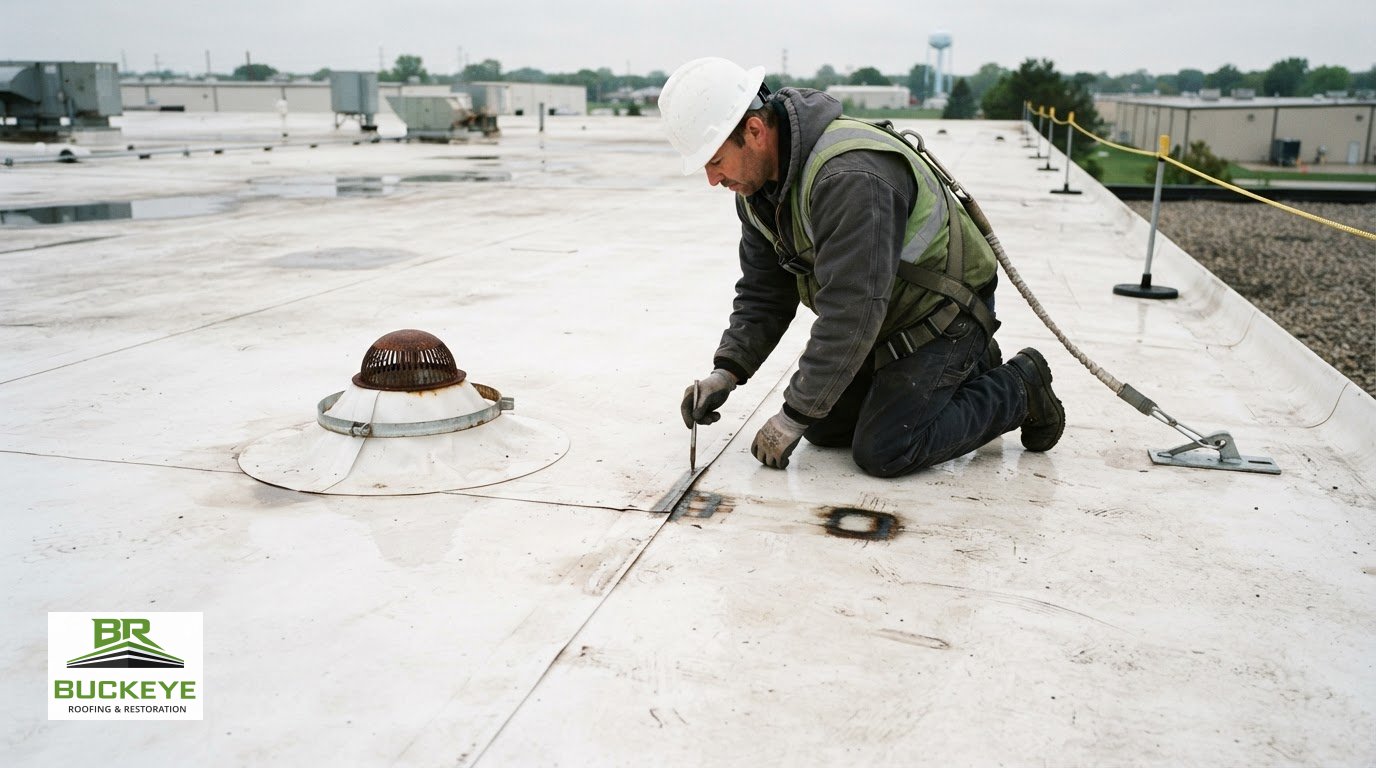
A roof’s age is a planning signal, not an automatic replacement order. Commercial roofs generally last 20 to 30 years, though material, installation, drainage, and maintenance affect actual service life. In Northwest Ohio, Northeast Indiana, and Southern Michigan, seasonal weather also makes regular condition checks useful. A commercial flat roof lifespan extension depends on the roof’s condition and upkeep, not just its installation date.
It’s reasonable to want a clear answer for budgeting and maintenance planning, but no single lifespan fits every building. Roofing materials, installation quality, drainage, and ongoing care all affect how long a system performs. Small problems can develop out of sight, so visible leaks aren’t the only sign that a roof needs attention.
This article explains what affects roof life in Ohio and nearby areas, how inspections and clear drainage help, and what distinguishes repair from restoration or replacement. You’ll also learn which roof conditions matter when deciding what to do next, so you can plan ahead without assuming every aging roof needs to come off.
Key Takeaways
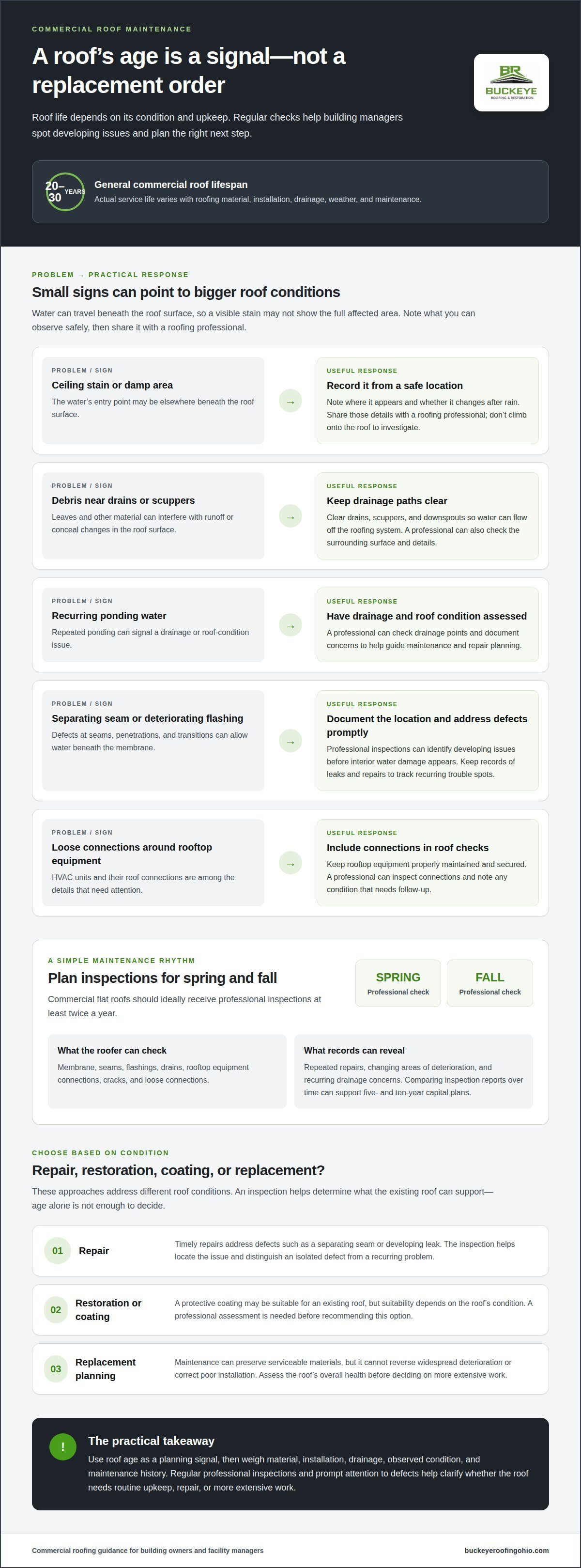
- Roof age is only one part of the lifespan picture; material, installation, drainage, and maintenance all matter.
- Regular professional inspections and timely repairs can help catch developing problems before they spread.
- Clear drains and scuppers support runoff, while recurring ponding can signal a drainage or roof-condition issue.
- Repair, restoration, coating, and replacement address different conditions, so the roof’s assembly and overall health should guide the choice.
- In Southern California, use the roof’s material and observed condition to plan maintenance and replacement decisions rather than relying on age alone.
Can maintenance extend commercial roof lifespan?
Yes. Regular maintenance can help a commercial roof remain usable by identifying wear before water reaches the building interior. Commercial roofs generally last 20 to 30 years, but material, installation, drainage, weather, and upkeep all influence service life. A commercial flat roof lifespan extension plan focuses on addressing those conditions, not simply adding years to the calendar.
Preventive Maintenance and Roof Life
Preventive maintenance means checking the roof and addressing developing problems before they spread. It can help preserve serviceable roofing and defer replacement when the system remains sound. For a property manager, commercial flat roof lifespan extension starts with identifying areas that need attention and recording changes over time.
Building staff can note new ceiling stains, damp areas, or visible debris from a safe location. Record where a stain appears and whether it changes after rain, then share the details with a roofing professional. This helps focus the assessment without requiring staff to climb onto the roof. Maintenance can preserve serviceable materials, but it can’t reverse widespread deterioration or correct poor installation.
Installation Quality and Maintenance
Installation quality describes how well the roofing materials and details were assembled for the building. Proper installation and a structurally sound frame are important to a commercial roof’s lifespan. Seams, penetrations, and transitions deserve attention because defects in these areas can allow water beneath the membrane.
Maintenance gives professionals a chance to identify developing problems in these details. For example, an inspection may reveal a separating seam or deteriorating flashing before interior water damage appears. HVAC units and their roof connections should also be properly maintained and secured. Records of equipment work, leaks, and repairs can reveal repeated trouble spots and help distinguish an isolated defect from a recurring installation or drainage issue.
Planned Maintenance Versus Emergency Repairs
Planned maintenance schedules roof checks and addresses defects before they become active leaks. Emergency repairs respond after a failure disrupts building operations or lets water inside. Delaying maintenance can allow a small opening or loose seam to lead to wet insulation, damaged interior finishes, or more extensive repairs.
Address leaks and cracks promptly rather than leaving them until a future budget cycle. Water can travel beneath the roof surface, so a visible stain may not show the full affected area. Planned assessments also help managers document conditions and coordinate work around building operations, rather than waiting for weather to expose an overlooked weakness during a busy workday.
Professional Maintenance and Costs
Professional maintenance gives a roofer the opportunity to assess conditions and carry out appropriate upkeep. Commercial flat roofs should ideally receive professional inspections at least twice a year, in spring and fall. A roofer can inspect flashings, reseal seams, identify cracks or loose connections, and assess whether a protective coating is suitable for the existing roof.
How much does commercial flat roof maintenance cost in the United States? The price depends on the building and scope of work. Roof area, access, system condition, and required work affect the quote. What maintenance practices extend roof life? Schedule inspections, keep drainage paths clear, document changes, and address defects promptly. What are the risks of delaying maintenance? Small openings can let in moisture, worsen damage, and lead to earlier repairs. An assessment helps distinguish routine upkeep from a roof that needs more extensive work.
Routine inspections, drain clearing, and repairs
A roof inspection checks the membrane, seams, flashings, drains, and rooftop equipment for signs of wear. The findings help commercial building managers prioritize repairs and keep drainage working as intended.
Routine Roof Inspections
A routine roof inspection is a professional review of visible roof conditions and details that could let in water. Commercial flat roofs should ideally receive professional inspections at least twice a year, in spring and fall. These visits provide regular opportunities to check seams, flashings, and connections around rooftop HVAC units before a small defect becomes harder to locate.
Ask for findings that identify the roof area, observed condition, and recommended action. For example, a report might distinguish a loose seam from deteriorated flashing at a roof penetration. Building staff can record interior stains from a safe location and share their locations with the inspector. Don’t climb onto the roof to investigate loose materials or standing water.
Built-up roofing also benefits from inspections and debris removal. Leaves and other material can collect around drains or conceal surface changes, interfering with runoff. A professional can assess the roof surface, flashings, and drainage points, then document cracks or other deterioration. Clearing drains, scuppers, and downspouts helps water flow off the roofing system instead of pooling around debris.
Inspections and Capital Planning
A roof inspection turns observed conditions into information property managers can use for capital planning. Inspection records can support five- and ten-year capital plans by showing recurring repairs, areas of deterioration, and drainage concerns. Comparing reports over time helps managers see whether a problem is stable, spreading, or returning after repair.
That history matters when planning work across commercial buildings with different roof systems. A durable surface in one area doesn’t establish the condition of every section. Ask the inspector to describe affected locations, the apparent extent of the issue, and the work needed to address it. Those details help distinguish routine maintenance from repairs that may need budget priority.
Drainage should be part of every assessment, not an afterthought. Inspectors can check whether drains and scuppers are clear and whether water appears to be moving toward them. If a report notes recurring ponding, managers can track the same area during later visits and consider whether slope or another drainage issue needs attention. The roof’s structural condition also matters if water remains in place.
When inspection records show repeat leaks, loose seams, or deteriorating flashings, a professional assessment can clarify the next maintenance step. Schedule a commercial roof inspection with Buckeye Roofing & Restoration to discuss observed conditions and plan appropriate repairs.
Should you repair, restore, or replace?
The right choice depends on whether damage is isolated or the roofing system has broader deterioration. A professional assessment should account for the membrane, insulation, drainage, and structural condition before setting the scope.
Choosing Repair, Restoration, Coating, or Replacement
Repair addresses specific damage; restoration repairs and reseals an existing roof, often with a coating; replacement removes the old system and installs a new one. The distinction matters because a coating can’t correct every underlying problem. A roof with isolated damage and otherwise sound materials may suit repair, while widespread deterioration can point to more extensive work.
For a qualified existing roof, a coating typically adds a lifespan range of 5 to 15 years. That range is not a reason to coat a failing system or cover up unresolved moisture. The decision should account for the roof’s condition, substrate, drainage, and structural integrity, along with the building’s needs.
Targeted Repairs for Wet Insulation
Targeted repairs address a defined damaged area instead of replacing the entire roof assembly. Wet insulation needs attention because covering moisture can leave the underlying problem in place. A roofer can assess the affected area, identify the source of water entry, and determine whether nearby materials remain sound.
Moisture can extend beyond the point where a leak appears inside. For example, a ceiling stain near a seam doesn’t prove the seam is the only affected area. An assessment should trace the leak and check the roof assembly beneath the membrane. If damage is limited, localized work may be appropriate; broader moisture or deterioration may require a larger scope.
Prompt Leak and Crack Repairs
Prompt repair means addressing leaks and cracks as soon as they’re found, rather than waiting for visible damage to spread. A small opening can let water move beneath the membrane and affect insulation and interior finishes. Timely work can limit the area needing attention and clarify whether the damage remains isolated.
Tell the roofer where interior stains appear and when they occur, such as after rain. Don’t assume the leak source is directly above a stain. Ponding, debris, loose seams, or deteriorated flashing may also be relevant. Avoid walking onto the roof to investigate; a professional can assess access and conditions.
Before deciding, compare the scope of work with the roof’s overall condition. Ask the assessment to distinguish localized membrane damage, wet insulation, recurring leaks, and broader system deterioration. A coating should follow suitable repairs and shouldn’t conceal a failing roof. If drainage problems remain, they need attention as part of the plan, not just a surface treatment.
Replacement becomes more relevant when deterioration is widespread, the roof assembly has significant moisture concerns, or repeated repairs no longer address the underlying condition. Restoration may be a cost-effective alternative to full replacement when the existing roof is suitable. Inspection findings, rather than age alone, should guide the decision.
Drainage and ponding water on flat roofs
Commercial flat roofs are low-slope systems, not roofs without slope. Their drainage paths move water toward drains, scuppers, and downspouts; blockages or poor slope can interrupt that flow.
Standing water deserves attention because it can add thousands of pounds of weight to structural decking. Ponding also keeps roof areas wet longer, increasing exposure for seams, flashings, and membrane surfaces. A rubber membrane, such as EPDM, still depends on sound drainage and installation. The membrane material alone can’t correct a low spot or blocked outlet.
Debris often collects where water slows, around rooftop equipment, drain bowls, and parapet corners. Leaves can cover a drain opening, while packaging or loose material can obstruct a scupper. From the ground or another safe vantage point, building staff can note where water remains or debris gathers. Don’t walk onto the roof to clear an outlet; access and surface conditions can be hazardous.
Include drainage paths in the roof maintenance plan. A qualified roofer can check that drains, scuppers, and downspouts are open, then assess whether the roof slope directs runoff toward them. If ponding returns in the same location after debris removal, the pattern may point to a low area, movement, or a drainage design issue. Clearing the opening alone won’t correct those underlying conditions.
After rain, staff can record visible ponding from inside the building or another safe viewing point. Note whether the same area appears repeatedly and share that observation during a professional inspection. Interior ceiling stains or dampness beneath a low spot add useful context, but the stain may not be directly below the water entry point. A roofer can trace the likely water path and assess the membrane and roof assembly.
Drainage concerns also affect decisions about repair or restoration. Before applying a coating over an existing roof, the assessment should consider moisture, substrate condition, structural integrity, and runoff. A coating may protect a suitable surface, but it won’t remove trapped water or create proper slope by itself. Where water repeatedly collects, the underlying drainage condition needs attention as part of the repair plan.
Keep inspection notes specific: identify the roof area, nearby drain or scupper, visible debris, and any interior signs. These details help distinguish a one-time blockage from a recurring drainage problem. If ponding appears extensive, persists, or accompanies signs of structural concern, arrange a professional assessment rather than attempting roof access or cleanup.
Commercial Flat Roof Lifespan in Ohio and Nearby Markets
Across Ohio and nearby markets, commercial roofs generally last 20 to 30 years. That broad range helps with early planning, but it doesn’t predict an individual roof’s condition. Material, installation quality, drainage, maintenance, and weather exposure all shape how a specific system performs.
What building codes, warranty terms, or local climate factors affect commercial roof repairs and coatings? Applicable code requirements depend on the project and jurisdiction, while warranty terms can affect approved repair methods. In Ohio, Northeast Indiana, and Southern Michigan, seasonal weather makes drainage and roof condition important considerations for maintenance planning.
Material-specific estimates need context. For example, published estimates for TPO and EPDM roofs in New York shouldn’t be treated as local Ohio-area lifespan predictions. A broader commercial-roof range can offer a planning reference, but the installed system and its condition provide more useful guidance for an individual building.
For TPO, replacement planning is commonly described as starting around year 15 to 20; for EPDM, around year 20 to 25. These are planning windows, not automatic replacement dates or guarantees of service life in Ohio. Seasonal weather, installation details, drainage, and maintenance history can affect the condition of either system.
Assess more than the visible membrane. A surface that appears intact may still have concerns around rooftop equipment or in areas where water collects. An older roof may also remain serviceable if its assembly is sound and prior repairs addressed defects. Review inspection records alongside installation details and the history of leaks, repairs, and recurring problem areas.
Review warranty documents before repairs or coatings begin. Check the terms for covered materials, maintenance expectations, repair procedures, and exclusions. Proposed work should suit the existing roofing system and applicable warranty conditions. Keep inspection reports and repair records together so facilities teams can track recurring concerns and plan future work around the building’s actual roof history.
Use lifespan and replacement-planning ranges as prompts to review roof condition, not as deadlines. For example, a TPO roof approaching its planning window deserves a closer assessment, even if it shows no obvious leak. Installation quality, drainage, maintenance records, and observed deterioration help determine the appropriate next step.
If recurring leaks, surface wear, or drainage issues raise questions about your roof, arrange a professional inspection. A condition assessment can help clarify whether repair, restoration, coating, or replacement suits the building. Request a commercial roof inspection from Buckeye Roofing & Restoration to discuss the roof’s condition and next steps.
Buckeye Roofing & Restoration: Commercial Flat Roofing
Buckeye Roofing & Restoration helps commercial property owners assess flat-roof concerns and choose a practical next step. If a leak, damaged seam, or aging roof raises questions, an inspection can clarify whether focused repair, restoration, or replacement suits the roof’s condition.
For isolated damage, commercial flat roof repair may address the affected area. When the existing roof remains suitable, restoration or a coating may be considered after assessing its substrate, moisture, drainage, and structural condition. Coatings aren’t right for every roof, and an inspection helps establish whether they’re appropriate.
If you’re weighing options for your building, contact Buckeye Roofing & Restoration to discuss an inspection.
Put Your Roof Plan Into Practice
Turn the roof assessment into a working property record. Assign responsibility for tracking leak locations, completed repairs, access constraints, and recurring problem areas. Bring those notes into the next facilities or capital-planning review. A shared record keeps decisions grounded in roof history rather than one visible symptom.
Planning for commercial flat roof lifespan extension means making roof condition part of routine building operations. Connect inspection findings to maintenance priorities, occupancy needs, and the timing of other building work. This helps decision-makers sequence work with less disruption to staff, tenants, or production.
If you’re ready to put a practical plan in place, Buckeye Roofing & Restoration can discuss your commercial roof and appropriate next steps. Contact Buckeye Roofing & Restoration to start the conversation. A considered plan gives your team a clearer path forward, with decisions tied to what the building actually needs.
Frequently Asked Questions
How long does a flat commercial roof last?
A commercial roof generally lasts 20 to 30 years, though an individual roof may perform for less or more time. In Ohio, Northeast Indiana, and Southern Michigan, assess the specific system rather than treating that range as a replacement deadline. Installation quality, drainage, maintenance history, material condition, and exposure to seasonal weather all help explain how a roof is aging.
How long do commercial flat roofs typically last by roofing material?
There isn’t one dependable lifespan range for every roofing material across Ohio and nearby markets. TPO, EPDM, PVC, built-up roofing, and modified bitumen have different service-life estimates, and published ranges depend on climate and maintenance assumptions. For a useful property-level estimate, identify the installed system, review its records, and compare its condition with inspection findings. Seams, flashing, drainage, and repair history can influence planning.
How often should a commercial flat roof be inspected and maintained?
Plan professional inspections at least twice a year, ideally in spring and fall. Keep a maintenance log recording the inspection date, roof areas reviewed, issues found, and work completed. Note changes reported by building staff, such as a new ceiling stain near a rooftop unit. Comparing records over time helps identify recurring locations and gives inspectors useful context.
How much does it cost to restore or recoat a commercial flat roof compared with replacement?
Restoration may be a cost-effective alternative to replacement when the existing roof is suitable, but scope and price depend on the building. Roof area, access, substrate condition, moisture, preparation, drainage, and the extent of repairs all affect the quote. Restoration or coating shouldn’t conceal a failing roof. Pricing depends on the project and is provided after a quote request.
Which roof coatings work best for TPO, EPDM, PVC, and modified bitumen roofs?
No single coating is best for every TPO, EPDM, PVC, or modified bitumen roof. The right choice depends on the specific membrane, surface condition, substrate, moisture, drainage, and preparation required. A coating also needs to suit the existing assembly, not simply adhere to its visible surface. Have a roofing professional assess compatibility and roof condition before selecting a coating system.
When can a commercial flat roof be repaired or restored instead of replaced?
Repair is often appropriate when damage is isolated and the rest of the roof remains in decent condition. Restoration may suit an existing system that can be repaired, resealed, and recoated without covering unresolved moisture or broader failure. A professional assessment should consider the membrane, substrate, wet insulation, drainage, and structural integrity. Widespread deterioration or underlying damage can change the appropriate scope.
What signs indicate a commercial flat roof needs repair or replacement?
Interior water stains, recurring leaks, visible cracks, loose seams, and deteriorating flashing are signs to arrange an assessment. Replacement may be worth considering when damage spans broad areas or repairs keep recurring without addressing the underlying condition. Building staff can note stain locations and changes from a safe place. A roofer can inspect the roof assembly and distinguish isolated defects from more extensive deterioration.
How do drainage, ponding water, and insulation affect flat roof lifespan?
Poor drainage can shorten a flat roof’s lifespan, and standing water can add thousands of pounds of weight to structural decking. Wet insulation can also indicate that water has moved beneath the membrane, so a visible leak may not show the full affected area. Note recurring ponding locations and interior dampness, then share those observations with a roofing professional. Don’t access the roof to investigate or clear drains.

Article by
Harry Stanley III
Harry Stanley III is a construction marketing strategist and fractional CMO at H&A Marketing. He has helped construction companies grow through website strategy, SEO, paid advertising, branding, lead generation, CRM systems, and professional content. His past work includes helping Meraki Solar generate an additional $3.7 million in revenue in his first year and supporting American Builders as a fractional CMO. Today, Harry works directly with custom home builders and construction companies to build marketing systems designed to generate qualified leads and measurable growth.