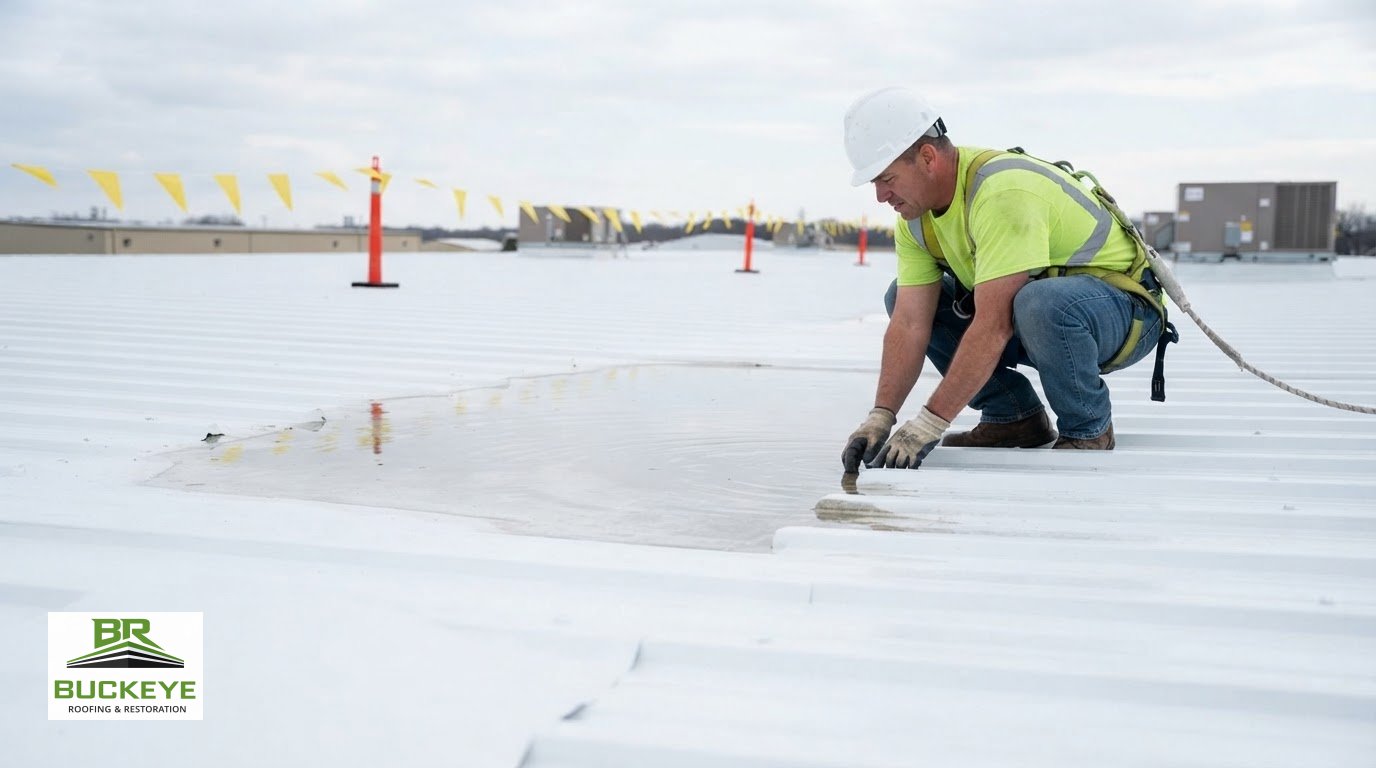
The brighter coating isn't automatically the better choice. In acrylic vs. silicone metal roof restoration, silicone is generally the stronger option for a low-slope roof with ponding water, while acrylic can suit a sloped metal roof that drains properly. Ponding water is water that remains on the roof for more than 48 hours.
Both coatings can reflect sunlight, but they perform differently in ways that matter to a working building. Silicone tolerates standing water better, while acrylic tends to retain a bright-white appearance longer as dirt accumulates.
This comparison covers ponding-water resistance, reflectivity, dirt pickup, VOC considerations, and application weather. You’ll also learn why roof slope and drainage matter, what each coating requires during application, and how to use these factors to make a practical choice for a metal roof.
Key Takeaways
- Compare how dirt pickup affects each coating’s reflectivity over time, not just how bright the roof looks when newly coated.
- Review product VOC information for the specific coating system rather than assuming all silicone or acrylic formulas are alike.
- Plan application around the coating’s surface and weather requirements, especially drying conditions and temperature.
- Look beyond the coating type: roof condition, drainage, substrate, and preparation all influence whether restoration is suitable.
- Use the decision guide to weigh your building’s needs and identify when a professional roof assessment can help clarify the next step.
Ponding-water resistance
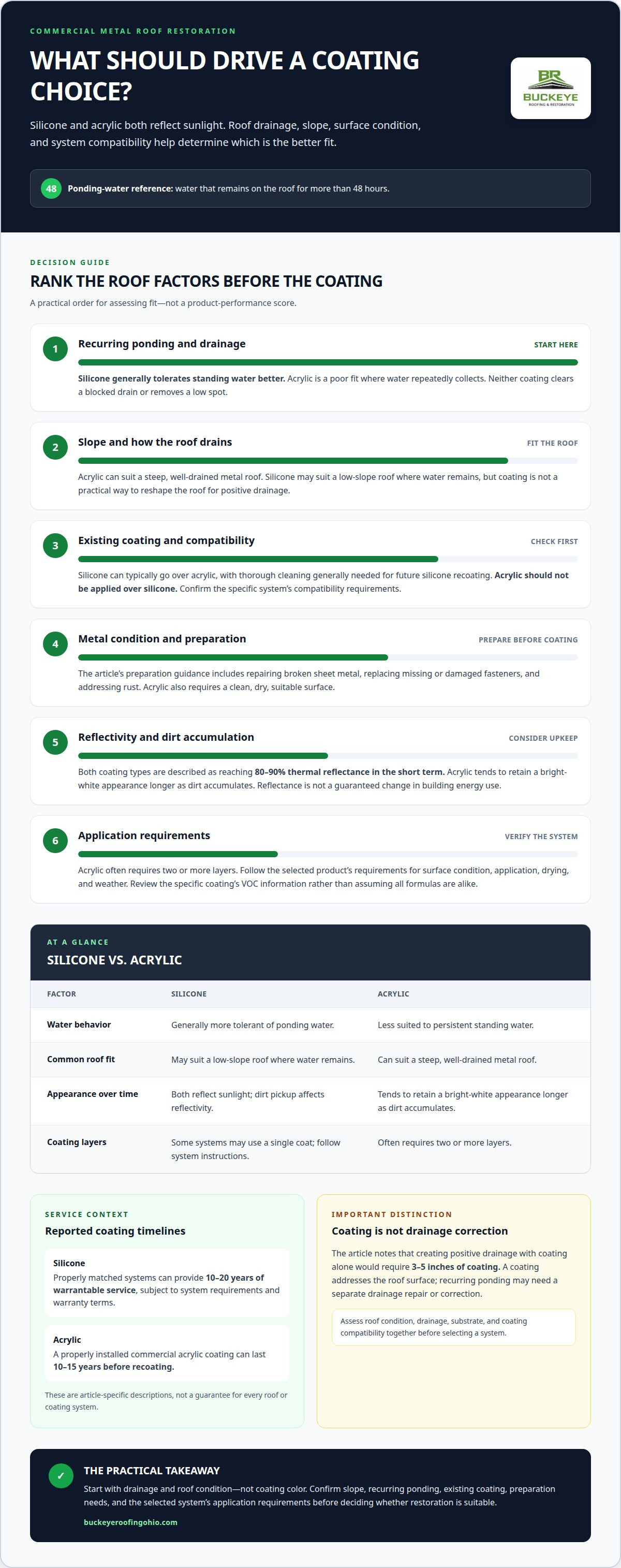
On a commercial metal roof, coating choice depends partly on whether rain drains or lingers. Ponding water is water that remains on a roof surface for more than 48 hours. Silicone generally tolerates this condition better than acrylic. Acrylic is water-based and doesn’t hold up well to persistent standing water, so it’s a poor fit where water repeatedly collects.
That distinction matters on low-slope metal roofs, where panel seams, fasteners, and drainage points can hold water after rain. Silicone may suit these conditions, but it won’t eliminate a low spot or fix poor drainage. If the same area remains wet after separate rain events, note its location and have the drainage path assessed before choosing a coating.
Coating cannot practically reshape a roof to create positive drainage. Mason Knowles said achieving positive drainage by applying coating alone would require 3 to 5 inches of coating. That makes the distinction clear: coating addresses the roof surface, while drainage problems may need a separate repair or correction. A roof with recurring ponding needs that condition understood, not simply covered.
| Coating | Response to ponding | Roof condition to consider | Practical implication |
|---|---|---|---|
| Acrylic | Less suited to persistent standing water | Drainage should carry water away | Consider only where ponding isn’t recurring |
| Silicone | Generally more tolerant of ponding | Low spots and drainage still need assessment | May suit roofs where water remains |
Weather can help explain what you see, but one wet surface after rain doesn’t establish a ponding pattern. Note whether water remains in the same areas after rain has passed, especially around drains, panel transitions, and roof penetrations. A facility manager can record locations from a safe vantage point and share them during a professional roof assessment. Don’t climb onto the roof to inspect standing water.
For example, water beside a drain may indicate a drainage issue, while water around a seam may warrant a closer look at the seam and surrounding panels. These observations help distinguish where water collects from why it collects. A coating decision should account for both the roof surface and its drainage. Silicone’s tolerance for ponding won’t clear a blocked drain or eliminate a low area.
Choose silicone when persistent ponding is part of the roof’s conditions and the surface is suitable for coating. Consider acrylic only when the metal roof drains properly and standing water doesn’t recur. The sensible next step is to assess drainage, roof condition, and coating compatibility together rather than choosing based on coating type alone.
Silicone vs Acrylic Roof Coating: Which Is Better?
For metal roofs, the better coating depends on slope, drainage, the existing surface, and future maintenance. Silicone generally suits roofs exposed to standing water, while acrylic can work on steep, well-drained metal roofs.
Silicone Coatings
Silicone is an elastomeric coating that handles ponding better than acrylic and typically weathers more slowly. Properly matched coating systems can provide 10-20 years of warrantable service, subject to the specific system’s requirements and warranty terms. Silicone can typically be applied over acrylic, but future recoating generally calls for silicone and thorough cleaning to support adhesion.
On metal, the prep sequence matters: repair broken sheet metal, replace missing or damaged fasteners, then address rust before coating. Brush away light rust and spot-treat heavier rust. GAF recommends silicone sealant on seams and fasteners at a wet thickness of 60 mils or 1/16 inch. Product instructions and applicable building requirements govern the selected assembly.
Acrylic Coatings
Acrylic is a water-based coating that can suit steep-slope metal roofs where water drains off and doesn’t remain. A properly installed commercial acrylic coating can last 10 to 15 years before recoating. Acrylic can often be applied over existing metal or other roof materials when the surface is clean, dry, and suitable. It should not be applied over silicone.
Preparation still means repairing damaged metal and addressing surface issues before coating. Acrylic often requires two or more layers, so its application plan differs from silicone systems that may use a single coat. Follow the manufacturer’s directions for compatibility, surface condition, application, and drying. Warranty coverage depends on meeting system requirements, and no single warranty term applies to every roof.
Urethane offers another point of comparison. It has stronger abrasion and foot-traffic resistance than acrylic or silicone, and some hybrid systems use urethane as a base coat beneath a silicone or aliphatic topcoat. This may suit roofs where surface wear matters, but it isn’t a direct substitute for choosing between acrylic and silicone.
There is no single installed cost per square foot for all U.S. metal roofs. Project pricing depends on roof condition, preparation, coating system, and application needs, and is provided after a quote request.
Choose based on the roof’s slope, drainage, existing coating, condition, and expected use. An inspection can establish whether coating is appropriate before selecting a system. A commercial roof restoration assessment can help evaluate those factors.
Reflectivity and dirt accumulation
A new reflective coating can change how much sunlight a roof surface reflects. Reported reflectivity can rise from 10-20% before coating to 80-90% afterward. Both acrylic and silicone coatings are described as reaching 80-90% thermal reflectance in the short term. These figures describe surface reflectance, not a guaranteed change in a building’s energy use.
For facility managers, the distinction matters. Reflectivity describes how the roof surface responds to sunlight, but energy use also depends on insulation, ventilation, building operations, and the roof assembly. A reflective roof may affect how much heat the surface absorbs, but the coating figure alone can’t predict utility bills. Compare the coating’s stated reflectance with the building’s existing conditions before treating it as an energy strategy.
Surface cleanliness can change that comparison after installation. Silicone-coated roofs tend to accumulate dirt within 6 to 12 months after application. Silicone also has high dirt pickup, which can cause reflectivity to fade faster than acrylic’s. Acrylic coatings are described as maintaining bright-white reflectivity well over time. A warehouse near dust-producing operations, exhaust, or frequent rooftop activity should account for those exposures when weighing finish appearance.
Dirt pickup and coating wear aren’t the same. A roof may look dull because of grime, even when the coating remains intact. Conversely, color alone can’t confirm visible coating damage. If a roof’s appearance changes, record the affected areas and have the coating assessed instead of assuming dullness means the system has failed.
Use these practical checks when reviewing coating performance:
- Compare the stated reflectivity values for the specific acrylic and silicone products.
- Note whether each value describes initial or short-term performance.
- Consider nearby sources of dust, exhaust, and debris that may soil the roof.
- Track changes in appearance from safe ground-level or interior views.
Solids content describes the portion of a coating that remains after volatile components leave, but it doesn’t establish reflectivity or dirt resistance on its own. Good adhesion helps a coating stay attached, but doesn’t keep the surface clean. These are separate performance considerations, so don’t treat one product characteristic as a substitute for another.
For a useful comparison, consider reflectivity alongside expected surface exposure and maintenance needs. A bright finish may matter to a property owner, while dirt pickup may be more noticeable in a dusty industrial setting. The better choice depends on the roof and its surroundings, not just the initial reflectance figure.
Environmental considerations and VOCs
Some products release VOCs, or volatile organic compounds, during application and drying. For a commercial roof project, compare the specific coating’s VOC information instead of assuming every acrylic or silicone formula has the same environmental profile. Product chemistry and formulation matter more than the coating category alone.
Some high-solids silicone coatings have extremely low VOCs and are considered environmentally friendly. Modern silicone formulations typically have solids content of 90% or greater. Solids describe the portion that remains as coating after volatile components leave. A high-solids product can therefore be a useful option to examine, but the product data still determines its actual VOC characteristics.
Acrylic coatings are water-based, but that alone doesn’t establish a product’s VOC content or overall environmental impact. Acrylic formulas vary, as do silicone formulas. Compare the technical information for the exact acrylic coating with that of the silicone product under consideration. Don’t use a general label such as “water-based” or “high-solids” in place of product-specific figures.
Before selecting a coating for a warehouse or manufacturing facility, review the product documentation and project conditions. A practical check includes:
- Locate the VOC content stated for the exact coating and confirm the units used.
- Review the application and drying instructions, including any ventilation guidance.
- Identify nearby air intakes, loading areas, or occupied work zones that may affect scheduling.
- Read the cleanup directions and plan how application materials will be handled.
Cleanup is another environmental consideration. Silicone coatings require virgin mineral spirits for cleanup, so crews need to follow the product’s handling and disposal directions. This differs from the cleanup approach for a water-based acrylic product. Don’t pour leftover coating or cleanup materials onto the roof, into drains, or onto surrounding ground.
VOC content is only one part of a responsible coating decision. Roof condition, preparation needs, coating strength and adhesion, and the expected maintenance approach all affect whether a system is suitable. A low-VOC product still needs proper application. Poor adhesion or premature coating failure can lead to avoidable repairs and additional material use.
For a clear comparison, review product data sheets, surface requirements, and application plans side by side. If the building operates during the work, coordinate coating and cleanup activities with its ventilation and daily operations. This helps facility managers consider indoor use alongside product emissions, without treating one environmental label as the whole answer.
Weather and temperature application
Application weather affects adhesion, drying, and when a commercial roof can return to normal use. Acrylic needs warmer, dry conditions. Silicone can be applied at lower temperatures, but the roof surface must still be dry and sound.
For acrylic, outside temperatures should be at least 50°F for optimal adhesion. Don’t apply it if rain is expected within 24 hours. The coating also needs dry weather while it’s applied and drying. Depending on temperature and humidity, drying can take a few hours to a full day. In northern states, those conditions can narrow the practical work window.
Silicone contains no water and can be applied at lower temperatures than acrylic and other roof coatings. That flexibility doesn’t mean crews can coat a wet metal roof. Surface moisture can affect adhesion, so the roof still needs to be clean, dry, and sound. Humid conditions may be workable if the roof itself is dry.
For a facility manager, scheduling means looking beyond the forecast for the application day. Acrylic needs a suitable dry period for application and drying. Silicone still requires a dry surface, even if the air is humid. A short weather window shouldn’t take priority over surface preparation or product instructions.
- Check the forecast for the full acrylic drying window, including rain risk within 24 hours.
- Confirm outside temperatures meet the 50°F guidance for acrylic adhesion.
- Have the roof surface assessed for moisture before either coating is applied.
- Follow the selected product’s application directions for the roof and weather conditions.
These checks matter on metal roofs with varied exposures. A shaded panel may stay damp after a sunny area dries, and seams or low points may retain moisture longer. A commercial facility with metal panels beside a bitumen roof should assess each area and coating system separately. One surface’s readiness doesn’t mean another is ready.
Weather planning supports longevity, but it can’t make a damaged or unsuitable roof ready for coating. Delaying application is more sensible than applying over a wet surface or outside the coating’s stated conditions. Before work begins, a professional can assess roof condition, surface moisture, and the available weather window. Schedule a commercial roof inspection to discuss whether conditions and roof readiness support restoration.
Buckeye Roofing & Restoration: Commercial Flat Roofing
Buckeye Roofing & Restoration helps commercial property owners assess whether repair, restoration, or replacement best fits their roof. For metal roofs, choosing between acrylic and silicone is only part of the decision. Roof condition, drainage, existing coatings, and surface preparation all affect whether a coating is suitable.
Turn to Buckeye for a commercial roof inspection if standing water, leaks, rust, or loose fasteners raise questions about your roof’s condition. The inspection can help determine whether commercial roof repair, restoration, or coatings make sense, rather than assuming one coating works for every building.
If you’re weighing the next step for a commercial roof, contact Buckeye Roofing & Restoration to discuss an inspection.
Make the next roof decision with a clear assessment
Choosing a coating is one part of a broader plan to keep a commercial building’s roof serviceable. Before settling on a system, use inspection findings to set priorities: address active defects, understand drainage, and decide whether restoration suits the roof’s overall condition. The acrylic vs. silicone metal roof restoration decision should follow those findings, not replace them.
Buckeye Roofing & Restoration can assess whether commercial flat-roof repair or restoration is appropriate and whether coatings suit the existing roof. If coating isn’t the right path, another roofing solution may better fit the building. This measured approach helps owners and facility managers make a decision based on the roof itself.
Take the next step at a pace that works for your property. Contact Buckeye Roofing & Restoration to discuss an assessment and your roof’s needs. A clear evaluation gives you a practical starting point for planning the work ahead.
Frequently Asked Questions
Can you coat over an old coating?
Often, provided the existing layer is sound and compatible with the new system. For example, acrylic can be recoated with acrylic, while silicone recoating generally calls for silicone. An adhesion test helps determine whether the new layer can bond. If the coating is peeling or the metal beneath it has deteriorated, those areas need attention before recoating. Adding another layer won’t fix an underlying defect.
Final Thoughts: Which One Is Right for You?
Choose the coating that fits the roof’s condition and operating needs. A steep metal roof that drains well may suit acrylic, while persistent ponding favors silicone. Also consider the existing coating, surface exposure, and time available for application and drying. For instance, a facility’s maintenance schedule may affect which coating’s weather requirements are practical.
Which roof coating lasts the longest?
Silicone coatings typically weather more slowly than other coating types, but that doesn’t make them the universal winner for service life. Product system, application thickness, preparation, climate, and maintenance all influence performance. Dirt can reduce a roof’s reflectivity without proving the coating has failed. Compare the specific system’s requirements with the roof’s condition and maintenance plan instead of judging longevity by coating type alone.
How do acrylic and silicone roof coatings compare for metal roof restoration?
For an acrylic vs silicone metal roof restoration project, match the coating to drainage and roof conditions. Acrylic suits metal roofs that shed water, while silicone better tolerates ponding. Acrylic tends to maintain a bright-white appearance, whereas silicone can collect more dirt. Existing coatings also affect the choice: compatibility and adhesion determine whether a new layer can be applied successfully.
What are the pros and cons of acrylic coatings on metal roofs?
Acrylic can work on a sloped metal roof that drains properly, and its bright-white appearance can hold up well as dirt accumulates. Its main limitation is poor performance under persistent standing water. Application also requires suitable temperatures and dry conditions. Weigh these trade-offs against the roof’s drainage patterns and the facility’s available maintenance window.
What are the pros and cons of silicone coatings on metal roofs?
Silicone’s key advantage is its greater tolerance for ponding water compared with acrylic. It typically weathers slowly, but dirt pickup can reduce reflectivity, and future recoating generally requires silicone. Before choosing it, consider the roof’s exposure and the maintenance implications of its coating history. A sound, dry surface and proper preparation remain important for successful application.
How long do acrylic and silicone coatings last on metal roofs?
There isn’t one lifespan that applies to every coated metal roof. The coating system, application thickness, preparation, climate, and condition of the metal all affect service life. A roof with damaged seams or failing fasteners needs those issues addressed, since coating alone won’t repair them. Use inspection findings and the selected system’s maintenance guidance to plan upkeep and assess when recoating may be appropriate.
How do acrylic and silicone coatings perform in ponding water, UV exposure, and extreme temperatures?
Silicone generally performs better where ponding occurs, while acrylic suits roofs that drain well. Both can provide high initial reflectivity, though dirt may affect silicone’s surface appearance over time. Application temperature differs from performance after installation: silicone can be applied at lower temperatures, but the roof surface still needs to be dry. Follow the selected coating system’s application instructions for site conditions.

Article by
Harry Stanley III
Harry Stanley III is a construction marketing strategist and fractional CMO at H&A Marketing. He has helped construction companies grow through website strategy, SEO, paid advertising, branding, lead generation, CRM systems, and professional content. His past work includes helping Meraki Solar generate an additional $3.7 million in revenue in his first year and supporting American Builders as a fractional CMO. Today, Harry works directly with custom home builders and construction companies to build marketing systems designed to generate qualified leads and measurable growth.