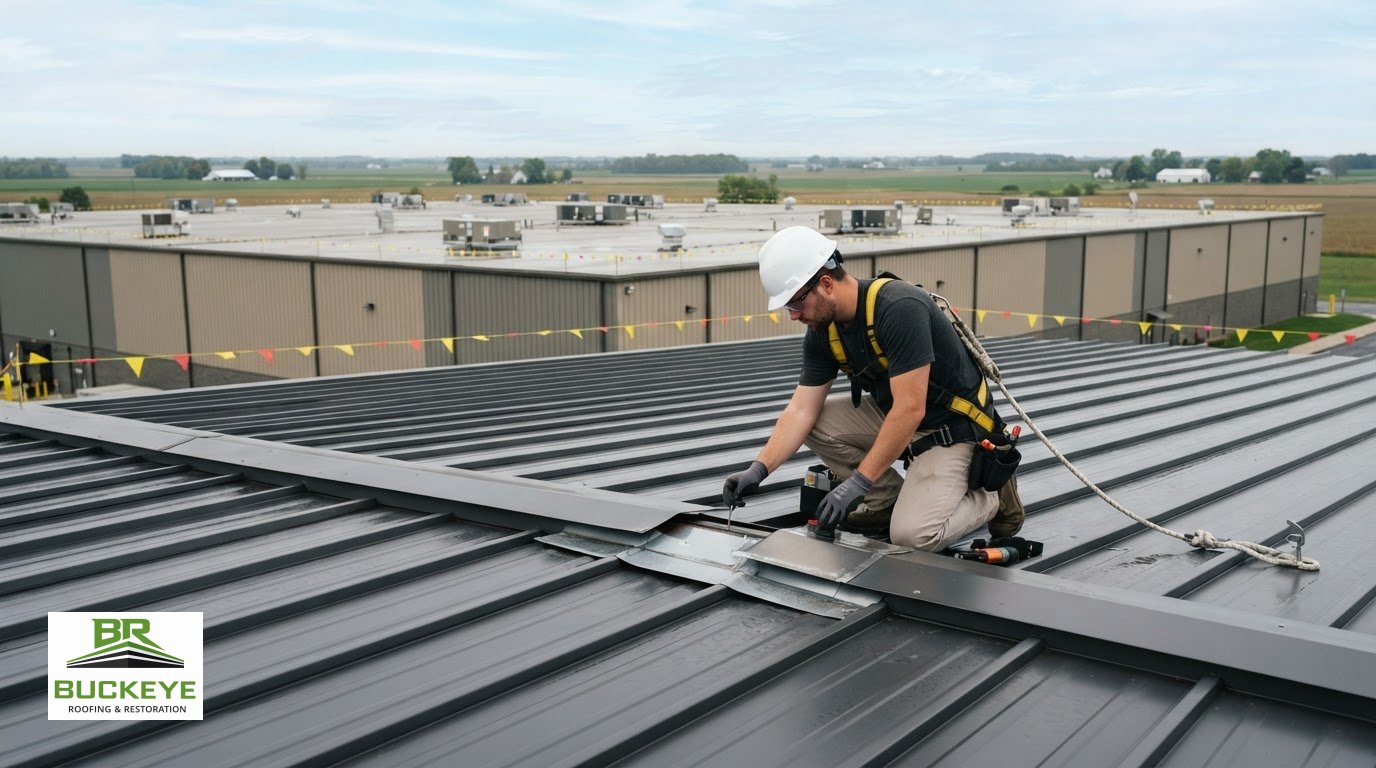
A roof leak doesn’t automatically mean a standing seam roof needs replacement. Commercial standing seam repair starts by tracing water to its entry point, then addressing the affected seam, flashing, fastener, or panel detail. The right fix depends on the roof’s condition and the leak’s source, not simply where water appears inside.
For a facility manager, repairs also need to account for roof access, building use, and the work happening below. A focused repair can avoid unnecessary work, while a clear inspection plan helps set expectations about disruption.
This guide covers common leak points on standing seam roofs, typical repair approaches, and factors that affect the scope and cost. It also explains how to plan repairs around business operations and when broader restoration or replacement may be more practical.
Key Takeaways
- A leak’s interior location may not match the roof opening, so tracing the water path helps target the repair.
- Coordinate roof access, work areas, and timing with facility operations to reduce avoidable disruption.
- Seam movement, flashing details, fasteners, and storm-related damage are among the areas a roof inspection may assess.
- A careful diagnosis considers the surrounding panels and roof details, not just the visible symptom inside the building.
- The repair process should address the identified source of water entry, then assess whether broader roof work is warranted.
Commercial metal roof leak repair
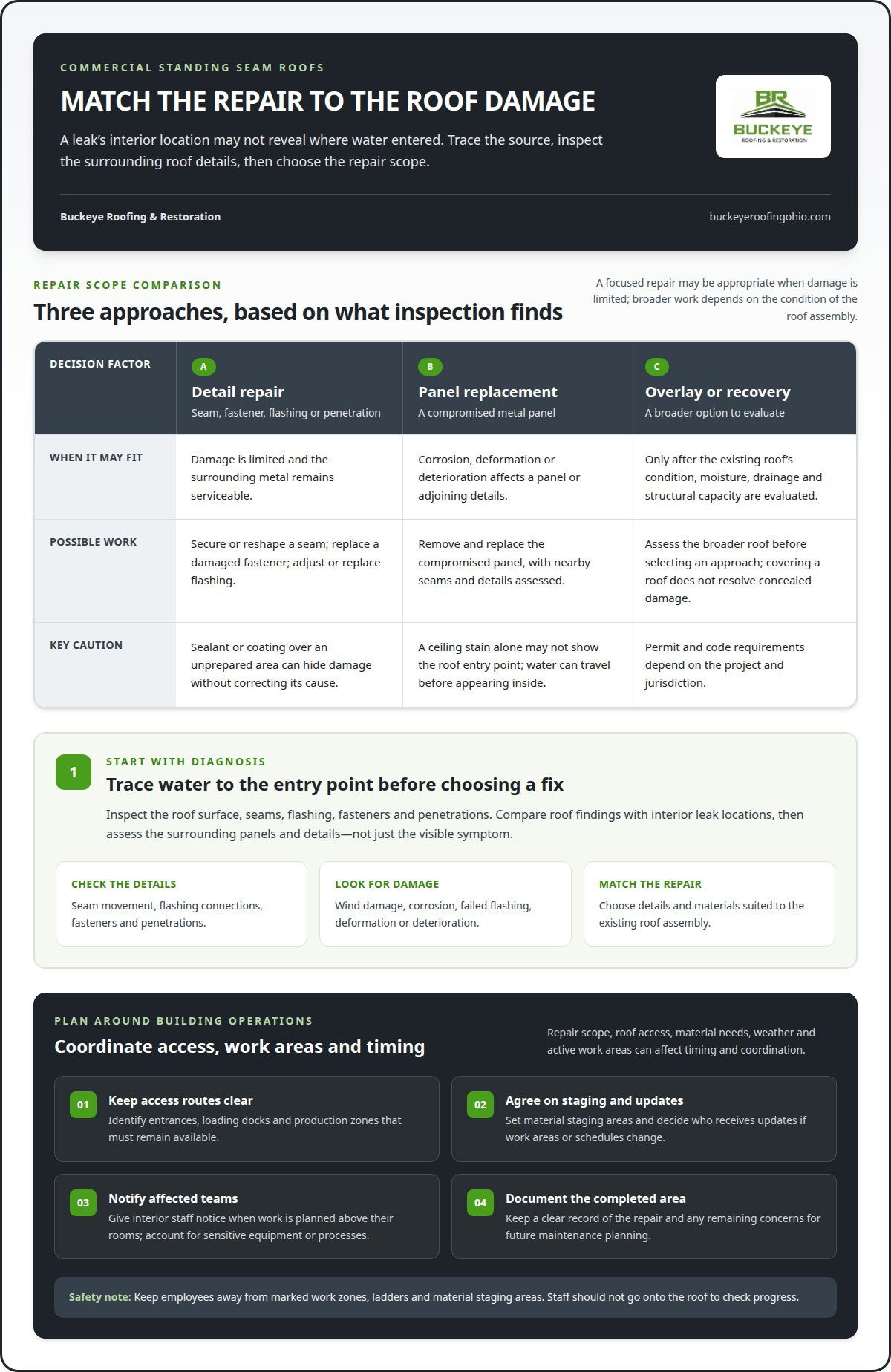
A sound repair starts by tracing water to its entry point, then matching the fix to the panels and roof details. A localized leak may call for a detail repair, panel replacement, or broader recovery work. Inspection findings guide the decision.
Leak diagnosis and damage causes
A roofer checks the roof surface, seams, flashing, fasteners, and penetrations, then compares those findings with interior leak locations. Water can travel before appearing inside, so a ceiling stain alone may not reveal the entry point. Wind damage, corrosion, and failed flashing are among the conditions to assess.
Panel movement also matters in the repair plan. The Metal Construction Association provides technical resources on metal construction systems; a qualified roofer should select details and materials suited to the existing roof assembly. Sealant or coating over an unprepared area can conceal damage without correcting its cause.
Repair or replacement assessment
Standing seam panels can often be repaired when damage is limited and the surrounding metal remains serviceable. Replacement may be more practical when corrosion, deformation, or deterioration affects a panel or adjoining details. The roofer assesses nearby seams and the extent of damage before recommending an approach.
A metal roof overlay or recovery may be considered only after evaluating the existing roof’s condition, moisture, drainage, and structural capacity. It does not resolve concealed damage simply by covering it. Permit and code requirements depend on the project and jurisdiction; the International Code Council’s codes provide model-code resources, while the local building authority determines applicable requirements.
Panel, seam, and flashing repairs
Repair methods depend on the failed detail. A roofer may secure or reshape a seam, replace a damaged fastener, or remove and replace a compromised panel. Flashing around an edge or penetration may need adjustment or replacement to restore the intended water-shedding detail.
At penetrations, the roofer checks the flashing connection instead of sealing only the visible gap. Sealant should be compatible with the roof materials and used as part of a sound repair detail. Incorrect application may leave the underlying opening unaddressed or interfere with panel movement.
Repair costs and contractor selection
Commercial standing seam repair costs per square foot in the United States depend on the damage, access, materials, and scope. The price varies by project and is provided after a quote request. Ask for a written explanation of the affected details and proposed work.
Choose a contractor who can explain the inspection findings and repair method for a commercial standing seam system. Warranty and insurance coverage depend on the applicable documents and policy terms. Keep inspection records, repair documentation, and maintenance notes together to inform future roof decisions.
Minimizing disruption to business operations
Roof work can affect loading areas, production schedules, customer access, and staff movement. Before work begins, share the building’s operating hours, restricted zones, and delivery schedule to help prevent surprises. For example, a warehouse with busy loading bays may need a different access plan than an office with a quiet courtyard.
The cost and timeline of standing seam repairs depend on the extent of damage, roof access, material needs, weather, and coordination around the work area. Repairing one accessible detail may require less planning than work across multiple roof sections or around active equipment.
Before crews arrive, identify how roof access, noise, and equipment placement could affect daily work. A short coordination meeting can clarify:
- Which entrances, loading docks, or production zones must remain clear.
- Where workers can stage materials without blocking deliveries or walkways.
- Who should receive updates if the work area or schedule changes.
- Whether interior staff need notice before work begins above their rooms.
These details matter in manufacturing buildings, where overhead equipment and production lines may limit access below a repair area. A facility contact can identify sensitive processes, equipment, or rooms that need advance notice. This information helps crews plan movement and communicate with the right people.
Weather can affect roof access and the order of work. If conditions change, the facility contact should know which areas remain restricted and whether crews will return to finish the planned work. Rather than promise uninterrupted operations, agree on how updates will reach supervisors and occupants.
Keep employees away from marked work zones, ladders, and material staging areas. Do not send staff onto the roof to check progress. A designated facility representative can handle questions from inside and relay concerns without entering an active work area.
For occupied properties, consider whether work can be divided by roof area. A phased plan may help keep a loading entrance or production zone available while crews work elsewhere. The sequence should reflect access, building use, and repair scope, rather than assume one schedule fits every project.
After the work, ask for a clear record of the completed repair area and any remaining concerns. Facility teams can use this information to plan follow-up maintenance and brief staff affected by access changes. A concise record also helps connect future observations to the correct roof section.
If an active leak or planned repair needs coordination, use the commercial roof inspection and quote request to discuss the building’s operating needs.
What are common causes of commercial standing seam metal roof damage?
Standing seam roofs can be affected by weather, movement, corrosion, installation details, and rooftop activity. The Metal Construction Association explains that metal roofing systems must account for thermal movement. If a panel or connection cannot move as intended, stress may develop around clips, seams, or transitions.
Wind and hail can dent panels, damage protective finishes, or affect roof edges and attached details. After a storm, a building manager can note new interior staining or visible damage from a safe ground-level location. The National Oceanic and Atmospheric Administration’s severe-weather resources help explain why strong winds and hail can affect building exteriors. Roof access should remain with qualified professionals.
Corrosion may develop when moisture and contaminants remain against metal or when a protective finish is damaged. Scratches from tools, equipment movement, or unplanned foot traffic can expose the surface beneath the finish. The Metal Construction Association’s guidance on metal building materials provides useful context, but an inspection must assess the actual panel, coating, and surrounding conditions.
Penetrations and transitions can be vulnerable because they interrupt continuous roof panels. Vents, pipes, and rooftop units need flashing suited to the roof configuration. When equipment is added or altered, poorly coordinated flashing or disturbed panels can create an opening. Facility managers should record rooftop work so inspectors can relate later symptoms to changes on the roof.
Foot traffic can dent panels or stress seams, particularly when workers carry tools or equipment across the roof. Keep a record of maintenance access and direct contractors to agreed routes. Staff should not walk the roof to investigate damage; a qualified roofer can inspect the panels and details using appropriate procedures.
Debris can collect around equipment, transitions, and drainage paths. Leaves or discarded materials may slow water movement or keep moisture against a roof detail. In cold weather, snow and ice may also affect drainage. The National Weather Service provides information about local weather hazards, while a roofing inspection determines whether a specific roof detail has been affected.
Useful observations include recurring ceiling marks, visible dents, rust-colored staining, or leaks noticed after a particular weather event. These signs can guide an inspection but do not establish the cause on their own. Record the affected room, date, and conditions so a professional can assess the roof assembly and determine the appropriate repair scope.
Diagnosing leaks and damage in standing seam roofs
A useful diagnosis connects interior evidence with roof details and the building’s layout. The National Roofing Contractors Association (NRCA) describes roof inspections as a way to assess roof condition and identify maintenance needs. For a standing seam system, the review should consider the roof assembly and details near the affected area, not just the ceiling mark.
Start with an interior record. Note the room, the stain’s location, when it appeared, and whether it follows rain or changing weather. A building plan can help relate the room to roof edges, equipment, and panel direction. These notes give the roofing professional a practical starting point without sending staff onto the roof.
Next, a qualified roofer examines the relevant roof area and nearby transitions. The Metal Construction Association’s metal roofing resources discuss system components and design considerations that inform this assessment. The roofer checks panel layout, seam condition, flashing, and penetrations, then considers how water might travel between the suspected opening and the interior symptom.
A stain beneath a rooftop unit, for example, doesn’t prove that the unit flashing is the entry point. Water may travel along a roof detail before reaching the ceiling. The contractor compares the location with roof slope, panel direction, and transitions, then documents which observations support the suspected source. This helps avoid choosing a repair based only on the most visible symptom.
Surface observations need context, too. A dent, finish scratch, or displaced flashing may indicate damage, but the inspection must determine whether it relates to the leak. The roofer records affected details and checks surrounding areas for related signs. If leaks appear in several rooms, mapping each location can help show whether they point to one roof area or separate issues.
Building staff can provide useful information from inside. Share maintenance records, notes about recent rooftop equipment work, and photographs of interior staining. Keep employees away from roof access points and work areas; roof inspection and testing belong to trained professionals using appropriate procedures.
Before approving work, ask for a clear description of the suspected entry point and the observations supporting that conclusion. A written report should identify the roof area and explain the proposed scope in plain language. After the repair, keep the report with building maintenance documents and track any new interior symptoms during later weather events.
How is a commercial standing seam metal roof repaired step by step?
A well-planned repair follows the diagnosed damage, panel design, and building’s operating needs. The sequence below shows what property managers can expect from a professional crew.
- Confirm the repair scope. The contractor identifies the affected roof area, panel type, and damaged detail. For example, an isolated seam issue calls for a different approach than a corroded panel beside a rooftop unit. The written scope should describe the planned work and materials.
- Coordinate access and safety. The crew establishes a safe route to the work area and keeps building staff clear of active work zones. A warehouse may need loading access kept open, while a manufacturing site may require coordination around equipment below the repair.
- Prepare the repair area. The roofer removes loose debris and checks the surrounding metal before applying or fitting repair materials. A clean, dry surface helps the repair detail bond or connect as intended. If the inspection reveals more damage, the scope may need revision before work continues.
- Correct the failed component. The method depends on the defect. A contractor may secure or reshape a damaged seam, replace a failed fastener, or remove a panel that cannot be repaired effectively. Sealant should support a compatible detail, not simply cover an unresolved opening.
- Address flashing and penetrations. At a vent, pipe, or equipment support, the roofer checks the flashing connection and surrounding panel. Damaged flashing may need replacement or adjustment. The repair must account for the standing seam layout, rather than treating each visible gap as an isolated spot.
- Replace panels when needed. If damage extends through the panel or nearby metal has deteriorated, a replacement section may be more appropriate than a surface patch. The contractor considers how the replacement connects with adjacent seams and roof details. Broader panel damage can change the repair scope.
- Review and document the work. The contractor checks the repaired area and records the location, work completed, and any remaining concerns. The building manager can compare that record with the original leak notes and monitor the affected interior area after later rainfall.
Commercial standing seam repair should address the cause identified during inspection, not just the visible symptom. Ask for a clear work description and keep the repair record with the building’s maintenance documents. This helps facility staff track follow-up needs without climbing onto the roof.
For an active leak or damaged standing seam roof, request a commercial roof inspection to discuss the repair scope and building access needs.
Buckeye Roofing & Restoration: Commercial Flat Roofing
Buckeye Roofing & Restoration helps commercial property owners assess and maintain flat roofing systems. When an inspection identifies leaks or deterioration on a commercial flat roof, the company’s commercial flat roof repair service addresses the system’s condition. Restoration or coatings may also be options when the roof’s substrate, moisture levels, drainage, and structural condition support that approach.
Standing seam roofs and flat roofing systems require different repair methods. For a facility with both roof types, clear inspection findings help distinguish metal-roof issues from flat-roof concerns and identify the appropriate next step for each area.
To discuss a commercial flat roof concern or arrange an inspection, contact Buckeye Roofing & Restoration.
Make the next roof decision with a clear inspection
A recurring leak calls for a practical next step, not a guess based on the stain inside the building. Record where water appears, when it follows weather, and whether the affected area changes. Those observations can help a roofing professional focus the inspection and explain the repair scope.
For commercial standing seam repair, the goal is to match the work to the roof’s actual condition. An inspection can clarify whether a specific detail needs attention or broader work should be considered. That distinction helps property teams plan responsibly and communicate with building occupants.
Buckeye Roofing & Restoration provides commercial roofing services, including flat roofing, flat-roof repair, and restoration. Discuss your building’s roof concerns with the company and determine an appropriate next step based on inspection findings.
Contact Buckeye Roofing & Restoration to start the conversation and move forward with a clearer plan.
Frequently Asked Questions
How do warranties and insurance cover commercial standing seam roof repairs?
Warranty and insurance coverage depend on the applicable documents and policy terms. Keep inspection records and repair documentation together to inform future roof decisions.
How can routine maintenance prevent standing seam roof leaks and costly repairs?
Regular inspections can identify issues at seams, flashing, fasteners, penetrations, and drainage paths before they worsen. Keep maintenance and rooftop-work records, and avoid unplanned roof traffic that can dent panels or stress seams.

Article by
Harry Stanley III
Harry Stanley III is a construction marketing strategist and fractional CMO at H&A Marketing. He has helped construction companies grow through website strategy, SEO, paid advertising, branding, lead generation, CRM systems, and professional content. His past work includes helping Meraki Solar generate an additional $3.7 million in revenue in his first year and supporting American Builders as a fractional CMO. Today, Harry works directly with custom home builders and construction companies to build marketing systems designed to generate qualified leads and measurable growth.