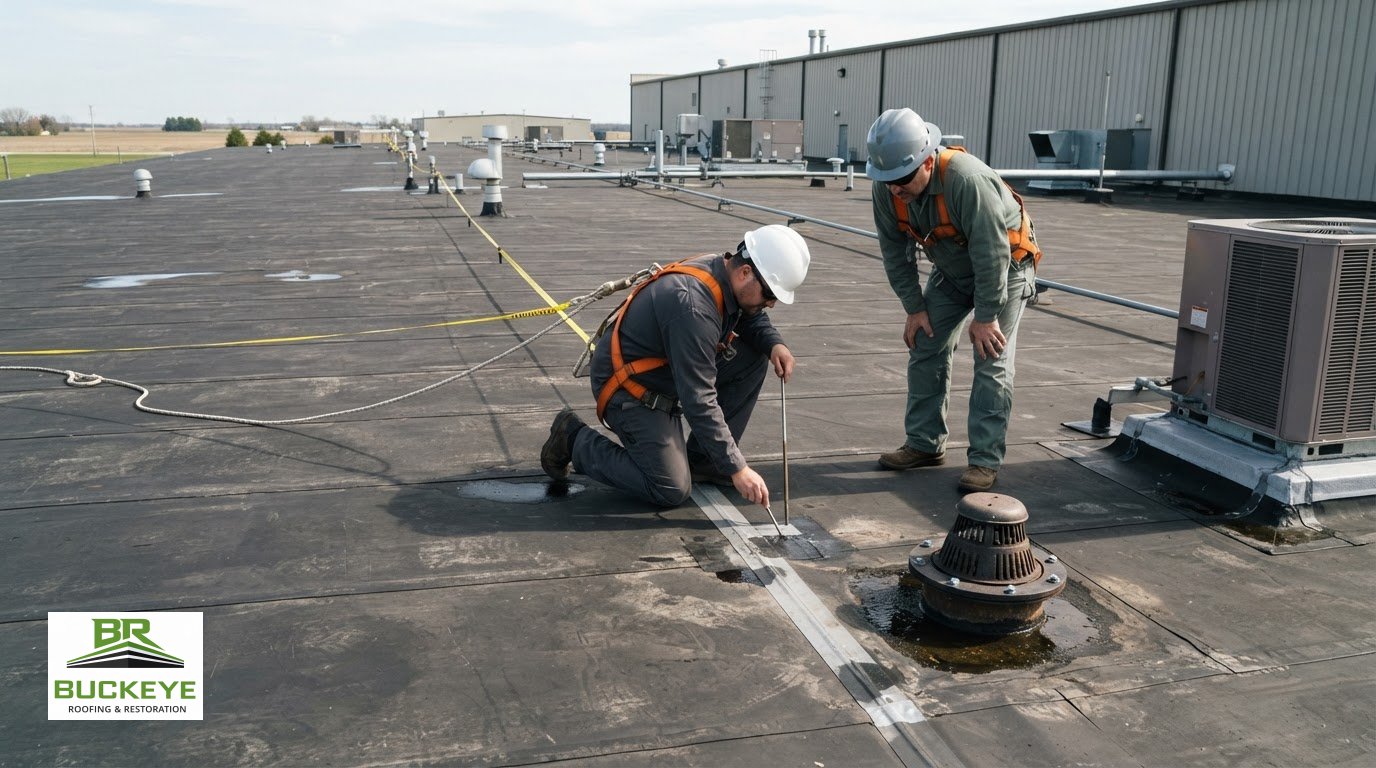
The newest or most expensive membrane is not automatically the right choice. A commercial low slope membrane evaluation should match the roof’s condition to the building’s use, local weather exposure, and long-term plans. The practical next step may be maintaining the existing system, repairing specific defects, restoring the roof, or considering replacement.
Upfront cost matters, but it is only part of the decision. The roofing system should suit the building’s operations, rooftop access, and maintenance needs. Facility managers also need to plan work around equipment, tenants, inventory, and daily activities.
This guide explains how to review roof records and inspection findings, compare membrane options, and assess long-term value. It also distinguishes maintenance, repair, restoration, coatings, and replacement. Use these points to organize an evaluation and identify the information needed to choose a practical next step.
Key Takeaways
- Use a roof map to track observed conditions, completed work, and unresolved issues across the building.
- Weigh EPDM’s flexibility in cold weather and repairability against the needs of your roof and facility.
- Compare membrane options by building use, climate exposure, drainage, insulation needs, and lifecycle value, not upfront cost alone.
- Match the response to the roof’s condition: targeted repair, restoration, coating, or replacement each serves a different purpose.
- Have a professional assess drainage, membrane condition, insulation, and roof-deck integrity before deciding on the next step.
How Should Facility Managers Compare Low-Slope Roofing Systems?
Before comparing membrane options, review roof records, observed conditions, drainage, and building plans. A roof map brings separate findings together in a useful record for maintenance and future decisions.
Roof Condition and Remaining Service Life
Map observations and keep dated photos, leak reports, and records of completed repairs. List unresolved issues separately, including recurring leaks and areas that could not be inspected. This evidence can help distinguish isolated damage from deterioration affecting multiple roof areas.
Remaining service life depends on the membrane, insulation, deck condition, drainage, and repair history. Recurring leaks, widespread deterioration, damaged insulation, or repeated repairs call for a broader review. If a photovoltaic system is planned, consider that its payback period may be 20+ years, so the roof should be expected to last beyond that period.
Drainage and Roof Detail Review
Trace the route water takes to roof drains and scuppers. Record blocked outlets, ponding areas, and drainage paths that appear interrupted. Prolonged ponding typically means standing water remains 48 hours after rain when drying conditions are favorable. Compare these locations with leak reports and visible changes in the roof assembly.
Record penetrations, equipment curbs, flashing, and roof edges as separate details. Look for open seams, loose membrane, and damaged seals around each transition. Note equipment locations and regular foot traffic as well. These details help identify where maintenance access or repairs may affect the roofing plan.
Diagnosis and Corrective Planning
Identify likely causes before choosing corrective work. Common problems include punctures, separated seams, membrane deterioration, leaks near penetrations, and poor drainage. Since water can travel before appearing inside, compare leak reports with roof details instead of assuming the nearest visible defect is the source.
Match the response to the evidence. Targeted repair may suit localized damage when nearby materials remain sound. Recurring leaks or widespread deterioration call for an assessment beyond a single patch. Record affected areas, completed work, and unresolved issues so repair, restoration, and replacement plans can be compared fairly.
Nondestructive Inspection and Monitoring
Visual reviews, infrared imaging, drones, and sensors can help track roof conditions. Record the method used, its findings, and the locations assessed. This creates a baseline for future comparisons and helps identify areas that may need closer investigation without opening every part of the roof assembly.
To compare energy efficiency, review product data for solar reflectance and thermal emittance. These measures describe how a roof surface reflects sunlight and releases absorbed heat. Cool roofs reflect more sunlight and absorb less solar energy than conventional roofs. Consider these properties alongside insulation, climate, and building use, since one rating alone cannot determine the best system for every facility.
EPDM membrane strengths and considerations
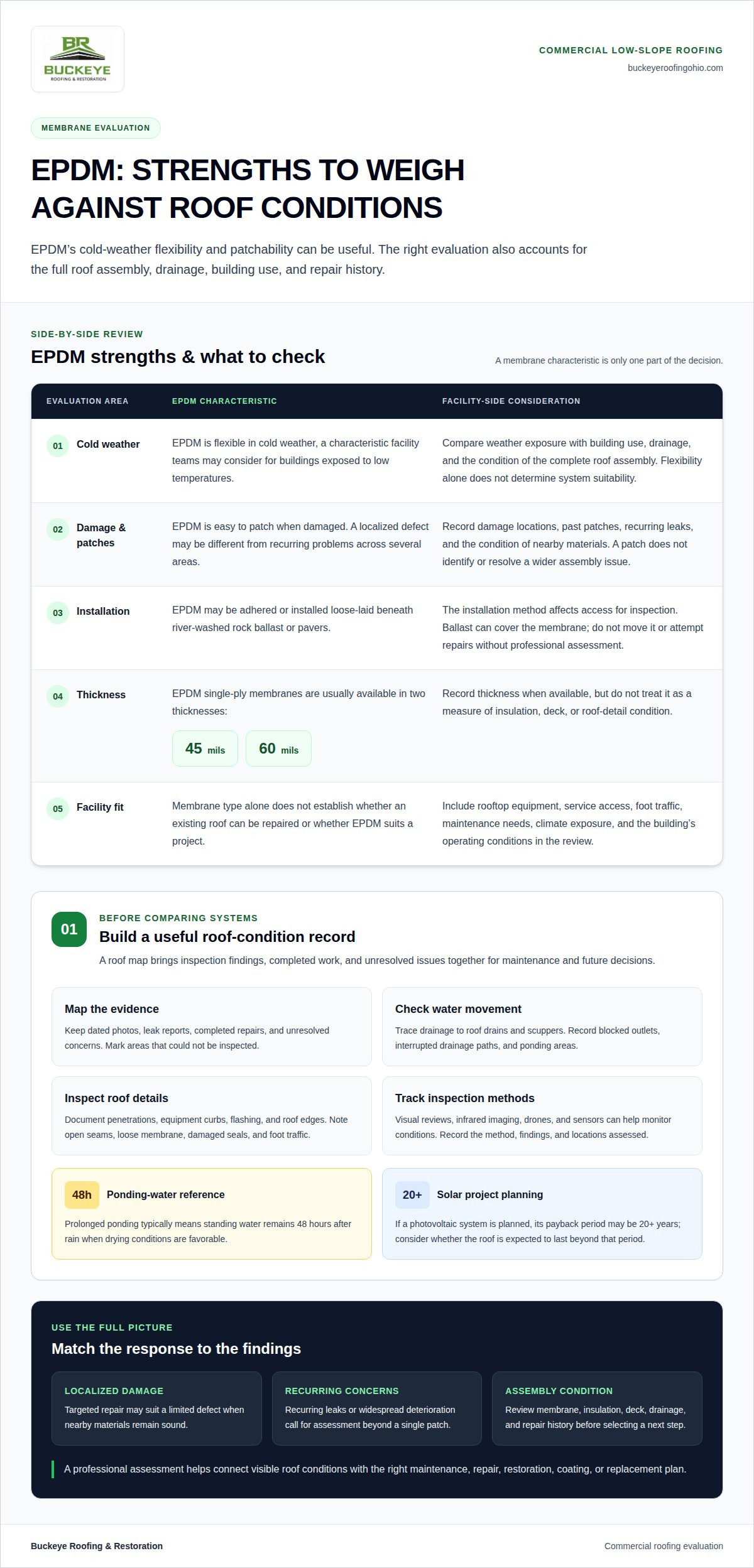
EPDM is a synthetic rubber membrane used on commercial low-slope roofs since the 1960s. Its flexibility in cold weather is one reason facility teams may consider it for buildings exposed to low temperatures. EPDM is also easy to patch when damaged. Those characteristics are useful starting points, but they don’t establish whether an existing roof can be repaired or whether EPDM suits a new project.
For an existing EPDM roof, review the location and pattern of damage, previous patches, and the condition of surrounding materials. A small defect and recurring problems across several areas call for different evaluations. Include building use, weather exposure, drainage, and maintenance access rather than judging the roof by membrane type alone.
EPDM installation and roof configuration
EPDM may be adhered or installed loose-laid beneath river-washed rock ballast or pavers. The installation method affects how the membrane is held in place and how inspectors access it. For example, maintenance planning for a ballasted assembly should account for areas where ballast covers the membrane. Do not move ballast or attempt repairs without professional assessment.
EPDM single-ply membranes are usually 45 or 60 mils thick. Thickness helps describe the membrane, but it doesn’t show the condition of the insulation, deck, or roof details. Include membrane thickness in the roof record when available, then compare it with observed damage, repair history, and the needs of the facility.
Performance and trade-offs
Cold-weather flexibility may matter for a facility exposed to changing temperatures. Patchability can also help address localized damage when the surrounding roof remains suitable. However, a patch does not explain the cause or resolve a wider assembly problem. If a leak returns near a repair, record its location and history rather than treating each occurrence as unrelated.
Compare EPDM with the building’s operating conditions. A warehouse with regular rooftop service activity needs a maintenance plan that accounts for access, equipment, and foot traffic. A building with limited rooftop activity may have different inspection needs. Drainage and existing roof layers matter too, so evaluate the complete assembly and its condition before selecting a material.
A useful EPDM review records the installation method, available thickness information, repair locations, and unresolved concerns. Those details help facility managers decide what to monitor and what needs closer attention. For a professional assessment of a commercial roof, request an inspection.
Factors for comparing systems and lifecycle value
Start a membrane comparison with the building, not the product label. Match each option to occupancy, rooftop equipment, insulation goals, drainage, weather exposure, and expected maintenance. A warehouse with regular service traffic has different demands from an office roof with limited access. The roof’s assembly, construction, and condition also affect which system is suitable.
Compare the complete roof assembly
TPO and EPDM are distinct single-ply systems, not interchangeable surface coverings. TPO can be mechanically attached or fully adhered, and its seams are welded. Attachment method and seam condition affect the installed assembly. EPDM is a flexible rubber membrane that can be adhered or ballasted. Compare each system with the building’s deck, insulation, drainage, and access needs.
Other systems involve different materials and structural considerations. Modified bitumen uses reinforced asphalt-based protection in multiple layers. Built-up roofing can contain 3, 4 or 5 layers of bitumen and reinforcing plies, and its weight means the building structure must be designed to carry it. These differences shape installation and maintenance planning, so compare the full assembly rather than membrane names alone.
Account for climate, use, and energy goals
Assess exposure to ultraviolet radiation, wind, temperature changes, and foot traffic. A roof with frequent equipment servicing may need a different access and protection plan from one with little routine traffic. Drainage matters too: standing water can affect roof performance and complicate maintenance. Compare these conditions with the building’s needs before choosing a membrane surface or attachment method.
Reflectivity can also factor into energy planning. The U.S. Department of Energy says cool roofs reflect more sunlight and absorb less solar energy than conventional roofs. In warm or hot climates, cool roofs can reduce annual air-conditioning energy use for some single-story buildings by up to 15 percent. That finding isn’t a universal forecast; consider building type, climate, insulation, and operating conditions together.
Compare lifecycle value, not just installation
Create a side-by-side comparison covering installation scope, expected maintenance, repair access, and the condition of existing materials. A lower initial expense may not offer better long-term value if the system needs frequent repairs or does not suit the building’s use. On the other hand, a more extensive system may add little value when the existing roof remains serviceable and targeted work addresses its needs.
For each option, record the work included, roof details needing attention, and future maintenance requirements. Compare these commitments with facility priorities, such as limiting operational disruption or accommodating rooftop equipment. This helps managers choose an approach based on the building’s actual demands rather than a single feature or broad claim.
Maintenance, repair, restoration, and replacement decisions
Choose a response based on the roof’s condition, not only its age or membrane type. Inspection timing depends on roof condition, weather exposure, drainage, leak history, and rooftop activity. Warranty terms depend on the documents issued for the specific roof system.
Maintenance and Inspection Requirements
Use a maintenance record to connect each inspection finding with an action, such as clearing drainage paths, documenting damaged flashing, or tracking a recurring interior leak. Set inspection timing according to roof condition and building operations. A facility with frequent rooftop service may need closer attention to traffic paths and penetrations than a roof with limited access.
After severe weather, new leaks, or rooftop work, record visible changes and arrange a professional review if there is damage or access is unsafe. Routine reviews should document membrane seams, edges, penetrations, drainage, and previous repairs. Consistent records help facility managers determine whether a defect is isolated or recurring.
Warranty Considerations
No single warranty term or maintenance schedule applies to every commercial membrane roof. Review the documents for the specific system, including covered components, exclusions, required maintenance, inspection records, and procedures for reporting or addressing defects. Keep these documents with roof maps and completed-work records.
Warranty coverage and practical maintenance needs are separate considerations. A warranty does not replace routine observation or mean every repair will be covered. Before work begins, compare the proposed scope with existing documents and record how the work affects the roof assembly and its maintenance requirements.
Use a condition-based decision process. If damage is confined to one area and surrounding materials remain sound, targeted repair may address it. If problems recur, spread across the membrane, or involve wet insulation or poor drainage, assess the entire roof system before choosing a broader solution. Modified bitumen and thermoplastic membranes have different materials and details, so repairs must suit the existing assembly.
Restoration or a coating may suit a roof that remains structurally sound, has a suitable substrate, and has manageable moisture conditions and functioning drainage. These approaches cannot correct every underlying problem. If deterioration is widespread, insulation is compromised, or failures keep recurring, compare restoration with replacement based on the work required and the building’s needs.
Replacement becomes a stronger option when repairs keep recurring or the roof system can’t reliably serve the building. Reroofing may involve adding a new assembly over an existing roof, while full replacement removes existing materials; the roof’s condition and construction help determine the appropriate scope. Document the reasons behind the choice, including repair history, drainage concerns, and operational exposure. For isolated defects, a professional commercial roof repair assessment can help define the work.
What factors should be evaluated when inspecting a commercial low-slope membrane roof?
A thorough inspection connects membrane observations with the roof assembly, drainage, and interior evidence. Record each finding by location, condition, and likely effect on the building rather than treating the roof as one uniform surface.
Start with the membrane field. Note punctures, cuts, open seams, surface wear, loose areas, and patches that appear to be lifting or separating. Compare these observations with interior leak locations, remembering that water can travel beneath the membrane before appearing indoors. A ceiling stain directly below a roof area does not always show where water entered.
Inspect transitions where the membrane meets penetrations, equipment curbs, walls, edges, and flashing. These details connect, interrupt, or move with roofing materials, so defects may need a different repair from damage in an open membrane area. Photograph each detail from a safe access point and note nearby equipment or service routes that could affect future roof traffic.
Drainage findings should include the direction water takes, whether drains and scuppers are clear, and whether depressions hold water. Prolonged ponding typically means standing water remains 48 hours after rainfall when drying conditions are favorable. Record the location and extent of ponding, then compare it with interior leaks, soft-looking areas, or drainage changes noted in previous records.
Look beyond the visible membrane. Damaged insulation can limit the value of surface repairs, while moisture within the assembly may need closer investigation. Note recurring interior stains, soft or uneven areas observed from a safe vantage point, and repairs that have not stopped a leak. Structural concerns, unsafe access, or suspected wet materials require professional assessment, not an untrained rooftop check.
Also document roof overburden, such as ballast or pavers. Overburden can help hold a membrane in place during wind events and protect it from ultraviolet light and general wear. It can also obscure the membrane, so record where it occurs and whether it restricts inspection access. Do not move heavy materials or walk on questionable areas to investigate.
Finish with a written condition record: map defects, attach dated photos, identify completed repairs, and list unresolved questions. Separate isolated damage from patterns affecting seams, edges, drainage points, or multiple roof areas. This gives facility managers a practical basis for maintenance planning and comparing repair, restoration, or replacement scopes.
If leaks, ponding, or membrane damage need professional review, schedule a commercial roof inspection.
Buckeye Roofing & Restoration: Commercial Flat Roofing
Buckeye Roofing & Restoration helps facility managers assess commercial flat roofs and choose a practical next step. An inspection can clarify whether localized damage calls for repair or whether the roof’s broader condition makes restoration or coatings worth considering. These options are not interchangeable. Restoration and coatings depend on the roof’s condition, substrate, moisture, drainage, and structural integrity.
Bring inspection notes, leak locations, and completed-work records to the discussion. This information connects observed problems with the roof’s history and operating needs. If replacement appears necessary, the inspection can help explain why repair or restoration may not address the underlying condition.
Contact Buckeye Roofing & Restoration to discuss a commercial roof inspection and possible next steps.
Turn Roof Findings Into a Practical Plan
Use the evaluation to make a clear decision, not simply to file another inspection report. Record which findings need action, which can be monitored, and how each decision affects building operations. This gives facility teams a basis for planning work, coordinating access, and keeping future roof records consistent.
A commercial low slope membrane evaluation can also connect roof planning with wider facility priorities. Consider how maintenance access, equipment work, and operating schedules fit together before setting next steps. Clear records help everyone responsible for the building understand why a decision was made and what needs attention later.
If you’re ready to discuss the roof’s needs and choose a sensible path forward, connect with Buckeye Roofing & Restoration. A practical plan starts with a clear conversation about the building.
Frequently Asked Questions
What should a commercial roof condition review document?
A useful review creates a record another facility manager can follow. Include a roof plan with labeled locations, dated photos, observed conditions, and related interior leak reports. Note the membrane type when known, previous work, outstanding repairs, and inaccessible areas. For example, label a photo “north loading-bay curb” rather than “roof damage.” Specific labels make future comparisons and maintenance planning more precise.
Why Is Drainage So Important on a Low-Slope Commercial Roof?
Drainage directs water toward roof drains or scuppers instead of letting it collect across the membrane. Standing water can keep roof details wet longer and put ongoing stress on the roof assembly. Debris near an outlet can also obstruct water flow. If water repeatedly collects beside rooftop equipment, record the location and have the drainage path assessed rather than treating the membrane as the only possible issue.
What are the main types of commercial low-slope roofing membranes?
Common roofing options include TPO, EPDM, PVC, modified bitumen, and built-up roofing. TPO and PVC are single-ply membranes with heat-welded seams; EPDM is a flexible rubber membrane. Modified bitumen uses reinforced asphalt-based layers, while built-up roofing combines bitumen with reinforcing plies. These systems differ in materials, seams, installation, and maintenance needs. Compare the existing assembly and building requirements, not just the membrane name.
How do climate, drainage, ponding water, and rooftop equipment affect membrane selection?
Weather and building operations shape the conditions a roof system must handle. Temperature changes and weather exposure influence material and detail choices, while drainage problems need attention regardless of membrane type. Rooftop equipment adds penetrations and service routes, so maintenance traffic affects how those areas are protected and inspected. For example, a roof with frequent equipment access needs a practical plan for walkways and detail maintenance alongside membrane selection.
What energy-efficiency and reflectivity ratings apply to commercial roof membranes?
Compare product data for solar reflectance and thermal emittance. Cool roofs reflect more sunlight and absorb less solar energy; in warm or hot climates, they can reduce annual air-conditioning energy use for some single-story buildings by up to 15 percent.
What steps are involved in selecting and installing a commercial low-slope membrane system?
Map roof records and inspection findings, then assess membrane condition, drainage, insulation, roof-deck integrity, and building needs. Compare repair, restoration, coatings, and replacement, and select a suitable assembly and installation method. Follow manufacturer instructions and confirm site-specific product approvals and local requirements.
How do TPO, PVC, EPDM, and modified bitumen compare in cost, lifespan, and performance?
EPDM is flexible in cold weather and can be patched; TPO has a reflective surface and welded seams; PVC resists grease, oils, and harsh chemicals; and modified bitumen provides reinforced asphalt-based protection in multiple layers. No comparative cost or lifespan figures are provided.

Article by
Harry Stanley III
Harry Stanley III is a construction marketing strategist and fractional CMO at H&A Marketing. He has helped construction companies grow through website strategy, SEO, paid advertising, branding, lead generation, CRM systems, and professional content. His past work includes helping Meraki Solar generate an additional $3.7 million in revenue in his first year and supporting American Builders as a fractional CMO. Today, Harry works directly with custom home builders and construction companies to build marketing systems designed to generate qualified leads and measurable growth.