
When Is It Time to Stop Patching a Commercial Flat Roof?
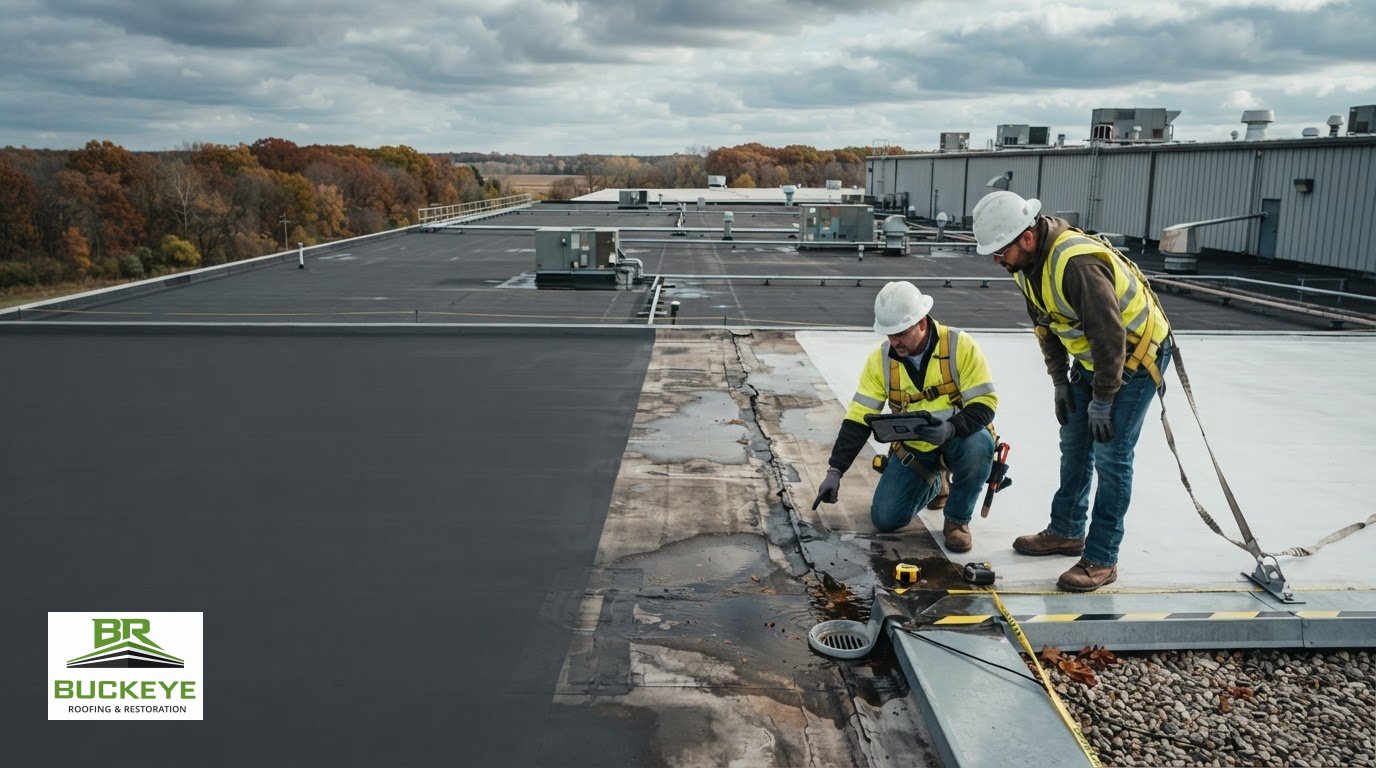
What if the next roof leak doesn’t call for another patch or a full replacement? For owners and facility managers considering commercial roof repair services in Fort Wayne Indiana, the right answer depends on what an inspection finds, not on the leak alone. A recurring leak can disrupt operations or put stored materials at risk, while visible damage may not show how far moisture has traveled.
It makes sense to want a clear fix without approving work the roof doesn’t need. A professional assessment helps identify the source of the problem and evaluate the roof membrane, drainage, and overall condition. Repair may suit isolated damage; restoration, coating, reroofing, or replacement may make sense when inspection findings support broader work.
This article explains how commercial roof repairs are assessed, what happens when a roofer investigates a low-slope roof, and which signs suggest a patch may no longer be enough. You’ll also learn what to expect when addressing a roof problem in Fort Wayne, where seasonal weather can put repeated stress on commercial roofing systems.
Key Takeaways
- Recurring leaks, interior water stains, debris, and drainage issues are signs to document and discuss during a professional roof inspection.
- For commercial roof repair services in Fort Wayne Indiana, an inspection helps identify the affected roofing system and define a repair scope based on actual conditions.
- Repair addresses a specific defect, while restoration, coating, reroofing, and replacement involve different scopes of work.
- Roof moisture, substrate condition, drainage, and structural integrity help determine whether repair or broader work is appropriate.
- Sharing affected areas, symptoms, and facility operating constraints can help inform repair planning and limit disruption.
When Do Fort Wayne Commercial Properties Need Roof Repair?
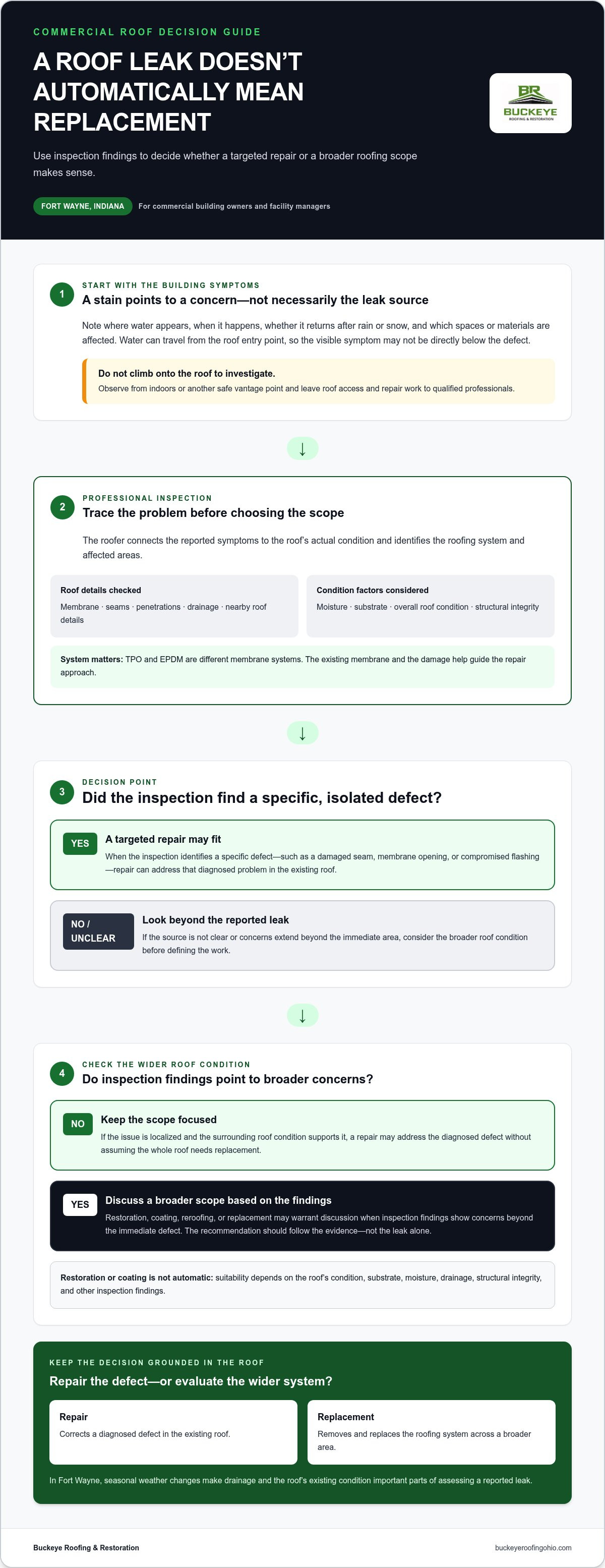
Commercial roof repair is targeted work on an existing roof system to correct a diagnosed defect, such as a damaged seam, membrane opening, or compromised flashing. A stain or leak is a reason to investigate, but it isn’t enough on its own to determine the repair. Water can travel from the point where it enters, so the visible symptom may not be directly below the roof defect.
For owners seeking commercial roof repair services in Fort Wayne Indiana, an inspection connects building symptoms to the roof’s actual condition. A low-slope roof may look nearly flat, but it is designed with slope and drainage paths to move water toward drains or other outlets. The Flat roof overview describes common features of these systems, including drainage considerations.
Which roof warning signs can facility staff observe safely?
Start indoors. Look for water staining, damp materials, recurring water entry, or changes that appear after rain or snow. From the ground or another safe vantage point, staff may also notice debris near roof edges or visible drainage concerns. Don’t climb onto the roof to investigate. Record where and when symptoms appear, which areas are affected, and whether the issue returns after particular weather. Those details can help a roofer focus the inspection.
Why do commercial roof concerns affect building operations?
A leak may affect occupants, stored inventory, production areas, or equipment, depending on where water enters and how the space is used. Even a contained stain deserves assessment if water entry recurs. Documenting the affected area helps facility staff communicate practical concerns and plan for an inspection without assuming the entire roof needs work.
Fort Wayne commercial buildings face seasonal weather changes, so drainage and the roof’s existing condition matter when assessing a reported leak. Debris or water that appears to collect near drainage points may warrant professional attention. Staff should observe from a safe location rather than approach loose materials or standing water on the roof. A qualified roofer can inspect the system, trace the source, and determine whether a targeted repair is appropriate.
Buckeye Roofing & Restoration provides commercial roof repair in Fort Wayne and surrounding Northeast Indiana markets. Learn more about commercial roof repair and how an assessment can clarify the next step.
How Buckeye Assesses and Repairs a Commercial Roof in Fort Wayne
A sound repair starts by tracing the problem, not by applying a patch wherever water appears indoors. For commercial roof repair services in Fort Wayne Indiana, Buckeye follows a practical sequence: discuss the symptoms, inspect the roof, identify the roofing system and affected areas, then recommend a scope that fits the findings.
What does a commercial roof inspection assess before repair?
The inspection focuses on the reported leak and the surrounding roof condition. A roofer may assess the membrane, seams, penetrations, drainage, and nearby details where water can enter. A ceiling stain or damp area can point to a problem, but it may not reveal the leak’s source or full extent. Safe access, weather, and building conditions also shape how the assessment is carried out. The National Roofing Contractors Association (NRCA) guidelines offer additional roofing-industry resources on inspection and maintenance.
After the inspection, the roofer identifies the system and considers how the damage relates to the rest of the roof. A membrane puncture, seam failure, or leak around a penetration may call for targeted repair. Drainage concerns or deterioration beyond the immediate leak area may change the recommended scope. The goal is to address the diagnosed defect while accounting for the roof around it.
How does repair planning account for TPO and EPDM roofs?
TPO and EPDM are different membrane systems, so they aren’t interchangeable repair materials. The existing membrane, type and location of damage, and condition of the surrounding roof guide the repair approach. Identifying the system matters before selecting materials or defining the work. Facility staff can report symptoms and affected areas, but roof access and repair work should be left to qualified professionals.
A targeted repair corrects a diagnosed defect in the existing roof; a full replacement removes and replaces the roofing system across a broader area. A leak doesn’t automatically mean the whole roof needs replacement. If inspection reveals widespread concerns, broader work may warrant discussion, but the recommendation should follow the evidence.
Once the findings are clear, Buckeye can explain the proposed repair scope and how it relates to the roof’s condition. Learn more about commercial roof repair, or request a commercial roof inspection to discuss a concern at your Fort Wayne property.
Commercial Roof Repair, Restoration, or Replacement: Which Fits?
A recurring leak doesn’t automatically mean the whole roof needs to come off. The right scope depends on inspection findings across the roof, including moisture, the condition of the membrane and underlying substrate, drainage, and structural integrity. For property managers weighing commercial roof repair services in Fort Wayne Indiana, understanding the difference between a localized fix and broader work makes the recommendation easier to assess.
| Option | What it involves | When it may fit |
|---|---|---|
| Targeted repair | Corrects a diagnosed defect in a defined area of the existing roof. | Inspection findings show localized damage and the surrounding roof remains suitable. |
| Restoration or coating | Renews or adds a protective layer to an existing roof system. A coating is one type of restoration approach. | The roof and substrate meet the conditions required for the chosen system. Moisture, drainage, and overall condition need assessment. |
| Reroofing | Adds a new roofing system over an existing roof, where the building and existing roof conditions allow. | Inspection confirms the existing assembly can support this approach and the project is suitable. |
| Full replacement | Removes the existing roofing system and installs a new one. | Widespread deterioration or other findings make a broader renewal appropriate. |
When can targeted roof repair be a reasonable option?
Repair may make sense when an inspection identifies a defined problem, such as a damaged membrane area or failed seam, and the surrounding roof is in suitable condition to remain in service. The assessment should consider more than the visible defect. A localized repair addresses its diagnosed scope; it shouldn’t be assumed to resolve separate or hidden problems elsewhere.
When should restoration or replacement be evaluated instead?
Broader deterioration, moisture within the roof assembly, drainage problems, or concerns with the substrate or structure can make an isolated patch an incomplete answer. Restoration or a coating may be considered only if inspection findings show the existing roof is a suitable candidate. Neither option fits every roof. Reroofing and full replacement are also distinct approaches, and neither should be treated as automatic. For a broader decision framework, see Should You Repair, Restore, or Replace Your Commercial Roof?
Roof work also needs to be planned safely. OSHA’s resources provide information on workplace safety, including OSHA safety regulations for roofing. A professional assessment helps determine which scope fits the roof rather than defaulting to another patch or the largest intervention.
To discuss a commercial roof concern, learn about Buckeye Roofing & Restoration and its commercial roofing services.
Planning Commercial Roof Repair Around Fort Wayne Building Operations
Roof work needs to fit the building as well as the roof. A warehouse may need clear access around loading areas, while a manufacturing facility may have equipment or active work zones below the affected area. Offices and other occupied buildings have their own access and scheduling needs. Sharing those details before an inspection helps Buckeye plan the assessment around how the property operates.
What should a facility manager prepare for a roof assessment?
Gather practical information that can help connect roof findings with building symptoms. A short record is useful:
- Where water entry or staining has appeared, and when it happens.
- Which rooms, equipment areas, or stored materials may be affected.
- Any previous repair history or changes in the reported symptoms.
- Access requirements, active work zones, and other facility constraints.
Staff should observe symptoms from inside or another safe location. Don’t ask employees to climb onto the roof or approach loose materials, standing water, or other unsafe areas. A professional inspection is the right way to assess roof conditions directly.
How can repair planning reduce avoidable operational disruption?
Once the roof has been assessed, the repair scope and building conditions help determine how to coordinate access and work areas. Facility managers can identify areas that need to remain clear, note sensitive activities, and share operational limits with the roofing team. Weather and roof condition can also affect planning, so avoid relying on an assumed start or completion schedule before the assessment.
Good coordination doesn’t guarantee that operations will continue without interruption. It does give the roofing team and facility staff a clearer basis for planning around occupants, inventory, equipment, and work activity. For commercial roof repair services in Fort Wayne Indiana, these details help connect the repair plan to the needs of the specific property.
For additional maintenance planning, look for the related guide, Commercial Flat Roof Repair: A Facility Manager’s Guide to Longevity. When you’re ready to discuss an inspection and how roof work may fit your facility’s operations, connect with Buckeye Roofing & Restoration.
Arrange Commercial Roof Repair Services in Fort Wayne, Indiana
Another patch isn’t always the right next step, and a leak doesn’t automatically mean the roof needs replacement. For commercial roof repair services in Fort Wayne Indiana, a practical decision starts with the building’s symptoms and an on-site assessment. Buckeye Roofing & Restoration is based in Edon, Ohio, and serves commercial properties in Fort Wayne and surrounding Northeast Indiana markets.
The process is straightforward: describe the concern, arrange an inspection, review what the roofer finds, then consider a scope that fits the roof’s condition. This sequence helps property owners and facility managers decide based on evidence rather than guessing from a ceiling stain or the history of earlier patches.
What information helps start a commercial roof repair discussion?
Share the building type, roof system if known, and the interior or exterior location where symptoms have appeared. Note whether water entry recurs, when it tends to show up, and whether it affects occupants, equipment, inventory, or facility operations. Previous repair information can also provide useful context. You don’t need to diagnose the roof or access it yourself. These observations help frame the discussion, but an inspection is needed to identify the cause and suitable scope.
What happens after Buckeye evaluates the roof?
The inspection findings inform a recommendation tailored to the actual roof, not a default choice between another patch and full replacement. If the damage is localized and surrounding areas are in suitable condition, targeted repair may be reasonable. If broader deterioration is present, restoration, a coating, reroofing, or replacement may be considered based on the roof’s condition, moisture, substrate, drainage, and structural integrity. Restoration and coatings aren’t right for every roof, so suitability depends on the assessment.
Ask for a clear explanation of the findings and how the proposed work addresses them. The scope should reflect the diagnosed issue and relevant roof conditions. If the inspection identifies concerns beyond the original leak, those findings can guide the next decision without assuming the largest intervention is necessary.
If your Fort Wayne commercial property has an active leak or recurring roof concerns, take the next step with an inspection. Request a commercial roof inspection to discuss the symptoms and determine what work the roof may need.
Make the Next Roof Decision With Confidence
Another patch may be reasonable when inspection findings show a localized defect and the surrounding roof remains in sound condition. Recurring leaks or broader deterioration call for a closer look, not an automatic replacement recommendation. The roof’s moisture, drainage, membrane, substrate, and structural condition help determine whether repair, restoration, coating, or replacement fits.
Buckeye provides commercial flat-roof repair and leak detection for properties in Fort Wayne and Northeast Indiana from its base in Edon, Ohio. The company serves businesses across Ohio, Northeast Indiana, and Southern Michigan, including commercial properties in Toledo, Findlay, Lima, Jackson, Battle Creek, Elkhart, Defiance, Bryan, Kalamazoo, Adrian, Bowling Green, Perrysburg, and Auburn. An inspection gives building owners and facility managers a clearer basis for deciding what work is appropriate, with recommendations guided by the roof’s actual condition.
If you’re weighing commercial roof repair services in Fort Wayne Indiana, start with the symptoms and arrange a professional assessment. Request a commercial roof inspection in Fort Wayne to discuss an active leak or recurring concern. A clear assessment can help you take the next practical step for your building.
Frequently Asked Questions
Can a commercial roof leak be repaired without replacing the entire roof?
Yes, a commercial roof leak can often be repaired without replacing the entire roof if inspection finds localized damage and the surrounding roof remains serviceable. A roofer needs to trace the leak and assess the membrane, seams, drainage, and nearby areas before recommending work. If the inspection finds widespread deterioration or other underlying concerns, a broader solution may be worth evaluating. A leak by itself doesn’t determine the scope.
How does a roofer determine whether a commercial roof needs repair or replacement?
A roofer inspects the reported leak and the overall roof condition, including the membrane, seams, penetrations, drainage, moisture, and supporting substrate. The assessment helps show whether the problem is isolated or part of broader deterioration. Structural concerns and the condition of surrounding areas also matter. A targeted repair may fit a defined defect, while replacement may be considered if inspection findings show the existing system needs broader renewal.
What commercial roof problems can be addressed with a targeted repair?
Targeted repairs may address diagnosed, localized defects such as a membrane puncture, a failed seam, or damage near a roof penetration. The appropriate repair depends on the existing roofing system and the condition of the surrounding area. A visible leak may have more than one contributing issue, so repairing one spot shouldn’t be assumed to resolve separate or hidden problems. A professional inspection helps define the repair scope.
Is standing water on a commercial roof always a sign it needs repair?
No, standing water doesn’t automatically mean the roof needs repair, but persistent ponding or water near drainage points deserves professional assessment. A commercial low-slope roof is designed to drain, and an inspection can check whether drainage issues, roof condition, or another factor is involved. Don’t walk onto the roof to investigate. Report what you can safely observe and arrange an inspection if ponding persists or accompanies a leak.
Can TPO and EPDM commercial roofs both be repaired?
Yes, TPO and EPDM commercial roofs can both be repaired, but they’re distinct membrane systems and aren’t interchangeable. The roofer identifies the existing system, examines the damage and nearby roof areas, and selects an approach suited to those findings. A puncture or seam concern may call for a different repair method depending on the membrane and its condition. Leave roof access and repair work to trained professionals.
When should a Fort Wayne business schedule a commercial roof inspection?
Schedule an inspection when you notice recurring water entry, interior staining, storm-related damage, standing water, loose materials, or possible structural concerns. An inspection is also sensible when the source of a leak is unclear or a previous repair hasn’t resolved the symptom. For commercial roof repair services in Fort Wayne Indiana, documenting where and when the issue appears can help the roofer assess the concern and plan around building operations.
Does Buckeye Roofing & Restoration provide commercial roof repair in Fort Wayne, Indiana?
Yes. Buckeye Roofing & Restoration provides commercial roof repair services in Fort Wayne Indiana, serving commercial properties in Northeast Indiana from its base in Edon, Ohio. Its work includes commercial flat-roof repair and leak detection. An inspection helps determine whether a specific repair fits the roof’s condition or whether another option should be considered. Recommendations are based on the assessment, not an automatic assumption that the roof needs replacement.

Article by
Harry Stanley III
Harry Stanley III is a construction marketing strategist and fractional CMO at H&A Marketing. He has helped construction companies grow through website strategy, SEO, paid advertising, branding, lead generation, CRM systems, and professional content. His past work includes helping Meraki Solar generate an additional $3.7 million in revenue in his first year and supporting American Builders as a fractional CMO. Today, Harry works directly with custom home builders and construction companies to build marketing systems designed to generate qualified leads and measurable growth.
