
TPO Roof Repair Guide for Adrian Facility Managers
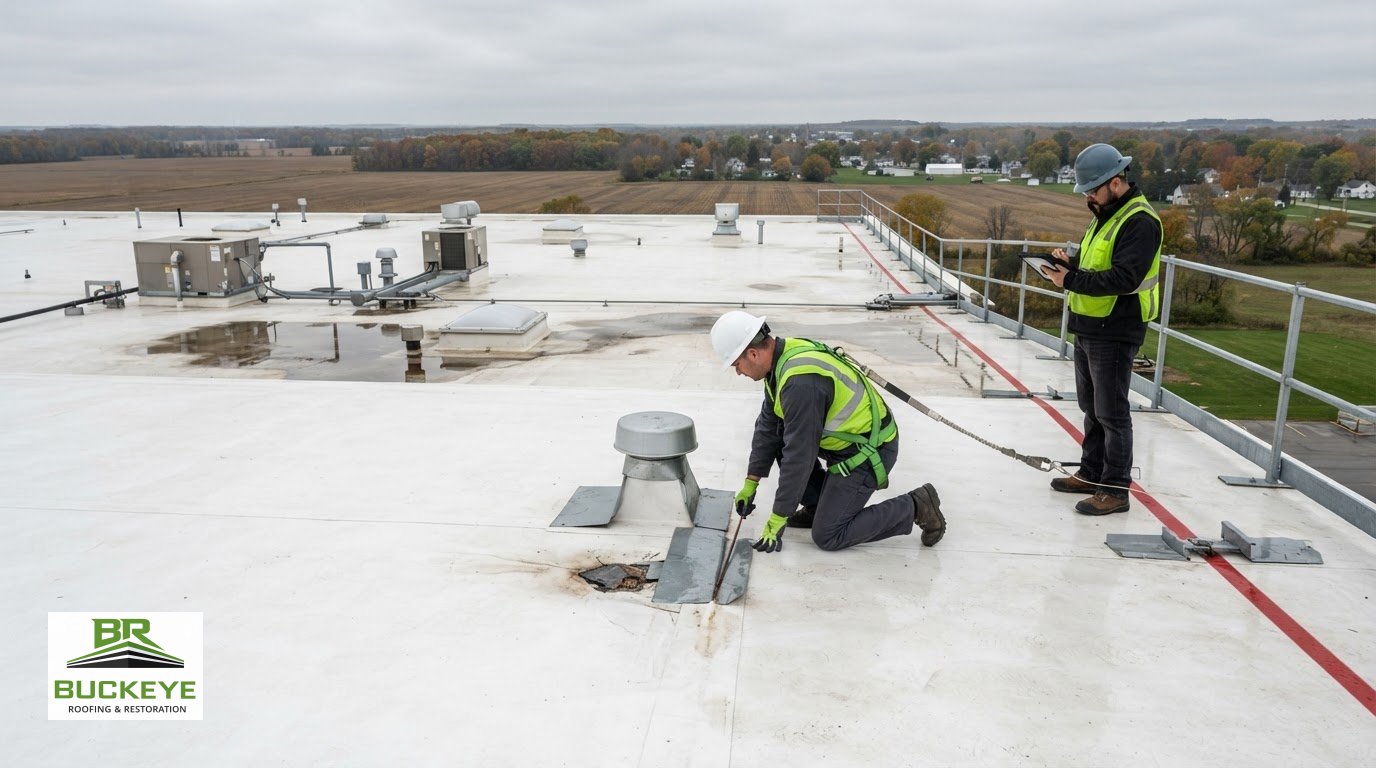
What if a leak in your Adrian facility calls for a focused repair, not work across the entire roof? An interior stain or visible membrane damage can disrupt operations, but it may not show where water is entering or how far the damage extends. TPO roof repair in Adrian Michigan starts with finding and assessing the problem before choosing a remedy.
It’s reasonable to want the leak addressed without committing to more work than the roof needs. A professional inspection can check the membrane, heat-welded seams, flashings, penetrations, drainage, and surrounding roof condition to help identify the likely source and appropriate repair scope.
This guide explains what a roofer evaluates, how a localized repair differs from broader restoration or replacement, and what information you can safely gather from inside or around your building. Note where leaks appear, when they occur, and any visible changes in ceilings or operations. You don’t need to climb onto the roof to report useful details. Inspection findings can help you choose a proportionate next step based on the roof’s actual condition.
Key Takeaways
- For TPO roof repair in Adrian Michigan, an inspection helps connect reported symptoms with likely roof entry points before repair scope is chosen.
- Interior leak locations and visible membrane damage may not reveal the full water path, so share observations without accessing the roof.
- Repair, broader corrective work, restoration, or replacement may be considered based on damage extent, roof condition, moisture, drainage, and structural integrity.
- Prepare for an assessment by recording leak locations and timing, taking photos from safe areas, and gathering prior repair records.
- Buckeye Roofing & Restoration serves commercial properties in Adrian from its Edon, Ohio base and can assess the roof before recommending a next step.
TPO Roof Repair in Adrian, Michigan: Recognizing a Commercial Roof Problem
A ceiling stain, a drip near equipment, or a visible tear in the membrane can interrupt work and leave you wondering where water is getting in. TPO, short for thermoplastic polyolefin (TPO), is used on commercial low-slope roofs. These roofs are designed to drain water, even though their slope may not be obvious from the ground. A leak indoors is a reason to document what you see, not proof that the membrane directly above it is damaged.
For facility managers considering TPO roof repair in Adrian Michigan, local seasonal conditions are worth mentioning during the inspection. Snow, ice, thawing, and drainage can affect where water collects and how it moves across a roof. A roofer can check whether symptoms relate to a seam, flashing, roof penetration, drainage area, or another condition.
Which TPO roof warning signs can you observe safely?
Start inside the building or from another safe, ground-level location. Note where moisture appears and whether it changes after rain, snow, or a thaw. Water can travel along roof layers or building components before showing up indoors, so the stain may not be directly beneath the entry point.
- Record the location of stains, dripping, damp materials, or changes in the affected area.
- Take photographs from a safe location and note when the symptoms occur.
- From the ground, note visible debris or changes you can clearly see without entering a restricted area.
Don’t walk onto the roof to investigate. Avoid touching suspected electrical hazards, loose materials, or any area that appears unsafe. Leave roof access and close inspection to qualified professionals.
When should an Adrian facility manager request an inspection?
Contact a commercial roofer when a leak returns, visible membrane damage appears, or water intrusion affects building operations. Standing water, suspected structural concerns, or unsafe roof access also warrant professional assessment. Don’t wait for the indoor symptom to identify the source. It may show only where water emerged, not where it entered or how far damage extends.
An inspection can help determine whether the concern is isolated or part of a broader roof condition. Use the findings to guide the next step rather than assuming every leak calls for the same work. For more information about commercial roof repair, review the service details and discuss the symptoms your facility is experiencing.
How a Commercial Roofer Diagnoses TPO Roof Damage Before Repair
A sound repair plan starts with tracing the problem, not simply patching the most visible mark. A commercial roofer typically reviews the leak history and reported conditions, inspects accessible roof areas, looks for likely entry points, and documents the findings. This helps connect building symptoms to roof conditions without assuming they line up in a straight line.
Water can move between roof layers or along building components before appearing inside. A ceiling stain may be some distance from the entry point, while a visible membrane issue may not be the source of that particular leak. The roofer compares interior reports with exterior observations and considers the roof system as a whole.
What does a roofer check on a TPO membrane?
The inspection may include membrane seams, transitions, flashing, penetrations, and details around rooftop equipment. TPO sheets are joined at seams using heat-welding methods. The roofer checks for separation and other visible defects, while distinguishing a limited area of damage from signs of broader issues with the membrane or roof system.
Diagnosis also considers what lies beneath the membrane. The substrate, insulation, and possible moisture within the assembly can affect whether a localized repair is appropriate. Ask how the findings relate to the proposed scope, so the recommendation addresses observed conditions rather than an assumption based on one damaged spot.
How do drainage and hidden moisture affect the diagnosis?
Drainage patterns matter. A roofer checks drains, water flow, and areas where water appears to collect because those conditions can help explain how moisture reaches a vulnerable detail. Standing water alone doesn’t prove that the membrane has failed, just as a leak stain alone doesn’t identify its source.
Moisture below the membrane may change the repair options, so a professional needs to assess its extent and the surrounding roof condition. The inspection should consider whether the damage is isolated or connected to drainage, the substrate, insulation, or other concerns.
Because roof access involves fall hazards, facility teams should leave roof-level inspection to qualified personnel and confirm that appropriate safety practices are in place. The OSHA fall protection requirements provide government guidance on fall protection in construction, including provisions covering low-slope roof work.
For TPO roof repair in Adrian Michigan, a documented assessment gives facility managers a clearer basis for comparing repair scope with the roof’s overall condition. If you’re discussing an active leak, Buckeye provides commercial roof repair for properties in the area.
TPO Roof Repair or a Larger Scope? Compare Options by Inspection Findings
A separated seam doesn’t automatically mean the entire TPO roof needs replacement. The right scope depends on what the inspection finds across the affected area and the rest of the system. A roofer considers the extent of damage, membrane condition, substrate, insulation, moisture, drainage, and structural integrity before recommending a path.
For TPO roof repair in Adrian Michigan, the goal is to match the work to the verified problem. A limited defect may call for a focused repair, while recurring leaks or signs of widespread deterioration may require a broader evaluation. The recommendation should explain what is damaged, what remains serviceable, and why the proposed scope fits those findings.
When may a localized TPO repair be considered?
A localized repair may be an option when inspection identifies a contained, addressable failure and the surrounding roof remains in suitable condition. The roofer still needs to assess nearby membrane, seams, flashing, and underlying materials. A small visible defect alone doesn’t establish that the area around it is sound or that a repair is appropriate. Discuss the scope and expected performance based on the specific roof, without assuming warranty coverage.
When might inspection findings point beyond a patch?
Widespread membrane damage, recurring leaks, wet insulation or substrate, or other system concerns can signal that a small repair may not address the full problem. These findings call for further assessment, not an automatic replacement decision. The roof’s overall condition and the source of the moisture help determine whether broader corrective work is needed.
The options are different. Repair addresses a specific defect. Restoration renews an existing roof system when its condition and underlying materials make that approach suitable. A coating is an applied layer, not a substitute for correcting damaged or unsuitable materials. Its suitability needs to be assessed. Reroofing adds a new roof system over an existing one when conditions allow, while full replacement removes and replaces the existing roof assembly. An inspection should clarify which option, if any, fits the roof.
If the main concern is a separated TPO seam, start by assessing the seam and surrounding details, then consider the roof-wide findings before choosing a scope. For broader planning context, see Buckeye’s guide to commercial flat-roof repair. A clear inspection report can help you compare the proposed work with the actual condition of the roof.
Preparing for TPO Roof Repair at Adrian Commercial Sites
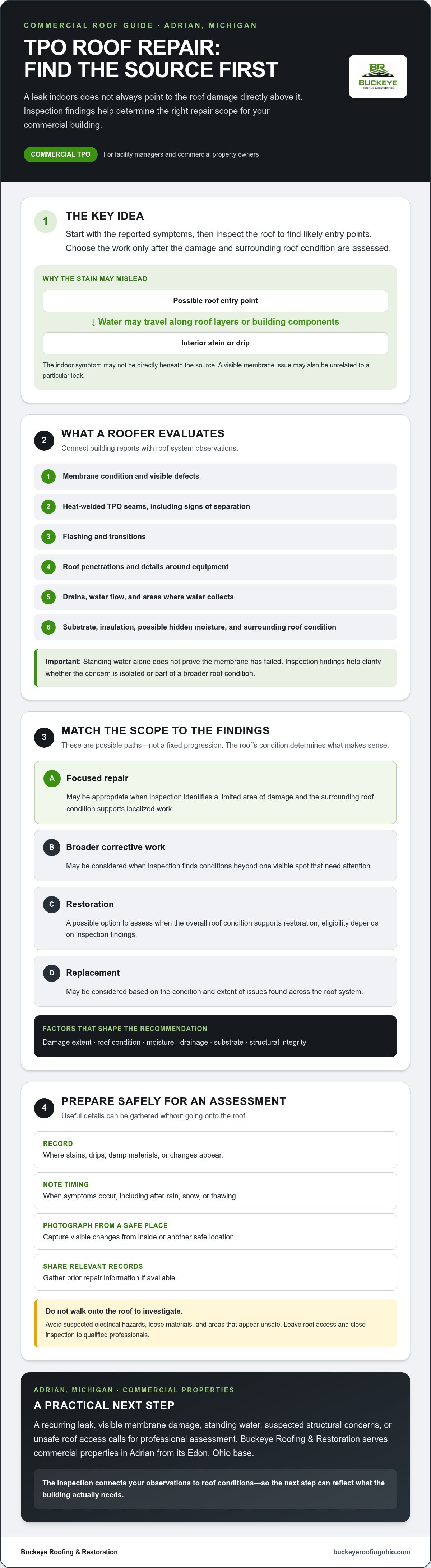
A little preparation can help a roofer assess the issue and coordinate a visit around your facility’s needs. You don’t need to access the roof or diagnose the damage yourself. Gather what you can safely observe, make relevant records available, and identify any site procedures the inspection team should know before arrival.
What information should you gather before the inspection?
Keep a brief record of the leak pattern. Note the affected rooms or equipment, when moisture appears, and whether occupants noticed changes after rain, snow, or thawing. Photos of stains or dripping taken from safe indoor locations can help show how the issue has changed. Don’t take photos from a roof or other unsafe area.
Collect useful building records if available, such as roof plans, previous inspection notes, repair records, and maintenance information related to rooftop equipment or drainage. You can also flag operational considerations, including restricted areas, production schedules, loading activity, and who can coordinate building access. These details help the roofer plan the assessment around facility operations.
What should you ask before approving repair work?
Ask the roofer to explain what the inspection identified and how the proposed work addresses it. A clear recommendation should connect the observed condition to the planned repair, rather than relying only on the location of an interior stain or a visible mark.
- Which failure or condition is the proposed work intended to address?
- Does the scope include nearby seams, flashing, penetrations, or drainage details?
- Were concerns found with the substrate, insulation, moisture, or the broader roof system?
- What access arrangements or operational precautions should the facility prepare for?
Discuss weather and site conditions as part of planning. TPO repair work may depend on conditions at the roof, and the roofer can explain how those conditions affect scheduling. Don’t assume a specific repair date until the contractor has reviewed the site and confirmed the plan.
Before approving work, make sure you understand the proposed scope and how it relates to the inspection findings. If you’re responsible for a commercial property in Adrian, request a commercial roof inspection to discuss the reported symptoms and determine an appropriate next step.
TPO Roof Repair in Adrian: Choosing a Practical Commercial Roofing Next Step
A recurring leak or suspected seam separation doesn’t tell you, by itself, whether the answer is a localized repair or broader work. A practical decision path is straightforward: document symptoms from a safe location, arrange a professional roof assessment, then compare options with the inspection findings. That keeps the scope tied to the roof’s condition, not assumptions based on a stain or visible defect.
What to expect from an inspection-led recommendation
A useful recommendation connects what the roofer observed to the work being proposed. Ask what was found at the TPO membrane and seams, whether nearby flashing or penetrations need attention, and what the inspection showed about drainage, moisture, and the roof assembly. If the proposed scope extends beyond the reported leak, ask what findings support that broader work.
Repair may suit an isolated, addressable defect. Restoration or a coating may be considered only if the existing roof and underlying materials are suitable. Replacement may be discussed if inspection findings show more extensive concerns. No option should be assumed before the roof is assessed, and a clear explanation should outline any alternatives considered.
How to take the next step with Buckeye
Buckeye Roofing & Restoration is based in Edon, Ohio, and provides commercial roofing services in Adrian and surrounding Southern Michigan markets. For TPO roof repair in Adrian Michigan, an assessment can establish the roof’s condition and help identify whether repair or a different scope is appropriate. You can review details about commercial roof repair as you consider the next step.
Before the inspection, share where and when moisture appears, any photos taken from safe areas, and available roof or repair records. These details can help the roofer understand the reported issue, but they don’t replace a roof-level assessment. You can also ask how the inspection and any proposed work will be coordinated with building access and operations.
Buckeye serves businesses across Ohio, Northeast Indiana, and Southern Michigan, including Adrian, Toledo, Fort Wayne, Findlay, Lima, Jackson, Battle Creek, Elkhart, Defiance, Bryan, Kalamazoo, Bowling Green, Perrysburg, and Auburn.
Make Your Next Roofing Decision With Clear Findings
A leak or damaged TPO membrane doesn’t automatically call for work across the whole roof. Document what you can safely observe, then have a commercial roofer assess the membrane, seams, drainage, and any underlying concerns. Inspection findings help determine whether a localized repair fits or whether the roof needs a broader evaluation.
For facility managers weighing TPO roof repair in Adrian Michigan, Buckeye Roofing & Restoration serves commercial properties in Adrian from its Edon, Ohio base. Commercial services include TPO roof repair, leak detection, inspections, and maintenance. Recommendations depend on the roof’s actual condition, not just the location of an interior stain or visible defect.
Have an active leak or questions about a TPO roof? Request a commercial roof inspection and discuss the findings with a commercial roofing professional. A clear assessment can help you choose a practical next step for your building.
Frequently Asked Questions
Can a damaged commercial TPO roof be repaired instead of replaced?
Yes, a damaged TPO roof may be repairable if an inspection finds a localized problem and the surrounding roof remains suitable. A roofer checks the membrane, seams, flashing, substrate, insulation, moisture, and drainage before deciding on scope. For TPO roof repair in Adrian Michigan, the recommendation should reflect the roof’s condition, not just one visible defect. More extensive damage may call for broader corrective work or replacement.
How does a roofer find the source of a TPO roof leak?
A roofer compares reported indoor symptoms with roof conditions, then inspects likely water-entry areas such as seams, flashing, penetrations, and drainage details. Water can travel through or along building materials, so the ceiling stain may not sit directly below the entry point. The inspection also considers the roof’s overall condition and possible moisture below the membrane. A visible defect is a clue, not proof of the leak’s source.
What happens during a commercial TPO roof inspection?
A commercial TPO inspection typically starts with a review of leak history and any records or photos the facility manager can provide. The roofer then examines accessible roof areas, including membrane seams, transitions, penetrations, flashing, rooftop equipment details, and drainage. They document findings and consider whether moisture, substrate, insulation, or broader roof conditions affect the repair options. The assessment helps connect the proposed scope to observed conditions.
Is a TPO roof repair possible during cold or snowy weather in Adrian?
It depends on the roof’s condition and the weather at the time of the work. Cold, snow, ice, or wet surfaces may affect safe access and whether repair work can proceed appropriately. A commercial roofer should assess site conditions and explain any constraints before confirming a plan. Facility managers shouldn’t assume a repair can be completed in every season or attempt to clear or inspect the roof themselves.
Can building staff safely inspect a commercial TPO roof themselves?
Building staff should not walk onto a commercial roof to inspect or repair TPO. Roof access may involve fall hazards, slippery surfaces, loose materials, or nearby electrical equipment. Staff can help by recording where and when moisture appears, taking photos from safe indoor or ground-level locations, and sharing prior repair records. Leave roof-level assessment to qualified roofing professionals using appropriate safety practices.
When does TPO roof damage require more than a localized repair?
Further evaluation may be appropriate if inspection finds widespread membrane damage, recurring leaks, wet insulation or substrate, or related concerns with drainage and roof details. These findings don’t automatically mean full replacement is necessary. The roofer should explain whether broader repairs, restoration, a coating, reroofing, or replacement are options and why. Restoration or coating suitability depends on the roof’s condition and inspection findings.
Does ponding water mean a TPO roof needs replacement?
No. Ponding water alone doesn’t establish that a TPO roof needs replacement or prove that the membrane has failed. A roofer should assess drainage, water flow, the surrounding membrane, and whether moisture has affected materials below the roof surface. Low-slope commercial roofs are designed to drain, so persistent collection is a condition worth discussing during an inspection. The appropriate response depends on what the assessment finds.

Article by
Harry Stanley III
Harry Stanley III is a construction marketing strategist and fractional CMO at H&A Marketing. He has helped construction companies grow through website strategy, SEO, paid advertising, branding, lead generation, CRM systems, and professional content. His past work includes helping Meraki Solar generate an additional $3.7 million in revenue in his first year and supporting American Builders as a fractional CMO. Today, Harry works directly with custom home builders and construction companies to build marketing systems designed to generate qualified leads and measurable growth.
