Standing-Seam vs. Exposed-Fastener Metal Roof Repair
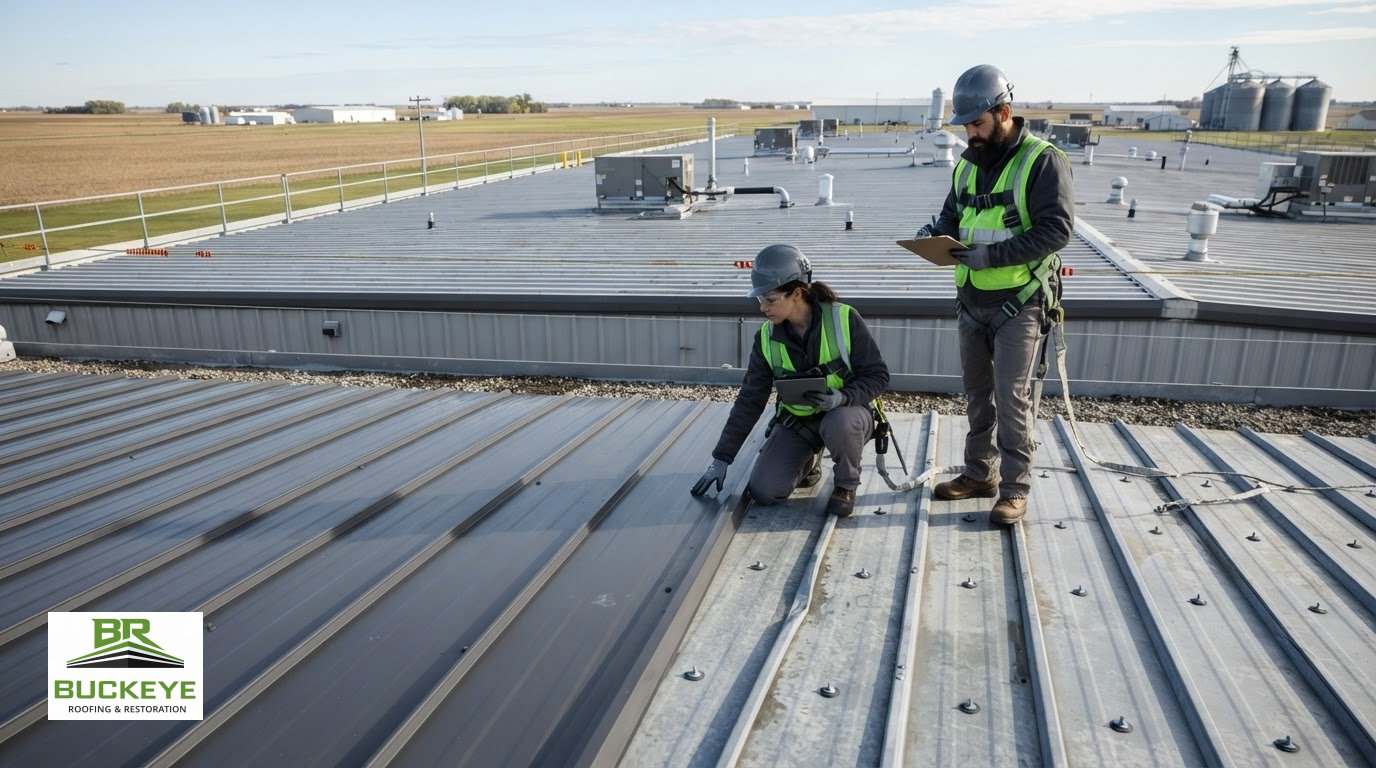
The most robust-looking roof isn’t automatically the right one for your building. Choosing low slope commercial roofing in Adrian Michigan means weighing more than material: drainage, existing roof condition, and the way your facility operates all matter.
If you’re comparing standing-seam and exposed-fastener metal roofs, the differences can be hard to sort out. Standing-seam panels conceal their fasteners, while exposed-fastener panels have fasteners visible at the surface. But metal isn’t the only option for a low-slope roof. Membrane systems such as TPO and EPDM serve different building needs, and no single system is the best fit for every property.
This guide compares the broad differences and explains what to consider, including how roof slope and drainage, local freeze-thaw conditions, and day-to-day operations can affect the decision. It also looks at roof condition and why a leak or aging surface doesn’t automatically mean full replacement. For commercial properties in Adrian, an inspection can help clarify whether repair, restoration, or replacement is the practical next step.
Key Takeaways
- Low-slope roofs are designed to drain water, and the right system depends on the building, not a universal ranking.
- Compare TPO, EPDM, and commercial metal roofing by roof condition, drainage, substrate, and facility operations.
- For low slope commercial roofing in Adrian Michigan, consider how seasonal conditions and the building’s needs affect the roofing decision.
- Visible leaks or interior water stains are useful warning signs, but a professional inspection can identify the cause and scope of work.
- Inspection findings help determine whether repair, restoration, coating, maintenance, or replacement is the practical next step.
What low-slope commercial roofing means for buildings in Adrian, Michigan
A commercial roof can look nearly level from the ground and still have a slope. Low-slope roofing is designed to direct rain and melting snow toward drains, scuppers, or roof edges. It isn’t a roof with no slope. This distinction matters because water needs a clear path off the roof, and drainage performance depends on more than the visible roofing surface.
Warehouses, manufacturing facilities, offices, and retail properties may use low-slope systems because they suit broad roof areas and can work around rooftop equipment and building layouts. Membranes such as TPO and EPDM are common low-slope categories; commercial metal is another distinct option. For a general overview of low-slope roofs, it helps to remember that “flat” is common shorthand, not a description of a roof that cannot drain.
How low-slope commercial roofs handle drainage
The roof’s slope works with its drainage components to move water toward designated outlets. Debris, blocked drains, or changes in the roof surface can affect how water moves. Ponding water, meaning water that remains on the roof after rainfall, is a reason to arrange an inspection, but it doesn’t by itself prove that the roof has failed.
From a safe location, building staff can note visible pooling, interior leaks, or water staining on ceilings and walls. Don’t climb onto the roof to investigate. Standing water, active leaks, or signs of structural concern call for professional evaluation. An inspection can assess the roof surface and drainage together rather than treating a symptom as the whole problem.
Why the building’s use matters in Adrian
Roof needs vary with the work happening below. A warehouse may need a roofing plan that accounts for large open areas and ongoing shipping activity. A manufacturing site may have equipment and production schedules to coordinate. Offices and retail buildings may need work planned around staff, customers, and regular access. Local seasonal conditions also make drainage and roof condition practical considerations, but the right response depends on the actual building and roof.
- Rooftop equipment can affect access and the areas that need attention.
- Work schedules and daily operations help shape project planning.
- The existing roof, its drainage, and inspection findings guide whether repair or a larger scope makes sense.
For low slope commercial roofing in Adrian Michigan, there’s no one system that suits every property. Building use, the existing roof assembly, drainage, and the condition of the roof all factor into the decision. Buckeye Roofing & Restoration serves commercial properties in Adrian, and a commercial roof inspection and repair assessment can help identify the roof’s needs before a scope of work is chosen.
TPO, EPDM, and commercial metal: the main low-slope roof categories
For a commercial metal roof, the distinction between standing-seam and exposed-fastener panels affects where a roofer looks and what a repair may involve. Standing-seam systems join panels at raised seams, with fasteners generally concealed or covered. Exposed-fastener systems use fasteners that pass through the panel surface. Neither design is automatically the better choice for every building. The roof’s condition, details, and repair needs should guide the assessment.
How standing-seam and exposed-fastener repairs differ
On standing-seam roofs, an inspection may focus on seams, panel movement, flashing, and penetrations. Repair work depends on the source and extent of the problem. On exposed-fastener roofs, visible fasteners and their seals are additional inspection points because they’re part of the panel surface. A roofer assesses whether the concern is limited to a detail or affects a broader area. The repair approach depends on the actual roof and findings.
Where TPO and EPDM fit the comparison
TPO and EPDM are single-ply membrane systems, not metal-panel systems. They belong in a low-slope roofing comparison, but they aren’t interchangeable with standing-seam or exposed-fastener metal roofs. Their roof surfaces and details require different inspection and repair considerations. The table highlights the distinctions without ranking one system as a universal winner.
| System type | General form | Repair considerations | Inspection questions |
|---|---|---|---|
| Standing-seam metal | Metal panels joined at raised seams | Seams, flashing, penetrations, panel condition, and concealed fastening details | Where is water entering, and what panel or roof detail is involved? |
| Exposed-fastener metal | Metal panels fastened through the panel surface | Panel condition, visible fasteners, seals, flashing, and penetrations | Are fasteners or surrounding areas visibly loose, damaged, or deteriorated? |
| TPO or EPDM | Single-ply membrane roof | Membrane condition, seams, penetrations, and drainage details | Is the issue in the membrane or one of its roof details? |
For low slope commercial roofing in Adrian Michigan, the building’s roof type and condition should shape the repair plan. A metal roof with a concern at a panel connection calls for a different assessment than a membrane roof with a leak near a penetration. Buckeye Roofing & Restoration serves commercial properties, and commercial roofing guidance and services can help building teams consider the next step based on inspection findings.
Which low-slope roof fits your building? Compare the decision factors
No single roofing system is automatically the right choice for every low-slope building. A membrane or metal roof that suits one property may not suit another, even if the buildings look similar from the ground. The sensible comparison starts with the roof already in place, then considers what it needs to do and what work the building can accommodate.
What roof condition and drainage can change
An inspection looks beyond the visible surface. Moisture within the roof assembly, the condition of the substrate beneath it, drainage performance, and structural integrity can all affect the options. A ceiling stain or leak is a symptom, not a confirmed diagnosis; water can travel before it appears inside. Likewise, ponding calls for evaluation but doesn’t alone prove a particular failure. Restoration or coating is appropriate only when inspection findings support it.
Use this decision matrix to organize the questions, not to declare a winner:
- Existing roof condition: Are concerns limited to repairable areas, or is damage widespread? What does an inspection find below the surface?
- Drainage: Are drains and water paths functioning as intended? Are there areas where water remains after precipitation?
- Substrate and structure: Is the surface beneath the roof covering suitable for the planned work? Are there signs that need structural evaluation?
- Regional conditions: How should the roof be assessed for seasonal freeze-thaw cycles, snow, and ice? The inspection should consider the actual roof and its drainage rather than assume every system responds the same way.
- Project scope: Is the need a targeted repair, broader restoration, coating, or replacement? The roof’s condition determines which approaches are viable.
How building operations shape system priorities
A roofing plan also has to work around the facility. Rooftop equipment, required access, production schedules, deliveries, and occupied areas can affect how a project is organized. A warehouse may prioritize keeping loading activity moving, while a manufacturing site may need work coordinated with operations. Offices and retail properties have their own access needs. Budget matters too, but it should be considered alongside the roof’s condition and the scope that can address it responsibly.
For properties in Adrian, snow and ice are worth including in the inspection discussion, especially where drainage or existing roof concerns are present. That doesn’t establish which material is best or predict how a system will perform. It helps focus the assessment on real site conditions. The right recommendation for low slope commercial roofing in Adrian Michigan depends on the roof assembly, building use, drainage, and inspection findings.
When the roof may be repairable, an inspection can clarify the practical scope before a larger project is considered. Buckeye’s commercial roof repair service addresses identified roof problems, with the next step guided by the condition of the system.
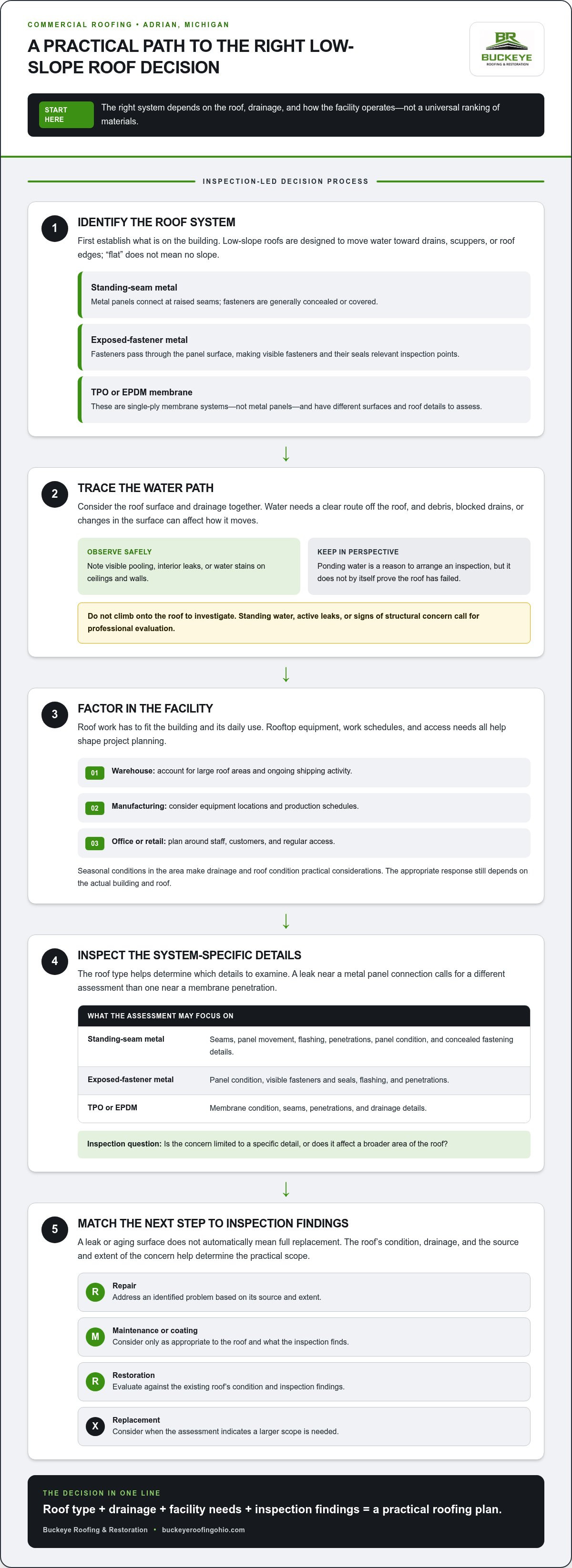
A practical inspection-led process for comparing commercial roofs
A clear decision starts with the building, not a material preference. For low slope commercial roofing in Adrian Michigan, use an inspection-led process to connect the facility’s needs with the condition of the roof and the scope it can reasonably support. Building staff can watch for warning signs from safe locations, but diagnosis and roof access belong to trained professionals.
- Review building needs. Note the roof type if known, active leaks, rooftop equipment, access requirements, and operating schedules that could affect project planning.
- Assess roof condition. Have a commercial roofer examine the roof surface, drainage, and areas where water may be entering. Don’t climb onto the roof or attempt repairs.
- Compare suitable scopes. Use the inspection findings to consider targeted repair, restoration or coating where appropriate, or replacement if the existing roof cannot support a narrower scope.
- Plan next steps. Align the work with the building’s operational needs and address any further evaluation called for by the findings.
What a commercial roofer evaluates during an inspection
The assessment should match the system on the building. A roofer may examine membrane or metal-panel condition, seams or connections, penetrations around rooftop equipment, drainage paths, and visible deterioration. Moisture within the assembly, substrate condition, or structural concerns can change the recommended scope. A leak or stain is useful evidence, but it doesn’t identify the source by itself. Findings should explain what’s observed on this roof.
From inside the building or the ground, staff can record visible leaks, ceiling or wall water stains, and when those signs appear. Share those observations with the roofer. Avoid roof access, especially if materials look loose or conditions are uncertain. A professional inspection can trace concerns without asking untrained staff to investigate or make repairs.
When repair, restoration, or replacement enters the discussion
Repair addresses specific roof problems. Restoration is broader work intended to renew an existing roof, while a coating adds a protective layer only when the roof is a suitable candidate. Full replacement removes and replaces the existing roof system. Coating or restoration isn’t appropriate for every roof; moisture, substrate condition, drainage, and structural integrity all factor into eligibility. A detailed commercial roof repair assessment can help distinguish a localized repair need from a larger project.
Use the inspection findings to compare scopes rather than treating one symptom as a reason to replace the entire roof. If a leak, interior staining, standing water, or structural concern is present, arrange a professional inspection. Request a commercial roof inspection to discuss what the building needs and which next steps fit the findings.
How Buckeye helps Adrian businesses choose a low-slope roofing path
Choosing a roofing scope should start with what the inspection finds, not a default assumption about replacement. Buckeye Roofing & Restoration works with commercial building owners and facility teams to assess the roof and discuss practical next steps. For low slope commercial roofing in Adrian Michigan, that means considering the existing system, the areas of concern, and the building’s operating needs before settling on a plan.
Matching the service scope to the roof’s condition
A repair may address a defined leak or damaged area. Restoration or a coating may be considered when the roof and its underlying conditions are suitable. Replacement is a separate scope for situations where the existing system’s condition calls for a new roof. These options serve different purposes, so the assessment should account for moisture, substrate, drainage, and structural condition before recommending work.
The system also shapes the service discussion. Buckeye works with commercial TPO and EPDM roofing systems, and provides repair and restoration for commercial metal roofs. Each system has its own details and repair considerations. Maintenance can help address ongoing care, while inspection findings help determine whether a particular concern calls for repair, restoration, coating, or replacement. No outcome should be assumed before the roof is evaluated.
What to share when requesting an inspection
Before arranging an assessment, gather the details your team already knows. Share the building type, approximate locations of leaks, and any interior signs such as water staining. Note rooftop equipment, access needs, operating schedules, or production constraints that could affect project planning. These observations help frame the discussion without requiring staff to access or investigate the roof themselves.
Clear information helps start a useful conversation, but the roof’s condition determines the appropriate scope. If you’re responsible for a commercial property and want to review its needs, request a commercial roof inspection or quote.
Make the next roofing decision with a clear plan
For low slope commercial roofing in Adrian Michigan, turn observations into a useful record: note where leaks appear, when they occur, and whether interior staining changes after precipitation. Keep those details with building maintenance records so they can inform future roof planning.
Use the record to set priorities with your facility team. A clear history of recurring concerns can help organize maintenance planning and identify when a new assessment may be useful. That gives building decision-makers a practical starting point for coordinating roofing work with ongoing operations.
As you plan ahead, discuss the next roofing step for your property with Buckeye Roofing & Restoration. A steady, informed approach can help your team move forward with confidence.
Frequently Asked Questions
What is considered a low-slope commercial roof?
A low-slope commercial roof has a shallow pitch and is designed to shed water toward drains, scuppers, or roof edges. It differs from a steep roof, where water runs off more directly. For a building owner, the label is a starting point, not a complete description of the roof. The system’s material, drainage layout, and condition still need to be identified during an assessment.
Is a low-slope roof the same as a flat roof?
“Flat roof” is common shorthand for a low-slope roof, but commercial roofs aren’t necessarily level. Even a slight pitch can help direct water toward drainage points. If you’re reviewing maintenance records or discussing a leak, describe the roof as low-slope if that’s how it’s identified, and share where water collects or enters. A roofer can verify the roof design and drainage during an inspection.
How do TPO and EPDM roofs differ for commercial buildings?
TPO and EPDM are different single-ply membrane systems. TPO is a thermoplastic membrane, while EPDM is a synthetic rubber membrane. Their installation and seam details differ, so the best fit depends on the project, existing roof assembly, and inspection findings. A facility manager comparing them should consider the roof’s condition and building needs, rather than choosing based on the material name alone.
Can a commercial metal roof be used on a low-slope building?
Yes, some commercial metal roof assemblies are designed for low-slope applications. Suitability depends on the specific system, roof layout, drainage, and project requirements; not every metal panel profile is appropriate for every slope. If a building already has a metal roof, visible corrosion, loose panels, or water entry are reasons to arrange an inspection. Don’t climb onto the roof to check these conditions yourself.
What should I do if I notice a leak in my commercial roof?
Report the leak and arrange a professional roof assessment. From inside the building, note where water appears, when it happens, and whether nearby equipment or stored materials may be affected. If it’s safe, move contents away from the drip and document visible interior staining. Don’t access the roof or attempt a repair. A roofer can investigate the source and recommend an appropriate scope of work.
Does a low-slope commercial roof always need full replacement?
No. A leak or visible defect doesn’t automatically mean the entire roof needs replacement. Depending on the inspection, a defined issue may be addressed with repair; restoration or coating may be options for a roof that meets the necessary condition requirements. Replacement enters the discussion when the roof’s broader condition calls for it. Moisture, substrate, drainage, and structural findings help determine which scope is appropriate.
How does freeze-thaw weather affect commercial roofing in Adrian, Michigan?
Repeated freezing and thawing can make existing roof concerns, such as damaged seams or areas where water collects, important to assess. Snow and ice can also make drainage and roof access considerations more pressing. For low slope commercial roofing in Adrian Michigan, track when leaks or interior staining appear, especially around seasonal changes, and share those observations with a commercial roofer. Don’t go onto an icy or snow-covered roof to investigate.

Article by
Harry Stanley III
Harry Stanley III is a construction marketing strategist and fractional CMO at H&A Marketing. He has helped construction companies grow through website strategy, SEO, paid advertising, branding, lead generation, CRM systems, and professional content. His past work includes helping Meraki Solar generate an additional $3.7 million in revenue in his first year and supporting American Builders as a fractional CMO. Today, Harry works directly with custom home builders and construction companies to build marketing systems designed to generate qualified leads and measurable growth.