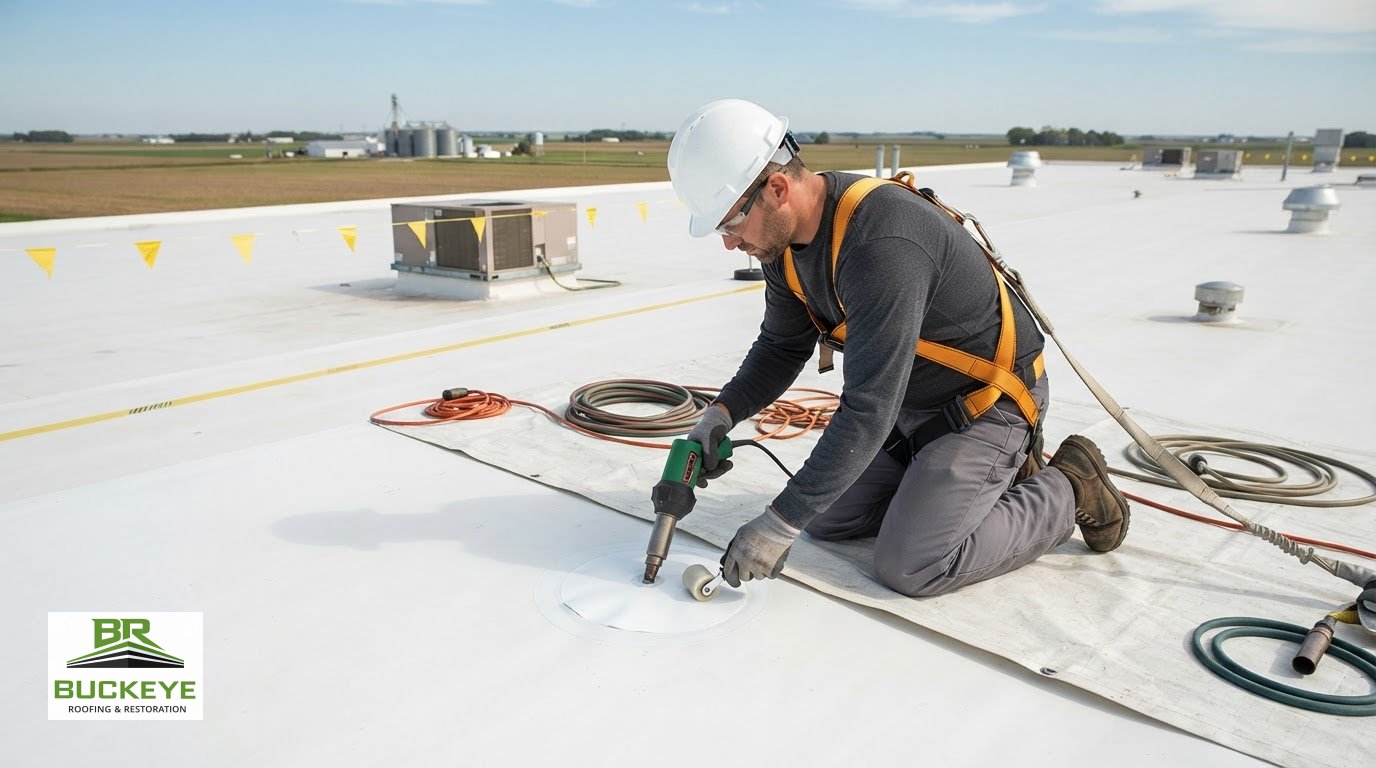
Commercial TPO puncture repair usually involves cleaning and drying the damaged area, then heat-welding a compatible TPO patch over the puncture. If the damage extends beyond the membrane or affects insulation, seams, or nearby areas, a patch alone may not resolve the full problem.
Punctures can result from rooftop equipment work, foot traffic, or sharp debris. A small hole may seem straightforward, but water can travel beneath the membrane, so visible damage may not reveal the full extent of the problem.
This guide explains how a heat-welded patch works, what to check when assessing damage, and when broader repairs may be appropriate. It also covers factors that affect repair costs, including the damage’s size and location, the surrounding membrane’s condition, and whether insulation or drainage problems are involved. You’ll have a clearer basis for deciding what the roof needs, without assuming every puncture requires a larger repair.
Key Takeaways
- Look for punctures caused by rooftop work, foot traffic, or sharp debris, and have the surrounding membrane and roof assembly assessed.
- Localized damage may be repairable; the membrane’s condition, seam stability, and insulation condition help guide repair-versus-replacement decisions.
- A compatible TPO patch is heat-welded to clean, dry membrane, creating a bonded repair rather than relying on general-purpose tape or caulk.
- Wet insulation, recurring leaks, or widespread wear can signal that the puncture is only part of a larger roofing issue.
- Repair costs depend on the damage’s size and location, access, and whether the work extends beyond the membrane.
What Causes TPO Roof Punctures?
TPO and PVC repairs commonly use heat-welded, compatible membrane, while EPDM repairs use materials suited to that rubber membrane. The roofing system determines the repair approach.
A repair can affect the manufacturer’s warranty or building-code compliance, depending on warranty terms, repair materials, and applicable project requirements. Keep repair records and have the roof assessed by a professional familiar with commercial membrane systems.
- Review recent rooftop activity. HVAC technicians, electricians, and other trades can puncture TPO by dropping tools, dragging equipment, or walking unprotected routes. Ask building staff whether work occurred near the leak or whether equipment was moved. A maintenance log can connect a new ceiling stain with a recent service visit. Use that information to direct a professional inspection, rather than sending staff onto the roof.
- Consider debris and exposed edges as possible causes. Fasteners, metal flashing scraps, broken branches, and damaged equipment panels can puncture or abrade a membrane. From a safe location, note storm activity, roof work, or reported debris. Don’t attempt to clear hazards yourself. A roofer can inspect the surface and nearby details for punctures, tears, stress cracking, lifted seams, and signs that water has migrated below the membrane.
- Assess the full roof assembly, not just the visible opening. Water may travel beneath TPO before appearing inside, so an interior stain doesn’t always sit directly below the puncture. Record the stain’s location and whether it changes after rain. A professional inspection checks the membrane, seams, insulation, and roof deck for related damage. Inspections are recommended twice a year, in spring and fall, and after severe storms or rooftop equipment work.
- Use compatible repair supplies and professional equipment. A TPO repair calls for membrane material compatible with the existing roof and tools suited to the repair method. General-purpose tape, caulk, or roof cement won’t create a true welded bond and can complicate later work. Heat-welding requires control of equipment temperature and movement. A professional can determine whether the area is suitable for a permanent repair and document the materials used.
- Track damage and recurring conditions. Note where leaks appear, what work preceded them, and whether the same area has needed attention before. For example, repeat punctures along an equipment service route may indicate that access practices need review. Include these details in the inspection record. They help distinguish an isolated incident from a recurring roof issue and give maintenance staff useful context for future inspections.
Can a TPO roof actually be repaired, or does it have to be replaced?
- Judge the roof’s overall condition, not one defect alone. A localized puncture doesn’t automatically mean the entire TPO system needs replacement. A targeted repair is generally suitable when the surrounding membrane remains sound, seams are stable, and insulation is dry. During an inspection, look for patterns: repeated leaks in separate areas or widespread membrane shrinkage suggest a larger condition issue. Record prior repairs and leak locations so the assessment can account for the roof’s history.
- Use roof age as context for the inspection. Commercial TPO roofs under 15 years old with localized damage and sound underlying materials are generally stronger repair candidates. A roof over 20 years old and nearing the end of its warrantied lifespan may call for replacement planning. These ages are useful reference points, not stand-alone decisions. Membrane condition, seam performance, moisture, and the amount of affected area still determine whether repair remains practical.
- Compare the scope of repairs with the replacement alternative. A few isolated deficiencies can often be addressed without replacing an otherwise serviceable roof. If repairs are extensive or recurring, compare their scope with a full replacement plan. Replacement may make economic sense when repair costs exceed 40-50% of replacement cost. That comparison should include the roof’s condition and the work required, not just the immediate leak. Ask for the findings and proposed work to be documented.
- Separate repair from restoration and replacement. Repair addresses specific defects. Restoration treats a broader existing roof surface and may include coatings, but it isn’t a substitute for correcting failed areas or addressing moisture below the membrane. Full replacement removes and renews the roofing system. A professional assessment considers the roof assembly, drainage, substrate, and structural condition before determining which scope fits. Don’t treat a coating as a shortcut around an unresolved leak.
- Keep hands-on work with qualified roofing professionals. Commercial roofs may have unsafe access, rooftop equipment, and concealed damage that building staff can’t assess from a visible puncture. TPO repair also involves specialized equipment and material compatibility. Avoid walking onto the roof or attempting a repair; instead, log interior leak locations and any recent roof work. If you need help weighing repair against replacement, request a commercial roof assessment based on the roof’s actual condition.
Using compatible heat-welded TPO patches
A successful patch involves more than covering a hole. The repair process must suit the existing membrane, the damage, and nearby roof details.
- Confirm the repair approach before work begins. Identify whether the damage is a puncture, a longer tear, or a defect near a seam or penetration. Each condition affects the repair layout. Check the existing membrane type and available roof records before selecting patch material. If the damaged section extends beyond sound TPO, a small surface patch may not be the right scope.
-
Size Patches for Punctures and Tears
Cut compatible TPO material to extend at least 3 inches beyond a puncture in every direction. For a tear, cover the full damaged length and allow the patch to extend onto sound membrane beyond both ends. Avoid narrow strips that leave the damaged edge close to the weld. Round the patch corners so they’re less likely to catch or lift during later roof work.
-
Heat-Weld Patches and Seams
Set up hot-air welding equipment for the membrane and working conditions, then weld the patch perimeter in a steady, controlled pass. Both temperature and travel speed affect how well the material fuses. For separated seams, cleaning and rewelding may work. If a seam cannot be cleanly rewelded, TPO strip material can be welded over it. These adjustments require trained roofing work.
-
Check Patch Welds and Roof Details
Test the completed weld for consistent attachment around the entire edge. A sound weld holds until the membrane itself tears, rather than separating at the bond. Contractors should check weld-test samples while welding TPO seams, not only at the start of a job. Inspect nearby penetrations and transitions too, since a sound patch won’t correct a separate defect.
- Document the finished repair for future maintenance. Record the repair location, damage type, and any related seam or penetration work. Marking the patch on a simple roof plan helps staff find it during later inspections without walking onto the roof. Keep the record with other maintenance notes, especially if equipment work or recurring access occurs nearby.

When punctures indicate broader roof problems
Delaying a repair can let water travel beneath the TPO membrane, wet insulation, and damage interior finishes. Standing water, recurring leaks, or damage around roof penetrations can indicate more than one isolated hole.
- Check whether the damage extends below the membrane. A puncture can let water move laterally through the roof assembly, so the interior leak may appear away from the entry point. A professional inspection checks insulation and the roof deck, not only the visible membrane. If insulation is wet, selective removal and replacement may be needed alongside membrane repair. Installing a new membrane over a leaking roof without assessing the insulation can leave moisture trapped beneath it.
- Look for drainage issues that keep the roof wet. Ponding water doesn’t usually puncture TPO by itself, but it can expose weak repairs and accelerate small defects. Water that remains more than 48 hours after rain can speed damage. Have drains and other outlets assessed, and address drainage before repairing seams beneath standing water. Recurring ice at drains or low spots can also back up water and stress seams.
- Inspect flashing around roof penetrations. A pipe, HVAC unit, or other penetration needs flashing that seals its connection to the membrane. Gaps or cracks around flashing can allow leaks even when the nearby field membrane looks intact. A roofer can fit new flashing membrane to the detail and weld it into place. Check nearby seams and the penetration base, rather than treating a puncture elsewhere as the only possible leak source.
- Address repeat damage from foot traffic. If service visits repeatedly damage the same access route, repairing each puncture alone leaves the cause in place. Have rooftop contractors use designated routes and protective walkway pads where traffic is frequent. This maintenance step helps reduce repeat wear around equipment and access points. Check whether loose equipment panels or sharp debris are also present, then have those hazards removed safely.
- Choose restoration only when the roof can support it. A coating may suit an aging TPO roof with broad surface wear or crazing if the membrane hasn’t failed. Don’t apply silicone coating over active leaks, failed seams, or trapped moisture. A commercial roof inspection should assess membrane condition, substrate, moisture, drainage, and structural integrity first. Installation costs depend on the repair scope, materials, access, and whether wet insulation or drainage deficiencies need work. A documented repair record can also guide maintenance and future capital planning.
Commercial TPO repair costs
- Define the repair scope before comparing quotes. A single puncture in accessible membrane requires different work from a torn area beside a seam or roof penetration. Ask the roofer to describe the affected area, proposed repair method, and any related work. A written scope helps owners compare like with like rather than treating every “roof repair” estimate as the same job.
- Account for what lies beneath the TPO membrane. If an inspection finds moisture in the insulation, the work may extend beyond patching the surface. Selective removal and replacement of wet insulation adds labor and materials, while a dry assembly may need only targeted membrane work. The visible leak location may not match the full path of the moisture, so inspection findings shape the repair scope.
- Include access, location, and roof details. A puncture near a clear access point may be easier to reach than damage around rooftop equipment, flashing, or a complex penetration. The roofer must assess access and the space available to prepare and weld the repair. Multiple damaged spots, difficult roof details, and recurring leaks can change the labor and materials required.
- Consider weather and the repair method. TPO welding requires suitable conditions, and dry weather with moderate temperatures is generally ideal for repair work. If moisture or unsuitable conditions prevent a permanent weld, the timing and scope may change. Temporary covers or compatible sealants can control a leak until conditions allow permanent work, but they aren’t long-term repairs. Ask the roofer to distinguish temporary measures from the final repair.
- Request a scope-based estimate and keep the record. The price depends on the roof and is provided after a quote request. Factors include damage size, access, membrane condition, moisture, insulation, and related seam or flashing work. Ask for the findings, repair materials, and work areas to be documented. This record helps owners plan maintenance and track future repair needs. Request a commercial roof repair assessment to understand what your building needs.
In 2025, roofing labor and material costs had stabilized.
Buckeye Roofing & Restoration: Commercial Flat Roofing
Buckeye Roofing & Restoration helps commercial property owners assess TPO punctures and determine whether targeted repair suits the roof’s condition. Its commercial flat roof repair service addresses localized damage, while broader wear may call for restoration or coatings when inspection findings support that approach.
A professional assessment is important when leaks recur, insulation may be wet, or punctures occur alongside seam or flashing problems. The membrane, drainage, and underlying assembly all inform a practical recommendation. Not every damaged roof needs replacement, and a patch alone may not resolve a wider issue.
If you’re weighing repair options for a commercial roof, contact Buckeye Roofing & Restoration to discuss an inspection.
Plan the Next Roof Decision with Confidence
A puncture is also a useful opportunity to review how roof work is tracked across your building. Keep inspection findings, repair locations, and notes about recurring leaks together so facility staff can spot patterns and plan maintenance around equipment work and access needs.
For commercial TPO puncture repair, the next step is an on-site assessment that considers the roof as a system, not just the visible hole. Buckeye Roofing & Restoration provides commercial flat roofing, repair, and restoration for building owners and facility managers seeking a practical solution.
Contact Buckeye Roofing & Restoration to discuss your commercial roof. A clear assessment can help you move ahead with a plan that fits the building.
Frequently Asked Questions
How do you know the weld is any good?
A sound weld remains bonded when tested, and the TPO membrane tears before the weld separates. A roofing professional checks the patch edge for gaps, loose sections, and areas that have not fused. The inspection should cover the entire perimeter, not just one convenient spot. For the repair record, note the test result and exact roof location so future inspections can track the area.
How do you repair a puncture in a commercial TPO roofing membrane?
A roofer repairs a puncture by preparing the damaged area and heat-welding a compatible TPO patch over it. First, the roofer checks whether the membrane and underlying assembly are sound. Then the repair surface is cleaned and dried, the patch is positioned over undamaged material, and its edges are welded. If the puncture is beside a seam or penetration, that detail also needs inspection.
What materials and tools are needed to repair a commercial TPO roof puncture?
A professional repair generally uses compatible TPO membrane, hot-air welding equipment, and tools to clean, cut, and inspect the patch. Any materials used should be prepared according to their instructions before the patch is applied. The roofer also needs a way to check the finished weld for gaps or weak attachment. Exact materials depend on the existing membrane and repair location.
How do you determine whether a TPO roof puncture can be patched or needs membrane replacement?
A localized puncture can be patched when the surrounding membrane is sound and the damage does not extend into a larger compromised area. Replacing a membrane section may be appropriate if the material around the hole is torn, deteriorated, or unable to hold a reliable weld. A roofer also checks seams and insulation. For example, wet insulation beneath the opening may require separate work beyond the membrane repair.
What are the steps for cleaning, preparing, and heat-welding a TPO roof patch?
A roofer follows a clear sequence: inspect the membrane, clean and dry the repair surface, prepare compatible patch material, then heat-weld its edges. If primer is used, it must cure completely before the patch is applied. The roofer then checks the finished weld for continuous attachment and unfused areas. Temperature and travel speed affect the weld, so this work requires trained equipment handling.
What patch size and overlap are required for a TPO membrane puncture repair?
The patch should extend at least 3 inches beyond the puncture in every direction, landing on clean, sound membrane. A tear needs coverage beyond its full damaged length and width, not merely a cover over the visible opening. Rounded corners help reduce edge lifting. The repairer must also leave enough clear surface around the damage to prepare and weld the patch securely.
How much does commercial TPO roof puncture repair cost in the United States?
The cost depends on the repair scope, and a price is provided after a quote request. Key factors include the puncture’s size and location, roof access, the surrounding membrane’s condition, and whether inspection finds wet insulation, seam damage, or flashing issues. A single isolated repair differs from work across several roof areas. Ask for a written scope that identifies the work and materials included.
Can commercial TPO puncture repairs be done as a DIY project, or should a roofing contractor do them?
A commercial TPO puncture repair is best handled by a roofing professional. Heat-welding requires control of equipment temperature and movement, and a poor bond can leave an entry point for water. Roof access can also involve hazards around edges, equipment, or wet surfaces. Building staff can document interior staining and recent rooftop work from a safe location, then share those details with the roofer.

Article by
Harry Stanley III
Harry Stanley III is a construction marketing strategist and fractional CMO at H&A Marketing. He has helped construction companies grow through website strategy, SEO, paid advertising, branding, lead generation, CRM systems, and professional content. His past work includes helping Meraki Solar generate an additional $3.7 million in revenue in his first year and supporting American Builders as a fractional CMO. Today, Harry works directly with custom home builders and construction companies to build marketing systems designed to generate qualified leads and measurable growth.