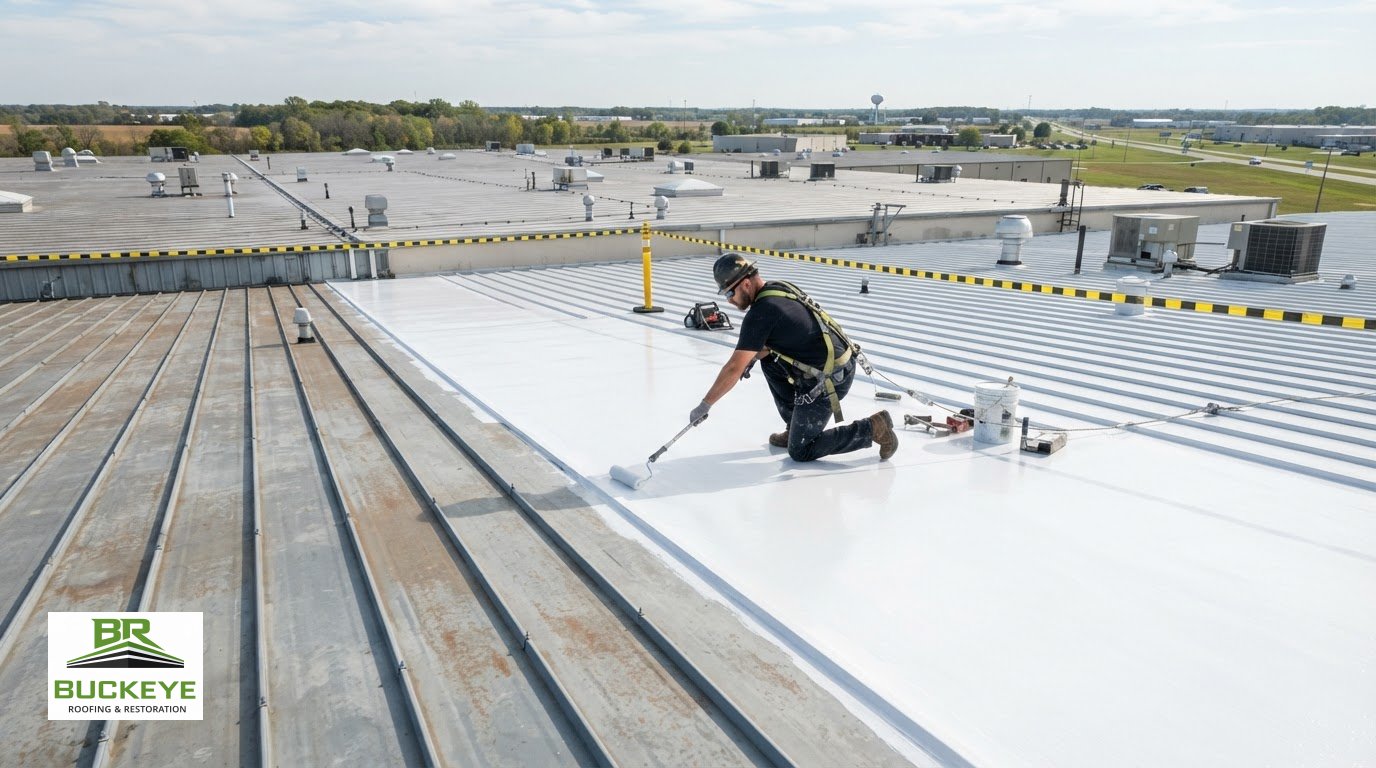
A roof coating only works when it bonds to sound, compatible metal. Commercial metal roof coating systems are fluid-applied layers that protect an existing surface. Reflective options can also help reduce heat absorbed by the roof. Rust, aging paint, loose fasteners, and the existing finish all affect whether coating is suitable.
A coating should do more than change a roof’s appearance. The right system can help protect metal from weather and sun, but coatings differ in flexibility, reflectivity, service life, and warranty coverage. Coating over underlying damage or moisture problems will not fix them.
This article explains how coatings work, what can affect indoor temperatures, and how roof condition and surface compatibility shape the decision. You’ll also learn what preparation involves and why a roof’s construction, drainage, and exposure matter when comparing systems. Use these considerations to decide whether coating, repair, or another approach suits your commercial building.
Key Takeaways
- Choose a coating based on the metal roof’s profile, existing finish, exposure, and ability to accommodate movement.
- Reflective coatings can reduce heat absorbed by the roof, but indoor results depend on the building and its conditions.
- Cleaning, repairs, and surface preparation help determine whether a coating can adhere properly.
- Service life and warranty coverage differ by coating system, so compare their terms alongside roof condition.
- A professional inspection can help identify whether coating, repair, restoration, or replacement best fits the roof.
What Is the Best Coating for Metal Roofs?
No single coating suits every metal roof. Before choosing a system, compare the roof’s metal, existing finish, weather exposure, and required surface preparation.
Available Commercial Coating Systems
Commercial metal roof coating systems include silicone, acrylic, polyurethane, polyurea, silicone-modified polyester, and SEBS rubber coatings. Elastomeric coatings are designed to flex as metal moves, but the right choice still depends on the roof type and climate.
The U.S. Environmental Protection Agency describes low-slope cool-roof products as fluid-applied membranes that protect metal roofs and support waterproofing in light or cool colors. Before choosing, compare each system’s flexibility, weather resistance, and compatibility with the existing roof.
Coating Properties and Application
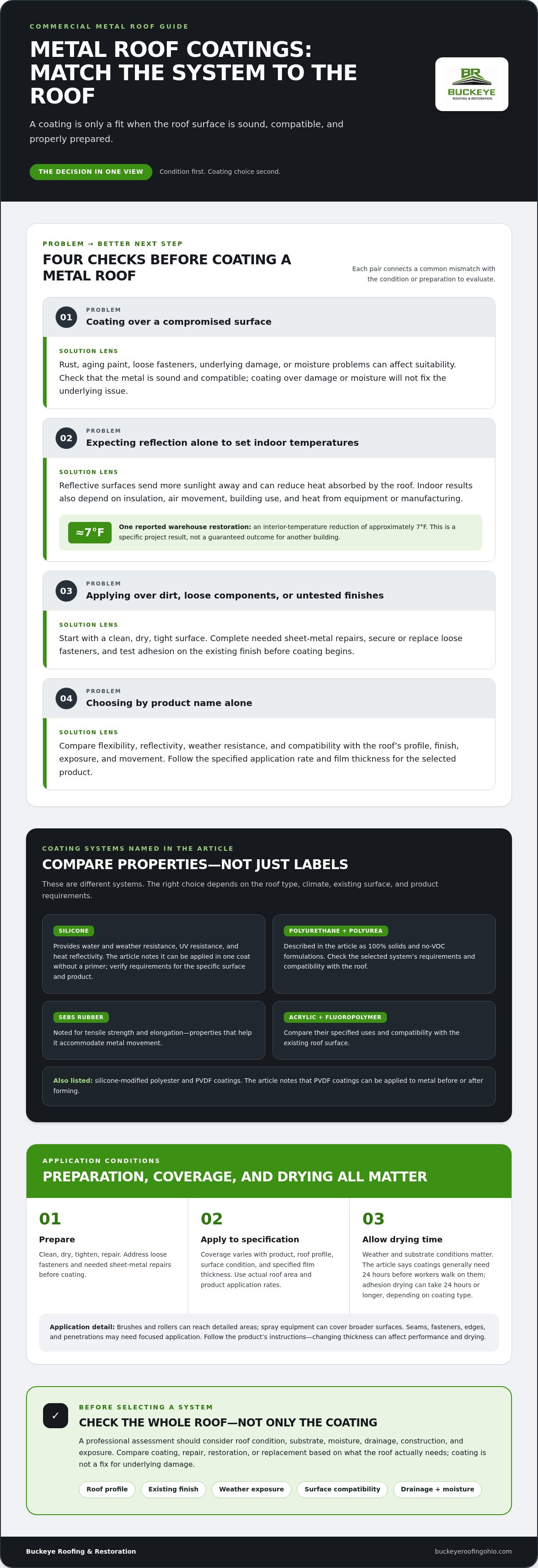
Silicone coatings provide water and weather resistance, UV resistance, and heat reflectivity. Polyurethane and polyurea coatings are described as 100% solids and no-VOC formulations. SEBS rubber is noted for tensile strength and elongation, properties that help it accommodate metal movement.
Application starts with a clean, dry, tight surface and any needed sheet-metal repairs. Secure or replace loose fasteners before coating. Weather and substrate conditions matter during application: the coating needs time to dry, and it generally needs 24 hours before workers walk on it. Adhesion drying time can be 24 hours or longer, depending on the coating type.
Coverage and Application Rates
Coverage depends on the coating product, roof profile, surface condition, and specified film thickness. Use the product’s application rate and actual roof area to calculate material needs. A smooth panel and a complex standing-seam roof do not present the same surface area.
Brushes and rollers can coat detailed areas, while spray equipment can cover broader surfaces. Seams, fasteners, edges, and penetrations may need focused application. Follow the product’s coverage and application instructions: changing the applied thickness can affect performance and drying.
Primer Requirements, Costs, and Coating Comparisons
Primer requirements depend on the coating and metal surface. Silicone roof coating can be applied in one coat without a primer, while other systems may require different preparation. Test adhesion on the existing surface before coating begins.
Silicone offers reflectivity and weather resistance; acrylic and fluoropolymer systems should be compared by their specified uses and compatibility. PVDF coatings can be applied to metal before or after forming. Typical coating costs per square foot in the United States depend on roof area, preparation, repairs, access, and selected coating; project pricing is determined after a quote request.
Heat reflection and indoor temperature reduction
Building-code, fire-rating, and energy-efficiency requirements depend on the jurisdiction, building use, and roof assembly. Confirm applicable criteria before specifying a coating. Cool-roof or tax incentives also vary by location and program, so compare documented coating performance and project scope with each program’s eligibility rules.
Solar Reflection and Cooling
A reflective roof surface sends more incoming sunlight away instead of absorbing it as heat. White rubber coatings are described as highly reflective, while the U.S. Environmental Protection Agency identifies light or cool-colored fluid-applied membranes as low-slope cool-roof products for metal-roof protection and waterproofing.
Less absorbed heat can mean a cooler roof surface and less heat transfer toward occupied space. The indoor effect also depends on insulation, air movement, building use, and heat from equipment or manufacturing processes. A reflective coating changes the roof surface, not those other conditions.
One reported warehouse restoration recorded an interior-temperature reduction of approximately 7°F. Treat that as a specific project result, not a measurement to apply automatically to another building with different roofing, insulation, or operations.
Energy Savings and Cooling Claims
Lower roof temperatures may reduce cooling demand associated with heat entering through the roof. The energy effect depends on the building’s cooling equipment, operating schedule, insulation, and existing roof color. Facility managers can compare utility use and indoor conditions before and after the work, while accounting for seasonal and operational changes.
Reflectivity alone does not establish a specific energy reduction. Compare documented coating properties and the roof’s current condition, and consider whether repairs or insulation issues affect heat movement. In a warehouse, for example, process heat and large interior volumes can affect comfort independently of the roof surface.
Set expectations around measurable conditions: roof temperature, indoor temperature, cooling operation, and utility consumption. A coating may change solar heat absorption, but it will not fix unrelated equipment or ventilation problems. A professional roof inspection can connect roof condition with heat and comfort concerns. Request a commercial roof inspection to assess the surface and its suitability for coating.
Material selection also affects how a roof responds to weather and temperature changes. The page lists fire resistance, reduced roof temperature, waterproofing, UV and ozone protection, thermal stability, and expandability as benefits of an applied SEBS roof system. SEBS rubber coating creates a flexible barrier between a metal roof and elements including extreme temperatures, UV rays, and rainwater. These are stated system benefits, not a guaranteed indoor-temperature result for every building.
Silicone-modified polyester coatings allow metal roofs to expand and contract as temperatures change. That movement-related property differs from the SEBS description, which emphasizes a flexible barrier against extreme temperatures, UV rays, and rainwater. The listed SEBS benefits include reduced roof temperature, alongside protection and flexibility. Consider which properties matter to your roof and project, without treating any one benefit as proof of a specific change in indoor conditions.
What are Roof Coatings?
Assess a commercial metal roof’s condition and surface before preparing and coating it. The practical sequence is to clean the metal, address sheet-metal and fastening issues, test adhesion, treat seams and penetrations as specified, then apply a compatible primer and coating system.
Preparation is essential to performance. Dirt, chalking paint, corrosion, and residue can interfere with adhesion. Coating over a loose fastener or open seam leaves the underlying problem unresolved. Metal roofs also move with temperature changes, so seam details must accommodate expansion rather than simply conceal it.
Start with a professional roof assessment, especially if there are leaks, corrosion, or access concerns. The inspection should identify the existing metal and finish, loose or missing fasteners, damaged panels, seams, penetrations, and areas where water collects. These findings guide preparation and help determine whether coating is suitable.
- Clean the surface. Remove dirt, loose coating, and other contaminants using a method appropriate for the roof. The metal should be clean and dry before coating.
- Make repairs. Complete necessary sheet-metal repairs and secure or replace loose or missing fasteners before applying coating.
- Check adhesion. Test the intended coating on the existing surface. Poor adhesion can undermine the system, even when the roof looks clean.
- Treat details. Address seams, fasteners, edges, and penetrations using compatible materials and the coating system’s application instructions.
- Apply primer and coating as specified. Primer needs depend on the roof surface and selected coating; avoid assuming every metal roof requires the same preparation.
Mastic and reinforcing mesh or fabric can be used for targeted seam and penetration details when the selected system calls for them. They do not replace repairing loose metal or replacing missing fasteners. The roofer should select detail materials and dimensions to suit the roof and coating system, rather than applying one detail everywhere.
Coating retention depends partly on substrate condition and adhesion. A coating applied over corrosion, failing paint, or trapped moisture may not bond as intended. Preparation should account for the metal type and existing finish instead of relying on the same cleaning or priming method for every panel.
For building owners, the takeaway is straightforward: preparation and coating form one system, from cleaning through final application. Keep workers off the roof until a professional has assessed access and conditions. Let the inspection findings determine whether repairs, preparation, and coating can proceed.
Roof coating warranties and service life
Commercial coating warranties can cover materials, workmanship, or both; one documented project had a 20-year warranty covering workmanship and material. The written warranty defines its exclusions, so review the covered work, roof conditions, maintenance duties, and claims process before installation.
Warranty and Guarantee Options
Warranty terms differ by coating system and project. Silicone-modified polyester systems typically come with warranties of 10 to 20 years. That period describes warranty coverage, not a promise that the roof will need no attention or that every roof condition falls within coverage.
Compare written warranty terms line by line. Identify whether coverage applies to coating materials, application workmanship, or both, and note any inspection or maintenance requirements. The document should explain how to report a problem and what remedy applies. A warranty duration is not the same as the coating’s expected service life.
Product Lifespan and Warranty
Coating service-life claims depend on the system and the existing roof. A properly applied commercial roof coating may extend an existing roof’s life by up to 10 years. Other stated claims describe 15-20 additional service years for a structurally sound, dry roof. These figures describe different claims, not a universal result for every metal roof.
Among the systems described, polyester has the greatest potential for chalk and fade, as well as the shortest lifespan. A coating’s finish can change over time, while the written warranty may define coverage separately. Keep these measures distinct when planning long-term maintenance.
Before signing, check which roof components the warranty covers and which conditions it excludes. Review language about the coating, seams, fasteners, penetrations, existing corrosion, water conditions, and repair work. These are points to examine, not automatic exclusions: the contract defines the actual scope. Confirm that the roof condition and preparation meet the stated requirements.
Service life also depends on the substrate beneath the finish. A coating cannot make unsound metal structurally sound, and corrosion or unresolved moisture can affect performance. Before installation, document the roof condition, completed repairs, and coating system. This gives facility managers a useful reference for later inspections or warranty questions.
For a useful comparison, place the warranty period beside the system’s stated service-life claim, maintenance terms, and covered work. A 20-year warranty, for example, matters only in relation to its written scope and conditions. Review those details with the roof assessment before treating coating as a long-term alternative to other work.
Coating compatibility and painted or corroded metal
A coating must be compatible with the specific metal roof and its existing finish. Surface condition, corrosion, drainage, and panel movement help determine whether coating is practical or replacement merits consideration.
Coating Suitability Versus Replacement
A structurally sound, dry roof may be a candidate for coating after assessment. The inspection should consider panel integrity, seams, fasteners, moisture, and drainage, including areas affected by ponding water. SEBS rubber coatings are described as resisting ponding water, but that property does not fix drainage problems or make every roof suitable.
Consider replacement when the roof’s underlying condition cannot support restoration. A coating adds a liquid layer; it does not rebuild failed metal panels or correct structural concerns. Compare the repair needs and roof condition before deciding that coating is preferable to replacement.
Painted and Corroded Metal Compatibility
Existing paint is part of the coating surface, so its condition matters. Peeling, chalking, or poorly bonded paint can interfere with adhesion. A compatibility assessment should identify the existing finish, prepare a representative area, and test adhesion before coating the full surface.
Metal can rust or corrode over time. Choose a coating based on the specific metal and corrosion condition, not just the visible color. Surface preparation and repair address the actual substrate; applying a new finish over unstable material leaves the underlying issue unresolved.
Leak, Corrosion, and Adhesion Risks
Coating over an active leak, open seam, or loose fastener can leave water entry points in place. Repair those details before application, then assess penetrations and panel joints. Metal panels expand and contract, so details must accommodate that movement.
Corrosion can weaken the substrate, while poor preparation can cause adhesion failure. Moisture trapped beneath a coating may also compromise the result. A roof assessment should distinguish surface wear from deeper deterioration and determine whether the metal is sound enough to receive a coating.
Before selecting a system, document the roof’s metal type, existing finish, corrosion, leaks, drainage, and repair needs. These findings help clarify whether coating, repair, or replacement suits the actual condition. Schedule a commercial roof inspection to assess the roof and coating compatibility.
Compatibility with the roof’s metal, finish, and condition matters. Metal roofs can rust, corrode, or wear over time.
An inspection can relate visible deterioration to the substrate and existing finish, rather than relying on appearance alone. Record areas of wear and corrosion, then determine whether the metal is sound enough for preparation and coating or whether repair or replacement should be considered. This ties the coating decision to the roof’s actual condition.
Buckeye Roofing & Restoration: Commercial Flat Roofing
Buckeye Roofing & Restoration helps commercial property owners assess practical options for aging or damaged roofs. Its commercial roof coatings and restoration work can suit roofs that can be preserved, while commercial flat-roof repair addresses damage that needs correction before coating.
For a metal roof, start with its condition: substrate, corrosion, moisture, drainage, and existing finish all affect coating suitability. If panels or underlying components are too deteriorated to support restoration, replacement may be more appropriate. An inspection helps identify the roof’s needs before work is recommended.
If you’re weighing repair, restoration, or coating for a commercial roof, contact Buckeye Roofing & Restoration to discuss the next step.
Plan the Next Roof Decision
Make your next maintenance review more useful by adding coating questions to your facility’s roof records. Note planned building work, access constraints, and operating periods when roofing could disrupt staff or equipment. This context can help shape a practical project schedule.
Keep product information, project records, and maintenance observations together. If you revisit commercial metal roof coating systems, those records can clarify what was considered and what has changed. The decision should fit the building’s operating plans as well as the roof project.
For a conversation about your facility’s roofing plans, contact Buckeye Roofing & Restoration. A straightforward discussion can help you decide what information to gather next.
Frequently Asked Questions
How long do commercial metal roof coatings last, and what affects their lifespan?
Service life varies with the coating selected, roof exposure, and how well the system performs over time. Distinguish the coating’s expected service life from its warranty period: they describe different things. Facility managers can track fading, surface wear, or recurring interior moisture during routine building reviews. These observations can indicate when a professional assessment may be useful, without assuming every visible change requires recoating.
What coating thickness, coverage rates, and application temperatures do manufacturers specify?
Use the selected coating manufacturer’s product data sheet for required thickness, coverage rate, and application temperature range. Before work begins, match the product name and system components in the project documents to that sheet. Request application records showing specified and applied thickness, material quantities, and weather conditions. These details help facility managers review completed work and plan future maintenance.
How can contractors assess and repair fasteners, seams, rust, and leaks before coating a metal roof?
Roofing professionals can document conditions with inspection notes, photographs, and a map connecting visible roof concerns to interior leak reports. This record helps distinguish recurring trouble spots from isolated issues and creates a baseline for later reviews. Building staff can note where staining or active drips appear inside, along with operating conditions at the time. Leave roof access and hands-on evaluation to qualified roofing professionals.
What are typical commercial metal roof coating costs per square foot in the United States?
Project pricing depends on roof area, preparation, repairs, access, and the selected coating.
Which commercial metal roof coatings qualify for cool-roof or tax incentives in different U.S. locations?
Eligibility varies by location and program. Light- or cool-colored fluid-applied membranes are identified as low-slope cool-roof products, but compare documented performance and project scope with each program’s eligibility rules.

Article by
Harry Stanley III
Harry Stanley III is a construction marketing strategist and fractional CMO at H&A Marketing. He has helped construction companies grow through website strategy, SEO, paid advertising, branding, lead generation, CRM systems, and professional content. His past work includes helping Meraki Solar generate an additional $3.7 million in revenue in his first year and supporting American Builders as a fractional CMO. Today, Harry works directly with custom home builders and construction companies to build marketing systems designed to generate qualified leads and measurable growth.