
How Contractors Prepare a Commercial Roof for a Restoration Coating
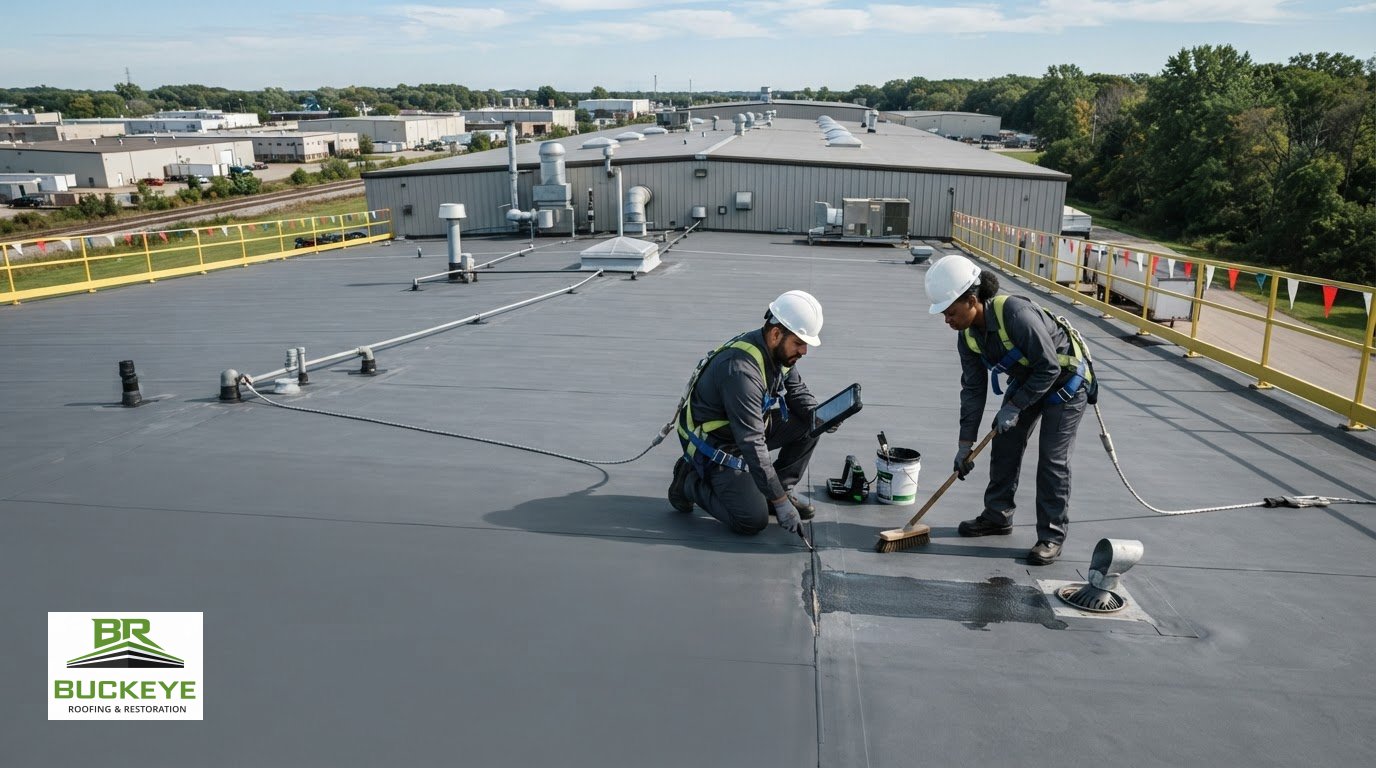
A coating shouldn’t be the first decision. Commercial roof coating preparation starts by determining whether the existing roof is a sound candidate for restoration, not by choosing a product and hoping it fits. That distinction matters when hidden moisture, poor drainage, or damaged roof materials could affect the result.
If you manage a warehouse, manufacturing facility, or other commercial building, it’s reasonable to want clear answers before work begins. A coating may be a practical option, but it won’t correct every underlying problem. Inspection findings help show what needs repair, whether the roof is dry and suitable for coating, and if replacement deserves consideration instead.
This article walks through the preparation process, from assessing the roof and addressing problem areas to planning around building operations and Midwest weather. You’ll learn what findings influence coating suitability and why a condition-based plan helps facility teams choose a sensible next step.
Key Takeaways
- Commercial roof coating preparation begins with an assessment of the roof’s condition, drainage, and suitability for restoration.
- The preparation sequence typically includes inspection, cleaning, drying, repairs, detailing, and a final readiness review, with steps tailored to the roof system.
- Moisture or drainage concerns can change the project scope and may make coating unsuitable until underlying issues are addressed.
- TPO, EPDM, and metal roofs require different preparation considerations, so the existing material and coating requirements matter.
- Use a professional review to confirm repairs are complete and the roof is ready without putting facility staff on the roof.
Why Commercial Roof Coating Preparation Starts with a Roof Assessment
Commercial roof coating preparation begins with understanding what’s already on the building. Preparation includes the inspection, repairs, and surface work completed before a coating is applied. The goal isn’t simply to cover the existing roof. It’s to determine whether the roof and its underlying materials can support a restoration approach, and what work must happen first.
A low-slope roof isn’t necessarily level. It’s designed with slope and drainage paths that direct water toward drains or other outlets. Inspectors consider how water moves across the surface, where it collects, and whether ponding persists. A coating doesn’t correct every drainage issue or resolve damage hidden beneath the roof surface.
Inspection findings determine whether coating is appropriate and what preparation the roof needs. A roof coating is applied over an existing roof, but the specific product and preparation requirements depend on the roof system and its condition.
What a commercial roof inspection checks before coating
A professional inspection reviews the membrane or metal surface, seams, penetrations, flashings, and visible damage. On a membrane roof, the inspector looks for conditions such as open seams or deterioration. On a metal roof, the review may include panel condition and connection details. The inspection also tracks drainage patterns and areas where water appears to remain after rainfall.
Moisture below the surface can change the recommendation, even if the roof looks intact from above. Inspectors consider signs of trapped moisture, wet insulation, and structural concerns. These findings help determine whether the roof can be prepared for coating or needs a different scope of work.
When coating preparation may reveal a different need
The right solution depends on the extent and location of the findings. Localized damage may call for repair. Restoration is broader work to renew an existing roof and may include a coating. A roof recover installs a new roof layer over an existing system when conditions allow. Full replacement removes and replaces the existing roof system. “Reroofing” is sometimes used broadly for new roof work, so the proposed scope should clarify whether it means a recover or replacement.
Wet insulation or compromised structural conditions can affect coating eligibility because a surface coating doesn’t address those underlying problems. The roof may need repairs or more extensive work before restoration is considered. An inspection provides the basis for comparing options, rather than assuming the roof is ready for a coating. Learn more about commercial roof restoration and how a condition-based assessment informs the approach.
How Contractors Prepare a Commercial Roof Surface for Coating
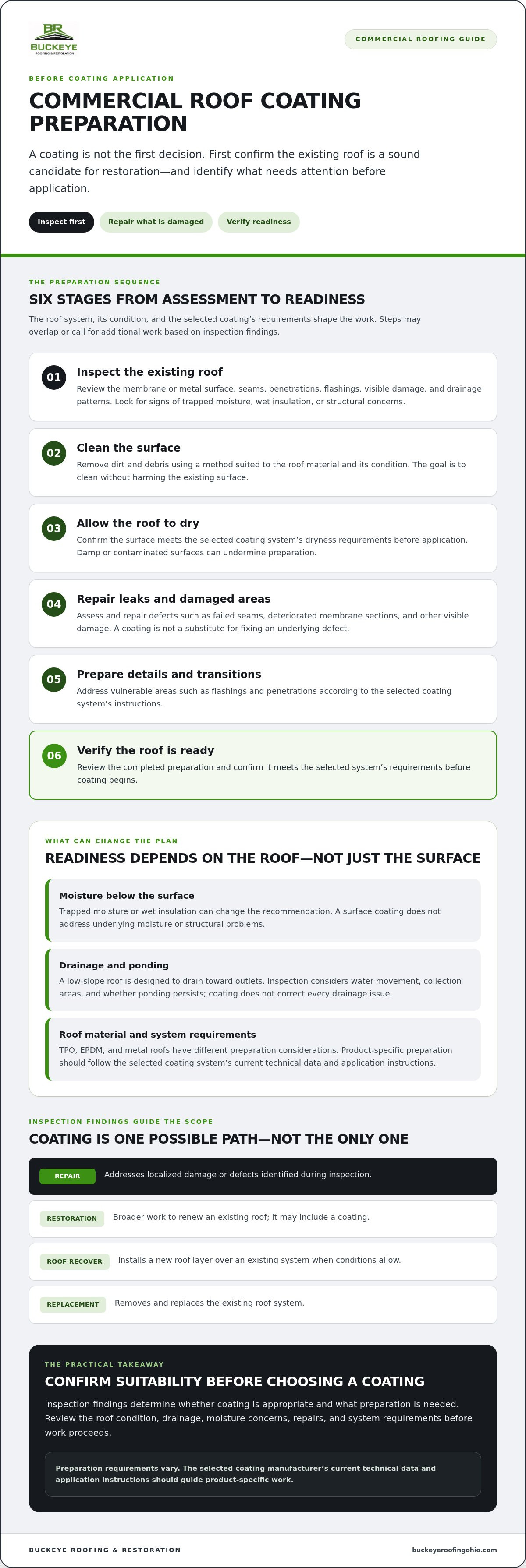
Once the inspection supports moving forward, the crew prepares the roof in a deliberate sequence. Commercial roof coating preparation isn’t a one-size-fits-all checklist: the existing roof system, its condition, and the selected coating’s requirements shape the work. Loose material, dirt, residue, or unrepaired defects can interfere with adhesion or leave underlying problems unresolved.
- Inspect: Confirm the roof’s condition and identify areas needing cleaning, repair, or closer review.
- Clean: Remove dirt and debris using methods suited to the roof material and its condition.
- Dry: Allow the surface to meet the coating system’s dryness requirements before application.
- Repair: Address leaks and damaged areas, including failed seams or deteriorated membrane sections.
- Detail: Prepare transitions and vulnerable details, such as flashings and penetrations, according to the system instructions.
- Verify readiness: Review the completed work and confirm the roof meets the selected system’s preparation requirements.
These steps can overlap or require additional work based on inspection findings. The Whole Building Design Guide provides broader context on roofing systems, while the coating manufacturer’s current technical data and application instructions should guide product-specific preparation. Requirements can differ, so crews should follow the documentation for the system selected for the project.
Cleaning and drying the existing roof surface
Cleaning isn’t simply a matter of using the strongest method available. A contractor selects an approach that removes dirt and incompatible debris without harming the existing surface. After cleaning, the roof must dry to the condition required by the coating system. Applying material over a damp or contaminated surface can undermine preparation, so readiness is confirmed before coating begins.
Repairing seams, penetrations, and damaged areas
Existing leaks and failed details need assessment and appropriate repair before coating. Crews pay close attention to seams, flashings, penetrations, and visible membrane damage because these areas can be sources of water entry. A coating shouldn’t be treated as a substitute for fixing a defect. If the inspection identifies repair work, commercial roof repair may be part of the preparation plan.
For a building team, the practical next step is to review the inspection findings and preparation scope with a commercial roofer. Schedule a commercial roof inspection to discuss the roof’s preparation needs.
How Moisture, Drainage, and Roof Type Affect Coating Preparation
Commercial roof coating preparation depends on more than what’s visible at the surface. A roof can appear intact while moisture or deterioration below the membrane changes the work required. Drainage also matters: a coating may be part of a restoration plan, but it doesn’t automatically correct ponding or the conditions causing it.
Why moisture and ponding water matter before coating
Water remaining on a roof after rainfall is a visible observation, not proof of concealed moisture. A professional inspection evaluates drainage patterns and considers whether moisture may be present within the roof assembly. Persistent ponding, suspected wet insulation, or signs of structural concern can lead to further evaluation, repairs, a revised restoration scope, or a different recommendation. These findings affect whether coating is appropriate, not just how the surface is prepared. For broader eligibility factors, see the guide to commercial roof restoration.
Preparation varies across TPO, EPDM, and metal roofs
These roof types aren’t interchangeable, so the inspection and preparation plan must account for the specific substrate. On TPO or EPDM, the condition of the membrane, seams, and penetrations informs what needs attention. On a metal roof, the review includes panel condition, fasteners, seams, and any visible rust. The appropriate cleaning, repair, and coating steps depend on those findings and the selected system’s current manufacturer instructions.
The table below outlines questions that help frame a professional evaluation. It isn’t a do-it-yourself suitability test, and no single visible sign determines whether coating will work.
| Condition observed or suspected | Question for professional evaluation |
|---|---|
| Water remains in a low area after rain | Is drainage functioning as intended, and does the area need corrective work? |
| Possible moisture below the roof surface | Is moisture present in the assembly, and how does it affect restoration suitability? |
| Membrane seams or penetrations appear damaged | What repair or detailing is needed before coating is considered? |
| Metal panels show rust or loose fasteners | What is the extent of the condition, and can the affected areas be properly addressed? |
A coating decision should follow the evidence, including roof type, substrate condition, moisture findings, drainage, and structural concerns. That measured review helps distinguish between a roof that may be prepared for restoration and one that needs another solution.
How Midwest Weather and Building Operations Shape Preparation
Roof preparation has to fit both the weather and the building’s daily demands. In Ohio, Indiana, and Southern Michigan, rain, changing temperatures, freeze-thaw periods, snow, and ice can affect when crews can inspect or prepare a roof. Those conditions also shape how facility teams plan access and coordinate work around people, equipment, and production.
Planning around weather in Ohio, Indiana, and Southern Michigan
Weather monitoring is part of scheduling, not an afterthought. The roof surface and forecast conditions must meet the selected coating system’s current manufacturer requirements. Those requirements vary, so a contractor should verify them rather than assume one temperature or moisture threshold applies to every product. Snow and ice can limit safe access or obscure roof conditions, while freeze-thaw seasons make drainage and inspection planning especially relevant. Buckeye Roofing & Restoration serves commercial properties in Auburn, Indiana, as well as markets across the region.
A roof is ready for coating only when its condition and the application conditions both meet the project’s requirements. If the forecast changes or the surface isn’t suitable, the schedule may need to adjust. That’s a practical part of commercial roof coating preparation, not a reason to rush work under poor conditions.
Preparing an occupied warehouse or industrial facility
For an active facility, preparation also means coordinating how the work area fits around operations. Facility managers can share access procedures, delivery or production constraints, and areas where equipment or materials need to remain clear. The project team can then coordinate roof access, staging, and communication about work areas. This helps limit avoidable disruption without assuming a fixed schedule or promising that operations won’t be affected.
Before work begins, agree on who will communicate changes, how staff will be informed about access restrictions, and which operational needs could affect staging or work sequencing. Building teams shouldn’t access the roof to assess conditions themselves. Active leaks, structural concerns, or unsafe access call for professional evaluation.
A coating plan should account for the roof’s actual condition, the selected system’s requirements, the forecast, and the building’s operating needs. If you’re planning roof work around production or warehouse activity, request a commercial roof inspection to discuss the conditions that will shape the preparation plan.
How to Confirm a Commercial Roof Is Ready for Coating
Readiness should be confirmed through a professional review, not a quick visual check from the ground. Facility managers can use the inspection findings to understand what was evaluated, what work remains, and whether coating is still the right option after preparation.
A facility manager’s review checklist
Before approving the next step, review whether the preparation record addresses:
- Inspection findings: Are the roof system, observed damage, moisture concerns, and drainage conditions documented?
- Completed repairs: Have identified leaks and damaged seams, flashings, penetrations, or other details been addressed?
- Drainage concerns: Are areas of persistent ponding noted, with a clear explanation of whether further work is needed?
- System readiness: Has the roofer confirmed that the prepared substrate meets the selected coating system’s requirements?
- Remaining questions: Are unresolved conditions identified, rather than assumed to be covered by the coating?
Building staff can help by documenting what they observe safely from inside or from accessible ground-level locations. Record interior leak locations, the dates they occur, and any effect on equipment, inventory, or operations. Note visible exterior concerns only from a safe vantage point. Don’t walk on the roof or attempt repairs without proper training. A professional inspection is appropriate for suspected structural issues, active leaks, or unsafe access.
What happens after preparation findings are reviewed
A roofer uses the inspection and preparation findings to outline a scope that fits the roof’s actual condition. Localized defects may call for repair. If broader conditions support restoration, a coating may be one part of that approach. More extensive deterioration, moisture, drainage, or structural concerns can change the recommendation, including whether reroofing or replacement should be considered.
That’s why commercial roof coating preparation should end with a documented readiness review, not simply the completion of surface work. The review should make clear what was repaired, what conditions remain, and how system-specific requirements were addressed. It gives building owners a practical basis for deciding whether to proceed, resolve additional issues, or consider another roofing option.
If restoration is being considered, learn more about commercial roof restoration. A coating isn’t suitable for every roof, so an inspection should guide the recommendation. Schedule a commercial roof inspection to discuss your building’s condition and the appropriate next step.
Make the Next Roofing Decision With Clear Information
Proper commercial roof coating preparation confirms whether the existing roof can support restoration before coating work begins. A professional assessment considers the surface, moisture concerns, drainage, needed repairs, and system-specific requirements. Cleaning and detailing matter, but they can’t make an unsuitable roof ready for coating.
For commercial flat and low-slope roofs, the inspection findings guide the next step. That may be localized repair, restoration with a coating, reroofing, or full replacement. Midwest weather and building operations also shape planning, particularly when facility teams need to coordinate access and active work areas.
Buckeye Roofing & Restoration provides inspection-led recommendations for commercial properties across Ohio, Northeast Indiana, and Southern Michigan. Schedule a commercial roof inspection to discuss your roof’s condition and practical options. A clear assessment is a sensible place to start.
Frequently Asked Questions
What does commercial roof coating preparation include?
Commercial roof coating preparation includes inspecting the roof, cleaning the surface, allowing it to dry, repairing defects, and checking readiness before application. The exact scope depends on the existing roof system and its condition. For example, membrane seams and metal roof fasteners call for different evaluations. The selected coating manufacturer’s current instructions guide system-specific preparation, including the condition the surface must meet before work proceeds.
Can every commercial roof be prepared for a coating?
No. A coating isn’t appropriate for every commercial roof. The substrate’s condition, moisture in the roof assembly, drainage performance, and structural integrity all influence eligibility. A roof that appears serviceable from the ground may still need further professional evaluation. Inspection findings guide whether coating is a reasonable restoration approach or whether repair, other restoration work, reroofing, or replacement makes more sense. No coating outcome should be assumed before the roof is assessed.
Does ponding water need to be addressed before a roof is coated?
Persistent ponding water warrants professional evaluation before coating. A low-slope roof is designed to drain, and standing water may point to drainage concerns that need attention. A coating alone shouldn’t be treated as a guaranteed fix for ponding. The roofer assesses the drainage pattern and roof condition to determine whether corrective work is needed and how the finding affects coating suitability. Don’t walk onto the roof to investigate; report the concern for professional review.
How do contractors check for moisture under a commercial roof?
Contractors assess roof condition and look for signs that moisture may be present within the roof assembly. Surface observations can help identify areas for closer review, but they can’t confirm concealed conditions on their own. The inspection approach depends on the roof and the concerns identified. If moisture is found or suspected, it can change the preparation scope or make coating unsuitable until the underlying issue is addressed.
Can a business keep operating during commercial roof coating preparation?
Whether a business can continue operating depends on the building, work scope, access needs, and project plan. Facility managers at warehouses and manufacturing sites can share production schedules, delivery activity, access procedures, and sensitive work areas with the project team. That coordination helps plan staging and communication, but it doesn’t guarantee uninterrupted operations or a particular duration. Discuss operating constraints early so they can inform the preparation plan.
When should a commercial roof be repaired instead of coated?
Repair may be needed before coating is considered, especially when an inspection identifies active leaks, localized membrane damage, failed seams, or deteriorated details. Repair addresses specific defects; restoration involves broader work to renew an existing roof and may include a coating. Replacement removes and replaces the roof system. A professional assessment determines whether repairs can address the findings or whether restoration or replacement is more appropriate for the building.
How does Midwest weather affect roof coating preparation?
Weather affects scheduling and whether the roof surface is ready for coating. In Ohio, Northeast Indiana, and Southern Michigan, rain, changing conditions, snow, ice, and freeze-thaw seasons can influence inspection access and project planning. Exact application conditions depend on the selected coating system’s current manufacturer requirements, not a single rule for every product. Contractors monitor conditions and plan around the roof’s readiness rather than assume a guaranteed application window.

Article by
Harry Stanley III
Harry Stanley III is a construction marketing strategist and fractional CMO at H&A Marketing. He has helped construction companies grow through website strategy, SEO, paid advertising, branding, lead generation, CRM systems, and professional content. His past work includes helping Meraki Solar generate an additional $3.7 million in revenue in his first year and supporting American Builders as a fractional CMO. Today, Harry works directly with custom home builders and construction companies to build marketing systems designed to generate qualified leads and measurable growth.
