
Commercial Metal Roof Rust Repair in Auburn, Indiana: A Practical Guide
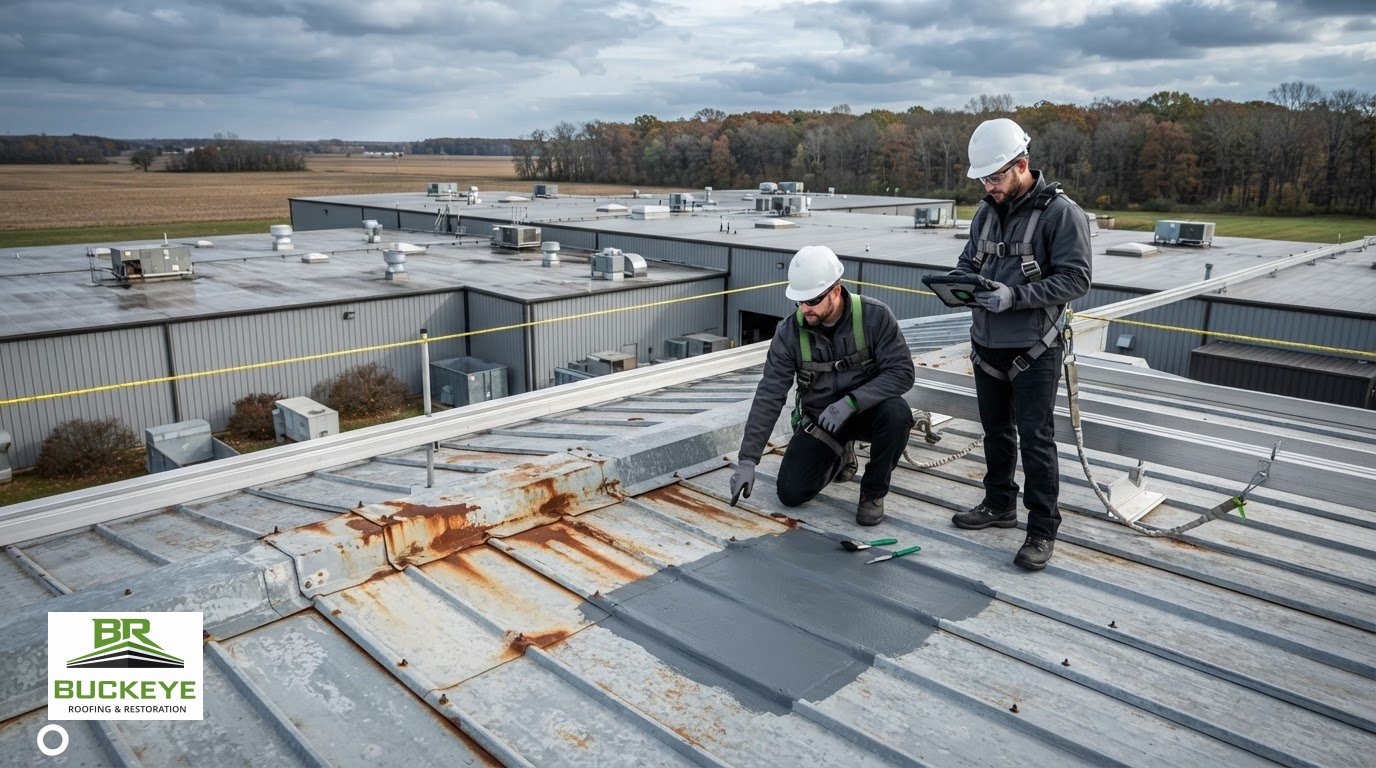
Does rust mean your commercial metal roof is failing, or could a targeted repair address the problem? For building owners and facility managers, that distinction matters: the right commercial metal roof rust repair should address the source of corrosion and any related leaks, not just cover the visible stain.
Rust can be limited to a small area, or it can point to deeper deterioration in panels, seams, or fasteners. Auburn’s seasonal mix of snow, moisture, and temperature swings can put added stress on roof surfaces and connections. But visible rust alone doesn’t tell you whether repair, restoration, a coating, or replacement makes the most sense.
This guide explains what a roofer should assess before recommending work, how the main options differ, and when a professional inspection is appropriate. You’ll also learn how to plan an assessment around warehouse, manufacturing, or other commercial operations, so roof decisions can account for both building condition and day-to-day needs. Buckeye Roofing & Restoration serves commercial properties in Auburn and can assess whether metal-roof repair or restoration fits the inspection findings.
Key Takeaways
- Commercial metal roof rust repair should address corrosion and related roof vulnerabilities, not just the visible discoloration.
- A roofer’s assessment of panels, seams, fasteners, penetrations, drainage, and leak evidence helps guide the next step.
- Localized repair, broader restoration or coating, and replacement each suit different roof conditions; no single option fits every building.
- Record concerns from a safe location and discuss Auburn’s snow, ice, freeze-thaw cycles, and drainage during a professional inspection.
- Buckeye Roofing & Restoration serves commercial properties in Auburn, Indiana, with metal-roof repair and restoration recommendations based on inspection findings.
Commercial Metal Roof Rust Repair: What Rust Can, and Cannot, Tell You
Commercial metal roof rust repair addresses corrosion along with related weaknesses in the roof system, such as compromised seams, fasteners, or areas where water can enter. The goal isn’t simply to change how a rusty spot looks. A repair plan needs to account for the metal’s condition and the source of recurring moisture.
Quotable definition: Commercial metal roof rust repair is work that treats corrosion and related roof vulnerabilities, with the repair scope guided by an assessment of the metal and surrounding roof system, not appearance alone.
A rust-colored mark can be a surface change, but it can also indicate that the metal or its protective finish has deteriorated. And not all commercial metal roofs use the same material. Identifying the roof type and condition matters; a general overview of metal roof types and corrosion offers useful background, but it can’t determine what a specific building needs.
Look at context, not color alone. A stain near a seam or fastener, a spot that appears to be spreading, or interior signs of recurring moisture give a roofer useful clues. They still don’t establish whether a panel is serviceable. A professional assessment can help separate surface discoloration from corrosion that has affected the metal or its connections.
When is rust a maintenance concern versus a roof concern?
Isolated surface corrosion may call for a different response than deteriorated metal. The roofer considers where rust appears, how far it extends, whether moisture keeps returning, and whether seams or fasteners nearby show wear. These clues help define what to inspect next; they don’t provide a diagnosis on their own.
A photograph or view from the ground can document a concern, but it can’t confirm panel integrity or reveal every roof-system issue. Don’t climb onto the roof to investigate. If rust is accompanied by a leak, loose material, or visible damage, arrange a professional inspection.
Why commercial roofs in the Auburn area need context
For commercial properties in Auburn, Indiana, seasonal weather is part of the assessment. Freeze-thaw cycles, snow, and ice can make seams, panel connections, and drainage areas important points to review. Water that doesn’t drain as intended may leave affected areas exposed to persistent moisture, so the roofer considers drainage alongside visible corrosion.
Exposure differs from one building to another. Roof design, nearby obstructions, the condition of the panels, and where water collects all shape what rust may indicate. That’s why a recommendation shouldn’t rely on a generic assumption about Auburn’s weather or on the appearance of one spot.
Once the affected areas and surrounding conditions are understood, the appropriate scope may become clearer. Localized repair may address a limited issue, while broader deterioration calls for a wider evaluation. Buckeye Roofing & Restoration serves commercial properties in Auburn and provides commercial roof repair based on inspection findings.
How a Roofer Assesses Rust, Seams, and Metal Panel Condition
A useful inspection looks beyond the rust spot. A roofer checks how much metal is affected, whether corrosion appears superficial or has changed the panel, and whether the surrounding roof details could be letting moisture in. The assessment also considers leak evidence, drainage, and the condition of the roof as a system.
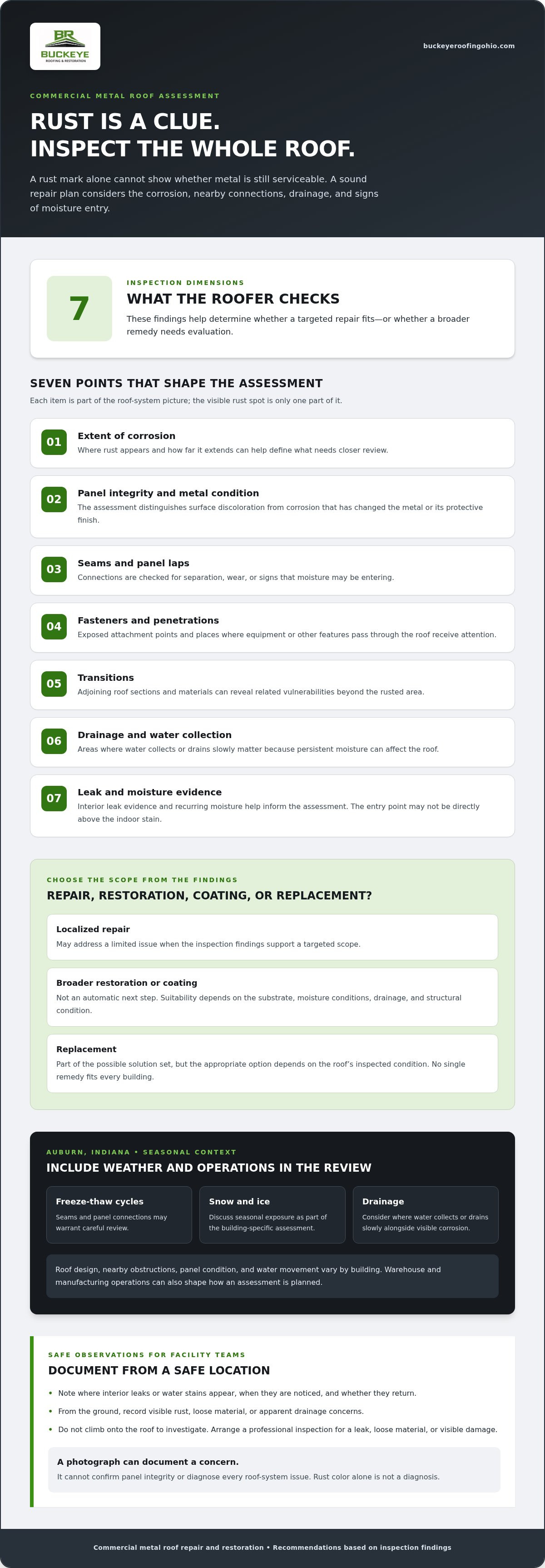
Inspection considers the extent of corrosion, panel integrity, seams, fasteners, penetrations, drainage, and signs of moisture entry. These findings help determine whether targeted commercial metal roof rust repair is appropriate or whether the roof needs a broader remedy. A coating or restoration is not a default next step: suitability depends on the substrate, moisture conditions, drainage, and structural condition.
What roof areas and details require attention?
On a metal roof, the roofer reviews panel laps, standing seams, exposed fasteners, penetrations, and transitions where roof sections or materials meet. These details can be relevant even when the most visible rust is elsewhere. Water may travel along a panel or enter at a connection, so the point where moisture appears inside may not sit directly below its entry point.
- Panels: Look for corrosion extent and changes to the metal’s condition.
- Seams and laps: Review connections for separation, wear, or signs of moisture entry.
- Fasteners and penetrations: Check exposed attachment points and areas where equipment or other features pass through the roof.
- Transitions and drainage: Assess adjoining details and areas where water may collect or drain slowly.
These are inspection points, not a do-it-yourself repair checklist. Metal roofing has details and repair needs distinct from membrane systems such as TPO or EPDM; the materials aren’t interchangeable. Background on metal roof corrosion prevention can help explain why corrosion protection matters, but it can’t establish which treatment fits a particular roof.
What should a facility manager observe safely?
Facility staff can note where interior leaks or water stains appear, when they’re noticed, and whether the issue returns. From a safe ground-level location, record visible exterior concerns such as apparent rust, loose material, or drainage problems. These observations give the roofer useful context, but they can’t confirm panel or structural condition.
Don’t climb onto the roof or attempt to remove corrosion or apply a treatment without proper training. Leaks, loose materials, standing water, and unsafe access warrant professional assessment. If you’re preparing for commercial metal roof rust repair, request a roof assessment so the findings can guide the next step.
Repair, Restoration, Coating, or Replacement: Which Rust Solution Fits?
Rust doesn’t point to one automatic fix. The right scope depends on how much metal is affected, whether panels and connections remain serviceable, and whether water entry or drainage problems are contributing to the damage. A limited issue may call for targeted work, while broader deterioration requires a wider assessment.
| Option | May fit when | Limits to consider |
|---|---|---|
| Localized repair | Inspection finds limited corrosion or a specific problem at a panel, seam, fastener, or leak path. | It won’t address widespread deterioration or concealed damage beyond the repair area. |
| Restoration or coating | The existing roof is a suitable base for broader remedial work, and inspection findings support restoration. | The metal and substrate must be suitable, moisture and drainage concerns must be addressed, and unsound panels still need attention. |
| Replacement | Corrosion or other damage is extensive, or the roof’s condition makes repair or restoration unsuitable. | Visible rust alone doesn’t establish that replacement is necessary; the full roof condition should guide the decision. |
When can localized commercial metal roof repair make sense?
Targeted commercial metal roof rust repair may be appropriate when corrosion is limited and the affected metal and nearby details can be addressed. The scope should account for related seams, fasteners, and any water-entry path, not just the visible spot. Buckeye’s commercial roof repair work is guided by inspection findings. A spot treatment alone isn’t a sound answer to widespread corrosion or damage that extends beyond what can be seen.
When should restoration or replacement be considered?
Broader deterioration may prompt an evaluation of restoration, coatings, or replacement. A coating is not a substitute for sound metal or for resolving an active water-entry problem. Before considering restoration, a roofer needs to assess the substrate, moisture conditions, drainage, and structural condition. If those findings show the roof can’t support a suitable restoration, replacement may be the more appropriate option. It should remain a condition-based recommendation, not an automatic response to rust.
These options aren’t interchangeable. Repair addresses a defined problem; restoration involves broader work to the existing roof; a coating is one possible part of a restoration plan when conditions allow; and replacement installs a new roof system. The inspection should explain which condition supports the recommendation and what issue each scope is intended to address.
For a warehouse or manufacturing facility, the decision also needs to account for the building’s use and planned work. A clear scope helps property and facility managers understand whether the concern is local or widespread and plan around operations. The practical starting point is a professional assessment, followed by a repair, restoration, coating, or replacement recommendation that matches the roof’s actual condition.
A Safe Decision Process for Commercial Roof Rust in Auburn, Indiana
A clear process helps facility managers document roof concerns without guessing at the cause or risking an unsafe roof visit. For commercial metal roof rust repair, useful preparation starts with observations and records; a professional inspection determines what the roof needs.
- Record interior signs. Note where water stains or leaks appear inside, when they occur, and whether the affected area changes. A leak’s location can help guide an inspection, but it doesn’t necessarily identify the point where water entered the roof.
- Document exterior concerns from a safe location. Record visible rust, apparent loose materials, or drainage issues from the ground or another safe vantage point. Photos can help track changes, but they cannot confirm the condition of a panel, seam, or fastener.
- Gather available roof records. Collect information about the roof system, previous repairs, inspections, and maintenance. Note any recurring leak locations or past concerns. These details give the roofer useful history and can help focus the assessment.
- Arrange a professional inspection. Share the observations and records, then let the inspection determine the condition of the metal and related roof details. Don’t assign a cause or settle on a repair scope before the roof has been assessed.
What information should a facility manager gather?
Keep the notes factual: dates or conditions when a leak appears, the interior areas affected, and what can be seen safely from outside. If a concern recurs after certain weather, record that pattern without assuming it proves the cause. Roof-system details, maintenance logs, and previous repair records can help distinguish a new issue from a continuing one.
When is professional inspection the right next step?
Arrange an assessment for active leaks, recurring rust, loose materials, or standing water. Suspected structural concerns and unsafe roof access also call for professional evaluation, not an attempt to inspect or treat the area yourself. A roofer can review the visible problem alongside the surrounding roof condition before discussing a remedy.
In Auburn and nearby Northeast Indiana, include seasonal exposure in the conversation. Freeze-thaw cycles, snow, and ice may make drainage, seams, and panel connections important inspection considerations. Conditions vary by building, roof design, and exposure, so regional weather is context rather than a diagnosis. Share where water collects or whether interior leaks appear during or after particular weather, if you have observed that safely.
Buckeye Roofing & Restoration serves commercial properties in Auburn and nearby Northeast Indiana markets. If your building has a recurring leak or visible roof concerns, request a commercial roof inspection to discuss the findings and next steps.
Commercial Metal Roof Rust Repair with Buckeye Roofing & Restoration
Rust on a commercial metal roof deserves a clear assessment, not an automatic replacement recommendation. Buckeye Roofing & Restoration provides commercial metal-roof repair and restoration, including rust remediation, seam sealing, and restorative coatings. The appropriate scope depends on the condition of the roof and what the inspection finds, including whether the visible corrosion is limited or tied to wider deterioration or water entry.
That distinction matters for facility managers who need to make a sound roof decision while keeping warehouse, manufacturing, or other building operations in mind. Sharing concerns about active leaks, affected areas, and operational access can help shape a useful discussion of the work being considered. The inspection findings, not a preset solution, guide whether repair, restoration, coating, or replacement is appropriate.
What happens after you request an inspection?
An assessment considers the roof’s condition alongside the concerns you report. Rust, panel condition, seams, fasteners, drainage, and signs of moisture entry can all inform the recommendation. The goal is to understand the issue and its scope before discussing next steps, not to treat a small visible area as proof that the entire roof needs replacement.
If inspection findings support a targeted repair, the scope can focus on the identified concern. If broader restoration or a coating is under consideration, the roof must be suitable based on its condition and other relevant findings. Replacement may also be discussed when the roof’s condition supports that option. No single approach is right for every metal roof.
How to take the next step
Before requesting an assessment, gather available roof and maintenance records and note where interior leaks appear or recur. You can also share observations made from safe locations and explain any building-use or access considerations that matter to your operation. Don’t climb onto the roof or attempt to treat rust yourself; leave roof evaluation and repair work to trained professionals.
For roofs where inspection findings point toward broader work on the existing system, Buckeye’s commercial roof restoration service may be relevant. Restoration or coatings are not suitable for every roof, so the condition of the metal and the inspection findings remain central to the decision.
Buckeye Roofing & Restoration serves commercial properties in Auburn, Indiana, and across Northeast Indiana. If you’re weighing commercial metal roof rust repair or have a leak or recurring corrosion to discuss, request a commercial roof inspection or quote. Share what you’ve observed and any roof history you have, and use the assessment to determine a practical next step.
Plan Your Roof’s Next Step
Use the inspection findings to turn a visible roof concern into a practical maintenance decision. A clear scope helps you plan around building use, coordinate with the people responsible for operations, and avoid treating a temporary sign of trouble as the whole story. For commercial metal roof rust repair, the useful outcome is knowing what needs attention and why.
Buckeye Roofing & Restoration provides commercial metal-roof repair and restoration. Recommendations are based on the roof’s assessed condition, so replacement isn’t assumed just because damage is present. Repair, restoration, coating, or replacement can be discussed in light of what the inspection shows.
If rust, a recurring leak, or another roof concern needs a closer look, share the observations and roof history you have. Request a commercial roof inspection or quote and take the next step with a clearer basis for planning.
Frequently Asked Questions
Can rust on a commercial metal roof be repaired without replacing the roof?
Yes, commercial metal roof rust repair may be possible without replacing the whole roof. For planning, ask for a scope that identifies the areas included and any related work, such as seam sealing or fastener repairs. That gives facility managers a clearer basis for comparing the proposed work with maintenance records and operational needs. It also helps distinguish the immediate repair scope from any separate work that may be considered later.
Does surface rust mean a commercial metal roof is leaking?
No. A rust mark by itself doesn’t confirm a roof leak. For a more useful record, note whether an interior water mark appears after rain or snow, whether it grows, and whether it is near equipment or plumbing that could be another source. This timeline can help narrow the investigation. Avoid treating a ceiling stain as proof of a roof failure before the source has been assessed.
Can a roof coating stop rust on a commercial metal roof?
A coating may be part of a suitable restoration plan, but it shouldn’t be treated as a stand-alone answer to every rust concern. For project planning, keep a record of which roof areas and details the proposed work covers, along with any maintenance recommended afterward. That documentation helps facility teams track the work over time and understand what a future inspection should compare against.
How does a roofer determine whether a rusted metal roof needs repair or replacement?
The recommendation comes from the roof’s overall condition, not a single rust mark. Maintenance history can add useful context: recurring repairs in the same area may tell a different story than an isolated concern with no prior record. Facility managers can organize past work orders by location and date before the assessment. This helps connect the current issue to the building’s maintenance history and supports practical capital planning.
Is it safe to inspect a commercial metal roof for rust yourself?
For untrained staff, climbing onto a commercial metal roof isn’t a safe inspection method. Instead, record what can be seen from the ground and report interior signs through the facility’s maintenance process. If water is affecting an occupied workspace or stored materials, follow the building’s procedures for managing that area while arranging professional help. Don’t handle roof materials or attempt treatment as part of the observation.
How can freeze-thaw weather affect a commercial metal roof in Northeast Indiana?
Freeze-thaw conditions make it useful to compare roof observations across seasons rather than relying on a single inspection note. Facility teams can record when a concern was first noticed and whether it changes after winter weather. That history gives a roofer a better sense of the pattern to investigate. It doesn’t establish the cause by itself, but it can make follow-up discussions more specific.
When should a facility manager request a commercial metal roof inspection?
Consider an inspection when planning maintenance or capital work, even if the immediate concern seems manageable. A documented assessment can help facility managers decide what work belongs in the current plan and what should be monitored. Bring available repair records, roof-system information, and notes about operational constraints, such as areas that must stay accessible. Planning ahead gives the team time to understand the roof’s condition before setting project priorities.

Article by
Harry Stanley III
Harry Stanley III is a construction marketing strategist and fractional CMO at H&A Marketing. He has helped construction companies grow through website strategy, SEO, paid advertising, branding, lead generation, CRM systems, and professional content. His past work includes helping Meraki Solar generate an additional $3.7 million in revenue in his first year and supporting American Builders as a fractional CMO. Today, Harry works directly with custom home builders and construction companies to build marketing systems designed to generate qualified leads and measurable growth.
