Which Commercial Flat-Roof System Works Best in Ohio’s Climate?
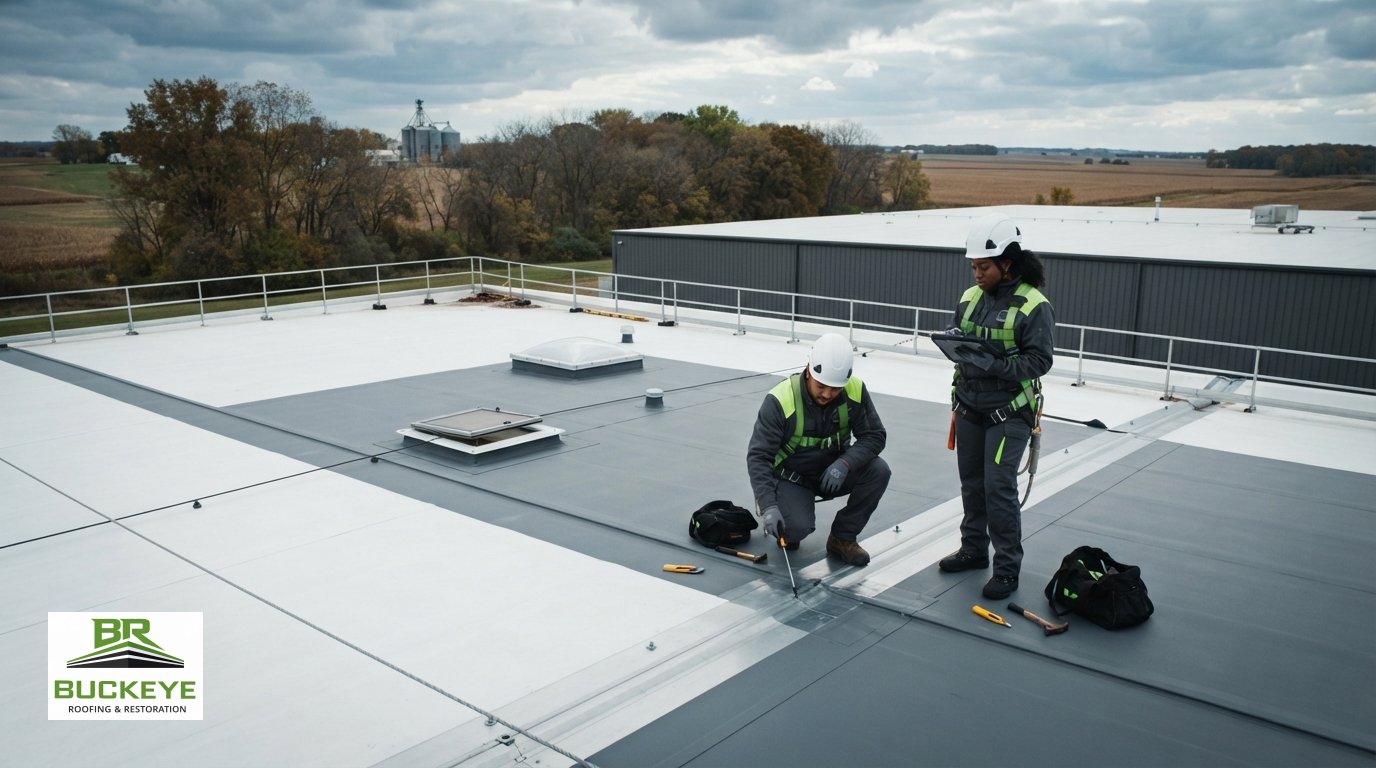
There isn’t one commercial flat-roof system that works best for every building in Ohio. TPO or EPDM may be suitable, but the right choice depends on the existing roof, drainage, building use, and inspection findings. When comparing a commercial roofing company in Bowling Green, Ohio, look beyond the material recommendation to how the contractor handles licensing, insurance, and the work itself.
It’s reasonable to want confidence in both the roof system and the people installing or repairing it. This article explains what to review when assessing a contractor’s licensing and insurance, commercial roofing experience, repair and replacement services, warranties, and help with insurance claims. It also outlines how building conditions and Ohio weather affect the choice between repair, restoration, coating, and replacement, so you can make a practical decision for your property.
Key Takeaways
- Compare repair, restoration, coating, and replacement based on the roof’s condition rather than assuming a full replacement is necessary.
- Review a contractor’s licensing and insurance details before work begins, and understand what each document covers.
- Look for experience with commercial low-slope roofs and workmanship practices suited to your building’s use and drainage needs.
- Read warranty terms carefully and clarify what documentation may help when discussing roof damage with your insurer.
- A professional inspection can help identify the roof system and next step that fit your property and Ohio weather.
Commercial roof repairs and replacements
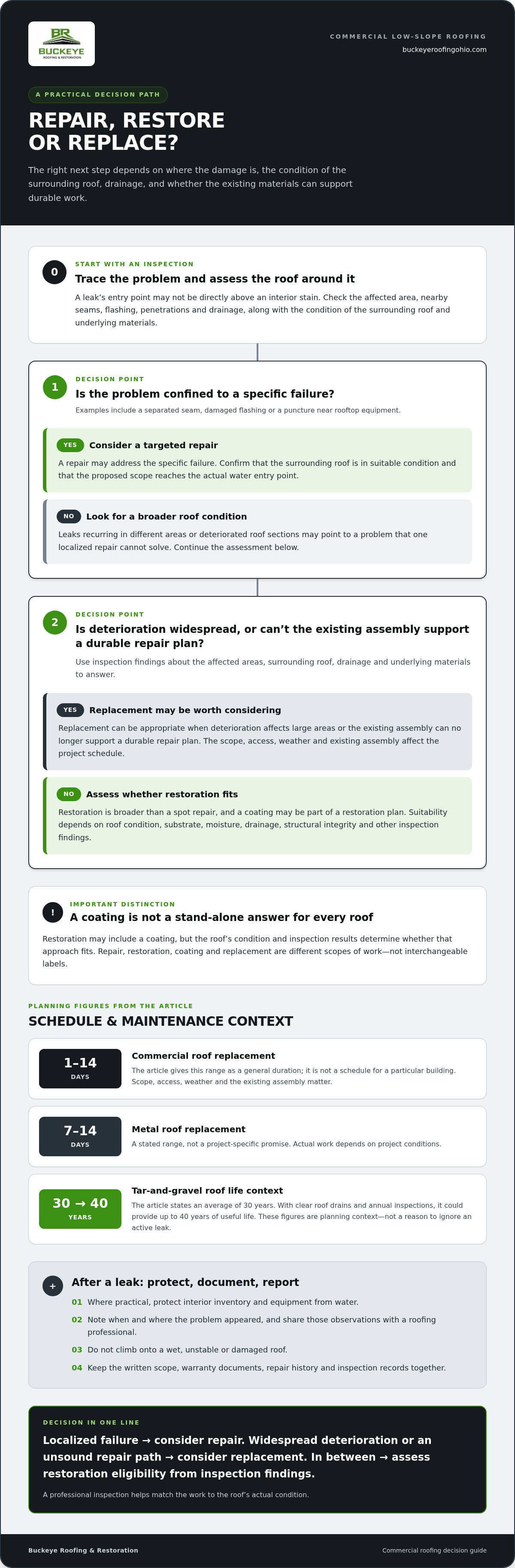
A commercial roof problem doesn’t automatically call for full replacement. The practical choice depends on where the damage is, the condition of the surrounding roof, drainage, and whether the underlying materials remain sound.
For a localized leak, commercial roof repair can address a specific failure, such as a separated seam, damaged flashing, or puncture near rooftop equipment. The key is finding the water’s entry point, which may not sit directly above an interior stain. Repeated leaks in different areas or deteriorated roof sections may signal a broader problem than one repair can solve.
Replacement is worth considering when deterioration affects large areas or the existing assembly can no longer support a durable repair plan. A roof replacement can take from 1 to 14 days. Metal roof replacement can take 7 to 14 days. These ranges don’t set a schedule for a particular building; the work scope, access, weather, and existing assembly all matter.
Flat-Roof Leak Detection and Restoration
Leak detection means tracing water pathways across a low-slope roof and examining seams, flashing, penetrations, and drainage. Interior stains, recurring drips, or wet materials can help pinpoint where an investigation should focus. Restoration is broader than a spot repair, and a coating may be one part of a restoration plan. Roof condition, substrate, moisture, drainage, and structural integrity all affect whether that approach fits.
Maintenance and Long-Term Planning
Use inspection records to track recurring issues, completed repairs, and drain conditions. Tar-and-gravel roofs last an average of 30 years. With clear roof drains and annual inspections, a tar-and-gravel roof could provide up to 40 years of useful life. Those figures make drain maintenance and documented condition useful planning considerations, not a reason to postpone attention to active leaks.
When reviewing a repair or replacement estimate, focus on how the proposed work addresses the observed condition. Keep the scope, warranty documents, and maintenance records together so future building managers can understand what was done and which terms apply. Ask how to report active leaks and what details will help assess them. Confirm the service arrangements before relying on emergency response or temporary protection.
After a leak, protect inventory and equipment from interior water where practical, and note when and where the problem appeared. Don’t climb onto a wet, unstable, or damaged roof. Share your observations with a roofing professional so the assessment can focus on affected areas and appropriate next steps.
Are roofing contractors in Bowling Green licensed and insured?
Before hiring a roofing contractor in Bowling Green, review the company’s insurance documents and clarify which licenses or registrations apply to the specific work. Match the business name on the proposal to the insurance documents and check the coverage dates. A directory listing alone doesn’t establish those details or demonstrate commercial roofing experience.
For commercial roof replacement in Bowling Green, review the Ohio Building Code and the City of Bowling Green’s permit and inspection requirements. The applicable provisions and approvals depend on the project scope and roof assembly. Document permit responsibility and required inspections in the project agreement. Don’t treat repairs, coatings, and full replacements as identical work, since each scope can raise different review questions.
Use a project-specific document check:
- Compare the contractor’s legal business name across the proposal and insurance documents.
- Review policy dates and confirm the documents cover the work being considered.
- Ask which license, registration, permit, or inspection applies to this project.
- Keep the estimate and written scope with the project records.
These steps help a facility manager connect the paperwork to the actual job instead of relying on verbal assurances.
The Better Business Bureau directory shows 3,188 roofing-contractor results near Bowling Green. That listing count is not a measure of commercial expertise. Narrow the options by the roof system and building type involved. A warehouse with a low-slope membrane needs experience relevant to seams, penetrations, and drainage. A commercial metal roof requires familiarity with its panels and connections.
Commercial roofing options in Bowling Green include TPO and EPDM membranes, as well as commercial metal roofing. These are distinct systems, not interchangeable labels. The existing assembly, building use, drainage, weather exposure, and inspection findings all inform which system is suitable. Ask the contractor to explain how the recommendation fits those property-specific conditions.
Confirm that the proposed work fits the building’s operations. A manufacturing facility, for example, may need a clearly defined work area and access plan, while a warehouse manager may need coordination around stored inventory. The written scope should identify affected roof areas, included work, and exclusions. This gives the property team a practical basis for comparing proposals and coordinating the site.
Bowling Green properties can be served by contractors based elsewhere in Ohio. The estimate should identify the job location and explain how site visits and project communication will work. Review the proposed scope and roof system together, and use commercial roofing information as a starting point for understanding the work under consideration.
Roofing contractor experience and workmanship
Commercial roofing experience should match both the roof system and the building’s day-to-day use. A low-slope membrane roof has different details from a commercial metal roof, including how seams, penetrations, and transitions are handled. For a warehouse, work planning also needs to account for operations below the roof. A contractor who understands these conditions can define a scope around the property rather than treating every roof alike.
Good workmanship starts before installation or repair. The contractor should document the roof’s existing condition, identify the areas covered by the scope, and explain how the work addresses them. For a recurring leak, for example, the proposal should describe the affected roof area and relevant details, not simply promise a general repair. That clarity helps building managers compare the written scope with the completed work.
During a project, coordination matters as much as material selection. A commercial roof may include rooftop equipment, access points, and areas that must remain operational. The work plan should identify where crews will work and how the facility can coordinate access. At a manufacturing site, clear communication about work areas helps staff plan around roofing activity and distinguish it from normal building operations.
Document completed work in a way that supports future maintenance. Useful closeout records can include the completed scope, photographs of repaired or replaced areas, and relevant product or warranty paperwork. These records give the next facility manager a baseline for later inspections. If a leak appears elsewhere, the maintenance team can distinguish it from the area addressed in earlier work.
Experience also means recognizing when a proposed scope needs further investigation. A stain inside an office or warehouse may not line up directly with the roof opening. A thorough assessment follows likely water paths and considers nearby penetrations, transitions, and drainage. After storm damage, record visible conditions from the ground for the inspection, but leave roof access and repairs to trained professionals.
For replacement work, the estimate should connect the recommended system to the existing roof, building use, drainage, and project scope. Comparing replacement costs alone can obscure differences in materials, included work, and closeout documentation. A clear proposal makes those differences visible instead of relying on vague labels such as “premium” or “complete.”
For a Bowling Green commercial property, useful workmanship records support ongoing maintenance and future planning. Keep the proposal, project notes, and closeout documents in one property file. A commercial roofing inspection can help document roof conditions and guide a scope suited to the building.
Warranties and insurance claim assistance
A commercial roof warranty is a written agreement, not a general promise about every future leak. Before approving a roof replacement, review what the warranty covers, who provides it, and which conditions could limit coverage. Compare the warranty with the project scope to ensure the roof system, materials, and completed work match the written terms.
Separate product coverage from workmanship coverage. Product terms address specified roofing materials; workmanship terms address installation work. The warranty should identify the covered roof area, responsible party, exclusions, and how to report a concern. Ask, for example, how the document treats roof penetrations or later work by other trades. Keep the signed warranty, final scope, and inspection records together.
“Certified” can refer to different credentials, so identify the issuer and what the credential covers. Certification for one roofing system doesn’t automatically establish warranty coverage for another. Match the proposed materials and installation requirements to the warranty paperwork, then record who handles a claim if a covered issue arises.
Insurance claim support is separate from warranty service. After storm damage, document visible conditions from a safe location, note when the damage appeared, and keep records of affected equipment or interior areas. A roofing professional can provide inspection findings, photographs, and a repair scope for the property file. The insurer determines coverage under the policy; a contractor’s inspection doesn’t guarantee a claim decision.
For commercial property managers, keep the claim file organized. Include the policy contact, inspection notes, dated photos, contractor estimates, and correspondence. If the insurer requests more documentation, compare the request with the roofer’s findings. A clear record helps distinguish storm-related damage from existing wear or maintenance concerns, without treating every roof issue as an insurance claim.
Financing and insurance address different questions. Financing concerns how the property owner plans to pay for approved work; insurance concerns whether a specific loss falls within the policy terms. Don’t assume a claim will pay for full roof replacement or that financing automatically applies to a project. Review the estimate, warranty, and policy separately before committing funds.
Homeowners and commercial building owners may face different policy language, property needs, and documentation. A warehouse with damage near rooftop equipment, for example, needs a scope that identifies affected roof areas and related interior conditions. Keep the roof inspection and claim paperwork tied to that specific building, rather than relying on generic forms or verbal summaries.
For a replacement proposal, ask the contractor to connect the inspection findings, written scope, materials, and warranty in one clear project record. A commercial roof replacement plan should explain the work being proposed, while the insurance decision remains with the insurer. Review those documents before scheduling work or making financial commitments.
Benefits of professional commercial roofing
Professional roof work starts with matching the system to the building, not choosing a premium material by name. In Bowling Green, weather includes snow, ice, rain, and freeze-thaw cycles. A commercial roof must drain water and suit the building’s use, existing assembly, and maintenance plan. An inspection connects those details to a practical recommendation.
Low-slope roofs aren’t all the same. TPO and EPDM are membrane systems, while metal roofing is a different assembly. An inspection can identify the existing material, examine seams and flashing, and assess drainage around rooftop equipment. Those findings help determine whether repairs, restoration, coating, or replacement fits the roof. A coating doesn’t replace an assessment of underlying moisture or damaged materials.
That distinction can guide spending. If damage is limited to a seam or penetration, targeted repair may address it without replacing the entire roof. If the roof has broader wear, restoration or a coating may be considered after assessing the substrate, moisture, drainage, and structural condition. Widespread deterioration may call for replacement. Let inspection findings, not a material’s reputation, guide the decision.
Professional installation also focuses on details that building staff may not readily see from the ground. A roofer checks how the roof meets walls, curbs, and penetrations, then documents the work and affected areas. For a warehouse, that record can help facility managers track recurring leaks and plan follow-up. Avoid untrained roof access and leave inspection and repairs to roofing professionals.
Long service life depends on the roof type and its upkeep. Some slate, clay, or certain metal roofs can last 50 to 100 years. That range does not apply to every metal roof or commercial system. For a low-slope building, regular inspections and clear drainage remain practical parts of planning, whatever material is installed. A roof’s expected service life should be weighed against its actual condition.
Commercial asphalt-based systems are a distinct category. They shouldn’t be treated as interchangeable with TPO, EPDM, coatings, or metal roofing. A professional review can document the current assembly and identify whether repairs, restoration, or replacement best fits the building’s needs. The estimate should explain the proposed work and materials so owners can compare scope rather than rely on labels such as “premium.”
For an Ohio facility, record visible interior leaks, maintenance history, and roof access concerns before scheduling an inspection. These details help the roofer focus on building-specific issues, including drainage and penetrations. Schedule a commercial roof inspection to discuss the roof’s condition and practical next steps.
Buckeye Roofing & Restoration: Commercial Flat Roofing
Buckeye Roofing & Restoration helps commercial property owners assess flat-roof problems and choose a practical next step. For buildings in Bowling Green, that may mean targeted repairs, restoration, or coatings, depending on the roof’s condition, moisture, drainage, and substrate.
A professional inspection can clarify whether a roof needs localized attention or a broader plan. Restoration and coatings aren’t suitable for every roof, and replacement may not be necessary when repairs address the actual issue. The right recommendation starts with the building’s existing system and how it’s performing.
If your commercial roof is leaking or showing wear, contact Buckeye Roofing & Restoration to discuss a free inspection and practical options for your property.
Make the Next Roof Decision Easier
Turn roof findings into a useful property record. Keep inspection notes, repair documentation, and warranty papers together, then use them to guide future maintenance and capital planning. This gives facility teams a clearer starting point when conditions change or a new estimate is needed.
Choosing a commercial roofing company in Bowling Green, Ohio, is one part of the process. Match the building’s documented needs with a clear scope of work so decisions stay grounded in the roof’s condition rather than assumptions.
For a practical discussion about your commercial roof, contact Buckeye Roofing & Restoration. A clear plan can help you move forward with confidence and keep your property’s needs in view.
Frequently Asked Questions
How do I know if roof repair or full replacement is the better option?
Repair may be appropriate when damage is limited and the surrounding roof remains serviceable. Replacement becomes more relevant when problems are widespread or the roof assembly has broader deterioration. An inspection finding isolated seam damage is different from one identifying issues across several roof areas. Ask for findings that distinguish the visible leak from the overall roof condition, then compare the recommended scope with your building’s maintenance records.
What are the signs of roof damage?
Interior water stains, recurring leaks, damp areas, or water near rooftop equipment can signal a roof problem. From the ground, look for displaced materials or visible damage after a storm. In a warehouse, note whether leaks recur in the same storage or work area. Don’t climb onto the roof to investigate. Share the location and timing of observed problems with a roofing professional so the inspection can focus on relevant areas.
What factors influence the cost of a roof replacement in Bowling Green?
Replacement cost depends on roof area, the existing assembly, selected materials, access, and work needed around penetrations and drainage. Hidden damage discovered during removal can also affect the scope. A replacement estimate should describe the included materials and labor, how existing materials will be handled, and any exclusions. Compare proposals by scope and building conditions, rather than relying on a general figure that may not fit your property.
Which commercial roofing companies serve Bowling Green, Ohio?
Buckeye Roofing & Restoration serves commercial properties across Ohio, including Bowling Green. The company also serves businesses in Northeast Indiana and Southern Michigan. A commercial roofing company serving Bowling Green should be able to discuss your building type, roof system, and project location clearly. For a warehouse, office, or manufacturing facility, focus the conversation on commercial low-slope roofing and the specific condition you want assessed.
What commercial roofing services do Bowling Green contractors offer?
Commercial roofing services can include inspections, leak repairs, maintenance, restoration, coatings, and roof replacement. Roofing systems also differ: TPO and EPDM are membrane options, while commercial metal roofing is a distinct system. A property manager dealing with a recurring leak may need an inspection and repair assessment, while broader deterioration may call for a different scope. The existing roof and its condition determine the appropriate service.
Which commercial roofing companies in Bowling Green have the best reviews?
There isn’t enough verified comparative information here to name a single best-reviewed commercial roofer. Review quality matters more than a broad rating when comments describe work similar to your project. Look for specific accounts of commercial roof inspections, communication, documented scopes, and follow-through. A review about residential work or a different roofing system may not tell you much about the contractor’s fit for a commercial low-slope building.
Are local commercial roofers licensed, insured, and bonded in Ohio?
Treat licensing, insurance, and bonding as separate items rather than assuming one proves the others. Ask for current insurance documentation under the business name shown on the proposal, and clarify which licensing or registration applies to your project. If a bond is part of the contract or project requirements, request its details in writing. Keep the documents with the signed scope so your property records show who is responsible for the work.
How much does commercial roof repair or replacement cost in Bowling Green, Ohio?
The price depends on the case and is given after a quote request. Repair scope, roof access, material selection, affected areas, and any additional work identified during inspection influence the estimate. A small, isolated repair differs from work involving multiple roof sections or replacement. Ask for an itemized scope that explains the work and materials, then compare estimates based on what each includes, not just the total.

Article by
Harry Stanley III
Harry Stanley III is a construction marketing strategist and fractional CMO at H&A Marketing. He has helped construction companies grow through website strategy, SEO, paid advertising, branding, lead generation, CRM systems, and professional content. His past work includes helping Meraki Solar generate an additional $3.7 million in revenue in his first year and supporting American Builders as a fractional CMO. Today, Harry works directly with custom home builders and construction companies to build marketing systems designed to generate qualified leads and measurable growth.