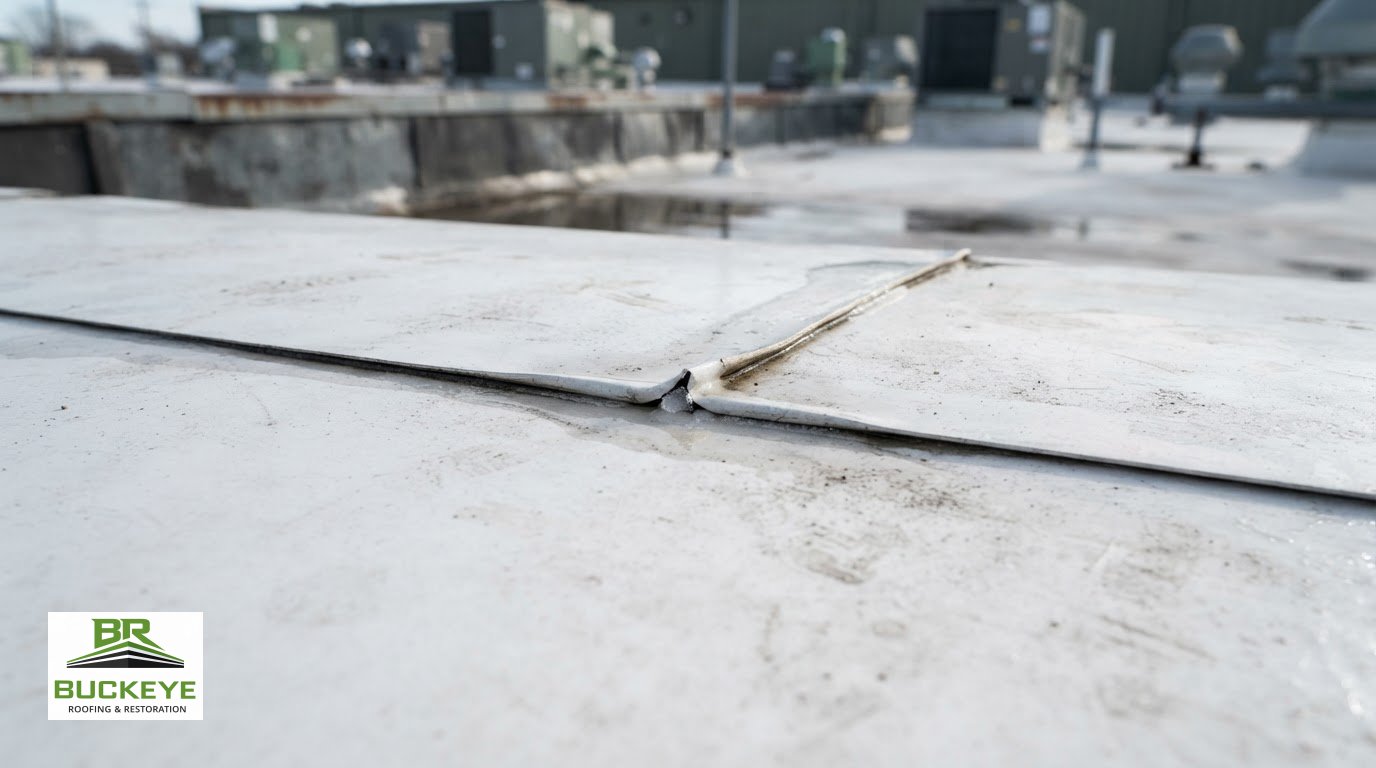
Small roof openings can become leak paths when temperatures rise above freezing and then drop below it. Freeze-thaw commercial roof damage often starts when water enters a crack or seam, freezes, and widens the opening. Repeated expansion and contraction can also strain membrane seams, flashing, and coatings.
For a facility manager, the challenge is that early damage may not be obvious indoors or from across the roof. A recurring ceiling stain, loose seam, or blocked drain can signal a problem worth addressing before winter weather adds further stress.
This article explains how freeze-thaw cycles affect commercial roofs, how small membrane cracks and worn seams can lead to leaks, and which warning signs to watch for. It also covers practical winter maintenance, including when to arrange an inspection and how a roofer evaluates whether repair, restoration, or replacement is appropriate.
Key Takeaways
- Repeated temperature changes can stress roof membranes, seams, flashing, and coatings, creating openings for water to enter.
- Water can travel beneath a roof membrane, so an interior stain may appear away from the original crack or seam.
- Blocked drainage and ice buildup can hold water on a low-slope roof, increasing the risk of leaks and membrane damage.
- Look for recurring ceiling stains, bubbling or cracked membrane areas, and loose seams, and arrange a professional inspection if you spot them.
- Winter maintenance starts with checking the roof before and after the season, addressing defects, and keeping drainage in working order.
1. How Does Expansion and Contraction Hurt My Roof?
Freeze-thaw commercial roof damage develops as roofing materials respond to temperature changes and moisture. Materials expand during warmer periods and contract as temperatures fall. This movement can strain seams, loosen flashing, and crack coatings. Water entering a weakened area can freeze and put further pressure on the defect.
A low-slope roof may show little change from the ground, but slight movement at a membrane lap or roof penetration can weaken the surface. For example, a seam that opens slightly may let in melting snow. If the moisture freezes, the seam undergoes another round of movement before the next thaw.
Problems can develop at several roof details. A professional inspection should assess membrane seams, flashing, penetrations, drains, and low spots, as well as cracked coatings, loose edges, and earlier repairs that may have separated. Recurring indoor stains or damp insulation can signal moisture intrusion.
Plan inspections before and after winter. An inspection in early to mid-fall leaves time to assess the roof and complete needed repairs before freezing weather makes the work more difficult. This visit establishes a condition record. A post-winter review can identify changes, such as a newly loose edge or a shifted repair.
Regular inspections and preventive maintenance give building managers a consistent way to assess vulnerable areas. Before winter, a roofing professional can examine drainage, flashing, and penetrations and identify repairs to address. After winter, reviewing those same areas can reveal new wear. Comparing inspection records shows whether a defect has changed or remained stable.
Maintenance should focus on function, not appearance alone. Clear drainage paths help melting snow leave the roof instead of collecting in low spots. Include roof drains and areas around HVAC equipment in the inspection. Building staff should not walk onto an unsafe roof to conduct these checks.
Moisture inside the roof assembly can affect its ability to regulate building temperature. A professional can look for signs of wet insulation and assess the assembly. If a ceiling stain appears after a winter storm, document its location and arrange an inspection promptly. The leak source may be elsewhere on the roof.
Use each seasonal inspection to record visible concerns, photos, and completed maintenance. A fall record provides a useful comparison for the post-winter review. If the same seam, penetration, or low spot keeps causing problems, that pattern can guide the next maintenance decision.
2. What Is the Freeze-Thaw Cycle?
A freeze-thaw cycle occurs when temperatures move above and below freezing within a short period. On a commercial roof, water may enter a small opening during a thaw, then freeze as temperatures drop. The freezing water expands inside the opening and can widen it. Later thaws may allow more moisture into the roof assembly.
Water often enters at details where roofing materials meet or change direction. A membrane seam may separate slightly, or flashing around an HVAC unit may loosen. Fasteners, roof edges, parapets, and earlier repair patches can also create vulnerable joints. A small gap can admit water even when most of the roof surface looks intact.
Once beneath the membrane, water can move through insulation and other roof layers. It may travel sideways before reaching the roof deck or appearing indoors. For example, a crack near a rooftop unit could contribute to a ceiling stain elsewhere in a warehouse. Wet insulation can retain moisture and become less effective at regulating building temperature.
Repeated thaw cycles can reopen the same entry point. Water may collect at a seam, freeze, and put pressure on the surrounding membrane. Flashing and sealants around vents, skylights, and other penetrations can also loosen. These changes may cause a recurring leak after winter storms, even if the opening is not visible indoors.
Applicable drainage and insulation requirements depend on the codes adopted by the jurisdiction and the building’s design. For a specific property, review local requirements alongside the roof assembly and drainage design. Requirements vary by building and location.
Common warning signs include recurring ceiling stains, damp insulation, bubbling or blistering membrane, separated seams, and loose flashing. Indoor discoloration or a mildew smell can also indicate moisture intrusion. These signs point to possible roof problems, but a visible stain may not mark the entry point. A professional assessment can trace the leak path rather than relying on the interior mark alone.
Record where stains appear and whether they return after thawing or winter storms. Note nearby equipment, roof penetrations, and previous repairs for the inspection. Avoid climbing onto a roof to examine suspected openings, especially when surfaces may be icy or unsafe. If leaks recur, arrange a commercial roof leak assessment to locate the entry point and evaluate the affected assembly.
3. Can a Small Crack in a Roof Membrane Cause a Major Water Leak?
Yes. A small membrane crack can let in water, and repeated freezing can widen the opening. Once inside, moisture may move through insulation before reaching the ceiling. The stain can appear far from the original crack, so its location alone may not reveal where water entered.
Drainage can make a small defect more consequential. Commercial low-slope roofs are designed to drain, but blocked drains, scuppers, or gutters can leave water standing. As temperatures drop, pooled water can freeze and stress seams, penetrations, and low areas. When it melts, water may collect again or back up beneath roofing materials.
Ice dams can form when melting snow reaches a blocked roof edge or drainage path and refreezes. Water trapped behind the ice can back up under roofing materials or enter through a nearby crack. On a low-slope roof, ice around a drain or downspout may block the route meltwater needs to leave the building.
Include drainage maintenance in the seasonal roof plan. A qualified professional can check whether drains and scuppers are clear, whether water is pooling, and whether ice has damaged the membrane. Roof cleaning should remove debris that blocks drainage, but building staff should not climb onto an icy or unsafe roof. Metal tools can puncture the membrane.
Early repair addresses a defect before another freeze-thaw cycle can stress it. A professional can inspect the crack, nearby seams, flashing, and drainage before deciding on a suitable repair. The right scope depends on the damage and surrounding roof condition. A recurring leak may require a broader assessment than a visible surface crack.
After discovering a leak, move people and equipment away from the affected area, protect contents from interior drips if it is safe, and document the stain and timing. Don’t walk on the roof or attempt a winter patch. Arrange a professional assessment, especially if water is near electrical equipment or the ceiling is sagging.
Give the roofer useful details: where water appears, when it began, whether it returns after thawing, and which drains or roof areas have had past problems. These observations can help guide the inspection, but they do not establish the source. Water may travel beneath the membrane before appearing indoors.
A proactive drainage check can catch blocked outlets and visible ice buildup before more meltwater backs up. If pooling returns after drains are cleared, the roof’s drainage performance and low areas need closer evaluation. Repeated standing water can accelerate material breakdown and expose cracks to more moisture.
4. Commercial flat-roof membrane and seam deterioration
Repeated freeze-thaw stress can affect how a commercial flat-roof membrane handles movement. As temperatures shift, materials expand and contract. Water in a crack or open seam can freeze, widen the defect, and leave a larger path for the next thaw. Over time, membranes may become brittle, seams may separate, and adhesives may lose their hold.
No single commercial roofing material is automatically most vulnerable in every building. Freeze-thaw effects depend on the membrane’s condition, seams and details, drainage, and the roof assembly. Any low-slope system can develop problems where water enters damaged areas or remains around penetrations.
Membrane elongation describes how far a membrane can stretch or move. Greater elongation can help a membrane accommodate movement and may limit stress from temperature changes. But elongation alone does not determine suitability. The existing roof, building conditions, drainage, and installation details all matter when evaluating a roofing system.
Inspectors look for warning signs such as cracks, blisters, loose or separated seams, and recurring leaks in the same location. They also assess flashing at penetrations, parapets, and previously repaired areas. A roof may appear intact from the ground while damage develops at a seam or beneath the membrane.
Ice dams can add another source of stress. When blocked drainage traps melting snow, backed-up water can reach weak seams or membrane imperfections. If the water freezes there, expansion may worsen the opening. A leak may then appear indoors during a later thaw, even if the visible roof surface shows only a small defect.
Insurance coverage for freeze-thaw damage depends on the building’s policy, the cause of the damage, and the policy’s exclusions. A roof warranty is separate; some commercial roof warranties exclude damage related to inadequate maintenance or natural wear and tear. Keep inspection records and repair documentation with the property’s maintenance files.
Repair, restoration, and replacement are different scopes of work. A localized defect may call for a targeted repair, while broader deterioration requires an assessment of the roof assembly and its moisture condition. Whether coating or restoration is suitable also depends on the substrate, drainage, and overall roof condition. An inspection helps determine which scope fits the damage.
Take recurring leaks, brittle membrane areas, and separated seams seriously, especially after winter weather. Don’t probe cracks or walk on a potentially unsafe roof. Record interior stains and arrange a professional assessment; visible damage may not show how far moisture has moved beneath the membrane.
5. Commercial roof winter maintenance planning
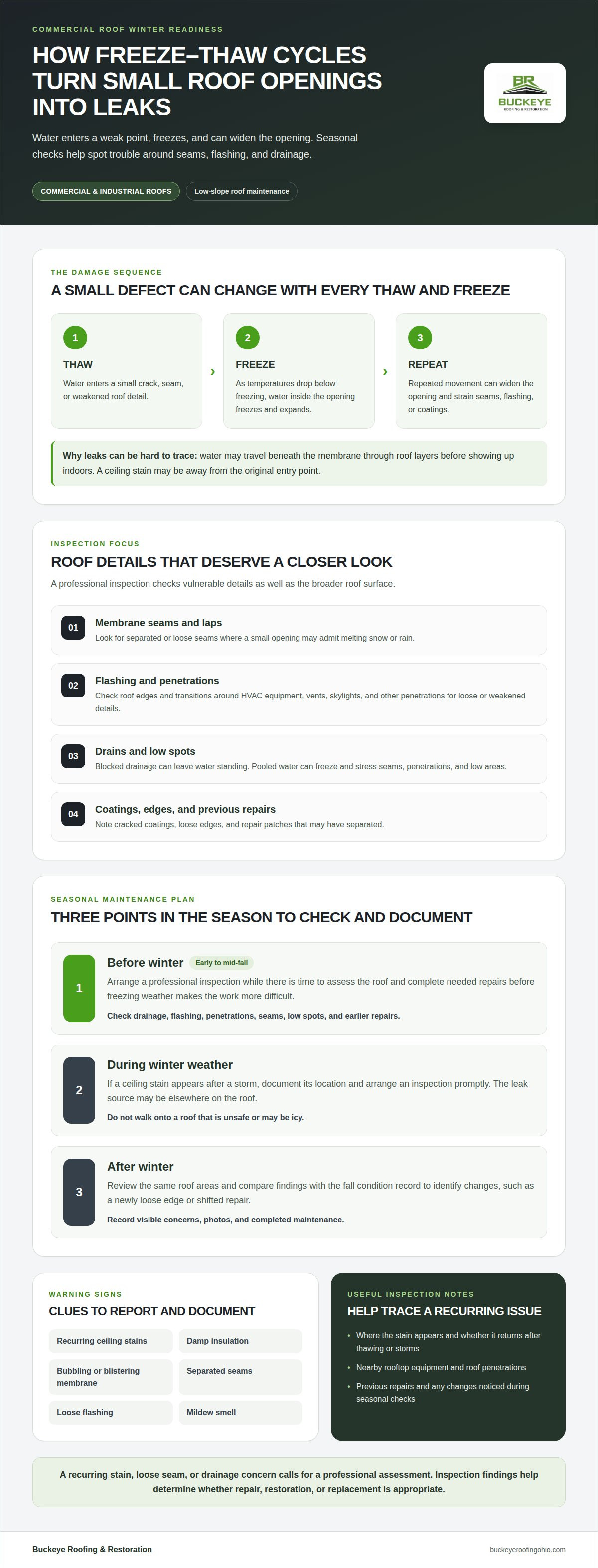
A practical winter plan starts before temperatures regularly fall below freezing. Schedule a commercial roof inspection in early to mid-fall, leaving time to address defects before snow and ice complicate access. The inspection should assess seams, flashing, penetrations, drains, low spots, and areas with previous leaks. A written record helps facility managers track what needs attention.
Use inspection findings to set priorities, not to assume every roof needs major work. A small opening at a seam may need targeted roof repair. Broader wear may call for further evaluation, especially if moisture has reached the insulation. The roofing system, substrate, drainage, and overall condition all affect which work is appropriate.
Give drainage specific attention before winter weather arrives. Have a qualified roofer check roof drains and scuppers for blockages, and review where water collects after rain. Clear drainage paths help melting snow leave the roof instead of pooling and refreezing. If the same low area repeatedly holds water, document it for closer assessment.
Build monitoring into the season. Assign a facilities contact to note interior stains, new drips, visible ice buildup, and recurring ponding. Record each observation with its date and location, such as a ceiling stain near a warehouse loading area. Report active leaks promptly, and keep staff off icy or otherwise unsafe roof surfaces.
A snow plan should identify who assesses roof conditions and how removal is handled. Heavy drifts can add weight, while careless shoveling can damage a membrane. Snow and ice removal should be done carefully, preferably by professionals. Avoid aggressive shoveling with metal tools, which can puncture roofing. If ceilings sag or new interior cracks appear, keep people away from the affected area and seek a professional assessment.
After winter, arrange another inspection and compare conditions with the fall record. Look for new seam separation, membrane cracks, damaged flashing, and signs of moisture indoors. This review helps distinguish older wear from changes that developed during winter. Repairing a small defect early may prevent more water from reaching the roof assembly.
Keep the plan useful by recording inspection findings, completed repairs, drainage observations, and recurring problem areas. For example, a drain that repeatedly blocks should stay on the maintenance list rather than dropping off after one clearing. Proper insulation and ventilation also help regulate roof temperature and reduce uneven snowmelt that can contribute to ice dams.
If your building needs a pre-winter assessment or a follow-up after snow and ice, schedule a commercial roof inspection to review its condition and maintenance needs.
Buckeye Roofing & Restoration
Buckeye Roofing & Restoration helps commercial property owners assess roof damage after freeze-thaw weather and choose a practical next step. A free commercial roof inspection can identify cracked membranes, separated seams, moisture concerns, and drainage issues that may contribute to leaks.
Depending on the roof’s condition, the appropriate solution may be a targeted repair, restoration, or coating. Restoration and coating suitability depends on the substrate, moisture levels, drainage, and overall condition, so the process starts with an inspection.
If you’re seeing recurring stains, active leaks, or visible roof wear, contact Buckeye Roofing & Restoration to discuss an inspection.
Choose the next step based on the roof’s condition
Addressing freeze-thaw commercial roof damage starts with understanding what the roof needs now, not assuming every leak calls for replacement. A professional assessment can distinguish a localized defect from broader wear and identify whether water has affected the roof assembly. This gives property managers a more useful basis for planning work around building operations and maintenance priorities.
Buckeye Roofing & Restoration assesses commercial flat roofs and determines whether repair or restoration fits the roof’s condition. Recommendations follow the inspection, including its findings on moisture, drainage, and existing materials. A practical plan can address current concerns and help you prepare for the next winter season.
If you’re ready to discuss a commercial roof concern, contact Buckeye Roofing & Restoration. A clear assessment is a sensible place to start.
Frequently Asked Questions
What Is the Freeze-Thaw Cycle?
For building operations, track how roof concerns relate to changing weather. Note when interior symptoms appear, whether they follow a thaw or storm, and whether they recur in the same area. This record can help a roofer compare observations with roof conditions and prioritize investigation. It also gives property managers a clearer maintenance history than an isolated report of “a leak.”
Can a Small Crack in a Roof Membrane Cause a Major Water Leak?
Yes, but the size of a visible defect does not show the full extent of the affected roof area. When reporting a suspected leak, describe where it appears indoors, when it appears, and whether it returns. Include nearby equipment or occupied spaces that need attention. Keep people away from wet areas if there are electrical concerns, and leave roof access and leak tracing to qualified professionals.
How Does Expansion and Contraction Hurt My Roof?
For maintenance records, document the roof detail involved rather than writing only “weather damage.” Note whether the concern is at a seam, flashing edge, penetration, or previous repair. Consistent descriptions let a facility manager compare inspection notes over time and identify recurring problem areas. Photos taken from a safe location can help show changes, but they do not replace a professional roof assessment.
Repair, Restore, or Replace?
Use inspection findings to frame the decision. A repair addresses a limited defect; restoration renews an existing roof when its condition supports that work; replacement installs a new roofing system. Ask the assessment to distinguish localized damage from broader deterioration and report moisture, substrate, drainage, and structural findings. Those details provide a sound basis for choosing the work, rather than relying on roof age alone.
What Happens If Water Gets Under the Surface?
Water beneath a roof surface can be difficult to locate from indoors alone. A roofer may need to examine the assembly and compare moisture indications with visible roof conditions to map the affected area. This matters because removing or covering only the obvious symptom may leave wet materials in place. Share any history of prior leaks or repairs so the assessment can account for those areas.
How do ice dams, ponding water, and frozen drains affect commercial roofs?
These conditions can disrupt normal roof drainage and leave property teams uncertain about where water is collecting. Log recurring ponding or visible ice from safe, ground-level locations, and report changes to the building’s facilities lead. Don’t send staff onto an icy roof to clear outlets. A professional can assess drainage performance and determine whether the roof or its outlets need attention.
How much does commercial roof freeze-thaw damage inspection and repair cost in the United States?
There is no single price for every commercial roof. Inspection findings, the roof system, access, affected area, and repair scope all influence the quote. For example, a localized seam issue differs from damage involving wet insulation or several roof details. A roofer needs to assess the building before outlining the work and its price; avoid relying on a general estimate without those findings.
How can property managers prevent freeze-thaw damage to commercial roofs?
Assign clear ownership of roof maintenance within the facilities team. Keep inspection reports, repair records, leak reports, and drainage observations together in the building’s maintenance file. Share recurring concerns with whoever manages roof access and snow response so staff do not improvise unsafe work. For buildings with multiple roof areas, use consistent location labels in records to help maintenance teams communicate clearly across shifts.

Article by
Harry Stanley III
Harry Stanley III is a construction marketing strategist and fractional CMO at H&A Marketing. He has helped construction companies grow through website strategy, SEO, paid advertising, branding, lead generation, CRM systems, and professional content. His past work includes helping Meraki Solar generate an additional $3.7 million in revenue in his first year and supporting American Builders as a fractional CMO. Today, Harry works directly with custom home builders and construction companies to build marketing systems designed to generate qualified leads and measurable growth.