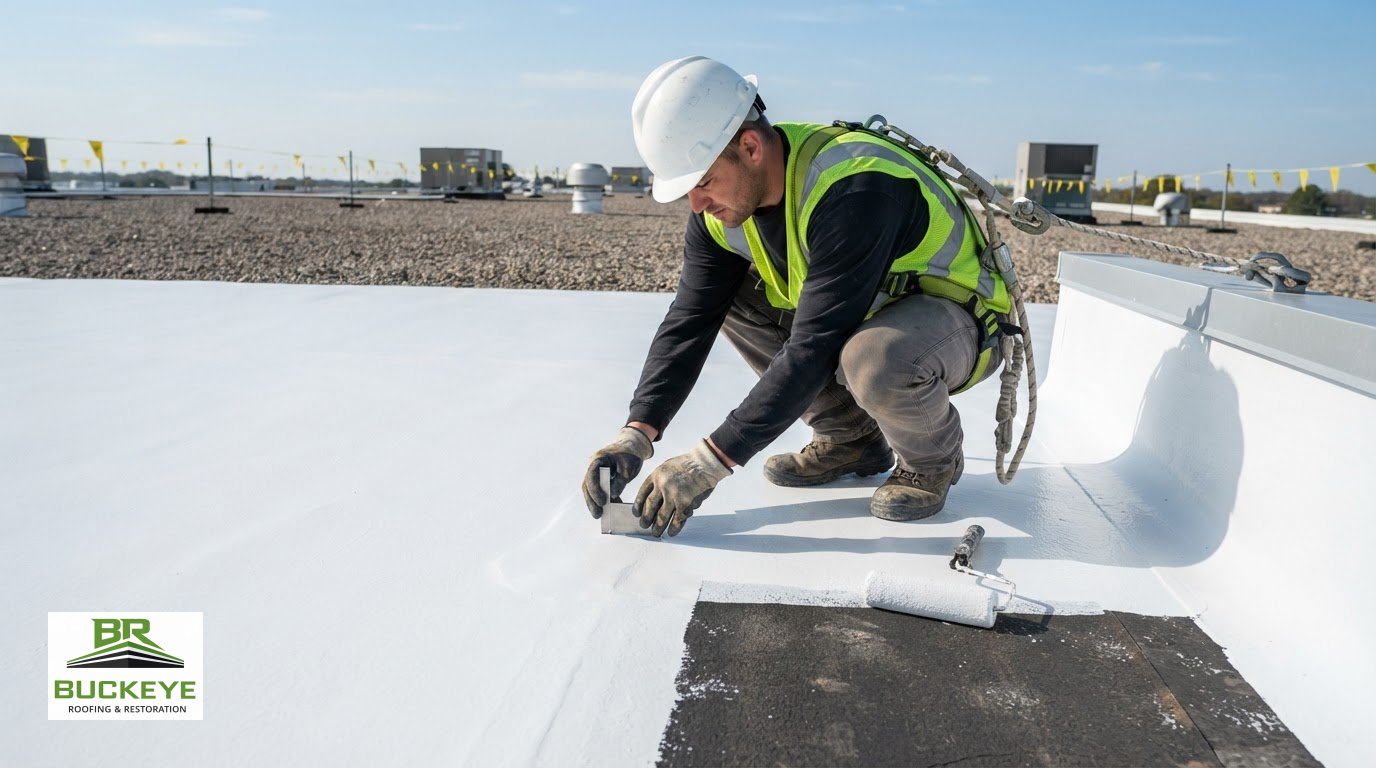
A silicone coating can add 15 to 20 years of service life to a suitable commercial roof, but the roof’s condition matters as much as the coating itself. Commercial silicone roof restoration isn’t a fit for every building, especially when moisture or structural damage affects the existing assembly.
If you manage a warehouse, manufacturing facility, or other commercial property, you’ll want a clear estimate of how long the roof may last before deciding what to do. Commercial silicone roof restoration can extend a suitable roof’s service life, but results depend on its condition, inspection findings, coating application, drainage, and weather exposure.
This article explains which roof types may be candidates for restoration, what an inspection evaluates, and why dry film thickness matters. It also covers silicone’s resistance to ponding water, sun exposure, and temperature changes, so you can assess when restoration may fit and when another solution is more appropriate.
Key Takeaways
- A suitable, properly restored commercial roof may gain 15 to 20 years of service life, but its condition and preparation matter.
- Coating thickness is tied to system requirements and warranty terms, so the application plan should match the roof and intended protection.
- Inspection and moisture assessment help identify wet insulation or structural problems that a coating cannot fix.
- Silicone’s resistance to ponding water and sun exposure can suit some low-slope roofs, but drainage and roof condition still matter.
- Existing roof materials and their condition determine whether restoration is practical or whether repair or replacement is the better path.
Why Choose a Silicone Roof Restoration System?
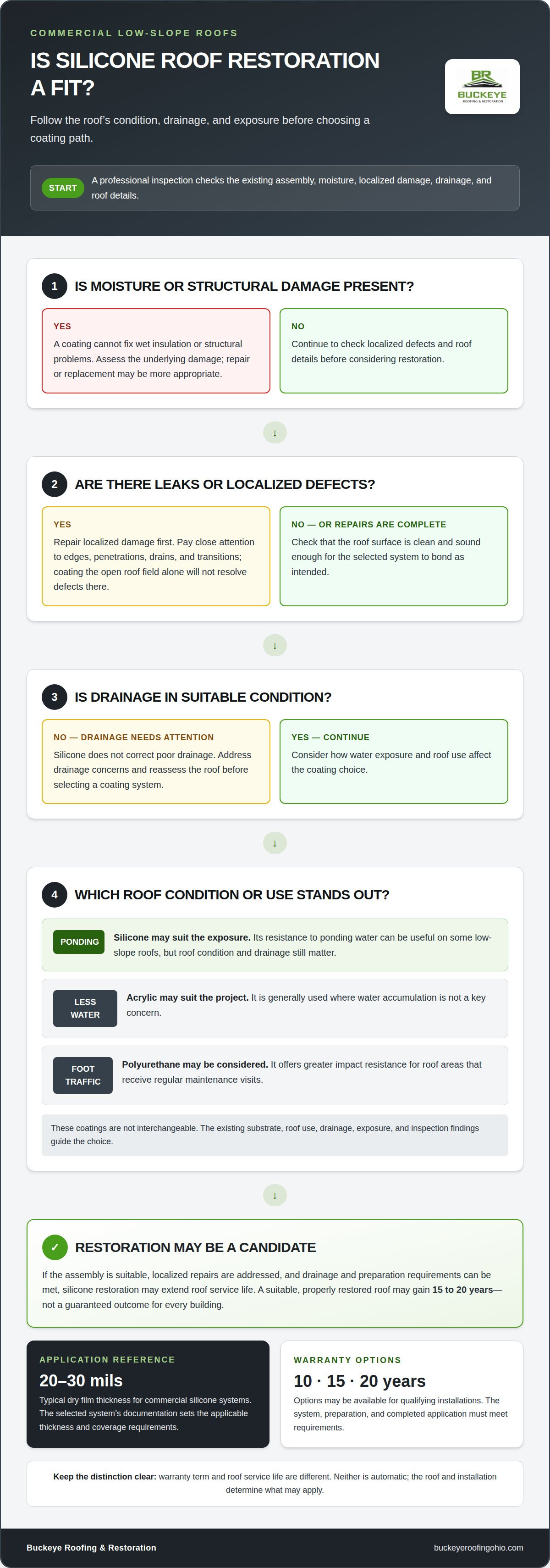
Silicone restoration repairs localized damage, then coats a suitable existing roof instead of removing the entire system. It can suit low-slope roofs exposed to ponding water, but wet insulation or structural damage may make coating unsuitable.
Compared with acrylic, silicone is better suited to roofs where water accumulation is a concern. Acrylic is generally used where it isn’t. Polyurethane offers greater impact resistance for roofs with heavy foot traffic, while replacement removes the existing roof system rather than restoring it.
Seamless Waterproof Membrane Formation
After application and curing, silicone coating forms a continuous membrane across the roof surface. Unlike separate sheets, it has no seams across the open roof field, reducing the number of seams that could become water-entry points.
Continuity still depends on careful detailing. Edges, penetrations, drains, and transitions need attention because coating the open field alone won’t resolve defects at those locations. A professional evaluates these details and repairs localized damage before coating, rather than treating the membrane as a substitute for repairs.
A suitable system may extend roof service life by 15 to 20 years. That outcome depends on the existing assembly and installation, so the coating’s seamless finish should be considered alongside the roof’s condition, drainage, and preparation.
Silicone, Acrylic, and Polyurethane Coatings
Silicone can be a practical option for roofs prone to ponding water. It cures into a flexible, continuous membrane, but it won’t correct poor drainage or damaged insulation beneath it. The roof needs an evaluation before selecting a coating.
Acrylic coatings generally suit projects where water accumulation isn’t a key concern. Polyurethane is often selected where foot traffic and impact resistance matter, such as roof areas that receive regular maintenance visits. These coatings aren’t interchangeable. The existing substrate, roof use, drainage, and exposure guide the choice.
Restoration can be less disruptive than full replacement when the existing roof is suitable for coating. Replacement is more relevant when the roof assembly has damage a coating cannot address. Any warranty depends on the coating system and installation requirements, not simply the product name.
Roof Preparation and Coating Application
Preparation begins with inspecting the roof, identifying leaks, and checking the substrate and drainage. The roofing team repairs localized defects and addresses details around penetrations and drains before applying the coating. A clean, sound surface helps the coating bond as intended.
The system may use a single- or two-coat application. Commercial silicone systems are typically applied to a dry film thickness of 20 to 30 mils, with the required thickness and coverage tied to the system and warranty terms.
Permit and fire-rating requirements depend on the building, project, and coating assembly. The project team should identify applicable requirements with the local building authority and review the system’s fire-classification documentation before application. Project duration also depends on roof area, repairs, preparation, weather, and application conditions.
Dry film thickness and manufacturer warranty requirements
Coating thickness affects the protection a silicone system provides and the warranty available for a qualifying installation. The manufacturer’s requirements should guide the application plan, rather than a generic coverage target.
Dry Film Thickness Requirements
Commercial silicone systems are typically applied to a dry film thickness of 20 to 30 mils. Dry film thickness measures the coating after it cures, rather than the wet material during application. Reaching the required thickness across the roof helps align the installation with the selected system’s specifications.
Coverage volume provides another planning measure. For example, a 10-year warranty system may use 1.5 gallons per square, while a 20-year NDL system may use 2.5 to 3.0 gallons per square. These are system examples, not interchangeable application instructions.
The manufacturer’s documentation sets the relevant requirements. Surface texture, substrate, repairs, and application method affect material distribution. A project plan should account for those conditions and document the required coverage and finished thickness.
Warranty Options and Service Life
Qualifying silicone restoration installations may have manufacturer warranty options of 10, 15, and 20 years. The selected term depends on the system’s requirements and the completed installation. A longer warranty option is not simply a thicker coat; the specified materials, preparation, and application must work together.
A silicone restoration can extend a suitable roof’s service life by up to 20 years. Warranty length and roof service life describe different things: the warranty addresses covered terms, while service life concerns how long the roof remains functional. Neither should be treated as an automatic promise for every roof.
Before choosing a system, review the required coating volume, dry film thickness, and application conditions. A clear scope can also help property managers plan maintenance with less disruption than a full replacement may involve.
Warranty Renewal and Recoating
At the end of a warranty period, a roof may be recoated to add another 10 to 20 years of warranted protection. Recoating isn’t automatic. The existing coating and roof assembly need assessment to determine whether another application can meet the system requirements.
An assessment should identify wear, damage, adhesion concerns, and repairs needed before applying new material. Any new warranty depends on meeting the installation requirements that apply to the system, rather than simply extending the original paperwork.
For a roof being considered for restoration or recoating, a commercial roof restoration assessment can help connect the roof’s condition with the appropriate system and warranty scope.
Inspections, core sampling, and moisture assessment
Before coating, an inspection must establish whether the existing roofing assembly can support restoration. Moisture testing and targeted core samples can distinguish surface wear from problems beneath the membrane.
Roof Inspection and Moisture Assessment
A professional inspection examines the roof surface, seams, penetrations, drains, and areas where leaks have been reported. The evaluator also considers drainage, visible damage, and whether the assembly remains structurally sound. These findings help determine whether restoration suits the roof or underlying problems require another solution.
Core sampling provides a closer look at roofing layers and insulation beneath the surface. A sample can reveal wet insulation or damage that a visual review may not detect. Testing should confirm the insulation is dry before coating proceeds, since silicone doesn’t remove trapped moisture or repair a compromised structure.
Trapped insulation moisture below 25% is the stated qualification threshold for coating. If testing or a core sample finds wet insulation or structural compromise, applying silicone is not the right next step. The affected areas need evaluation and appropriate correction before restoration is considered.
Adhesion testing addresses a separate question: whether the proposed coating will bond to the existing roof surface. A 1 sq. ft. test patch can check primer and silicone adhesion. Its result helps identify bonding concerns before the coating is applied across the roof, rather than discovering a compatibility issue after installation.
For building managers, interior leak locations and recurring trouble spots provide useful inspection context. Share those observations with the roofing professional, who can compare them with exterior conditions and test results. Don’t climb onto an unsafe roof to gather information. A qualified inspection can assess access and roof hazards.
Maintenance and Manufacturer Inspections
Maintenance helps track changes between restoration decisions. A professional can document new leaks, coating wear, drain conditions, and repairs, then compare findings during later inspections. These records give facility teams a clearer history of the roof’s condition and help identify recurring issues that may affect its service life.
After restoration, inspections should focus on the coating and roof details that manage water. Drains, penetrations, edges, and repaired areas deserve attention because damage or debris can affect drainage and expose weak points. A prompt review after a reported leak can help determine whether the issue is localized or signals a broader concern.
A manufacturer inspection may be part of a particular coating system or warranty process. It can assess the installation against applicable system requirements, including documented preparation and application. Keep inspection findings and maintenance records with the roof’s warranty documents so future evaluations can account for the completed work.
For commercial roofing decisions, follow a practical sequence: inspect the existing assembly, test for moisture, assess adhesion, and document follow-up maintenance. The findings help determine whether a coating is suitable or another repair approach is needed.
Silicone resistance to ponding water, UV exposure, and temperature changes
Silicone can suit an existing roof exposed to ponding water and direct sun. Its weather resistance still depends on the roof’s condition, drainage, and inspection findings.
Ponding-Water Tolerance
Silicone coatings can suit roofs prone to ponding water, where water remains after rainfall instead of draining away. The coating forms a continuous surface, but it doesn’t correct low spots, blocked drains, or other drainage problems. Those conditions still need attention during the roof assessment.
A roofing professional should examine where water collects and whether the existing roof is deteriorating in those areas. Ponding near drains, seams, or penetrations calls for closer review because coating performance depends on sound details beneath and around it. An inspection can distinguish standing water from moisture trapped within the roofing assembly.
Silicone’s tolerance of ponding water can make it a practical option, but it isn’t a reason to ignore persistent drainage issues. An inspection should consider where water collects, the roof’s condition, and whether repairs are needed before coating. If the assembly has wet insulation or structural damage, coating alone won’t solve the underlying problem.
For a facility manager, safely observed signs include recurring interior leaks after rainfall or water visible from an accessible vantage point. Don’t climb onto a commercial roof to investigate. Share the location and timing of leaks with a roofing professional, who can assess the roof and recommend suitable next steps.
UV Exposure and Temperature Changes
Sun exposure gradually challenges a roof’s surface. Highly reflective silicone topcoats reflect up to 85-88% of the sun’s UV rays. That reflectivity can help limit heat buildup at the roof surface, with rooftop temperatures reduced by up to 50°F.
These figures describe potential performance, not a guaranteed result for every building. Roof color, installation, exposure, and the condition of the existing assembly influence coating performance. The system also needs the specified application thickness to provide its intended surface protection.
Temperature changes repeatedly stress commercial roofing materials as surfaces warm and cool. During an inspection, a roofing professional should look for deterioration, open seams, and vulnerable transitions that could affect the coating system. In Northwest Ohio, seasonal weather makes drainage and roof condition important parts of the evaluation.
Reflective coatings address sun exposure, while silicone’s water resistance addresses ponding concerns. Neither removes the need to inspect drains, edges, penetrations, and repaired areas. A roofing professional should consider these details together before recommending a system for a particular building.
Commercial roof types suitable for silicone restoration
Commercial silicone roof restoration may suit several roof materials, but material alone doesn’t establish whether a roof qualifies. Inspection findings, drainage, roof use, and the condition of the existing assembly all matter.
There isn’t one per-square-foot price that applies to every U.S. commercial roof. Project pricing depends on condition, repairs, preparation, coating quantity, and system requirements. A project-specific quote accounts for those factors instead of assuming roofs of similar size need identical work.
Two roofs with the same surface material can require different scopes of work. A sound roof needing limited repairs differs from one with wet insulation or widespread deterioration. Those conditions influence whether restoration is appropriate and what preparation may be needed.
Low-slope membrane roofs: TPO and EPDM roofs may qualify when the membrane and underlying assembly can support restoration. The roofer assesses seams, penetrations, drainage, insulation, and surface condition. Material compatibility and preparation help determine whether a coating suits the roof.
Built-up or modified bitumen roofs: These layered systems need assessment of the surface, previous repairs, and moisture beneath the membrane. A coating may be considered when the assembly is sound and the selected system suits the substrate. Wet insulation or structural damage needs to be addressed before coating.
Metal roofs: Restoration may be considered when panels remain strong and structurally intact. Some rust or corrosion may be manageable, but weakened panels and unresolved defects need attention first. Inspection should include panel condition, fasteners, seams, and transitions where water could enter.
Polyurethane may suit roofs with heavy foot traffic because of its impact resistance. Acrylic is generally better suited to projects where water accumulation isn’t a key concern. Silicone can suit roofs prone to ponding water. Building use, drainage, exposure, existing material, and inspection findings guide the coating recommendation.
Replacement becomes a more relevant option when damage or moisture affects the assembly beyond localized repairs. Restoration preserves the existing roof system, while replacement installs a new one. For a suitable assembly, commercial silicone roof restoration may be an option after evaluating the roof’s condition and required work.
A warehouse with ponding areas needs an assessment of drainage, membrane, and insulation together. A metal roof with corrosion needs an assessment of panel strength and fasteners. These details help determine whether restoration fits, rather than relying on roof material alone.
To find out whether your building’s roof may qualify, arrange a commercial roof inspection. The findings can clarify whether repair, restoration, or replacement best suits its condition.
Buckeye Roofing & Restoration
Buckeye Roofing & Restoration helps commercial property owners assess whether their existing roof is a candidate for restoration, coating, repair, or replacement. A professional inspection considers the roof’s material, moisture, drainage, and structural condition before recommending an approach. If silicone restoration is suitable, the assessment can clarify the preparation and coating work the roof needs.
For a roof with localized damage, repair may be more appropriate than restoration. When the assembly cannot support a coating system, replacement may be the more practical option. The goal is to match the work to the roof, not assume one solution fits every building.
Contact Buckeye Roofing & Restoration to discuss your commercial roof and arrange an inspection.
Plan the Next Roof Decision with Confidence
Commercial silicone roof restoration belongs in a broader capital plan, not as a default choice. Matching the roof’s documented condition with facility priorities helps keep decisions grounded in the building’s needs.
Keep maintenance records, leak reports, and roof plans accessible to the people responsible for the property. These details support clearer commercial roofing decisions as priorities change.
A sound plan leaves room to reassess the roof as new information emerges, helping your team make informed decisions.
Frequently Asked Questions
How Long Does a Commercial Silicone Roof Last?
A suitable restoration can extend the existing roof’s service life, but the coating doesn’t reset the age or condition of the roof assembly. For planning, distinguish the coating system’s warranty term from the roof’s expected service life. Keep inspection reports, repair records, and warranty documents together so future evaluations can account for completed work and the roof’s condition over time.
What Is Silicone Roofing?
Silicone roofing usually refers to a liquid-applied coating system used over an existing commercial roof. It isn’t the same as installing a new TPO or EPDM membrane. The useful distinction for building owners is scope: restoration treats a roof that can remain in place, while replacement installs a new roofing system. Project documents should identify the existing assembly and proposed coating system.
What if My Roof Has Moisture or Structural Damage?
Share the leak history with the roofing professional, including when water appeared, which rooms were affected, and whether the issue followed rainfall. Interior staining can help identify areas to investigate, although the visible mark may not be directly below the roof entry point. Don’t climb onto the roof to investigate. A professional can determine whether further testing or another roof solution is needed.
Why Invest in Silicone Roof Coating?
A coating may be worth evaluating when keeping the existing roof fits your facility’s capital planning and operating needs. Compare the proposed restoration scope with the work required for replacement, including how each option affects roof access and building operations. The right comparison depends on inspection findings, not coating alone. Ask for a scope that clearly identifies included repairs, coating work, and excluded roof areas.
What are the benefits and drawbacks of silicone roof coatings for commercial buildings?
A silicone coating can provide a continuous protective surface on a roof suitable for restoration. Its limitations matter too: coating doesn’t renew the roof structure or resolve every drainage issue. If your facility has rooftop equipment or regular maintenance access, include those patterns in the evaluation. They can affect system selection and future roof access planning.
What are the steps to prepare and apply a silicone roof coating?
Before work begins, building managers can coordinate roof access, identify sensitive operations below the work area, and share available roof plans or repair records. The roofing team evaluates the assembly, defines the preparation and repair scope, and applies the selected system according to its requirements. At closeout, retain the project scope and installation records with the building’s roof documents for future maintenance planning.
How long does a commercial silicone roof coating last, and what maintenance does it require?
Performance depends on the roof’s condition, the application, and ongoing care. Building staff can note interior leaks, visible ceiling stains, or drainage concerns from safe locations and report changes for professional review. Keep maintenance findings with coating and repair records. That history helps a roofing professional compare the roof’s current condition with its installation documentation.
What roof conditions must be repaired before applying a silicone restoration coating?
Before coating, the roofing team needs to identify defects that could compromise the finished system, including damage around rooftop equipment or drains. The inspection should also establish whether the roof can support the proposed work as a whole. A building manager can provide access information and previous repair records; the professional evaluation determines what needs correction before coating begins.

Article by
Harry Stanley III
Harry Stanley III is a construction marketing strategist and fractional CMO at H&A Marketing. He has helped construction companies grow through website strategy, SEO, paid advertising, branding, lead generation, CRM systems, and professional content. His past work includes helping Meraki Solar generate an additional $3.7 million in revenue in his first year and supporting American Builders as a fractional CMO. Today, Harry works directly with custom home builders and construction companies to build marketing systems designed to generate qualified leads and measurable growth.