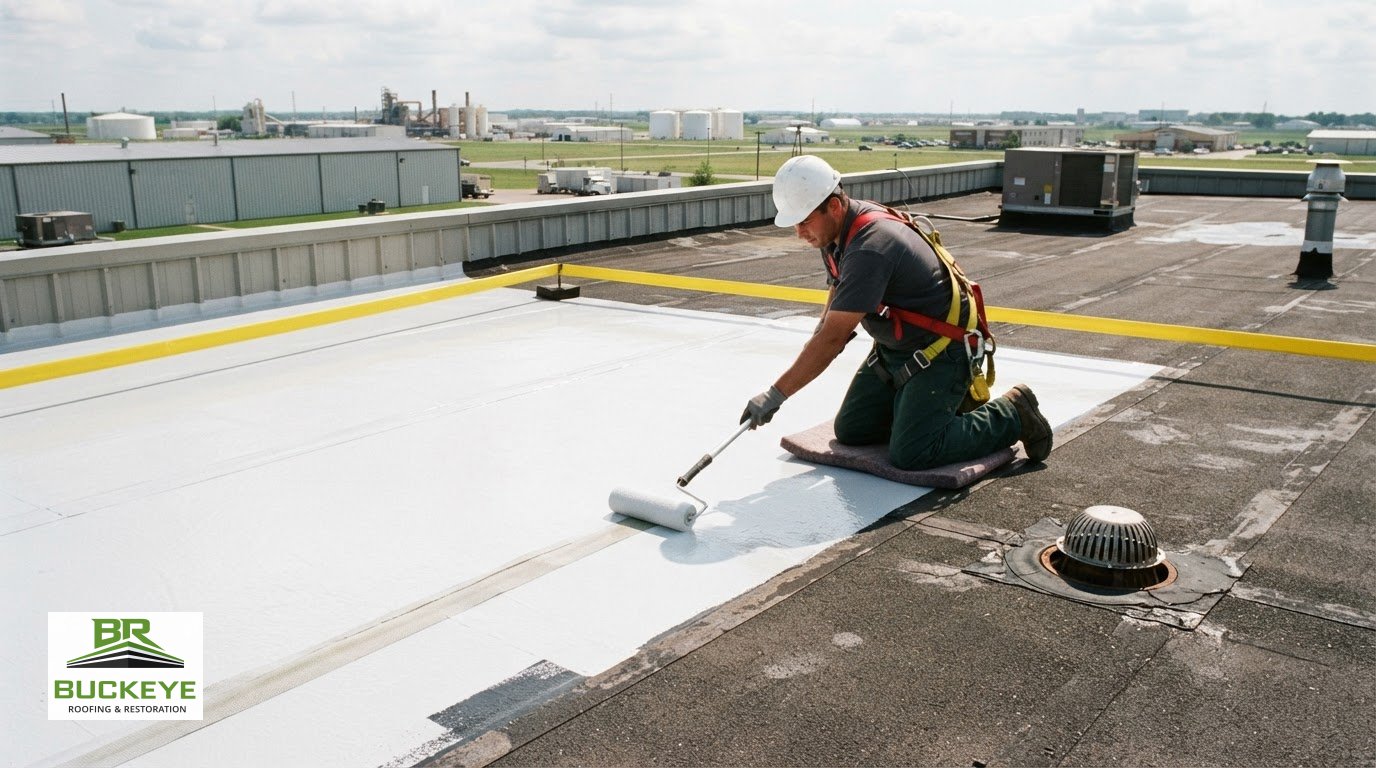
A coating can extend a commercial roof’s useful life, but it won’t resolve every underlying problem. For commercial roof coatings in Defiance, Ohio, the key question is whether the existing roof is suitable for restoration. A professional inspection can answer that and identify the right next step.
When a roof can be restored, a coating may help improve energy efficiency and delay replacement. A reflective surface can reduce heat absorbed by the roof, while a compatible system adds a protective layer. Neither benefit is automatic: roof condition, moisture, drainage, and existing materials all matter.
This article explains how coatings work, what an inspection should assess, and how maintenance can support a longer roof life. It also covers when coating may be practical and when repair or replacement makes more sense. In Defiance, seasonal weather makes sound drainage and regular roof assessments important parts of commercial property planning.
Key Takeaways
- Understand how repairs and ongoing maintenance inform whether a coating is a sensible next step.
- Learn why reflective surfaces may affect roof heat without replacing insulation or resolving every water issue.
- See how a suitable coating can support roof preservation while regular maintenance helps track changing conditions.
- Find out what a roofer evaluates, including the roof surface, moisture, drainage, and overall condition.
- Compare coating with repair, restoration, and replacement to better understand which option fits the building.
Commercial Roof Repair and Maintenance in Defiance, Ohio
Commercial roof repair should address the source of a leak, not just the ceiling stain. Water can travel beneath a low-slope roof before appearing inside a warehouse, office, or manufacturing space. A roofer traces the moisture path, checks seams and penetrations, and repairs the affected area. The assessment also helps determine whether the roof is suitable for coating.
In Defiance, changing weather can expose weak seams, cracks, loose flashing, or drainage problems. Keep a record of recurring leaks and interior water marks to share during an inspection. Never climb onto a commercial roof to investigate. A trained roofer can assess it safely and determine whether targeted repair, broader restoration, or replacement is appropriate.
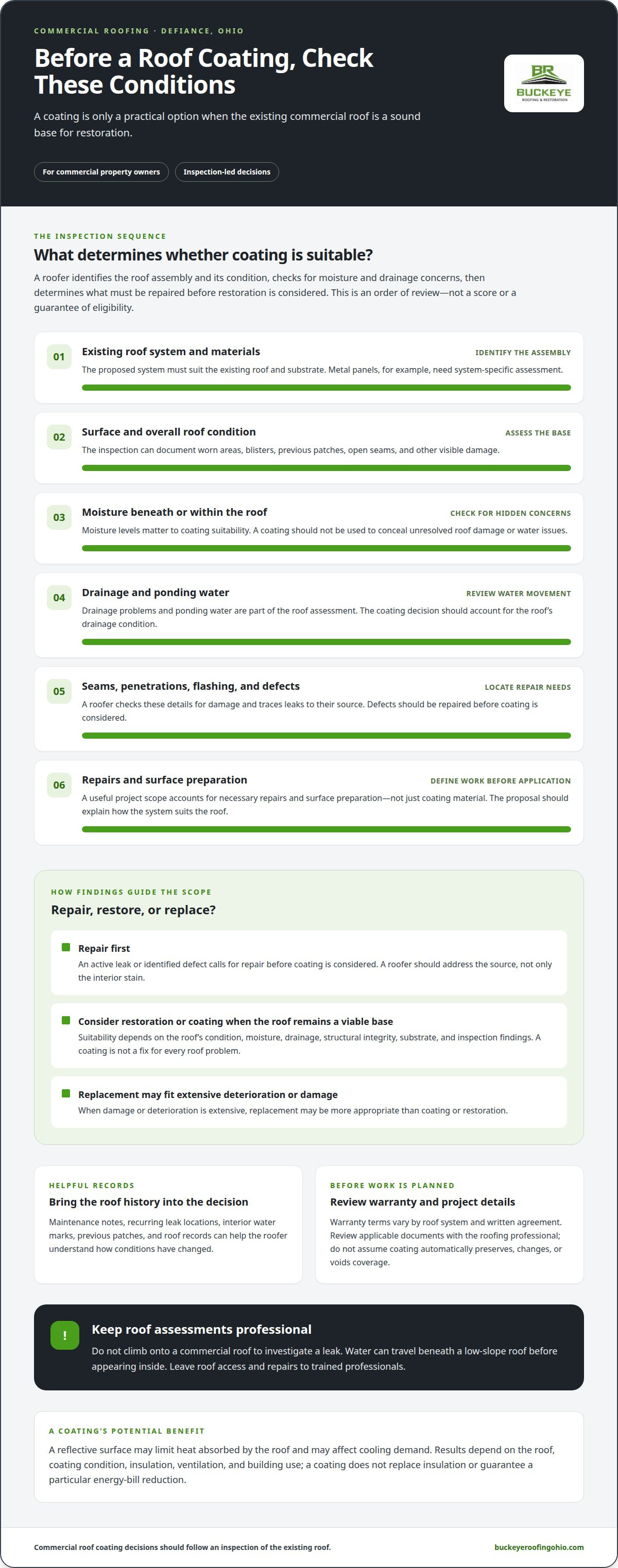
Maintenance records help guide coating decisions by showing how the roof changes over time. An inspection can document open seams, blisters, worn areas, ponding water, and previous patches. Defects should be repaired before coating is considered, since coating over unresolved damage can conceal rather than fix it. For an active leak, repair comes first, followed by assessment of the surrounding roof.
Warranty terms vary by roof system and written agreement. Before coating or repairs, review the applicable warranty documents and roof records with the roofing professional. These documents can clarify system requirements and whether the proposed work fits them. Don’t assume a coating automatically preserves, changes, or voids coverage.
Permit and building-code requirements for commercial roof coatings in Defiance, Ohio depend on the project scope and applicable local review. Before scheduling, establish whether the work involves coating alone or changes to the roof assembly. Those details guide the relevant code and permit review.
Coating costs depend on roof size and condition, surface preparation, repairs, access, and the system suited to the existing substrate. A useful estimate accounts for the work needed before application, not just the coating material. Metal roofs need system-specific care: a roofer checks panel seams, fasteners, and corrosion before recommending repair or restoration. Decisions should reflect the roof’s actual condition, not the assumption that every surface can be treated alike.
Commercial Roofing Services Around Defiance, Ohio
Commercial roofing work around Defiance can range from a focused leak repair to a full replacement. The right scope depends on the building, roof system, drainage, and inspection findings. A warehouse with a low-slope roof may need different work from a commercial building with exposed metal panels. A roofing contractor assesses these conditions before recommending repair, restoration, or replacement.
For coating, the sequence matters. First, the roofer identifies the roof assembly and visible damage. The inspection then checks moisture, seams, penetrations, drainage, and surface condition. Repairs can address isolated defects; restoration or coating may suit a roof that remains a viable base. If deterioration or damage is extensive, replacement may be more appropriate.
Defiance is within the Northwest Ohio service area, and commercial roofing work also reaches nearby markets in Northeast Indiana and Southern Michigan. The contractor is based in Edon, Ohio, not Defiance. Fort Wayne is among the nearby markets served, but that does not mean the contractor has a shop there. For property managers overseeing buildings across county or state lines, roof records and consistent inspection notes help clarify each property’s needs.
Installation planning should account for the building’s use, roof structure, drainage, and existing materials. A manufacturing facility, for example, may have rooftop equipment and penetrations that affect access and detailing. A roofing professional reviews these conditions before setting the scope. The selected system should suit the building, not follow a one-size-fits-all approach.
An active leak or storm-related concern calls for prompt attention, but service availability and response timing should never be assumed. Share the property address, building type, where water appears, and any known roof-system details when arranging an assessment. Interior staining can help identify the area of concern, though water may travel before it becomes visible. Keep occupants away from unsafe areas and leave roof access and repairs to trained professionals.
For commercial roof replacement or restoration, the proposal should explain the work, surface preparation, repairs, and how the selected system suits the existing roof. A coating cannot replace sound installation or necessary repairs. Clear documentation gives owners a practical basis for reviewing the scope, planning maintenance, and understanding what the work is intended to address.
How Reflective Roof Coatings Affect Energy Use
A reflective coating changes how the roof surface responds to sunlight. A light-colored surface reflects more solar energy than a dark one, which can limit heat absorbed by the roof. In a commercial building, that may affect heat transfer into the spaces below, especially in sunny weather. The effect depends on the roof, coating condition, insulation, ventilation, and building use.
Reducing roof heat can support lower cooling demand, but it doesn’t guarantee a particular energy bill reduction. Results also depend on equipment, operating hours, temperature settings, and how much roof area gets direct sun. For example, a conditioned warehouse with a large exposed roof may respond differently from an unconditioned storage space. A coating is one part of an energy plan, not a stand-alone efficiency fix.
Reflectivity, insulation, and waterproofing serve different purposes. A coating creates a surface layer; it does not add meaningful insulation to the roof assembly. Insulation slows heat transfer through the roof, while waterproofing limits water entry. If a commercial roofing system lacks adequate insulation, a reflective layer alone won’t correct that condition or resolve moisture inside the assembly.
For an existing TPO or EPDM roof, a roofer considers membrane condition and compatibility before recommending another surface treatment. Seams, penetrations, repairs, and drainage all affect whether coating is appropriate. Standing water or an active leak calls for attention to its cause, not simply a reflective finish. An inspection should distinguish heat-related goals from protection against water intrusion.
In Defiance, building owners can make energy decisions more useful by considering roof condition alongside indoor comfort and cooling patterns. Note which areas become uncomfortably warm, when cooling equipment runs heavily, and whether there are known insulation or moisture concerns. Share those observations during an assessment. The project can then address the actual priority, whether that’s reflectivity, insulation, leak repair, or another roof-system solution.
A practical evaluation considers the full roof assembly, not just its color. The roofer reviews the substrate, existing materials, insulation, drainage, and planned use of the space. A reflective coating can support energy-efficiency goals when it suits these conditions, but it remains distinct from insulation and leak repair. That distinction helps property managers set realistic expectations and plan appropriate work.
How Roof Coatings Can Extend Roof Life and Support Maintenance
A suitable coating can help protect a commercial roof’s surface and support ongoing maintenance. Risks include coating over trapped moisture, leaving leaks unrepaired, or applying a finish incompatible with the existing roofing materials.
Reduced Maintenance Needs
A coating can reduce routine surface deterioration by adding a protective layer to an eligible roof. This may make some upkeep more manageable, but it doesn’t eliminate inspections or repairs. A facility manager should still track recurring leaks, surface wear, and drainage concerns. Reduced maintenance means addressing problems before they spread, not assuming the roof needs no further attention.
The main question is whether the existing roof can support restoration. A roofer evaluates the substrate, moisture, seams, and overall condition before recommending a coating. If the surface is sound, coating may help preserve it. If damage is widespread or moisture is beneath the surface, repair or replacement may be more appropriate.
Ongoing Coating Maintenance
After application, maintenance should focus on visible changes and known trouble spots. An inspection can assess the coating finish, penetrations, seams, and drainage areas. Building staff can note interior water stains or changes to ceilings without accessing the roof. These observations help the roofer investigate concerns safely and decide whether maintenance or repair is needed.
Defiance weather can affect roof surfaces and drainage as seasons change. Keep inspection records with repair notes, photographs taken from safe locations, and available roof documents. These records help show whether a recurring issue is new or has appeared before. A coating still needs professional review, especially after a leak or visible roof damage.
Coatings have limits. They don’t correct structural problems, restore damaged insulation, or fix poor drainage on their own. Applying a coating over a wet or failing roof can leave underlying issues unresolved. Preparation matters too: the existing surface must be evaluated and prepared for the selected system. These factors determine whether coating is a sound maintenance choice.
Preventative maintenance helps owners plan work before minor defects become broader concerns. A roofer can document the roof’s condition, identify needed repairs, and assess whether coating remains suitable. Review warranty documents before altering an existing roof, since the written terms may address approved maintenance or repairs. Don’t assume coating preserves or changes warranty coverage.
For a commercial building, useful records connect inspection findings with repairs and coating work. This history clarifies the roof’s condition over time and supports decisions about maintenance, restoration, or replacement. Coatings may extend useful roof life when the existing assembly is suitable, but they don’t replace the need to address damage or inspect the system.
What a Roofer Checks Before Recommending a Roof Coating
A coating recommendation should follow a close assessment of the roof, not a product preference. Inspection findings help determine whether coating, repair, restoration, or replacement best suits the building.
Comparing Coating Types
Commercial coating products differ in compatibility, application requirements, and suitability for particular roof conditions. A roofer considers the substrate, drainage, exposure, and project goals before recommending a system. Compare how each proposed option fits the roof, rather than which one sounds most durable. The written scope should identify the selected system and explain its role.
Available Commercial Coating Systems
Commercial roof coatings are available for eligible projects in Defiance, but the right system depends on the existing roof materials, condition, and preparation needs. Ask for a clear description of the system in the scope and how it suits the building. This keeps the recommendation tied to the roof rather than a generic product list.
Roof Types and Preparation
A roofer may assess commercial TPO, EPDM, or metal roofs as potential coating candidates. The material alone doesn’t establish whether coating is suitable. An inspection checks surface condition, seams, penetrations, previous repairs, moisture, drainage, and structural concerns. Preparation is then planned for the roof and selected system, including any required cleaning or repairs. Existing roof records may also affect the work.
Inspection findings guide the next step. Isolated defects may call for repair; a suitable roof may be considered for broader restoration. Extensive deterioration or underlying damage can make replacement more appropriate. The assessment should explain the findings behind its recommendation. That gives property managers a practical basis for reviewing the scope and planning building operations around the work.
Professional application generally involves documenting roof conditions, preparing the surface, completing required repairs, and applying the selected coating system. The roofer accounts for access, work areas, and roof details needing attention. Building staff can share known leak locations and available maintenance records, while trained professionals handle roof access and work.
The duration of a commercial coating project varies. Roof area, access, preparation, repairs, weather, and the selected system’s application requirements all affect the schedule. A project plan should describe the sequence and factors shaping the timing. This helps facility managers coordinate around the work without assuming every roof or coating follows the same schedule.
Buckeye Roofing & Restoration’s Commercial Roof Coating Services
Buckeye Roofing & Restoration helps commercial property owners in Defiance assess whether coating suits an existing roof. Coating isn’t right for every roof: the surface, substrate, moisture, drainage, and structural condition all matter. A commercial roof inspection helps determine whether coating, repair, restoration, or replacement fits the building’s needs.
For a suitable roof, commercial roof coatings can add a protective surface layer as part of restoration. Coating differs from repair: repair addresses a specific defect, while coating covers a prepared roof surface. Restoration may combine repairs with coating. An inspection comes first, so the recommendation responds to the roof’s actual condition instead of assuming every roof can be coated.
Commercial flat roofing is a primary part of Buckeye Roofing & Restoration’s work. A flat roof is typically low-slope and designed to drain, so drainage and surface condition matter during assessment. An inspection can identify damaged areas, seams, or moisture that need attention before a coating decision. If coating isn’t suitable, repair or replacement may be more practical.
When damage is isolated, commercial flat-roof repair can address the affected area without treating the entire roof. If broader restoration is appropriate, the scope can combine necessary repairs with coating. This distinction matters for facility managers planning around building operations. It also clarifies what the proposed work is meant to solve, rather than treating coating as a substitute for every roofing service.
Buckeye Roofing & Restoration provides commercial roof coatings, flat-roof repair, and restoration for properties in Defiance. Based near Edon, the company serves Northwest Ohio and businesses across the state. The recommendation depends on inspection findings, including the roof system and surface condition. A clear scope explains what work is proposed and why it suits the roof.
If the building has recurring leaks, visible roof deterioration, or a coating under consideration, an inspection can help establish the next step. Share the building’s roof records and known concerns so the assessment can account for its history. Contact Buckeye Roofing & Restoration to discuss a commercial roof inspection.
Frequently Asked Questions
What commercial roof coating contractors serve Defiance, Ohio?
Buckeye Roofing & Restoration serves commercial property owners in Defiance with roofing services, including roof coatings. The company works on commercial and industrial buildings such as warehouses, manufacturing facilities, offices, and retail properties. When discussing a project, share the building’s use and operating constraints, such as busy loading areas or equipment that must remain accessible. These details help shape work around the facility’s daily needs.
What warranties and expected lifespans do commercial roof coatings offer?
Warranty coverage depends on the written terms for the specific restoration system and project, so rely on the documents rather than a general lifespan estimate. Buckeye states that restoration can add 10-20 years, depending on roof condition and the system used. Keep the warranty paperwork with maintenance records, and note any required upkeep or exclusions. That makes it easier to understand what coverage applies if a concern arises later.
How can I get quotes and verify commercial roofing contractors in Defiance, Ohio?
To request a quote from Buckeye Roofing & Restoration, provide the property address, building use, and a convenient contact for arranging access. Gather available roof plans or records of past work to clarify the project background. Buckeye provides free commercial roof inspections and quotes across Ohio. Before approving work, make sure the written quote identifies the proposed scope, site-specific access needs, and any exclusions.

Article by
Harry Stanley III
Harry Stanley III is a construction marketing strategist and fractional CMO at H&A Marketing. He has helped construction companies grow through website strategy, SEO, paid advertising, branding, lead generation, CRM systems, and professional content. His past work includes helping Meraki Solar generate an additional $3.7 million in revenue in his first year and supporting American Builders as a fractional CMO. Today, Harry works directly with custom home builders and construction companies to build marketing systems designed to generate qualified leads and measurable growth.