Commercial Flat Roof Contractor for Repairs in Defiance, Ohio
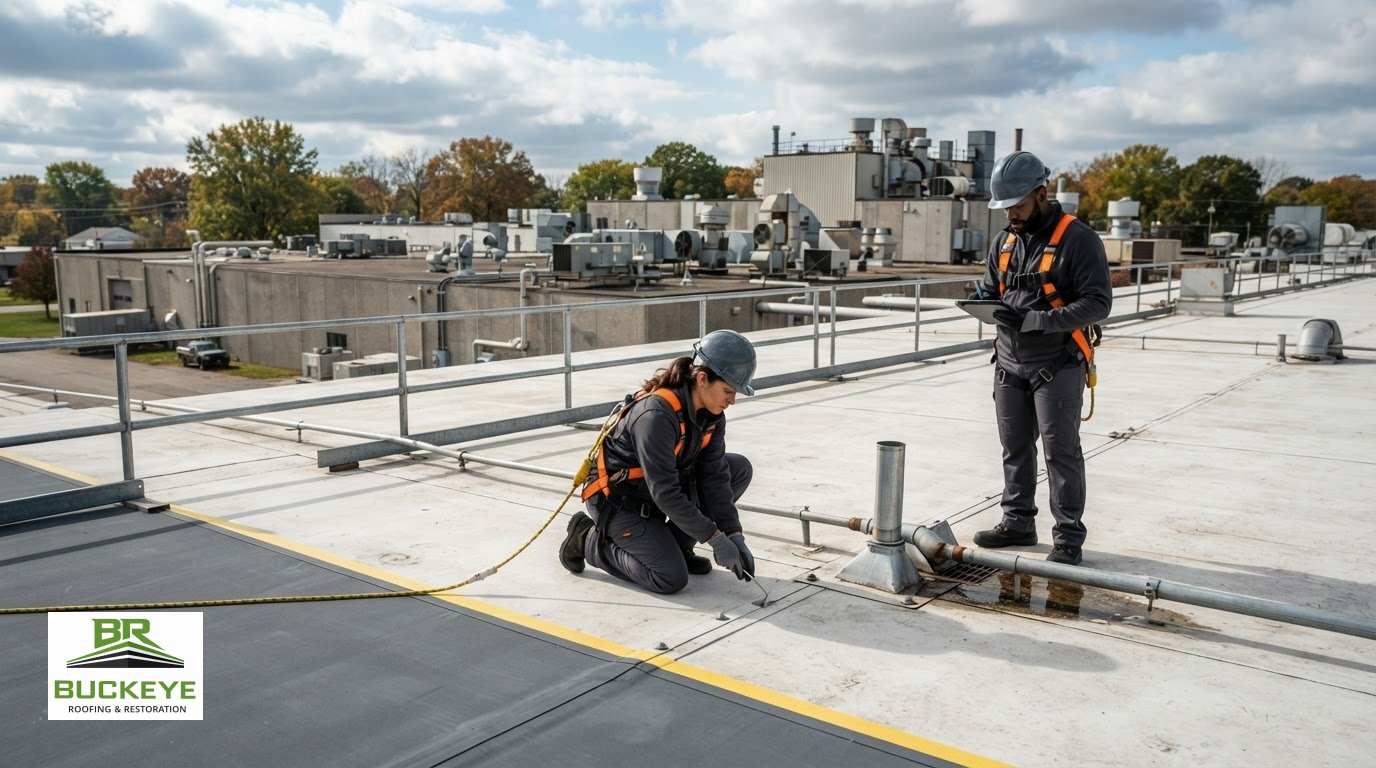
A commercial flat roof contractor in Defiance, Ohio should inspect the roof before recommending a repair, coating, restoration, or replacement. The right option depends on the roof’s condition, drainage, and existing system, not simply on the presence of a leak.
A leak can disrupt work and raise questions about whether a repair will hold or a larger project is needed. Learn what commercial roofing systems and coatings involve, what an inspection can reveal, and how maintenance can help catch problems before they spread.
This guide explains what to expect from commercial roof inspections, repairs, and estimates, when restoration or replacement may make sense, and how to use customer reviews when considering roofing work for a Defiance property.
Key Takeaways
- Match the roofing system and any coating to the building’s needs, existing roof condition, and drainage.
- A thorough inspection can help identify leak sources and assess whether repair, restoration, coating, or replacement is the sensible next step.
- Routine maintenance can help catch developing issues early; watch for interior leaks, standing water, and visible roof damage from a safe location.
- Use customer reviews to understand how a contractor communicates and handles work, while weighing each review in context.
- For commercial properties near Defiance, an inspection can help clarify the roof’s condition and guide a practical maintenance or repair plan.
Flat roofing systems and commercial roof coatings
Commercial low-slope roofs are designed to direct water toward drains and roof edges. For a Defiance facility, the building’s use, existing roof assembly, and installation method help determine which options are appropriate.
Commercial Roofing System Options
TPO and EPDM are membrane systems used on commercial roofs. Mechanically attached membranes are secured with fasteners, while adhered membranes are bonded to the roof assembly with adhesive. These methods affect installation details and how the membrane responds to building conditions. Compare the existing roof, roof deck, rooftop equipment, and project requirements before selecting a system.
A coating does not replace a membrane. It adds a protective layer to a roof that must be suitable for that work. Applying a coating over an existing commercial roof requires attention to the substrate, moisture, drainage, and structural integrity. A coating alone cannot fix a drainage problem or damaged roof layers.
Installation and Replacement Work
Installation planning should account for building operations. A warehouse may need clear loading access, while a manufacturing facility may need work coordinated around equipment or production areas. Discuss access points, rooftop units, staging areas, and work sequencing before installation. Clear coordination helps property teams understand how the roofing work will fit around daily operations.
For an Ohio commercial roofing project, request insurance documentation and verify any licensing requirements that apply to the scope with the appropriate authorities. For work in Defiance, ask the City of Defiance building department whether a permit is required. Explain whether the project involves repair, coating, reroofing, or replacement.
Roof Assessments and Rejuvenation
An assessment should document the membrane, seams, flashing, roof penetrations, drainage, and visible damage. Facility managers can share interior leak locations and maintenance records without sending staff onto the roof. For example, a leak near a rooftop unit gives the inspector a place to investigate, although water may be entering elsewhere.
“Rejuvenation” can describe work intended to renew an existing roof, but the method and roof condition matter. Restoration or coatings require a suitable substrate, manageable moisture, functional drainage, and sound structural integrity. Review the proposed system’s written warranty terms, exclusions, and installation conditions. Coverage can differ by product and project.
During a commercial roofing project, property managers, facility staff, and the roofing team can coordinate access and operational constraints. A distribution building, for example, may need a plan to keep delivery areas usable while work proceeds. Recording the agreed work areas and sequence gives everyone a shared reference as installation or replacement moves forward.
Roof inspections and estimates
A commercial roof inspection gives property managers a documented starting point for decisions. An estimate should connect observations to a defined scope, so you can see what work is proposed and which roof areas it covers.
Inspection and Estimate Details
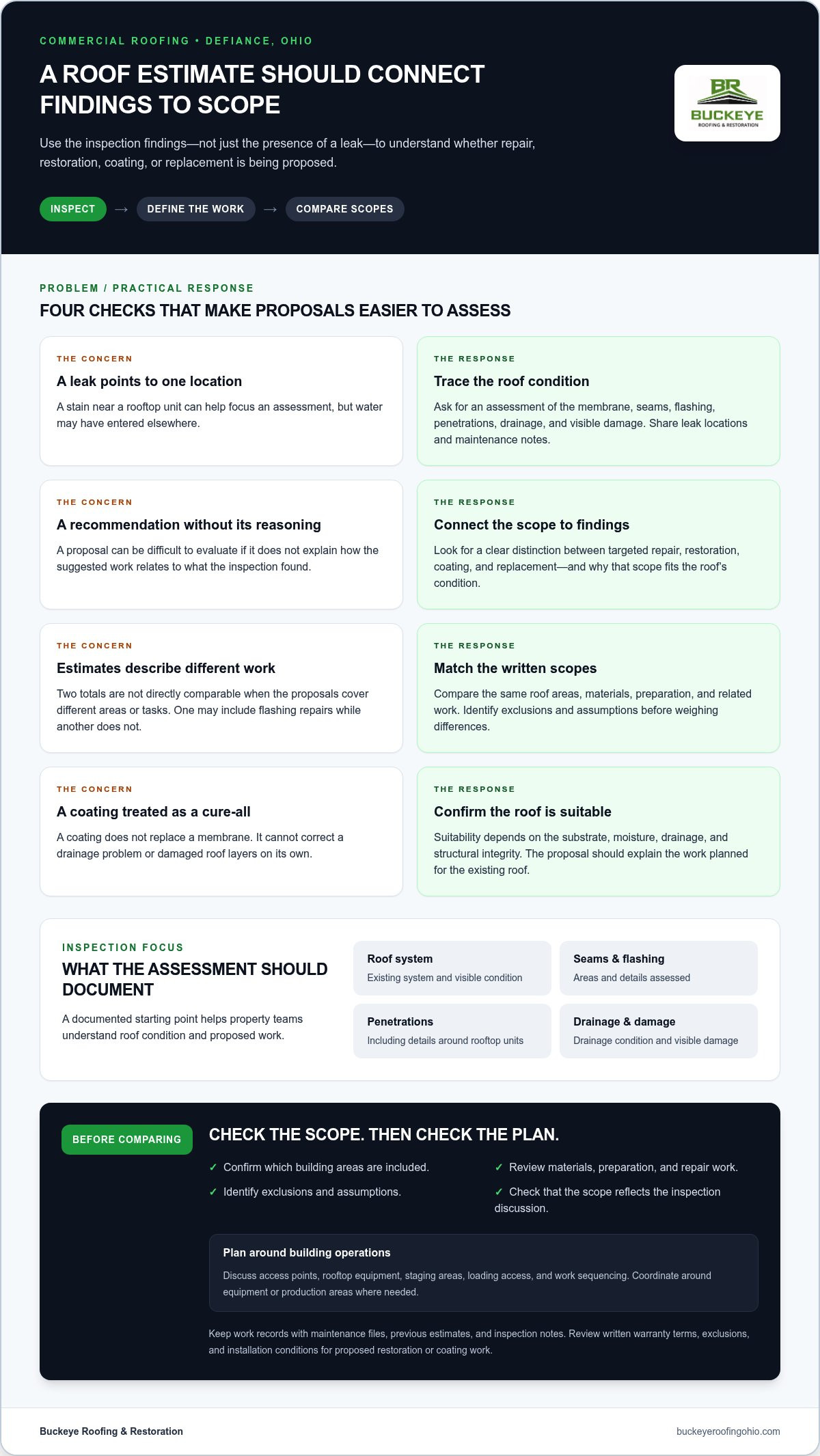
Ask the roofing professional to assess the roof system, seams, flashing, penetrations, drainage, and visible damage. Share building records, maintenance notes, and the location of any interior leak. A stain near a rooftop unit, for example, can help focus the assessment, even if water entered elsewhere.
Review the written estimate for the work area, proposed materials, preparation, and exclusions. A repair scope should identify the defect being addressed. A restoration or coating proposal should explain the work planned for the existing roof. These details help facility managers understand what is included before comparing options.
Comparing Contractor Estimates
Compare estimates by matching their scopes, not just their totals. Check whether each proposal covers the same roof areas, materials, preparation, and related work. If one includes flashing repairs and another does not, they describe different projects. Ask for clear written details before weighing the difference.
Look for the reasoning behind each recommendation. A proposal should connect its scope to inspection findings and distinguish a targeted repair from restoration, coating, or replacement. For a commercial building with rooftop equipment, check whether the estimate includes the areas around those units when they are part of the proposed work.
Use this checklist while reviewing proposals:
- Confirm the building areas included in the scope.
- Compare materials, preparation, and repair work described.
- Identify exclusions and assumptions that could affect the work.
- Check that the written scope reflects the inspection discussion.
Ask how the completed work will be documented and what records you will receive. Keep them with maintenance files, previous estimates, and inspection notes. If a similar issue develops later, these records can help your facility team explain the roof’s history and identify areas needing attention.
For a Defiance property, include operational constraints in the estimate discussion. A warehouse may need accessible loading areas, while a manufacturing building may require coordination around equipment or work areas. These details help define a practical scope and give the property team a clearer basis for planning.
Before approving an estimate, make sure the written scope answers your questions about work areas and included tasks. To discuss an inspection or estimate for a commercial roof, contact Buckeye Roofing & Restoration.
Roof maintenance plans and repairs
A maintenance plan turns roof observations into scheduled tasks, repair records, and clearer decisions. For a Defiance warehouse, that could include tracking drainage concerns alongside reports of interior leaks.
Start with a roof record that identifies the system, previous repairs, known leak locations, and rooftop equipment. After each professional visit, add dated notes and photos taken from safe locations. This history helps facility managers distinguish a new defect from a recurring problem and share useful details with the roofing team.
Maintenance involves monitoring roof conditions and addressing manageable issues before they worsen. A professional can examine seams, flashing, penetrations, drains, and areas where debris collects. In Northwest Ohio, note visible drainage changes after snow, ice, or freeze-thaw periods. Building staff should report interior stains or dripping, but leave roof access and repairs to trained professionals.
Useful maintenance records can include:
- The date and location of each interior leak report.
- Photos from inside the building or other safe vantage points.
- Changes around rooftop equipment, drains, and roof edges.
- Completed repairs and any follow-up observations.
A repair should address the observed defect and its cause, not simply conceal a symptom. For example, a ceiling stain below a roof penetration may point to nearby flashing or membrane issues. Water can travel beneath roof layers, so the stain may not be directly below the entry point. A commercial roof assessment helps trace the source and define the repair area.
Recurring leaks, loose membrane edges, damaged flashing, or standing water need professional attention. Do not send untrained staff onto the roof to investigate. Instead, record the affected room, nearby equipment, and when the issue appears. These details help the roofing professional focus the inspection and assess whether a targeted repair is appropriate.
Maintenance can also help distinguish a repair from broader work. A localized seam defect may call for repair, while widespread deterioration or moisture concerns may require a broader assessment. Coating or restoration is appropriate only when the roof’s condition, substrate, moisture, drainage, and structural integrity support that approach. A maintenance plan should record findings, completed work, and conditions requiring further evaluation.
For building owners, the practical value is continuity. A facility manager can use consistent records to plan access, coordinate work around operations, and track whether previously repaired areas remain sound. If a leak returns, those notes give the next inspection a concrete starting point. Discussing commercial roof repair after documenting the symptoms helps connect the reported problem to a defined scope, rather than treating every issue as a full replacement.
Customer reviews
For a commercial property in Defiance, reviews can offer insight into a roofing contractor’s communication, documentation, and follow-up. Reviews describing a similar project can help you assess a commercial flat roof contractor in Defiance, Ohio. Look for details about warehouses, manufacturing facilities, or offices and the roofing work completed. A high rating alone says little about the project or customer experience.
Check what reviewers say about the building and roof system. A comment about work on a TPO membrane, for example, may be more relevant to a facility with a similar roof than general praise without project details. Look for specific references to inspection findings, scope discussions, scheduling, or how questions were handled. These details help you judge whether the review relates to your property’s needs.
Read beyond the highest rating. A useful review might explain how a property manager received updates during a repair or how the contractor clarified the work included. Such specifics provide more context than a short statement calling a company “the best.” Reviews reflect individual experiences, so consider them alongside the proposed scope and inspection findings.
- Look for a commercial building and roofing scope similar to yours.
- Note whether the reviewer identifies the system or type of work.
- Consider comments about communication and project coordination.
- Check whether the review describes follow-up or completed documentation.
- Compare detailed feedback across available review sources.
Review patterns can help you prepare questions for your project. If reviewers mention clear explanations, ask how findings will be recorded for your building. If a comment describes work at an active facility, consider what coordination your warehouse or production floor may need. Use reviews to guide the discussion, not to assume your project will follow the same process.
Consider review dates and project context. Older feedback may describe different roof conditions or materials from those on your building today. A review about a repair may offer different insight from one about a full replacement. Neither establishes what your roof needs. An on-site assessment must account for the building and its current condition.
Reviews vary in detail. For a Defiance property, focus on comments from commercial owners or facility managers describing comparable work. When evaluating a commercial flat roof contractor in Defiance, Ohio, use reviews as context alongside the written scope and contractor’s explanation. This comparison can help you prepare focused questions about how the proposed work fits your building’s needs.
Commercial roof inspection and maintenance services near Defiance, Ohio
For a commercial property in Defiance, an inspection should connect visible roof conditions with building records and operational needs. A warehouse manager can share leak locations, rooftop equipment changes, and past repair notes before the assessment. That context helps focus the inspection on relevant areas instead of treating every roof the same.
A professional assessment can examine membrane seams, flashing, penetrations, roof edges, drainage paths, and areas around equipment. The inspector also considers the roof system and visible signs of wear. If staff report a ceiling stain near a production line, that location gives the inspection a starting point, but water may be entering elsewhere. Roof access and close-up checks belong to trained professionals.
Northwest Ohio weather can bring snow, ice, and freeze-thaw conditions. Drainage deserves particular attention on low-slope roofs because debris or blocked drains can affect how water leaves the roof. Building teams can safely watch for interior stains, drips, or drainage changes after weather events. They should report what they observe, not climb onto the roof or attempt repairs.
A practical inspection record can include:
- The building area and interior location connected to a reported leak.
- Visible membrane, flashing, or edge conditions observed professionally.
- Drainage concerns and rooftop equipment areas needing attention.
- Recommended repairs, their locations, and any follow-up observations.
Maintenance planning should reflect the roof’s actual condition and the building’s operations. A distribution facility may need work coordinated around loading activity, while a school may need planning around occupied areas. Record completed repairs and keep inspection findings with building maintenance files. That history helps property managers track recurring issues and explain operational constraints during future work.
An inspection can help distinguish a localized repair from broader restoration or replacement planning. Before recommending a coating or restoration, a professional evaluates the roof assembly, moisture concerns, substrate, drainage, and structural condition. If these conditions do not support restoration, a different scope may be more appropriate. Recommendations should address the roof as observed, not assume every Defiance property needs the same solution.
Schedule a professional inspection if you notice an interior leak, standing water, loose materials, or storm-related damage. Keep staff away from unsafe roof access and share the affected room and relevant maintenance records. For a commercial property near Defiance, request a commercial roof inspection to discuss the roof’s condition and practical next steps.
Residential roof rejuvenation is a separate consideration: Wagner says roof rejuvenation may extend a home's roof life after the roof's condition is inspected. The BBB directory lists 868 results for flat roofing contractors near Defiance, Ohio. For a commercial building, managers can use contractor options to seek an inspection-based assessment and compare proposed scopes with documented roof conditions and operational needs.
Buckeye Roofing & Restoration: Commercial Flat Roofing
Buckeye Roofing & Restoration helps commercial property owners address flat-roof concerns with solutions suited to the roof’s condition. Commercial flat-roof repair may be appropriate for a leak or localized damage. A roof with broader wear may call for restoration or coatings, with inspection findings guiding the right approach.
Coatings and restoration are not suitable for every roof. The assessment considers the existing system, substrate, moisture, drainage, and structural condition before recommending either approach. This gives facility managers a clearer basis for planning work without assuming every issue requires replacement.
For commercial roofing services in Defiance, discuss the roof’s condition and next steps with Buckeye Roofing & Restoration. Contact Buckeye Roofing & Restoration to talk about your commercial roof.
Choose the next step for your commercial roof
A roofing decision should fit the building’s condition and how your team uses the space. Before approving work, identify key operational constraints, such as access around rooftop equipment or maintaining warehouse activity during repairs. These details help shape a practical project discussion.
If your Defiance property needs a commercial flat roof contractor, Buckeye Roofing & Restoration provides commercial flat roofing, repairs, and restoration. An inspection can clarify which option suits the roof instead of defaulting to the most extensive scope. Coatings may also be appropriate when the existing roof’s condition and other inspection findings support them.
Bring your observations, maintenance records, and questions about the roof system to the conversation. The goal is a clear understanding of the work being considered and why it fits your building. Contact Buckeye Roofing & Restoration to discuss your commercial roof, and take the next step with a practical plan.
Frequently Asked Questions
Which commercial flat roof contractors serve Defiance, Ohio?
Buckeye Roofing & Restoration serves commercial properties in Defiance, Ohio, with flat-roof inspections, repairs, restoration, and replacement. The company works with building owners, facility managers, manufacturers, and warehouse operators. If you need a commercial flat roof contractor in Defiance, Ohio, start with the roof type and the issue needing attention. Share known leak locations and operational constraints so the inspection can focus on your property’s practical needs.
How should I assess commercial roofing company reviews and ratings near Defiance, Ohio?
Prioritize reviews describing commercial roofing work similar to your building’s needs. A warehouse membrane project is more relevant to a warehouse owner than a residential roof review. Look for comments about the scope, communication, and how questions were handled. Ratings can reveal patterns, but they cannot show whether a specific roof system or project condition matches yours. Use reviews as context alongside a written inspection and estimate.
Which commercial flat roofing systems are available in Defiance, Ohio?
Commercial flat-roof options include TPO and EPDM membrane systems. The right choice depends on the building and roof conditions. TPO and EPDM differ in material and installation details, so consider the existing assembly, rooftop use, drainage, and project requirements. Buckeye Roofing & Restoration provides TPO and EPDM roofing services. An inspection can help determine whether installation, repair, coating, or restoration best fits the roof.
What affects commercial flat roof replacement cost in Defiance, Ohio?
Replacement cost depends on the roof area, existing assembly, removal needs, selected system, drainage details, and rooftop equipment. Building use can also affect access and project coordination. A commercial roof replacement price is based on these project-specific factors and determined after a quote request. An inspection establishes the roof’s condition and scope before you compare proposals, so you can assess what each estimate includes rather than rely on a general figure.
commercial roofing warranties and manufacturer certifications near Defiance, Ohio
Buckeye Roofing & Restoration identifies itself as the only Owens Corning Platinum Preferred Contractor within a 40-mile radius of Defiance. Its page describes renewable warranty options of 10 or 20 years for fluid-applied roofing systems and warranties of up to 15 years for Uniflex elastomeric roof coatings; review the proposed system’s specific written terms and exclusions.

Article by
Harry Stanley III
Harry Stanley III is a construction marketing strategist and fractional CMO at H&A Marketing. He has helped construction companies grow through website strategy, SEO, paid advertising, branding, lead generation, CRM systems, and professional content. His past work includes helping Meraki Solar generate an additional $3.7 million in revenue in his first year and supporting American Builders as a fractional CMO. Today, Harry works directly with custom home builders and construction companies to build marketing systems designed to generate qualified leads and measurable growth.