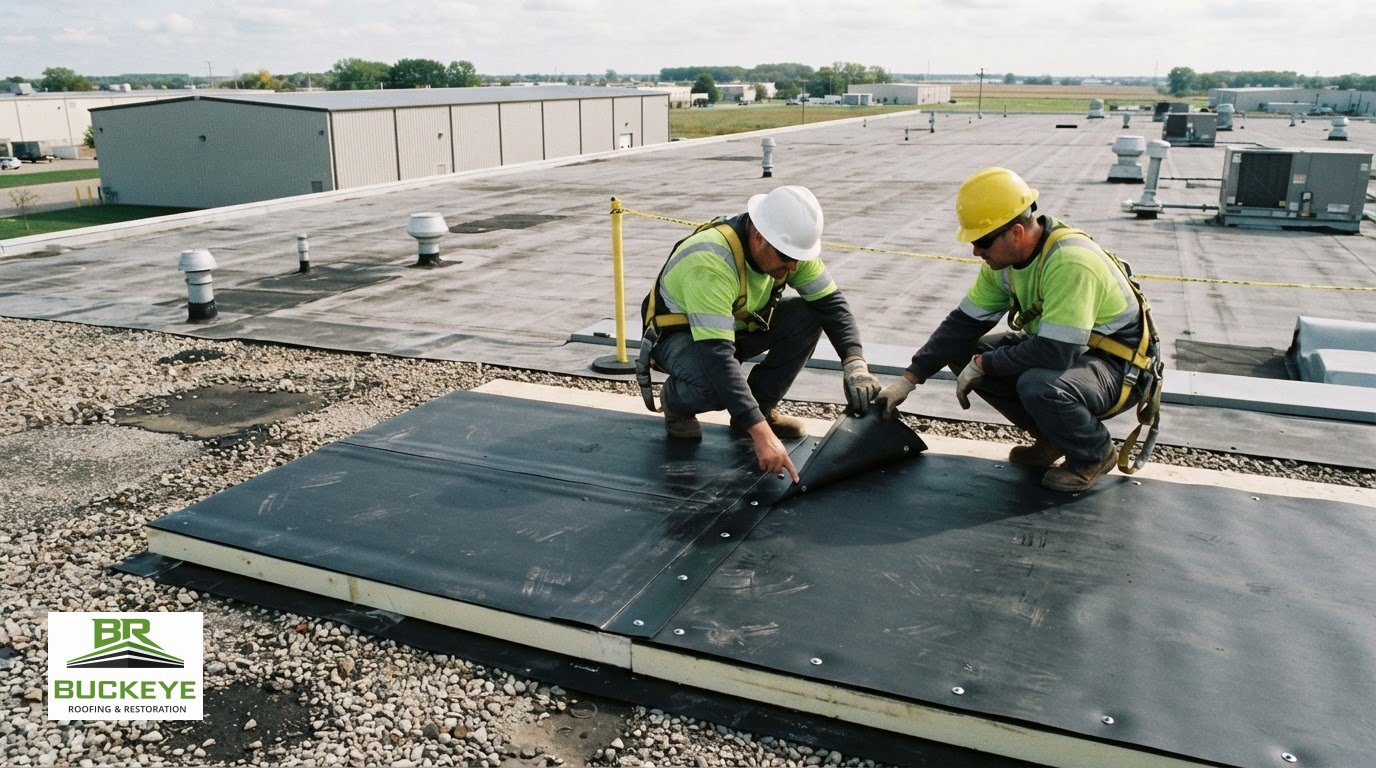
The better fit in a Firestone RubberGard vs. Carlisle Sure-Seal commercial EPDM comparison isn’t decided by brand name alone. It depends on the specific membrane and complete roofing assembly, including how the system is attached and how it suits the building’s conditions.
That makes the choice less straightforward than comparing product names or thicknesses on a spec sheet. Performance also depends on installation details, roof design, and the project’s wind-uplift requirements.
This comparison explains how the systems can differ in installation approach, durability considerations, available thicknesses, and wind-uplift resistance. It also shows why you need to assess the membrane and attachment system together when deciding which option suits your commercial roof and project requirements.
Key Takeaways
- Compare adhered, ballasted, and mechanically attached systems by how each fits the building and roof assembly, not by membrane name alone.
- Assess durability in the context of roof condition, installation details, and ongoing maintenance rather than relying on a single service-life estimate.
- Review available membrane thicknesses and product options against the project’s requirements before selecting a system.
- Wind-uplift performance depends on the complete roof assembly and its attachment details, so evaluate those together.
- Read warranty terms closely to understand what coverage applies and which installation or maintenance conditions matter.
Adhered, ballasted, and mechanically attached systems
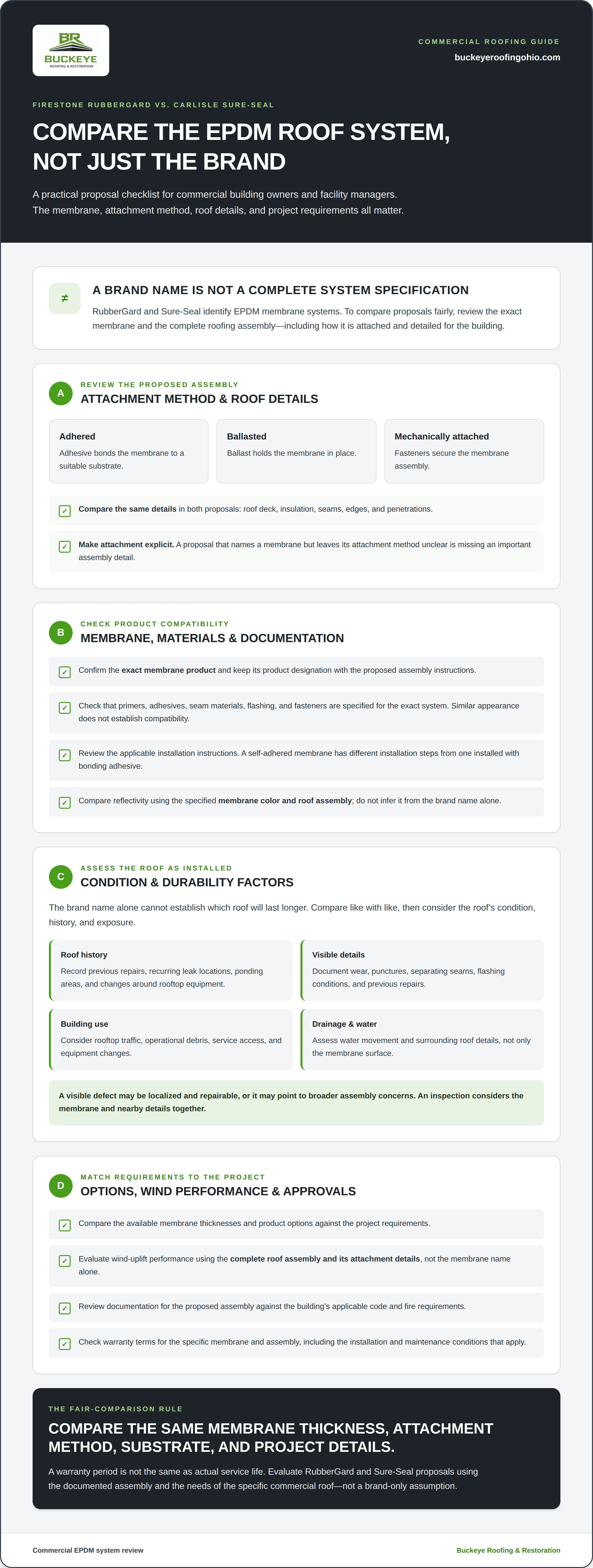
Firestone RubberGard and Carlisle Sure-Seal identify EPDM membrane systems, but the brand name alone doesn’t describe how a roof will be installed. Compare the proposed attachment method, substrate, seam details, and perimeter work. For example, a RubberGard proposal that doesn’t say how the membrane will be attached leaves important assembly details unanswered. Apply the same review to a Sure-Seal proposal.
In an adhered assembly, adhesive bonds the membrane to a suitable substrate. A ballasted assembly uses ballast to hold the membrane in place, while a mechanically attached assembly uses fasteners. These are distinct approaches, not interchangeable labels. For either RubberGard or Sure-Seal, compare how the proposal addresses the roof deck, insulation, seams, edges, and penetrations.
Adhesive selection and application must suit the membrane and roof assembly. Review the applicable installation instructions and specified components rather than assuming one bonding product works for both brands. A self-adhered membrane, for example, has different installation steps from a membrane installed with bonding adhesive. Keep the product designation and assembly instructions together during project review.
You can’t rank energy efficiency or reflectivity by brand name alone. The exact membrane color and roof assembly matter, so compare those details instead of assuming RubberGard or Sure-Seal is more reflective. For example, proposals with different membrane colors aren’t a like-for-like comparison.
Contractor availability and manufacturer support in the United States depend on the project location and the proposed system. Compare whether qualified installation support and product guidance are accessible for the specific RubberGard or Sure-Seal assembly. A regional comparison should focus on the contractors and support resources available for that project, not a blanket claim about either brand.
Building-code approvals and fire ratings apply to specific roof assemblies and project conditions. A RubberGard or Sure-Seal product name alone doesn’t establish an approval or rating. Review documentation for the complete proposed assembly against the requirements that apply to the project.
Accessories and compatible components depend on the selected system, too. Check the instructions for the exact membrane, including specified seam materials, primers, adhesives, flashing, and fasteners. Don’t substitute components based only on a similar appearance or shared material category.
- Compare attachment methods and assembly details for both proposals.
- Match adhesives and accessories to the exact membrane system.
- Evaluate reflectivity using the specified membrane color and assembly.
- Review assembly documentation for project-specific code and fire requirements.
Membrane service life and durability
Firestone RubberGard and Carlisle Sure-Seal are both EPDM systems, but the brand name alone can’t establish which roof will last longer. Service life depends on the installed assembly and the conditions it faces. Compare the same membrane thickness, attachment method, substrate, and project details before drawing conclusions. A mechanically attached assembly and an adhered assembly may experience different stresses, even when both use EPDM.
Start with the roof’s condition and history. For an existing RubberGard or Sure-Seal roof, record past repairs, recurring leak locations, ponding areas, and changes around rooftop equipment. These details can help distinguish an isolated seam or flashing issue from widespread membrane deterioration. Repair history provides useful context, but doesn’t prove by itself that the entire roof has reached the end of its service life.
Installation details matter at seams, penetrations, edges, and transitions. A separating seam, loose flashing, or puncture near equipment can create a leak path. Damage may be localized and repairable, or it may indicate broader assembly problems. A qualified inspection assesses the membrane and surrounding details together, rather than judging durability from one visible defect.
Exposure varies from building to building. Roof traffic near service equipment, operational debris, drainage, and repeated water exposure can all affect the demands on an EPDM surface. For example, a warehouse with frequent maintenance access needs suitable walk paths and careful foot-traffic management. Where drainage is a concern, assess water movement and surrounding details, not just the membrane surface.
Use a consistent comparison process for both manufacturers:
- Identify the installed RubberGard or Sure-Seal product and assembly from project records.
- Document visible wear, punctures, seam conditions, flashing, and previous repairs.
- Assess drainage, rooftop traffic, equipment changes, and recurring leak areas.
- Compare repair needs and maintenance requirements against the applicable product documentation.
A warranty period and actual service life aren’t interchangeable. Warranty terms describe coverage under stated conditions; they don’t establish how long every roof will perform. Review the precise membrane, assembly, installation requirements, and maintenance conditions for the project. Comparing unlike systems, such as different thicknesses or attachment methods, can lead to an unreliable brand-to-brand conclusion.
If you’re deciding whether to repair or replace a roof, the key question is whether deterioration is limited and the assembly remains serviceable. An inspection can identify affected areas and help determine whether localized repairs are suitable or broader work is needed. That evidence supports a practical decision without treating every leak as a reason for full replacement.
Membrane thickness and product variants
Thickness is useful to compare, but a brand name doesn’t identify one specific membrane build. Compare the exact Firestone RubberGard and Carlisle Sure-Seal products and thicknesses specified for the project. Without matching those details, a side-by-side review can mistake system-design differences for differences between manufacturers.
Start with the project documents. Identify the proposed membrane name, stated thickness, attachment method, substrate, and accessory requirements for each option. Then compare the details on equal terms. If one specification lists RubberGard EPDM SA, compare it with the Carlisle product actually proposed, not an assumed generic version of Sure-Seal.
A thicker membrane may provide more material at the surface, but thickness alone doesn’t establish overall roof durability. Installation, seams, flashing, roof traffic, and exposure matter, too. For example, a warehouse with frequent service access needs traffic paths and equipment work considered, not just membrane gauge. Assess thickness as part of the complete assembly.
Product variants can also differ in how they’re installed. RubberGard EPDM SA is a self-adhered product, so don’t treat it as interchangeable with every EPDM configuration. For either manufacturer, match the proposed variant to the documented substrate, seam treatment, perimeter details, and compatible accessories. A component intended for one assembly may not suit another.
Use this comparison sequence to keep proposals clear:
- Record the full Firestone or Carlisle product designation from each proposal.
- Compare the stated thickness and whether the values use the same measurement basis.
- Match attachment method, substrate, insulation, seams, flashings, and accessory details.
- Review the installation documentation and warranty conditions for the exact assembly.
If a proposal omits thickness, clarify the specified product and assembly details during project review. That’s a practical step, not evidence of a product defect. Compare submittals rather than relying on a broad label such as “EPDM,” which doesn’t describe every membrane or installation detail.
For an existing roof, identify the installed product before planning repairs or replacement. The visible membrane may not reveal the original thickness or concealed assembly. Project records and a professional inspection can help establish what’s present, where deterioration occurs, and whether proposed materials suit the roof. That information makes a RubberGard-versus-Sure-Seal decision more useful than choosing by thickness alone.
Storage details belong in the same product review as thickness and assembly. Firestone's self-adhered UltraPly TPO SA and RubberGard EPDM SA products with Secure Bond Technology have a storage shelf life of up to 18 months. For a proposal, confirm which product is being supplied and consider the stated shelf life when reviewing storage and project timing. Keep the product identification and relevant documentation with the submittal, so the comparison addresses the material actually proposed rather than relying on a broad membrane category. This check complements, but does not replace, matching thickness, attachment, and accessories across the complete roof assembly.
Wind-uplift resistance
Wind-uplift resistance is a property of the installed roof assembly, not the brand label alone. For Firestone RubberGard and Carlisle Sure-Seal, compare documentation for the exact membrane and assembly proposed. Documentation for one RubberGard configuration doesn’t establish performance for every RubberGard option, and the same applies to Sure-Seal. Compare documented assemblies that match the project.
Start with the building plans and proposed roof specification. Identify the roof deck, insulation, membrane attachment, and edge details in each proposal. If a component changes, the supporting documentation must match the revised assembly. For example, a specification that names a membrane but omits the deck or attachment details isn’t enough for a complete assembly comparison.
Pay particular attention to the roof perimeter and corners. Review how the proposed system’s documentation addresses those areas and whether the described configuration matches the building’s roof layout. A warehouse with a large open roof still needs project-specific edge and corner details. A general product description can’t replace details specific to the building.
Keep the comparison organized around verifiable project records:
- Record the exact RubberGard or Sure-Seal membrane designation.
- Match the deck, insulation, and attachment components to the assembly documentation.
- Review perimeter, corner, and edge details in the submitted plans.
- Keep installation records with the final product and assembly documents.
Installation records help resolve questions later. If the installed deck, insulation, or attachment differs from the documents, the paperwork may no longer describe the roof as built. For a facility manager, clear records of substitutions and final details make future assessments more practical. They also help prevent comparisons based on a rating or product reference for a different configuration.
From a safe location, look for visible signs on an existing commercial roof, such as lifted edges, loose flashing, or open seams. These observations can guide a professional assessment, but they won’t reveal concealed attachment details. Project records may identify the original assembly, while an inspection can assess visible conditions and changes since installation.
Compare Firestone RubberGard and Carlisle Sure-Seal using documentation for the building-specific assemblies proposed. If the documents describe different decks, attachment layouts, or edge conditions, the proposals aren’t directly comparable. Resolve those differences before choosing, and keep the final assembly details with the building’s roof records.
The brochure references FM 1-780 for RubberGard EPDM SA. Verify the exact product documentation and assembly details before relying on that reference in a project comparison.
What warranties do Firestone RubberGard and Carlisle Sure-Seal offer, and what conditions apply?
There isn’t one warranty term that applies to every Firestone RubberGard or Carlisle Sure-Seal roof based on brand name alone. Coverage and conditions depend on the exact written warranty for the proposed membrane and roof assembly. Without that document, naming a coverage period, warranty type, or exclusions could describe terms that don’t apply to the project.
For either system, compare the warranty document with the actual proposal. Confirm that it identifies the membrane and assembly being installed, then review the coverage it describes. Distinguish roofing-material coverage from any separate workmanship coverage in the project paperwork. Don’t assume one includes the other or that similarly named documents offer the same protection.
Conditions can matter as much as the stated coverage. Review the written terms for requirements involving installation, approved components, maintenance, repairs, alterations, and claim procedures. For example, if a facility later adds rooftop equipment, warranty requirements for alterations may affect how the work should be handled. The document, not a general brand comparison, determines the relevant conditions.
Use the same review for both proposals:
- Match each document to the exact membrane and roof assembly.
- Identify what coverage applies and what it excludes.
- Review installation, maintenance, repair, and alteration requirements.
- Note claim procedures and the records needed to support a claim.
For an existing roof, locate the original warranty and project records before arranging repairs or changes. If the documents identify a specific assembly, they help establish which terms apply. A leak alone doesn’t show whether the warranty covers its cause or repair. The documented conditions and inspection findings guide that assessment.
For a new project, compare the complete written warranty documents alongside the submitted system details. If a proposal doesn’t include the applicable document, the warranty comparison is incomplete. Request the project-specific terms as part of the review, and keep the final documents with the roof records. This gives the building owner a clear reference for future maintenance and claims.
Schedule a commercial roof inspection in Ohio to document an existing EPDM roof’s condition before planning repairs.
Buckeye Roofing & Restoration: TPO and EPDM Roofing Systems
Buckeye Roofing & Restoration helps commercial property owners evaluate TPO and EPDM roofing systems against the building’s condition and project needs. If an existing EPDM roof has leaks or visible wear, an inspection can help determine whether commercial flat-roof repair or restoration is appropriate. Comparing RubberGard and Sure-Seal is one part of that decision; the roof assembly, drainage, and condition matter, too.
If a roof needs broader work, Buckeye can assess commercial flat roofing options and explain which next step fits the inspection findings. Repair, restoration, and replacement suit different roof conditions, so recommendations should follow an inspection, not the product name alone.
Contact Buckeye Roofing & Restoration to discuss a commercial roof inspection.
Make the Next Roof Decision With Confidence
The Firestone RubberGard vs. Carlisle Sure-Seal commercial EPDM comparison is most useful when it informs a decision about an actual building, not just a product specification. Before approving work, gather available roof records and clarify the operational needs the system must meet. A clear scope connects the material choice to the property’s condition and use.
If the roof needs attention, Buckeye Roofing & Restoration can assess whether commercial flat roof repair, commercial roof restoration, or another approach fits the inspection findings. The right recommendation depends on the roof itself, so replacement shouldn’t be the default.
For a practical next step, contact Buckeye Roofing & Restoration to discuss your commercial roofing needs. A straightforward conversation can help you move from comparing product names to planning work that suits your building.
Frequently Asked Questions
What are the key differences between Firestone RubberGard and Carlisle Sure-Seal EPDM roofing systems?
The key differences depend on the specific products and roof assemblies being compared. For a Firestone RubberGard versus Carlisle Sure-Seal commercial EPDM decision, review each proposal’s membrane variant, attachment approach, compatible components, installation details, and written warranty. For example, compare a self-adhered option with the actual Carlisle system proposed, not with the brand name in general. This keeps the decision focused on the building’s specified roof system.
What EPDM membrane thicknesses and widths do Firestone RubberGard and Carlisle Sure-Seal offer?
Thicknesses and widths depend on the specific membrane variant, so there isn’t one useful figure for either brand as a whole. Compare product submittals for the exact RubberGard and Sure-Seal options in the project proposal. Check that the stated dimensions, installation method, and assembly suit the roof layout. For example, a large open roof and one with many penetrations may require different layout considerations.
How do RubberGard and Sure-Seal compare in puncture, tear, and weathering performance?
You can’t rank puncture, tear, or weathering performance by brand name alone. Compare test information for the exact membrane products and consider how the installed assembly will be used. A roof with regular service access near equipment faces different wear demands from one with limited access. Also consider drainage, rooftop work, and the condition of nearby flashing. These factors put product data in the context of the building.
What are the installation methods and seam requirements for each commercial EPDM system?
Installation methods and seam details vary by EPDM product and assembly. Review the applicable manufacturer instructions for substrate preparation, attachment, seam materials, flashing, and edge details. For example, a self-adhered membrane uses a different attachment approach from a mechanically attached system. Compatible materials and proper preparation matter at seams and penetrations. The project specification should clearly identify the components so the installed roof matches the intended system.
What maintenance, repair, and lifecycle considerations differ between the two EPDM systems?
Maintenance depends more on the installed assembly, exposure, and use than on brand name alone. Keep records of inspections, repairs, leaks, and rooftop equipment changes for either system. If a warehouse has a recurring leak near a penetration, document its location and repair history for a professional assessment. Those records help distinguish a localized repair need from wider deterioration and support planning for the roof’s next stage.

Article by
Harry Stanley III
Harry Stanley III is a construction marketing strategist and fractional CMO at H&A Marketing. He has helped construction companies grow through website strategy, SEO, paid advertising, branding, lead generation, CRM systems, and professional content. His past work includes helping Meraki Solar generate an additional $3.7 million in revenue in his first year and supporting American Builders as a fractional CMO. Today, Harry works directly with custom home builders and construction companies to build marketing systems designed to generate qualified leads and measurable growth.