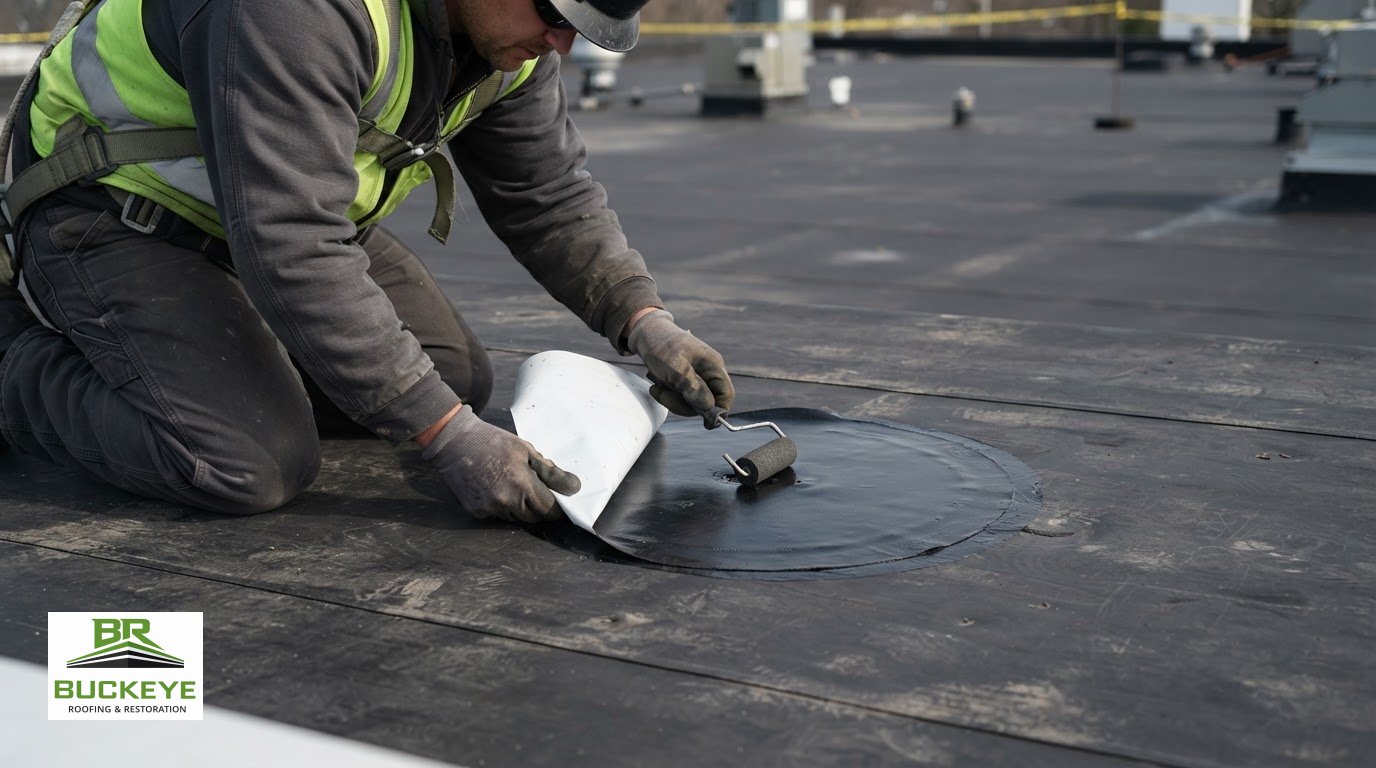
The familiar repair product isn’t automatically the right one for every EPDM roof. A Carlisle wipe versus Elevate QuickSeam Tape comparison for commercial EPDM repair starts with the damage and the existing system, not just the product names. For commercial buildings across Ohio, the roof’s condition and exposure help shape which repair detail fits.
Compare the options before approving a repair. Materials and application need to suit the membrane, the damage location, and the manufacturer’s repair instructions.
This article explains what each option is intended to do, where QuickSeam Tape fits, and what a commercial roofer evaluates before choosing a repair method. Use these points to discuss the work and decide whether a targeted fix is suitable or the roof needs a broader assessment.
Key Takeaways
- A sound EPDM repair follows the membrane manufacturer’s current instructions and matches the repair method to the type and location of damage.
- Surface cleanliness, dryness, weather, and application conditions affect whether tape can bond properly; a roofer should assess these before work begins.
- Using a wipe, primer, or tape that does not suit the roof system can compromise the repair, so product compatibility matters.
- Warranty coverage depends on the applicable terms and repair requirements. Manufacturer documents help clarify which materials and procedures apply.
- When a leak or membrane defect needs professional attention, an inspection can help determine whether targeted repair or a broader roof solution fits.
How does a commercial roofer use manufacturer-approved steps to repair an EPDM roof with QuickSeam tape?
A commercial roofer starts by identifying the membrane, damage, and applicable repair detail. Elevate QuickSeam Splice Tape is designed for field splicing RubberGard EPDM membrane panels and flashing. Its intended use matters: a seam product is not automatically suitable for every puncture or surface condition.
The roofer documents the defect’s position relative to seams, flashing, penetrations, and roof edges. This helps determine which manufacturer detail applies. For example, a cut near a field seam may call for a different approach than damage on an open section of membrane.
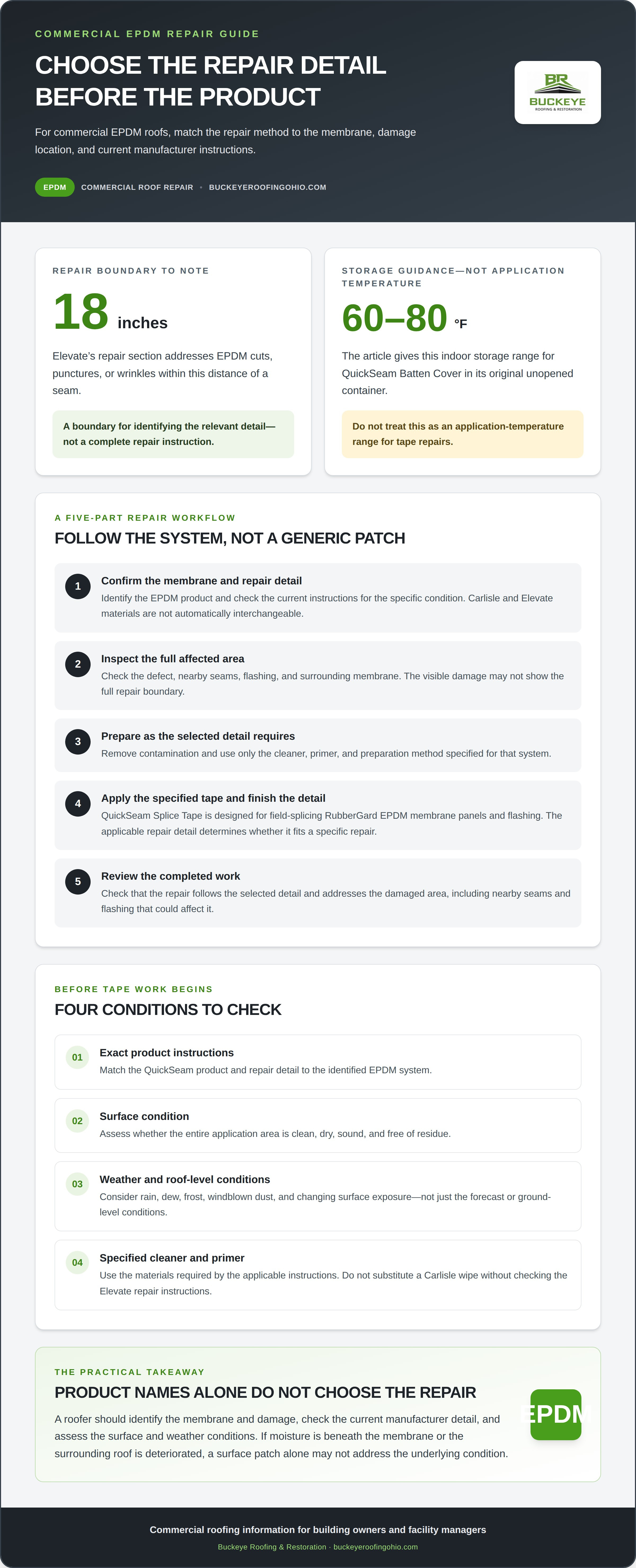
Elevate’s repair section addresses EPDM cuts, punctures, or wrinkles within 18 inches of a seam. That distance is a useful boundary for identifying the relevant detail, not a complete repair instruction. A roofer must also determine whether the seam itself is affected and whether the surrounding membrane remains suitable for repair.
- Confirm the system and repair detail. The roofer identifies the EPDM product and checks the current instructions for the relevant repair. Carlisle and Elevate materials should not be treated as interchangeable simply because both relate to EPDM.
- Inspect the full repair area. The roofer checks the damage, nearby seams, flashing, and membrane condition. A small visible puncture may sit within a larger area of deterioration, so the repair boundary should follow the actual condition.
- Prepare the surface as the selected detail requires. The roofer removes contamination and uses only the cleaner, primer, and tape specified for that system. Product names and application requirements must come from the current manufacturer instructions, not assumptions based on another brand.
- Apply the specified tape and finish the detail. The roofer follows the required placement, contact, and finishing instructions. QuickSeam Splice Tape serves field-splicing applications; the applicable repair detail determines whether it belongs in a particular repair.
- Review the completed work. The roofer checks that the repair follows the selected detail and addresses the full damaged area. The inspection also considers nearby seams and flashing that could affect the repair.
For a defect within 18 inches of a seam, locating the exact seam and identifying the membrane system are essential first steps. A professional repair should follow the current manufacturer detail for that condition. This keeps the product choice, surface preparation, and repair method aligned rather than relying on a generic tape patch.
What temperature, weather, and surface-preparation conditions does a commercial roofer check before making QuickSeam tape repairs?
QuickSeam tape needs a prepared surface and the conditions specified for the exact product and repair detail. A roofer checks the current Elevate instructions before setting an application temperature or weather limit. The available storage range for QuickSeam Batten Cover is 60 °F to 80 °F indoors, in its original unopened container. That storage guidance is not an application-temperature range for tape repairs.
Weather can affect the roof surface during a repair. Rain, dew, frost, windblown dust, and direct sun can change surface dryness, cleanliness, and working conditions. A membrane that looks dry early in the day, for example, may collect dew before application. The roofer checks the repair area itself, not just the forecast or conditions at ground level.
Preparation starts with examining the EPDM around the defect. The roofer looks for dirt, chalking, oils, loose material, moisture, and residue from earlier repairs. Contamination can interfere with contact between the membrane, primer, and tape. The required cleaner and preparation method depend on the Elevate repair detail. Do not substitute a Carlisle wipe without checking the instructions.
A professional also checks how far the repair needs to extend beyond the visible damage. A puncture may have a damaged edge, while a wrinkle can form a channel that affects tape contact. If water or trapped moisture is beneath the membrane, covering the surface alone will not address the underlying condition. The roofer evaluates the affected area and follows the manufacturer’s instructions for that defect.
- Confirm the product instructions. Match the exact QuickSeam product and repair detail to the EPDM system before work begins.
- Assess the roof surface. Check whether the membrane is clean, dry, sound, and free of residue across the full application area.
- Review current conditions. Consider precipitation, dew, frost, wind, and changes in surface exposure during the repair.
- Use specified preparation materials. Apply only the cleaner and primer required by the applicable instructions, rather than mixing products from different systems.
These checks explain why unsettled weather may call for a different repair window. They also help distinguish a tape-bonding problem from a larger membrane or moisture issue. If a leak or damaged EPDM area needs assessment, a commercial roof inspection can identify the conditions that affect repair suitability.
What are common failure risks when using the wrong wipe, primer, or tape for an EPDM repair?
An EPDM repair depends on compatible materials applied in the correct sequence. A Carlisle wipe, an Elevate primer, and QuickSeam tape each have a defined role in their respective repair details. Substituting one item without checking the instructions can leave contamination behind, interfere with adhesion, or create a patch that does not match the membrane system.
A wipe that leaves residue or fails to remove contamination can affect the bonding area. Dust or an oily film beneath QuickSeam tape, for example, separates the adhesive from the EPDM. The tape may initially appear attached, then develop a lifted edge or channel. The repair needs further assessment, not another layer over the same contaminated surface.
Primer errors create a different risk. Skipping primer when the manufacturer’s detail requires it, using the wrong primer, or applying it inconsistently may prevent the intended bond. Excess product or an improperly prepared surface can also affect the interface. Follow the specific Carlisle or Elevate procedure rather than assuming primers from different systems work the same way.
Tape selection matters too. Elevate QuickSeam Splice Tape is designed for field splicing RubberGard EPDM membrane panels and flashing. That purpose does not make it the right material for every puncture, seam repair, or flashing detail. A patch applied without following the relevant detail may miss a damaged edge or fail to address a wrinkle that creates a path for water.
- Product mismatch: A Carlisle wipe or primer used with an Elevate repair detail may not follow the prescribed material sequence.
- Incomplete cleaning: Dirt, residue, or moisture beneath tape separates the bonding surfaces.
- Incorrect placement: Tape that misses the full defect or crosses an unsuitable area leaves a vulnerable edge.
- Wrong repair type: Splice tape applied to a condition requiring another detail may not resolve the actual defect.
These issues can be difficult to diagnose from inside the building. A leak below a repair may come from a nearby seam, penetration, or separate membrane defect, not the visible patch. The roofer traces the water path, inspects the repair perimeter, and compares the materials with the relevant manufacturer instructions. This helps identify whether the cause is preparation, compatibility, placement, or another roof condition.
A useful repair record identifies the EPDM system, wipe or primer, tape, and repair detail. Those specifics help explain the work later, especially if the area leaks again. Diagnose the cause first, then repair it with materials and steps suited to the system.
Do Carlisle or Elevate warranties allow repairs using the other manufacturer's QuickSeam products
A product name alone cannot establish whether a repair complies with a roof’s warranty. The relevant documents are the actual Carlisle or Elevate warranty, its terms, and the repair instructions for that EPDM system. Without reviewing them, it would be inaccurate to promise that one manufacturer’s QuickSeam products preserve another manufacturer’s coverage.
Start with the warranty issued for the specific roof assembly. Identify the manufacturer, covered membrane, applicable warranty document, and any repair or maintenance conditions. A Carlisle-covered roof and an Elevate RubberGard roof may have different requirements. The fact that both use EPDM does not mean their approved materials or repair procedures are interchangeable.
Then match the proposed work to the written requirements. For example, using Elevate QuickSeam Splice Tape on a Carlisle system raises two questions: whether the tape is permitted for the repair and whether installation follows the required detail. Its intended use for RubberGard field splicing does not prove compatibility with every Carlisle assembly.
Review these items before approving a repair:
- Warranty identity: Confirm which manufacturer issued the roof warranty and which membrane system it covers.
- Repair conditions: Find the clauses addressing repairs, materials, workmanship, and any required documentation.
- Applicable detail: Match the defect, such as a puncture near a seam, to the manufacturer’s current repair instructions.
- Repair record: Document the damage, materials used, preparation, and completed work for the building’s maintenance file.
A Carlisle wipe versus Elevate QuickSeam Tape comparison should consider warranty compatibility as well as product function. If a repair crosses manufacturer systems, the roof’s written terms and applicable instructions need to support that choice. A familiar product name or a previous repair elsewhere on the roof does not establish coverage.
For a warranted roof, have the roofer review the warranty and repair detail before work begins. The roofer can identify the system, document the damage, and select a method supported by the applicable documents. If those documents require a particular material or procedure, follow that requirement rather than substituting a similar product.
Keep the final repair record with the warranty documents. Include the repair location, EPDM system identification, materials, and work performed. If a leak later appears nearby, the record gives the building owner and roofer a clear starting point for assessing the area and its warranty implications.
Where can contractors find current Carlisle and Elevate EPDM repair instructions and product data sheets
Start with the official technical resources from Carlisle Construction Materials or Holcim Elevate. Search by the exact product name and EPDM system, not just “roof tape.” An Elevate QuickSeam Splice Tape document may cover field splicing, while a separate repair detail addresses a puncture or seam condition.
For a Carlisle roof, find the current EPDM repair instructions and product data sheet in Carlisle’s technical materials. For an Elevate RubberGard roof, use Elevate’s instructions and data sheets. These documents identify the product, intended use, preparation requirements, and application details. Use the latest manufacturer revision rather than relying on an old project file.
Use a focused search process:
- Identify the roof system. Confirm whether the membrane is Carlisle or Elevate, then record its product name and the repair location.
- Search the manufacturer’s technical library. Look for the repair detail, product data sheet, and any related application guidance for the specific product.
- Match the document to the condition. A field splice, puncture, flashing repair, and wrinkle may each have a different detail.
- Review document control information. Check the publication or revision date and confirm the instructions apply to the product being used.
- Keep the documents with the repair record. Save the applicable instructions and data sheet alongside notes on materials and work performed.
For example, when assessing Elevate QuickSeam Splice Tape, confirm that the document covers the intended splice or repair application. The tape is intended for field splicing RubberGard EPDM membrane panels and flashing. That description does not replace the repair detail for a separate membrane defect.
Data sheets and repair instructions serve different purposes. A product data sheet describes the product; an installation or repair detail explains how it applies to a roof condition. A warranty document adds another layer by setting terms for the covered roof. Reviewing only one document can leave important requirements out of the work plan.
When a repair involves Carlisle materials alongside Elevate QuickSeam products, compare the instructions for each system before selecting materials. Similar product names or shared EPDM use do not establish compatibility. If the right repair detail is unclear, the roofer can use the manufacturer’s technical support channel to clarify which published instruction applies.
For a commercial EPDM leak, request a professional roof inspection to assess the damage and repair requirements.
Buckeye Roofing & Restoration: TPO and EPDM Roofing Systems
Buckeye Roofing & Restoration helps commercial property owners address EPDM leaks and membrane damage with professional roof assessment and repair. When a repair involves Carlisle or Elevate materials, the roof system, damage, and applicable manufacturer instructions all matter. An inspection helps determine whether a targeted repair fits or broader commercial flat roof repair or restoration is worth considering.
EPDM and TPO are distinct roofing systems, so the right repair depends on the existing membrane and the building’s condition. Buckeye provides commercial flat roofing services for facilities that need a practical assessment, not an automatic replacement recommendation.
If a commercial EPDM roof needs attention, contact Buckeye Roofing & Restoration to discuss an inspection.
Make the Next Roof Decision With a Clear Record
A repair decision can also improve how your facility tracks roof condition over time. Keep the membrane identification, repair location, and work records together so future maintenance decisions start with useful context. If another leak appears, that history can help distinguish a recurring issue from a separate defect.
A Carlisle wipe versus Elevate QuickSeam Tape comparison for commercial EPDM repair is only one part of choosing the right response. The roof’s actual condition determines whether a targeted repair is suitable or a broader assessment makes more sense. An inspection gives the roofer a basis for recommending a practical next step instead of assuming every damaged area needs the same treatment.
If you’re managing a commercial EPDM roof, contact Buckeye Roofing & Restoration to discuss an inspection or repair concern. A clear assessment can help you plan the work with confidence.
Frequently Asked Questions
What is Carlisle EPDM QuickSeam splice tape and what repairs is it used for?
QuickSeam is Elevate product branding, so do not assume “Carlisle QuickSeam” identifies a Carlisle tape. For Carlisle EPDM work, use the specific tape named in Carlisle’s repair documentation. The product label identifies the material; the repair detail explains its intended role. This distinction helps prevent a Carlisle cleaner or primer from being mistaken for the tape.
What is Elevate EPDM QuickSeam tape and what repairs is it used for?
Elevate QuickSeam Tape is a pressure-sensitive EPDM roofing accessory used where the applicable Elevate repair detail calls for it. Elevate’s product data sheet lists its cured thickness as 0.035 inches, with a tolerance of ± 0.005 inches. Those specifications can help distinguish the product from other EPDM materials in a job record. They don’t, by themselves, establish that the tape suits a particular defect or another manufacturer’s roof.
What are the differences between Carlisle and Elevate QuickSeam tape formulations and specifications?
Compare the products by their published data, not by similar names. Elevate’s product data sheet lists QuickSeam Tape as 100% solids, with a cured thickness of 0.035 inches and a tolerance of ± 0.005 inches. For a Carlisle product, use the exact product name shown on its label and data sheet. Intended use and specifications should be evaluated product by product, rather than inferred from the brand or tape format.
Are Carlisle and Elevate QuickSeam tapes compatible with each other's EPDM membranes and primers?
Compatibility depends on the exact materials and roof documents. A proposed repair, for example, might combine Carlisle EPDM, Elevate QuickSeam Tape, and a Carlisle primer. Assess that combination as a complete assembly, not by one component’s name alone. The roofer should document the membrane, tape, primer, and repair location so the combination can be evaluated against the applicable roof requirements.
How does a commercial roofer determine which surface cleaner or wipe Carlisle or Elevate requires before applying EPDM QuickSeam tape?
The roofer records the cleaner’s exact product name and manufacturer rather than listing it generically as “EPDM cleaner.” That detail helps a later roofer understand what was applied. The roofer also notes whether an earlier patch or coating affects the area, since the visible surface may not be the original membrane. Clear product identification makes the repair record more useful.

Article by
Harry Stanley III
Harry Stanley III is a construction marketing strategist and fractional CMO at H&A Marketing. He has helped construction companies grow through website strategy, SEO, paid advertising, branding, lead generation, CRM systems, and professional content. His past work includes helping Meraki Solar generate an additional $3.7 million in revenue in his first year and supporting American Builders as a fractional CMO. Today, Harry works directly with custom home builders and construction companies to build marketing systems designed to generate qualified leads and measurable growth.