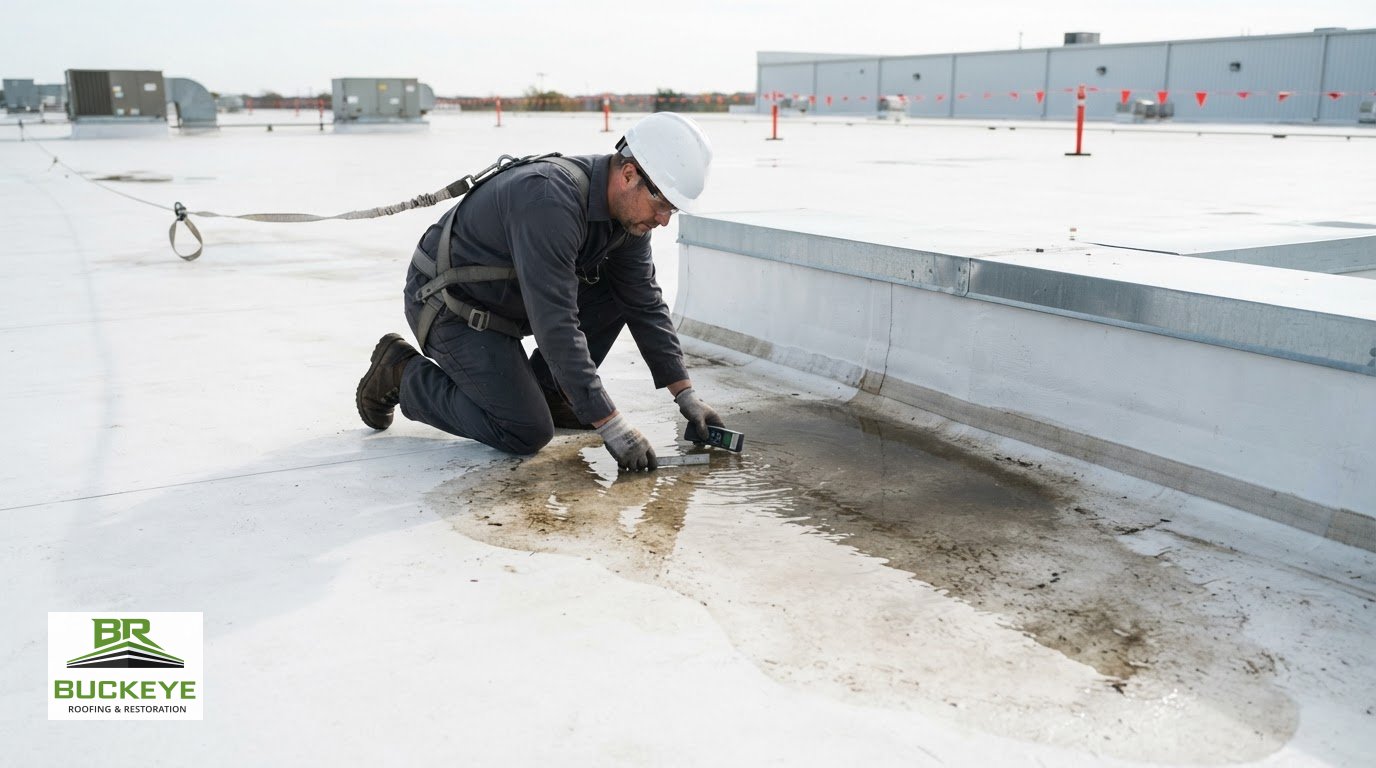
A coating’s advertised lifespan matters less if it doesn’t suit the roof. A properly applied and maintained silicone coating can last 10 to 20 years or longer. When weighing GacoFlex silicone against APOC’s acrylic coating for a commercial flat roof, ponding water is a key distinction: silicone can withstand standing water, while acrylic coatings aren’t suited to it.
That doesn’t make silicone the right choice for every building. Across Ohio, Northeast Indiana, and Southern Michigan, snowmelt and freeze-thaw cycles make drainage worth considering. The existing roof’s material and condition, drainage, and moisture levels all affect whether a coating can be applied successfully. If the roof is suitable, substrate compatibility and application requirements matter too.
This comparison covers coating lifespan, performance in ponding water, substrate compatibility, reflectivity upkeep, and future recoating. You’ll also learn why dirt can affect a reflective finish and what a commercial roof inspection can reveal before you choose a coating. The goal is a practical decision based on the roof’s actual condition, not a one-size-fits-all recommendation.
Key Takeaways
- Silicone can withstand standing water, while acrylic coatings are not suited to ponding. Roof drainage still matters when choosing a coating.
- A properly applied and maintained silicone coating can last 10 to 20 years or longer, but preparation, adhesion, and application quality affect performance.
- Coating compatibility depends on the existing roof material and its condition. Moisture, drainage, and structural integrity also help determine whether coating is suitable.
- Dirt can affect a reflective finish, so roof condition and surface maintenance matter when considering reflectivity over time.
- Recoating may extend the life of a suitable roof, but it won’t address every underlying repair or replacement need.
Can silicone coating handle ponding water?
Silicone and acrylic coatings respond differently when water remains on a low-slope roof. A product name alone doesn’t establish commercial code approval or incentive eligibility in the United States. Those depend on applicable codes, the roof assembly, and program requirements.
Silicone and Acrylic Ponding Tolerance
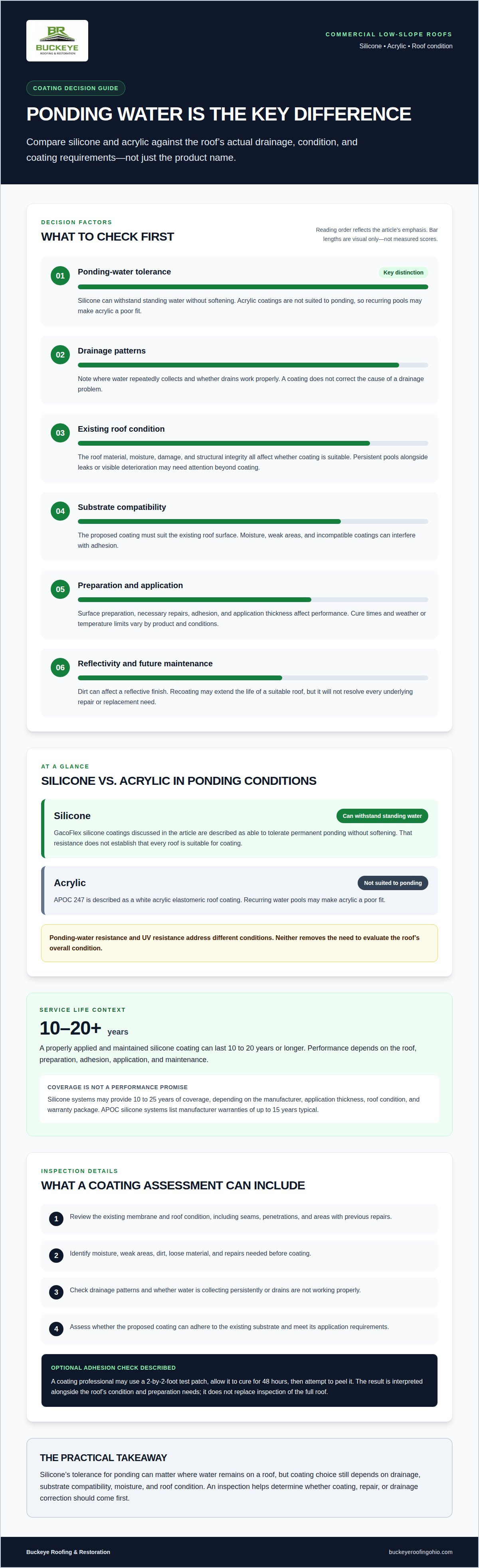
GacoFlex silicone and APOC 247 differ in how they handle standing water. APOC 247 is a white acrylic elastomeric roof coating, while GacoFlex coatings discussed here are silicone. Silicone coatings can withstand permanent ponding water without softening. Acrylic coatings aren’t suited to ponding, so recurring pools may make them a poor fit. The choice depends on drainage patterns as well as the roof surface and coating requirements.
Consider a warehouse roof where water repeatedly collects near a drain. Silicone’s resistance to ponding water may suit that condition better than acrylic. However, coating over a drainage problem won’t correct its cause. A roofer should assess where water collects, whether drains work properly, and whether the roof has other damage. Those findings help determine whether coating, repair, or drainage correction should come first.
Performance in Permanent Ponding
Permanent ponding occurs when water remains on the roof instead of draining away. Silicone coatings are described as able to tolerate this exposure without softening, which can matter where roof geometry or drainage leaves persistent pools. That resistance doesn’t make every roof suitable for coating. The membrane, insulation, and underlying structure still need assessment for moisture or damage.
Standing water can also signal a separate roofing concern. If a pool appears alongside interior leaks, loose material, or visible deterioration, coating alone may not address the problem. A professional inspection can determine whether localized repairs are needed before restoration and assess whether the existing substrate can support the proposed coating system.
Silicone coatings are also described as resistant to degradation, chalking, and cracking from harsh ultraviolet rays. That matters on exposed commercial roofs, where sunlight and retained water can affect the coating in different ways. Ponding-water resistance and UV resistance address separate conditions; neither removes the need to evaluate the roof’s overall condition.
Reflective coatings are sometimes discussed as a way to reduce cooling demand, but the cited EPA figure applies to homes, not commercial buildings. The U.S. Environmental Protection Agency reports that cool roofs can reduce peak cooling demand by 11 to 27 percent in air-conditioned residential buildings. That residential finding shouldn’t be treated as a commercial building performance estimate.
For a commercial roof, compare the specific coating’s limitations with the roof’s drainage and substrate conditions. Don’t treat silicone, acrylic, and polyurethane as interchangeable: coating chemistry and system requirements matter. A roof inspection can distinguish persistent ponding from surface damage and help determine whether repair or coating is the more suitable next step.
How long does a silicone roof coating system last?
A properly applied and maintained silicone coating can last 10 to 20 years or longer. Silicone systems commonly provide 10 to 25 years of coverage, depending on the manufacturer, application thickness, roof condition, and warranty package. APOC silicone systems list manufacturer warranties of up to 15 years typical. A warranty term describes its stated coverage, not a promise that every roof will perform identically.
Surface preparation affects adhesion and service life. Before coating, a roofing professional assesses the existing membrane, removes dirt and loose material, completes necessary repairs, and prepares the surface as the coating system requires. Moisture, weak areas, or incompatible existing coatings can interfere with adhesion. Application thickness must meet the manufacturer’s specifications; too little material may leave the roof without the intended protection.
Adhesion testing can help assess whether a coating will bond to the existing surface. One described method uses a 2-by-2-foot test patch, allows it to cure for 48 hours, then attempts to peel it. A coating professional interprets the result alongside the roof’s condition and preparation needs. The test does not replace inspection of the full roof, including seams, penetrations, and areas with previous repairs.
What are the cure times and weather or temperature limits for each coating? These vary by product and conditions. The installer should follow the manufacturer’s instructions for surface preparation, application, and weather, rather than assume silicone and acrylic share the same requirements.
What are the current prices of GacoFlex silicone and APOC commercial roof coatings? Cost depends on roof size and condition, preparation, repairs, the coating system, and application requirements. A product’s shelf price alone doesn’t account for the work needed to prepare and coat a commercial roof.
What safety precautions and installation risks apply to silicone and APOC roof coatings? Commercial roof work involves fall hazards, and coating application requires following the product label and safety data sheet. Professional crews plan roof access and application around site conditions. Building staff shouldn’t attempt roof work without appropriate training and safety measures.
Coating can sometimes restore an existing roof without a tear-off, but it isn’t the same as replacing the roof. A sound, dry, well-adhered surface gives the coating a suitable base; damaged or moisture-affected roofing may need repair or replacement instead. A commercial roof inspection can help determine whether restoration or another approach fits the roof’s condition.
Coating suitability by roof substrate
A coating must be compatible with the material already covering the roof. GacoFlex silicone coatings are described for several substrates, but compatibility alone doesn’t mean the roof is ready. A roofing professional assesses the surface, moisture, drainage, and existing damage before recommending a coating. The condition of seams, penetrations, and previous repairs also affects the application plan.
GacoFlex silicone coatings can be applied over several existing roof materials, including:
- Elastomeric coatings, metal, built-up roofing, and mineral cap sheet
- Weathered EPDM, Hypalon, and TPO/CPA membranes
- Concrete, wood, and existing spray polyurethane foam
These materials aren’t interchangeable. For example, weathered EPDM and TPO/CPA appear among the listed substrates, but that doesn’t mean every membrane condition is suitable. A roof with loose seams, damaged areas, or moisture within the assembly needs assessment before coating. Identifying the substrate is only the first step; surface condition and preparation requirements matter too.
Product selection also matters. GacoFlex S4200 and GacoRoof GR1600 are described as 100% silicone roof coatings. That composition doesn’t remove the need to match the product’s application instructions to the roof. The manufacturer’s requirements guide preparation and application, including the specified coating thickness. A contractor considers those requirements alongside roof geometry, drainage, and the building’s use.
Standing water makes substrate evaluation especially important. Silicone’s resistance to ponding water doesn’t repair an underlying membrane or correct drainage by itself. If water collects over a damaged or moisture-affected area, the roofer needs to determine what is happening beneath the surface. Coating over unresolved damage can leave the underlying problem in place.
Existing coatings also need careful review. GacoFlex silicone can be applied over elastomeric coatings, but the existing layer still needs assessment for adhesion and condition. Peeling, loose, or deteriorated coating can undermine the new layer’s bond. A professional evaluates whether surface preparation or repairs are needed before applying another coating.
A metal roof requires a different assessment from built-up roofing or a membrane. The roofing professional considers the roof’s condition and how the coating system fits its surface. Concrete, wood, and spray polyurethane foam also call for substrate-specific evaluation. A product’s compatibility list shouldn’t replace an inspection.
In practice, substrate compatibility is a starting point, not blanket approval. Confirm the roof material, inspect its condition, identify moisture or drainage concerns, then match the system and application thickness to the manufacturer’s instructions. This process helps determine whether coating is appropriate or whether the roof needs another type of work.
Dirt accumulation and reflectivity maintenance
The appearance of a GacoFlex S20 or S21 silicone roof coating can change over time as dirt, dust, and nearby industrial residue collect on the surface. A darker or less glossy area may signal surface contamination, but it doesn’t by itself prove the membrane has failed. A roof inspection helps distinguish a dirty finish from coating wear or another condition.
Reflectivity is a surface quality, not a substitute for roof condition. For example, a white coating near exhaust outlets may collect residue faster than one in a less exposed area. Shaded sections, drainage paths, and areas near rooftop equipment can also show different patterns. A professional assessment considers where buildup appears and whether it accompanies cracking, peeling, or moisture concerns.
Mold, mildew, and staining may affect a roof coating’s appearance. Dust, airborne particles, and runoff may also accumulate. Conditions around a manufacturing facility or warehouse can differ from those around an office building, so maintenance needs depend on the roof environment.
During maintenance reviews, a roofing professional can document visible changes and compare them with earlier inspection records. Useful observations include dull patches, streaks below rooftop equipment, debris around drains, and areas where water repeatedly collects. These signs can reveal patterns. Building staff can note visible changes from a safe location without climbing onto the roof or disturbing the coating.
Cleaning requires care. Depending on the product and surface, solvents or aggressive cleaning methods can affect a coating or its bond. Don’t assume a household cleaner or pressure washing is suitable. The manufacturer’s instructions and the roof’s condition guide appropriate cleaning. A professional can assess whether cleaning is warranted or whether a change points to damage that needs attention.
Maintaining reflectivity is different from repairing a coating. Cleaning addresses surface dirt; it won’t correct a split, loose seam, or moisture trapped below the membrane. If a dull area appears alongside visible deterioration, the roofer should assess both the coating and the underlying roof. This helps avoid treating every change in appearance as a need for recoating.
For facility managers, a practical record can connect roof observations with operating conditions. Note where residue forms, whether nearby exhaust or equipment may contribute, and whether the pattern changes after maintenance. During scheduled commercial roof inspections and maintenance, a roofing professional can evaluate the finish, drainage, and membrane together. This gives the building team a clearer basis for deciding whether cleaning, repair, or further coating work is appropriate.
Recoat potential and roof life extension
A silicone-coated roof can be recoated if its existing surface remains suitable. An inspection should assess adhesion, wear, moisture, drainage, and the underlying membrane. A fresh layer won’t correct damaged insulation, active leaks, or structural concerns. Those issues need attention before recoating can make sense.
For a silicone roof, an inspection and recoating may be considered at year 12 to 15 after the warranty expires. That timing is a review point, not an automatic instruction to apply another layer. Weather exposure, maintenance history, surface condition, and the original application affect what the inspection finds. A roof that remains sound may be a candidate; a deteriorated roof may need a different solution.
A qualifying silicone roof can often be recoated to extend its service life by another 10 to 15 years. “Qualifying” matters: the existing coating must be suitable for another application, and the roof beneath it must remain serviceable. For example, an intact silicone surface with localized wear presents a different situation from widespread separation or moisture-related damage.
Before recoating, a roofing professional evaluates whether the existing layer has degraded, remains bonded, or needs repairs. The surface may require cleaning or preparation to help the new coating adhere. Seams, penetrations, drains, and previous repairs also deserve attention. A new coat over unresolved defects can leave those problems in place.
Coating restoration is appropriate when the existing membrane has at least 5 years of structural life remaining. This threshold helps distinguish a roof with restoration potential from one nearing structural failure. If inspection reveals saturated insulation or significant membrane deterioration, adding coating may not address the underlying condition. The roof’s remaining structural life and repair needs guide the recommendation.
Silicone isn’t the only coating category with a recoating history. Building owners with flat roofs previously had the option of recoating with acrylic every 3 years. That comparison doesn’t mean acrylic and silicone follow the same maintenance schedule today. Product type, surface condition, and manufacturer requirements shape the work and intervals.
Consider recoating potential during the original planning process. Keep records of the coating system, preparation, repairs, and application details. They can help a roofer assess the existing layer later. Regular inspections can identify changes early, including peeling, cracks, or recurring leaks that may signal more than surface wear.
Recoating can extend the service life of a suitable roof, but it isn’t a substitute for necessary repairs or replacement. A professional inspection can assess the membrane, moisture, and coating together. Schedule a commercial roof inspection to determine whether recoating suits the roof’s current condition.
Buckeye Roofing & Restoration: Commercial Roof Coatings
Buckeye Roofing & Restoration provides commercial roof coatings when an existing roof may be suitable for restoration rather than replacement. The right approach depends on the roof’s substrate, moisture, drainage, and overall condition. If localized work is needed first, commercial flat-roof repair may be appropriate before coating. If the roof is suitable for restoration, a coating can be part of the solution.
An inspection helps determine whether coating, repair, or restoration fits the building’s needs. It can also identify conditions that may make coating unsuitable, such as underlying moisture or significant roof damage.
For a practical assessment of your commercial roof, contact Buckeye Roofing & Restoration.
Make the Next Roof Decision With Confidence
Use the coating comparison as a starting point, not a final specification. Before planning work, consider how the building operates, what maintenance the roof can accommodate, and how roofing decisions fit upcoming facility plans. A clear record of the roof’s condition can help your team make informed choices over time.
Choosing between GacoFlex silicone and APOC commercial flat-roof coatings is one part of the planning process. The next step is to connect the product comparison to your building’s priorities and the roof’s actual condition, rather than selecting a coating based on a single feature.
Share what you’re seeing and what you need the building to support. Contact Buckeye Roofing & Restoration to discuss a practical next step for your commercial property.
Frequently Asked Questions
Is silicone or acrylic better?
Neither coating is right for every commercial roof. Choose based on the roof’s exposure, existing surface, drainage, and the specific product’s application requirements. For example, a roof that drains reliably may have different priorities from one exposed to prolonged water contact. Consider maintenance needs too: the coating should suit both the roof and the building’s capacity to maintain it. A product comparison is most useful when it reflects actual roof conditions.
What are the differences between GacoFlex silicone and APOC commercial flat roof coatings?
The products differ in coating chemistry and available formulations. APOC 247 is an acrylic coating, while GacoFlex options include silicone formulations such as S4200 and GR1600. That distinction affects which exposure conditions and roof surfaces may suit a product. Compare the exact product instructions, not just the brand names, and consider how the coating will fit the roof’s existing system and maintenance plan.
What are the coverage rates and required film thicknesses for GacoFlex and APOC roof coatings?
Coverage rates depend on the exact product, the surface profile, and the specified application thickness. A rough or irregular substrate can use material differently from a smooth surface, so a single coverage estimate may not fit every roof. Do not assume a 20-to-40-mil dry-film thickness applies to every coating system; follow the selected product’s current manufacturer instructions for required coverage and thickness.
Which substrates and existing roof systems are compatible with GacoFlex silicone and APOC coatings?
Compatibility is product-specific, so identify both the existing roof system and the proposed coating before planning work. GacoFlex silicone products have stated compatibility with several roof materials, but the surface condition still matters. APOC coatings also vary by formulation; don’t assume one APOC product suits every membrane or roof surface. A professional assessment can identify the existing material and determine the applicable preparation and system requirements.
What surface preparation and application steps do GacoFlex and APOC require?
Preparation and application instructions vary by product. The installer should follow the selected manufacturer’s requirements and plan the work around rooftop equipment, drains, access points, and building operations. For example, keeping drains clear during application helps maintain drainage while work proceeds. Complete surface repairs and preparation before coating begins, and account for the weather conditions specified in the product instructions.
What warranties and expected service lives do GacoFlex silicone and APOC coatings offer?
Warranty terms depend on the product and system selected, so compare the actual warranty documents rather than assuming two coatings offer equivalent coverage. Review the stated application requirements, covered components, exclusions, and maintenance expectations. Expected service life also depends on installation and roof condition. Keep product and application records with building maintenance documents to help facility managers interpret future inspection findings and plan upkeep.
How do GacoFlex and APOC coatings compare for ponding water, UV resistance, and durability?
Compare these performance qualities separately instead of treating them as a single measure of durability. Water exposure, sunlight, surface wear, and roof movement place different demands on a coating. During an inspection, note where the roof experiences each condition, such as exposed areas near rooftop equipment or recurring water collection points. Match those exposures with product instructions and the condition of the existing roof system.
What are the current prices of GacoFlex silicone and APOC commercial roof coatings?
Actual cost depends on roof size and condition, preparation, repairs, and application requirements, so a quote is needed.

Article by
Harry Stanley III
Harry Stanley III is a construction marketing strategist and fractional CMO at H&A Marketing. He has helped construction companies grow through website strategy, SEO, paid advertising, branding, lead generation, CRM systems, and professional content. His past work includes helping Meraki Solar generate an additional $3.7 million in revenue in his first year and supporting American Builders as a fractional CMO. Today, Harry works directly with custom home builders and construction companies to build marketing systems designed to generate qualified leads and measurable growth.